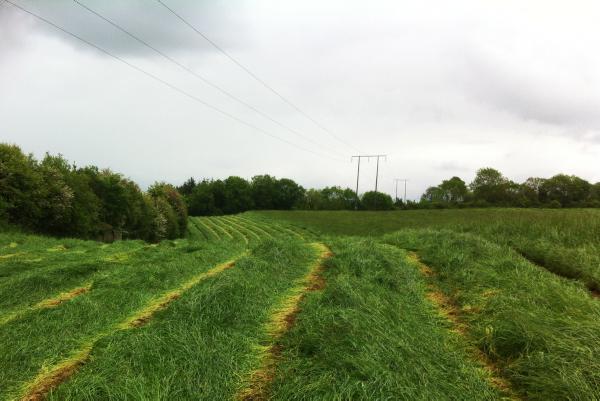
A bumper harvest all round seems to be the tone of conversation all over the country. We are no different; our red clover exceeded all expectations at 15.25 bales per acre and the normal grass ley yielded 10 bales per acre.
Even though we are a field short of our usually acreage for first cut silage, we have 90% of our feed requirements for the winter saved. I hope to cut the red clover two more times, but these will be much lighter cuts, aimed at high quality feed for finishing cattle in the autumn.
Even though we are reasonably stocked at overall farm rate of 2.5 lu/ha, we have a plentiful supply of grass. The re-seeding programme we have in place is definitely working and it’s not hard to see the rewards of it.
With the majority of our winter feed saved and the red clover filling the rest of the gap, we have to decide what to do with the remaining silage fields as no second cut is needed.
We are considering three options:
Purchase more animals for finishingCut more silage for sellingReseed more ground now that there is the optionIn the present circumstances, I am slow to purchase more animals for finishing as the reward is less than promising and the outlook doesn’t look like it is improving for the next 6-8 months.
I’m also slow to make more silage for selling, as crunching the figures soon tells me that the profit would be close to €5 a bale which is a poor return on investment.
So the plan is to forge ahead and reseed as much land as possible, as the return in future years will outweigh any short term gains with the other options.
We are very impressed with how the high clover swards are performing, so we are considering incorporating more clover into the system in the form of red clover. I am mindful that it can be difficult to manage but from a yield and quality point of view it is performing exceptionally well.
On the grazing front, things are progressing nicely. Cattle are entering paddocks at covers of 1,800-2,000 kg DM/ha. I am struggling slightly to get paddocks grazed out bare as stem is starting to appear.
I hope to do some mowing a day before they are ready to leave the paddocks in order for them to clean out the remaining grass. We don’t do any topping or haven’t done in the past as I find once we hit residuals from the beginning quality is never an issue.
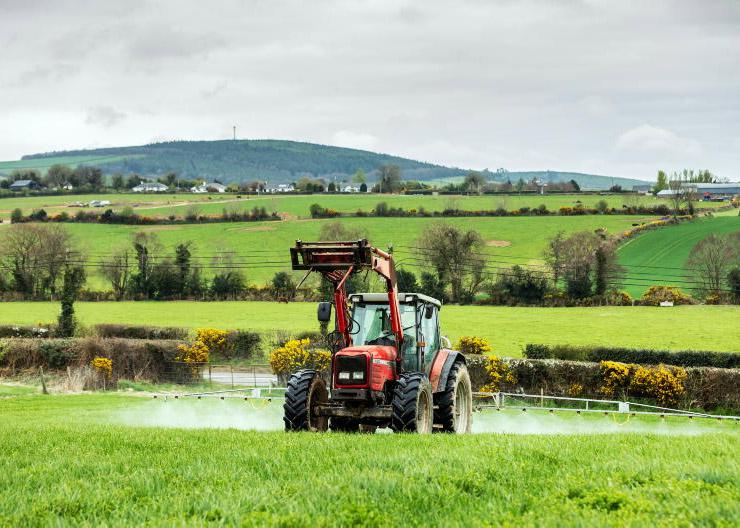
I am still following with a bag of Supercan per acre. I have switched from compounds that I was using earlier in the year as I am happy I have front loaded enough Phosphorous and Potassium to meet the requirements of the soil. I always use sulphur as a matter of procedure as the sulphur drains away very quickly on our free draining land.
A bumper harvest all round seems to be the tone of conversation all over the country. We are no different; our red clover exceeded all expectations at 15.25 bales per acre and the normal grass ley yielded 10 bales per acre.
Even though we are a field short of our usually acreage for first cut silage, we have 90% of our feed requirements for the winter saved. I hope to cut the red clover two more times, but these will be much lighter cuts, aimed at high quality feed for finishing cattle in the autumn.
Even though we are reasonably stocked at overall farm rate of 2.5 lu/ha, we have a plentiful supply of grass. The re-seeding programme we have in place is definitely working and it’s not hard to see the rewards of it.
With the majority of our winter feed saved and the red clover filling the rest of the gap, we have to decide what to do with the remaining silage fields as no second cut is needed.
We are considering three options:
Purchase more animals for finishingCut more silage for sellingReseed more ground now that there is the optionIn the present circumstances, I am slow to purchase more animals for finishing as the reward is less than promising and the outlook doesn’t look like it is improving for the next 6-8 months.
I’m also slow to make more silage for selling, as crunching the figures soon tells me that the profit would be close to €5 a bale which is a poor return on investment.
So the plan is to forge ahead and reseed as much land as possible, as the return in future years will outweigh any short term gains with the other options.
We are very impressed with how the high clover swards are performing, so we are considering incorporating more clover into the system in the form of red clover. I am mindful that it can be difficult to manage but from a yield and quality point of view it is performing exceptionally well.
On the grazing front, things are progressing nicely. Cattle are entering paddocks at covers of 1,800-2,000 kg DM/ha. I am struggling slightly to get paddocks grazed out bare as stem is starting to appear.
I hope to do some mowing a day before they are ready to leave the paddocks in order for them to clean out the remaining grass. We don’t do any topping or haven’t done in the past as I find once we hit residuals from the beginning quality is never an issue.
I am still following with a bag of Supercan per acre. I have switched from compounds that I was using earlier in the year as I am happy I have front loaded enough Phosphorous and Potassium to meet the requirements of the soil. I always use sulphur as a matter of procedure as the sulphur drains away very quickly on our free draining land.







SHARING OPTIONS