


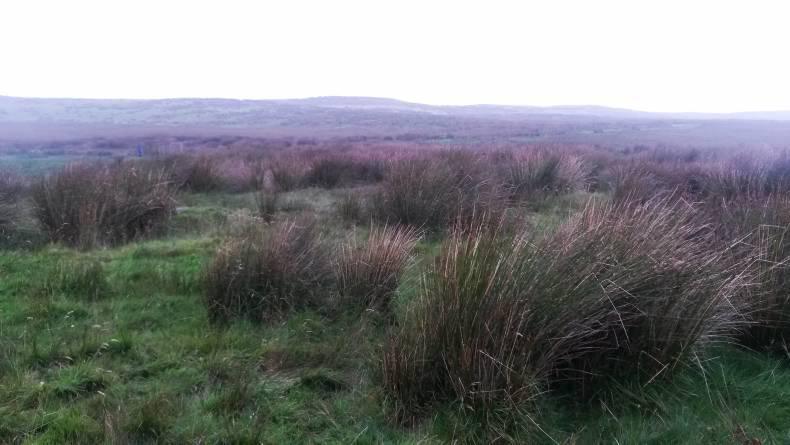
Additional support to farms in areas of natural of constraint (ANC) is looking less likely as it will have to compete for funding from within the Northern Ireland budget.
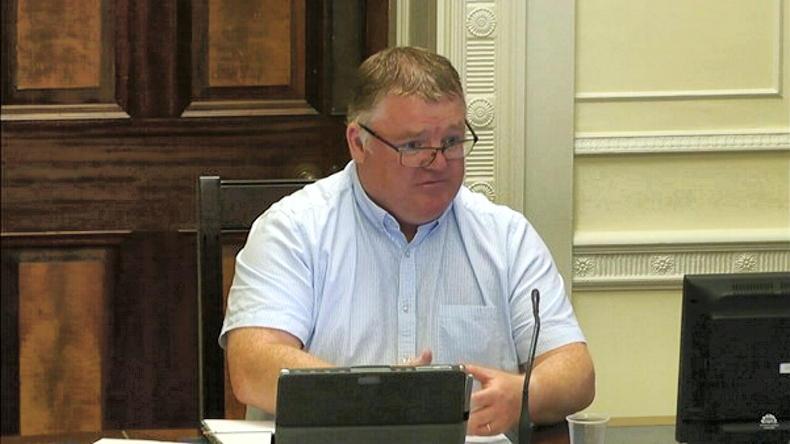
With financial pressures on budgets within the Department of Agriculture, Environment and Rural Affairs (DAERA) and the wider executive programme for government, it will be a challenge to obtain funding from the NI block grant, DAERA Minister Michelle McIlveen has said.
Speaking in the Assembly on Monday in her first question time since taking up the agriculture portfolio, the minister confirmed that she would not reduce Basic Payments to fund either coupled payments or an ANC scheme under Pillar I of the CAP. She added that she will not be introducing a Pillar I to Pillar II transfer to fund an ANC scheme in Pillar II under the Rural Development Programme.
Consultation
This position taken by the minister was widely expected as it was also the position taken up by farmer organisations in the consultation on the future of ANC supports that was opened by her predecessor Michelle O’Neill in February.
The ANC scheme was made available by the previous minister for two years through Pillar II funds.
Farmers are due to receive final payments next year (claimed in the 2016 Single Application and expected to be paid next February or March).
The Ulster Farmers’ Union favoured the option that the £20m scheme, paid to around 10,000 farmers in Severely Disadvantaged Areas (SDA), would be funded by the NI Executive from next year using new money from outside the CAP budget.
Non-committal
When asked by the Irish Farmers Journal if she would be taking the case to the executive to fund the scheme, the minister remained non-committal.
“I will announce my final decision as soon as I am in a position to do so,” she said.
The minister also stated that she is still giving careful consideration to other options for future support to farmers in the SDA. Minister McIlveen pointed to issues surrounding the lack of a business case from DAERA which shows that the ANC scheme delivers value for money and the movement of CAP payments to the SDA that is occurring through the transition to flat-rate payments.
“I cannot ignore long-term value for money, nor indeed the redistribution of Pillar I monies, which is already occurring as a result of the transition towards flat-rate support,” she said.
Transition to flat-rate payments
February’s consultation document states that Pillar II payments to the SDA region are increasing by about €4m year-on-year due to the transition to flat-rate payments. This is effectively coming from a reduction in the level of payments to the Disadvantaged Area (DA) and lowland regions. However, farms in the SDA region that already have entitlements valued above the NI average of €329/ha do not benefit from that transition.
Also discussed in the Assembly on Monday was the option of introducing coupled payments with Minister McIlveen confirming that this was a non-runner. “I do not believe there are any convincing arguments to introduce coupled support schemes in NI during the current CAP period,” she said.





SHARING OPTIONS