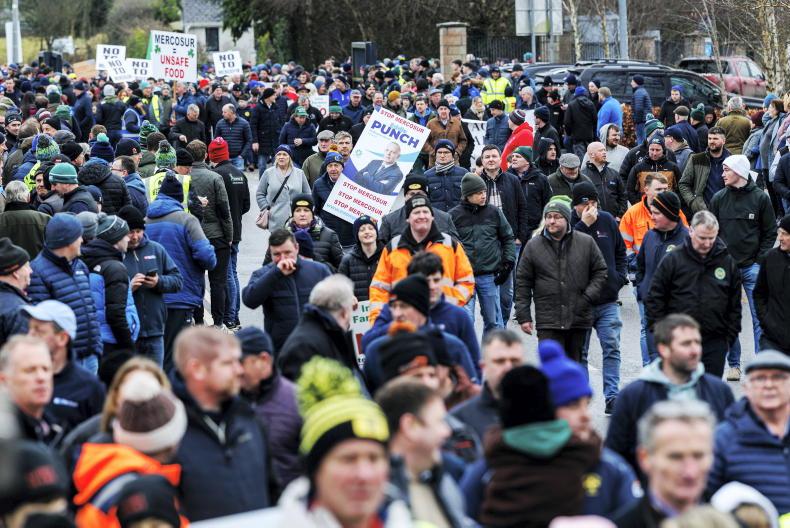
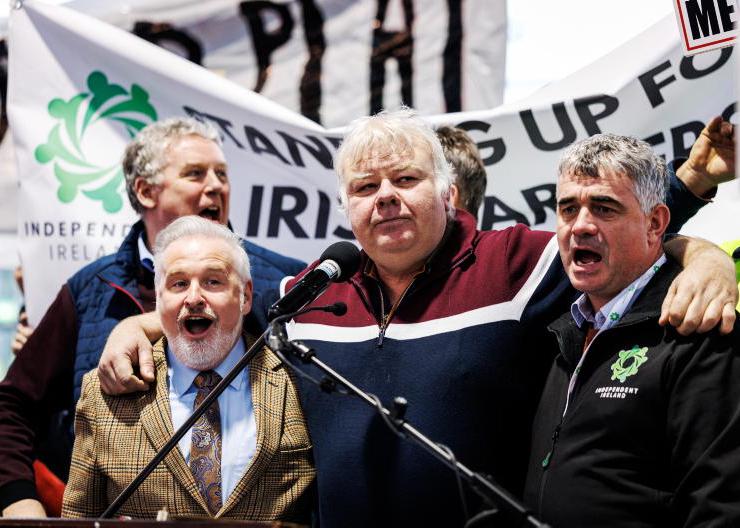
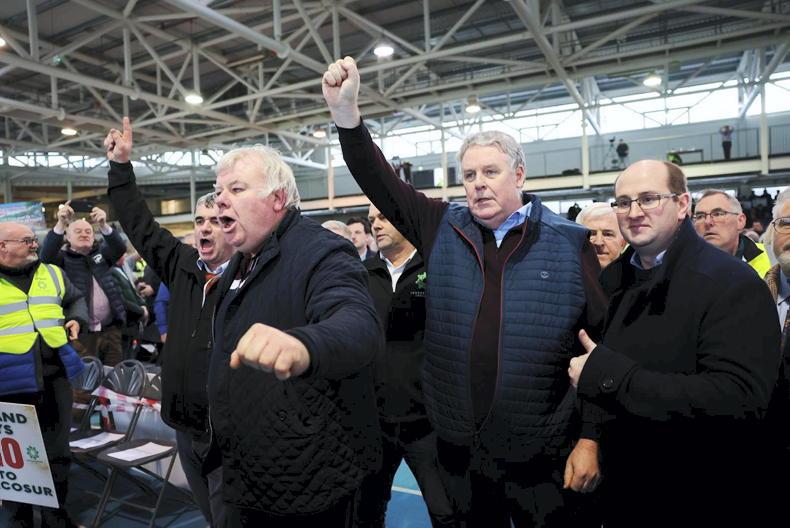
Anyone who attended Athlone last Saturday will have been moved by just how motivated farmers can be when they feel under threat.
There may have been some concerns with the vote taken the day before that there was no point in travelling on a bleak winter Saturday.
That was not the case and, if anything, farmers were even more motivated to have their voice heard.
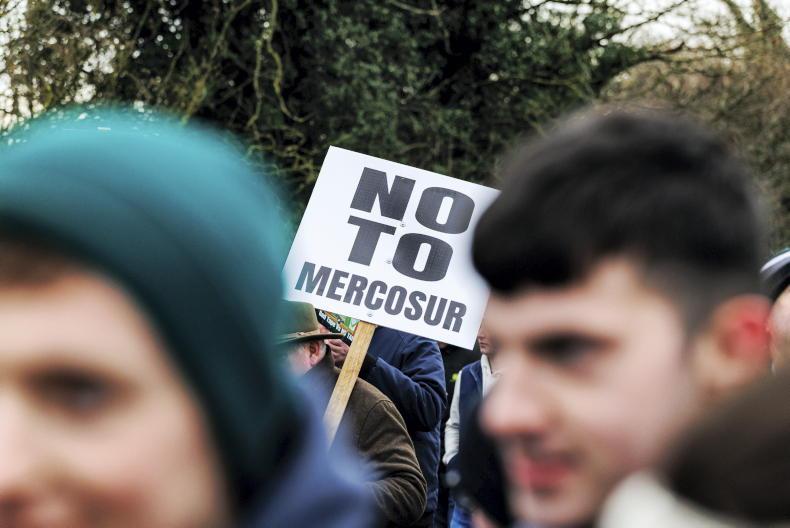
What was especially notable was the coming together of such a wide range of farm organisations under the opposition to Mercosur banner.
The event was also an achievement for first-time MEP Ciaran Mulloley and his Independent Ireland party, but the real success of the day is that it wasn’t about political parties nor farm organisations, it was about farmers making their voice heard in a well-organised and orderly protest.
Ratification process
As for the Mercosur issue itself, the vote on Friday means that the deal has squeaked through this initial level of scrutiny in the EU.
However, despite how it might be presented, that was just a qualifier and winning that means the decision now goes before the European Parliament for final adjudication.
There was some confidence around Athlone last Saturday that this vote isn’t a foregone conclusion, despite what might be considered the pro-Mercosur groupings in the Parliament having a majority of members.
MEPs by nature tend to be quite independent thinking, irrespective of grouping or party membership, so there may still be a surprise.
The strength of farmer feeling on Mercosur has not gone unnoticed in circles that usually pay little heed to the problems of agriculture and Irish farmers.
It is disappointing to note commentary around the theme that it is disingenuous for the Irish Government to oppose the Mercosur trade deal on the basis that the European Union has been good for Ireland and has been supportive on issues that have a particular impact on the country such as the nitrates directive and Brexit.
Such a view misses the point of what being a club member is all about.
Opposition is integral part of democratic decision making
Anyone who has been a member of a GAA, rugby or soccer club is likely at some time to have participated in a heated discussion on a major issue, often around buying land for playing fields or building a clubhouse.
Irish farmers have lived and adapted to many new rules on production and policy changes made by the EU over the decades
On such issues, there are often strong opinions for and against, but after (sometimes heated) debate, a decision is reached and good club members row in behind it.
In the GAA example, that typically means everyone rolls up their sleeves, gets out on the road and sells the tickets to raise the funding if the decision was taken to go ahead.
In the context of the EU deciding on controversial policies that are not in farmers' best interest, it is not unreasonable for farmers to make their voice and opposition heard and for their political representatives to listen to that voice as part of their decision-making process.
Irish farmers have lived and adapted to many new rules on production and policy changes made by the EU over the decades of our membership.
Many of these were opposed - and for good reason from a farmers' perspective - but once they were made, they were always complied with. That is the essence of democracy working at its best.
One of the political selling points made by advocates for the Mercosur trade deal is that the coming together of the EU and Mercosur as a trade block is a powerful signal to the powerful disruptors of the global rules-based order.
That is a fair point, but it only holds if the internal decision-making process has withstood the challenge from alternative views that were presented. Those views are not disloyalty to the institution - they are the basis of its strength.
Case for Mercosur deal
There is, of course, a powerful case that can be made on the benefits of the Mercosur trade deal for the wider Irish economy.
Many sectors of the Irish and EU economy benefit from the deal and, overall, Ireland and the EU would be a winner.
However, that doesn’t cut much ice with beef producers and processors in Ireland or poultry producers and processors in Poland. They clearly lose - the only debate is around how much.
Therefore, it is to be expected that these groups won't be enthusiastic about the deal, even if it benefits fellow citizens.
In a properly functioning democracy - which thankfully Ireland and the EU in general is - it is perfectly reasonable to hold two views at the same time. It is both beneficial to the wider economy, but, at the very least, a real risk to Irish beef producers and processors.
Back to the day job
With the successful protest in Athlone now in the rear view mirror, farmers' attention now turns back to the farm.
Calving is under way and the early season lambs are being born. Tillage farmers are wondering if it is worth their while planting spring crops and the production cycle for another year begins.
This is the core business of Irish farming and what occupies 99% of farmers' time, not protesting. That is why when they do protest in the numbers that they did last Saturday, it should be heeded.
Read more
Mercosur battle still not over
Mercosur hinges on MEPs
Farmers answer Fitzmaurice’s protest call over Mercosur deal
Anyone who attended Athlone last Saturday will have been moved by just how motivated farmers can be when they feel under threat.
There may have been some concerns with the vote taken the day before that there was no point in travelling on a bleak winter Saturday.
That was not the case and, if anything, farmers were even more motivated to have their voice heard.
What was especially notable was the coming together of such a wide range of farm organisations under the opposition to Mercosur banner.
The event was also an achievement for first-time MEP Ciaran Mulloley and his Independent Ireland party, but the real success of the day is that it wasn’t about political parties nor farm organisations, it was about farmers making their voice heard in a well-organised and orderly protest.
Ratification process
As for the Mercosur issue itself, the vote on Friday means that the deal has squeaked through this initial level of scrutiny in the EU.
However, despite how it might be presented, that was just a qualifier and winning that means the decision now goes before the European Parliament for final adjudication.
There was some confidence around Athlone last Saturday that this vote isn’t a foregone conclusion, despite what might be considered the pro-Mercosur groupings in the Parliament having a majority of members.
MEPs by nature tend to be quite independent thinking, irrespective of grouping or party membership, so there may still be a surprise.
The strength of farmer feeling on Mercosur has not gone unnoticed in circles that usually pay little heed to the problems of agriculture and Irish farmers.
It is disappointing to note commentary around the theme that it is disingenuous for the Irish Government to oppose the Mercosur trade deal on the basis that the European Union has been good for Ireland and has been supportive on issues that have a particular impact on the country such as the nitrates directive and Brexit.
Such a view misses the point of what being a club member is all about.
Opposition is integral part of democratic decision making
Anyone who has been a member of a GAA, rugby or soccer club is likely at some time to have participated in a heated discussion on a major issue, often around buying land for playing fields or building a clubhouse.
Irish farmers have lived and adapted to many new rules on production and policy changes made by the EU over the decades
On such issues, there are often strong opinions for and against, but after (sometimes heated) debate, a decision is reached and good club members row in behind it.
In the GAA example, that typically means everyone rolls up their sleeves, gets out on the road and sells the tickets to raise the funding if the decision was taken to go ahead.
In the context of the EU deciding on controversial policies that are not in farmers' best interest, it is not unreasonable for farmers to make their voice and opposition heard and for their political representatives to listen to that voice as part of their decision-making process.
Irish farmers have lived and adapted to many new rules on production and policy changes made by the EU over the decades of our membership.
Many of these were opposed - and for good reason from a farmers' perspective - but once they were made, they were always complied with. That is the essence of democracy working at its best.
One of the political selling points made by advocates for the Mercosur trade deal is that the coming together of the EU and Mercosur as a trade block is a powerful signal to the powerful disruptors of the global rules-based order.
That is a fair point, but it only holds if the internal decision-making process has withstood the challenge from alternative views that were presented. Those views are not disloyalty to the institution - they are the basis of its strength.
Case for Mercosur deal
There is, of course, a powerful case that can be made on the benefits of the Mercosur trade deal for the wider Irish economy.
Many sectors of the Irish and EU economy benefit from the deal and, overall, Ireland and the EU would be a winner.
However, that doesn’t cut much ice with beef producers and processors in Ireland or poultry producers and processors in Poland. They clearly lose - the only debate is around how much.
Therefore, it is to be expected that these groups won't be enthusiastic about the deal, even if it benefits fellow citizens.
In a properly functioning democracy - which thankfully Ireland and the EU in general is - it is perfectly reasonable to hold two views at the same time. It is both beneficial to the wider economy, but, at the very least, a real risk to Irish beef producers and processors.
Back to the day job
With the successful protest in Athlone now in the rear view mirror, farmers' attention now turns back to the farm.
Calving is under way and the early season lambs are being born. Tillage farmers are wondering if it is worth their while planting spring crops and the production cycle for another year begins.
This is the core business of Irish farming and what occupies 99% of farmers' time, not protesting. That is why when they do protest in the numbers that they did last Saturday, it should be heeded.
Read more
Mercosur battle still not over
Mercosur hinges on MEPs
Farmers answer Fitzmaurice’s protest call over Mercosur deal






SHARING OPTIONS