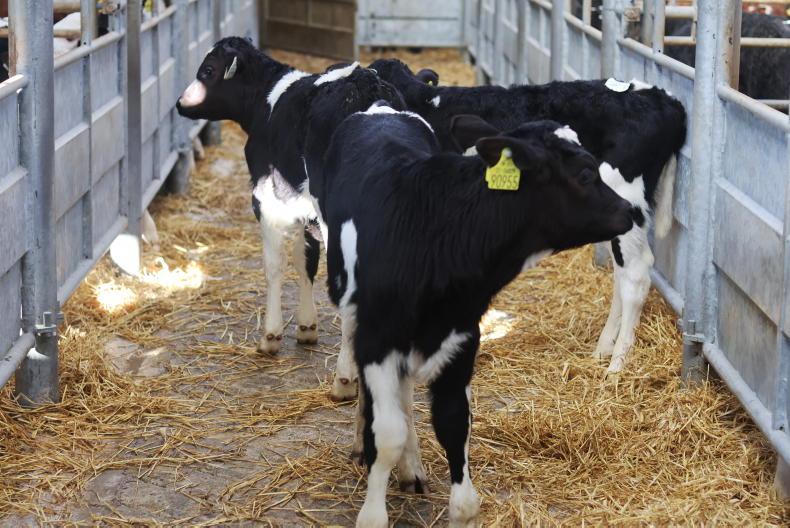
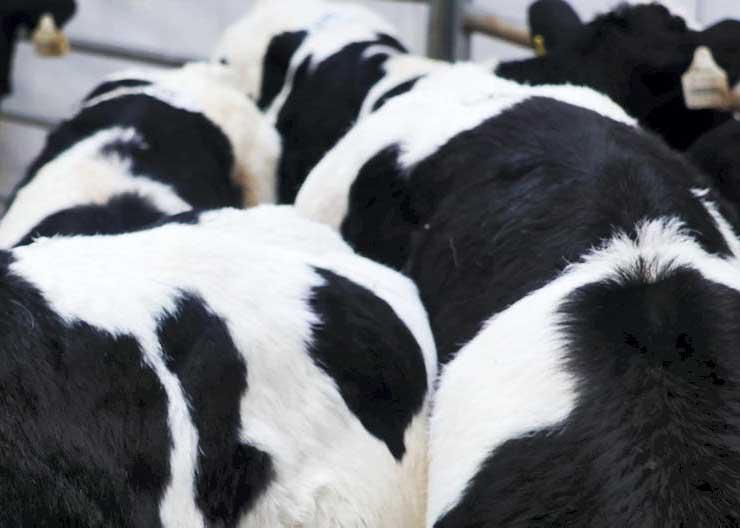
With the increased availability of dairy-bred calves on the market, many suckler farmers have tested out rearing some dairy cross calves this year. The top performers in this system place a lot of emphasis on the early born calf, so be careful purchasing May calves – they could be around for longer than you think.
Feeding high-quality milk replacer and maintaining a high health status in calves are of huge importance to a successful system. Speak to your vet about a vaccination and dosing policy. Artificially reared calves are more prone to worms and coccidiosis and need to be treated accordingly.
ADVERTISEMENT
Make sure calves have access to good-quality roughage and get them eating ration as soon as possible. Calves shouldn’t be weaned until eating 1kg of concentrates/day for three to four consecutive days. Calves should be weaned gradually over a seven- to 10-day period. Once turned out, they should be offered the best-quality grass on the farm and are ideal stock to graze recently reseeded pasture. Feeding 1kg concentrates per head per day is a safeguard and is a handy tool when herding stock. If a calf doesn’t come to feed, you know there is something wrong.
Slaughtering in June:
You should have cattle selected that you intend to slaughter in June. Ideally, they should be grouped separately to allow meal feeding to commence in coming weeks. Meal feeding should be targeted to be fed for six weeks pre-slaughter. While grass quality should be very high at this time of the year, some meal feeding at grass will help grades and kill out percentage.
This content is available to digital subscribers and loyalty code users only. Sign in to your account, use the code or subscribe to get unlimited access.
The reader loyalty code gives you full access to the site from when you enter it until the following Wednesday at 9pm. Find your unique code on the back page of Irish Country Living every week.
CODE ACCEPTED
You have full access to the site until next Wednesday at 9pm.
CODE NOT VALID
Please try again or contact support.
Dairy calf to beef:
With the increased availability of dairy-bred calves on the market, many suckler farmers have tested out rearing some dairy cross calves this year. The top performers in this system place a lot of emphasis on the early born calf, so be careful purchasing May calves – they could be around for longer than you think.
Feeding high-quality milk replacer and maintaining a high health status in calves are of huge importance to a successful system. Speak to your vet about a vaccination and dosing policy. Artificially reared calves are more prone to worms and coccidiosis and need to be treated accordingly.
Make sure calves have access to good-quality roughage and get them eating ration as soon as possible. Calves shouldn’t be weaned until eating 1kg of concentrates/day for three to four consecutive days. Calves should be weaned gradually over a seven- to 10-day period. Once turned out, they should be offered the best-quality grass on the farm and are ideal stock to graze recently reseeded pasture. Feeding 1kg concentrates per head per day is a safeguard and is a handy tool when herding stock. If a calf doesn’t come to feed, you know there is something wrong.
Slaughtering in June:
You should have cattle selected that you intend to slaughter in June. Ideally, they should be grouped separately to allow meal feeding to commence in coming weeks. Meal feeding should be targeted to be fed for six weeks pre-slaughter. While grass quality should be very high at this time of the year, some meal feeding at grass will help grades and kill out percentage.
If you would like to speak to a member of our team, please call us on 01-4199525.
Link sent to your email address
We have sent an email to your address. Please click on the link in this email to reset your password. If you can't find it in your inbox, please check your spam folder. If you can't find the email, please call us on 01-4199525.
ENTER YOUR LOYALTY CODE:
The reader loyalty code gives you full access to the site from when you enter it until the following Wednesday at 9pm. Find your unique code on the back page of Irish Country Living every week.





SHARING OPTIONS