


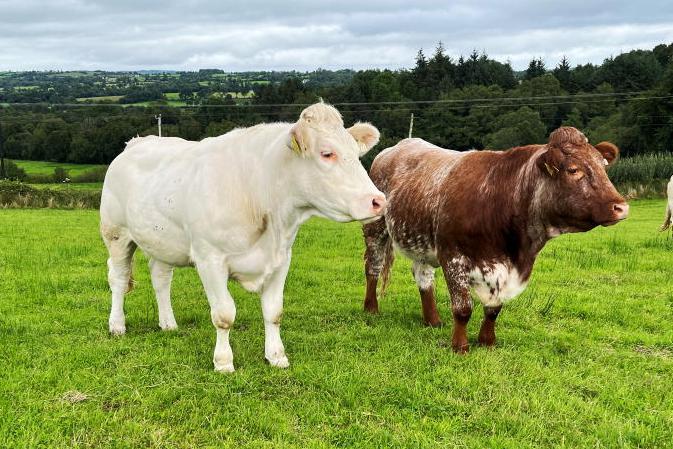
Selecting future replacements is often one of the most critical decisions in managing a suckler herd.
The quality and genetics of these heifers determine the future productivity, fertility and the longevity of a herd.
Picking out heifers with strong maternal traits, good calving ability and efficient growth rates will improve the profitability of the herd.
Poor selection has the potential to increase veterinary costs, reduce calf performance and slow genetic gain.
Heifers from fertile dams
One of the most important criteria when selecting heifers is to target animals out of cows with good fertility.
Where a tight breeding window is adhered to, selecting heifers from the first and second breeding cycles – born within the first six weeks of calving spread – helps ensure you are breeding from the most fertile cows.
Temperament
We often overlook temperament in the young heifers when selecting replacements, but this can also be a learnt behaviour in young stock.
Heifers from dams with temperament issues at calving will often demonstrate similar behaviour when they calve, so it’s important these are sent for beef.
Monitoring temperament at key management stages such as TB testing, dosing and weaning provides good insight into whether the animal can be well handled when mature.
Performance
When selecting heifers, it’s important they come from cows with proven maternal traits, particularly high milk yield. Heifers should gain around 1kg/day from birth and have a 200-day weight of over 250kg.
Cows that consistently wean calves at over 45% of their body weight are ideal dams to produce replacements, as this indicates high calf growth rates and strong milk production.
Genetics
A heifer cannot outperform her genetics. The use of good maternal bulls when breeding heifer replacements should be considered a long-term investment.
Select sires with positive figures for milk and calving ease of daughters. In addition, sires with positive figures for scrotal circumference are directly related to earlier puberty and better reproductive performance in offspring.





SHARING OPTIONS