


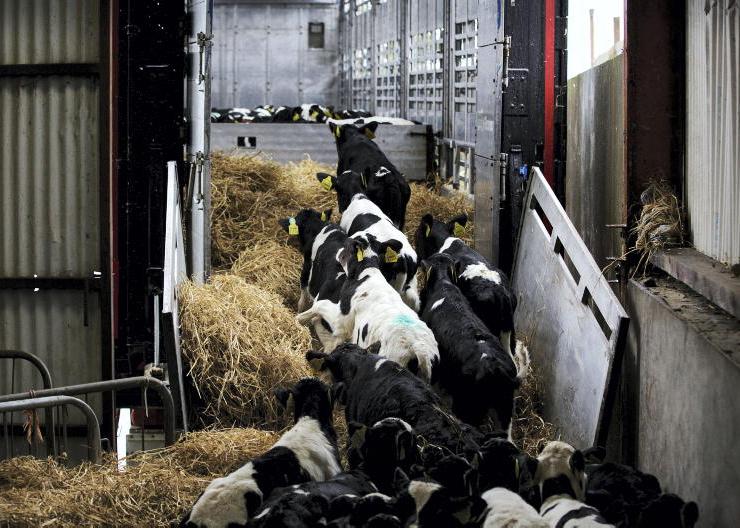
Cattle exporters have warned that EU animal transport rules’ direction of travel over recent years have put the continuation of the live export trade in peril.
A proposed tightening of the rules governing transport space requirements, in-transit calf feeding and maximum allowable journey times are among the proposed changes that would pile pressure on the trade, the Oireachtas agriculture committee heard last week.
Added to these challenges are the limited capacity of French lairages to accommodate numbers.
The Irish Livestock Exporters Association’s (ILEA) trade representative Lorcan O’Dochartaigh claimed that, when taken together, these issues could make the live export of cattle unviable.
He gave a practical example of the impact of the changes proposed: three-decked export trucks would have to be cut back to just two decks.
“Everything that I see coming through is another nail in the coffin and I don’t think that I am exaggerating when I say that, if the new legislation is implemented as they have drafted, it will end Irish live exports,” O’Dochartaigh said.
When pushed on any alternative to shipping cattle by truck, the ILEA representative suggested that the flying of calves by airplane had proved doable for one exporter, despite some resistance from the Department of Agriculture to the idea. “It was very successful. It was done with difficulty I have to say, there was reticence on behalf of the State at some levels to accommodate it.
“They weren’t flown from here, they weren’t flown from the State,” O’Dochartaigh commented, adding that Department vets were updated of the calves’ welfare by video in real-time throughout the journey.
NGO ‘disinformation’
The ILEA used the committee appearance to hit out at the growing difficulty it has seen “in countering disinformation propagated by certain activist groups and NGOs”.
O’Dochartaigh said that shippers had sought to reach out to “some of the more vocal NGOs both at home and abroad” to showcase their trade but had received a “flat, resounding ‘no’” in response to their offer.
“Of course, they are very fast to engage via their social media networks and via a five-minute slot on Drivetime.
“Much of what circulates publicly bears little resemblance to the factual record or to the assurances built into Ireland’s animal welfare framework, which remains among the most comprehensive in Europe.
“These campaigns, while often well-intentioned on the surface, have, in practice, distorted perceptions of our trade and jeopardise trust built over decades, where they can shout you down and not listen to a word you have to say.”
On restrictions to the live export trade resulting from the discovery of bluetongue in Ireland in January, O’Dochartaigh added that some countries are refusing bluetongue-vaccinated cattle because “they are not fully satisfied with the evidence of the vaccine, with the efficacy”.
He suggested that it remains unclear what the exact impact that a planned recategorisation of the disease at EU-level in July will have, but stated that soundings from Brussels that the European Commission “may deregulate it altogether” which would be “a blessing if it were to happen”.




SHARING OPTIONS