Programme results published by Animal Health Ireland (AHI) for the bovine viral diarrhoea (BVD) national eradication programme show a continued reduction in the number of BVD-positive calves identified. Results show that there has been 184 BVD-positive calves identified up to week 13 (01 April 2026).
This equates to 0.02% of the 1.22m calves tested to-date in 2026 and is 129 head lower than the 313 BVD-positive calves identified in the corresponding period in 2025.
Farmers are being advised to move any BVD-positive animals off-farm immediately with higher rates of compensation for calves (beef and dairy breeds) removed within the first 10 days of a positive or inclusive test result.
Support payments
Payment rates for the 2026 financial supports programme have not been announced but there were changes recently in the 2025 support package.
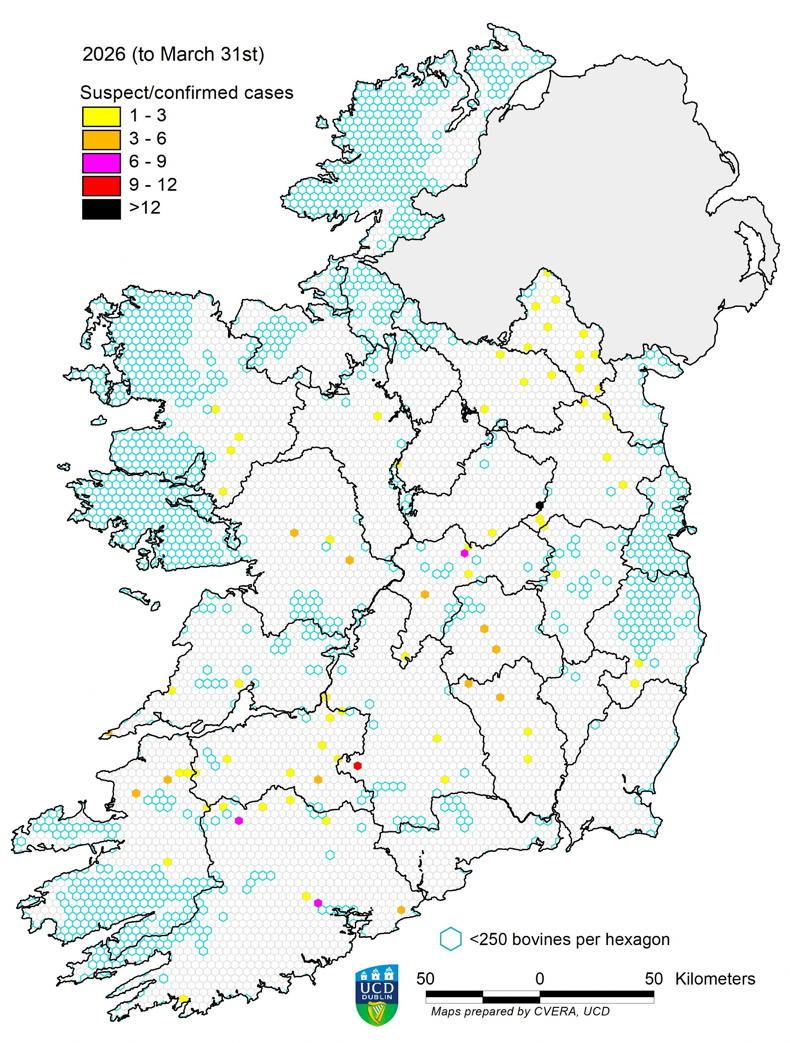
The map shows the location of BVD suspect/confirmed cases from 1 January to 31 March 2026.
Revised payment rates for a calf of a dairy or beef breed and born to a dairy dam and removed within 10 days of a positive or inconclusive test were increased by €40 to €200.
While the payment rate for calves of a beef dam and beef sire were increased from €220 to €320 per head. There was no change to the €30 payment for positive or inconclusive animals removed between 11 and 21 days of a positive or inconclusive test result.
Herd prevalence
The latest programme results show that there were 77 herds (0.22%) where BVD-positive calves were identified in
2026. This compares to 97 herds (0.27%) in the comparable period in 2025.
BVD vigilance
Meanwhile AHI is this week urging BVD vigilance ahead of the 2026 breeding season. The industry body states that detailed analysis shows that herds located within 400m of a confirmed BVD case in 2025 or 2026 face a significantly higher risk of infection.
“The data indicates that these herds have a one-in-seven chance of becoming positive the following year, even if they have no prior history of infection.
“Reviewing on-farm biosecurity in consultation with a veterinary practitioner is critical at this time of year. All pregnant animals can become infected with BVD, but heifers are particularly vulnerable as they tend to have lower immunity. Exposure during early pregnancy can result in the birth of infected calves.”
Five crucial steps
AHI are advising what they describe as seven crucial steps to protect herds as follows:
Boundary management: avoid grazing cows and heifers in early pregnancy near boundaries where nose-to-nose contact with neighbouring cattle occurs. Vaccination: While not preventing virus entry, vaccination reduces the impact of accidental exposure and should be considered as part of a herd health plan.Quarantine practices: Isolate all purchased or returning cattle for a minimum of 28 days. Calves from introduced pregnant animals should be tested promptly and kept separate until confirmed negative. Hygiene protocols: Ensure all farm visitors and workers follow strict cleaning and disinfection procedures. Equipment control: Minimise sharing of equipment such as trailers and calving jacks between farms. If completely unavoidable, thoroughly clean and disinfect before use. Maria Guelbenzu, BVD programme manager at AHI, said: “The decisions of today impact us all tomorrow. That is why we are urging farm families and their vets to ramp up efforts to protect herds from BVD.
“Strong biosecurity not only protects against BVD, but also reduces the risk of other infectious diseases. Acting now will protect your herd health, improve productivity and profitability while supporting the national goal of BVD eradication,” she said.
Programme results published by Animal Health Ireland (AHI) for the bovine viral diarrhoea (BVD) national eradication programme show a continued reduction in the number of BVD-positive calves identified. Results show that there has been 184 BVD-positive calves identified up to week 13 (01 April 2026).
This equates to 0.02% of the 1.22m calves tested to-date in 2026 and is 129 head lower than the 313 BVD-positive calves identified in the corresponding period in 2025.
Farmers are being advised to move any BVD-positive animals off-farm immediately with higher rates of compensation for calves (beef and dairy breeds) removed within the first 10 days of a positive or inclusive test result.
Support payments
Payment rates for the 2026 financial supports programme have not been announced but there were changes recently in the 2025 support package.
The map shows the location of BVD suspect/confirmed cases from 1 January to 31 March 2026.
Revised payment rates for a calf of a dairy or beef breed and born to a dairy dam and removed within 10 days of a positive or inconclusive test were increased by €40 to €200.
While the payment rate for calves of a beef dam and beef sire were increased from €220 to €320 per head. There was no change to the €30 payment for positive or inconclusive animals removed between 11 and 21 days of a positive or inconclusive test result.
Herd prevalence
The latest programme results show that there were 77 herds (0.22%) where BVD-positive calves were identified in
2026. This compares to 97 herds (0.27%) in the comparable period in 2025.
BVD vigilance
Meanwhile AHI is this week urging BVD vigilance ahead of the 2026 breeding season. The industry body states that detailed analysis shows that herds located within 400m of a confirmed BVD case in 2025 or 2026 face a significantly higher risk of infection.
“The data indicates that these herds have a one-in-seven chance of becoming positive the following year, even if they have no prior history of infection.
“Reviewing on-farm biosecurity in consultation with a veterinary practitioner is critical at this time of year. All pregnant animals can become infected with BVD, but heifers are particularly vulnerable as they tend to have lower immunity. Exposure during early pregnancy can result in the birth of infected calves.”
Five crucial steps
AHI are advising what they describe as seven crucial steps to protect herds as follows:
Boundary management: avoid grazing cows and heifers in early pregnancy near boundaries where nose-to-nose contact with neighbouring cattle occurs. Vaccination: While not preventing virus entry, vaccination reduces the impact of accidental exposure and should be considered as part of a herd health plan.Quarantine practices: Isolate all purchased or returning cattle for a minimum of 28 days. Calves from introduced pregnant animals should be tested promptly and kept separate until confirmed negative. Hygiene protocols: Ensure all farm visitors and workers follow strict cleaning and disinfection procedures. Equipment control: Minimise sharing of equipment such as trailers and calving jacks between farms. If completely unavoidable, thoroughly clean and disinfect before use. Maria Guelbenzu, BVD programme manager at AHI, said: “The decisions of today impact us all tomorrow. That is why we are urging farm families and their vets to ramp up efforts to protect herds from BVD.
“Strong biosecurity not only protects against BVD, but also reduces the risk of other infectious diseases. Acting now will protect your herd health, improve productivity and profitability while supporting the national goal of BVD eradication,” she said.





SHARING OPTIONS