Bord Bia uses the sustainability information captured from Irish farms to verify marketing credentials when selling product overseas. Bord Bia CEO, Tara McCarthy wants the quality of information to improve even further with this new model.
ADVERTISEMENT
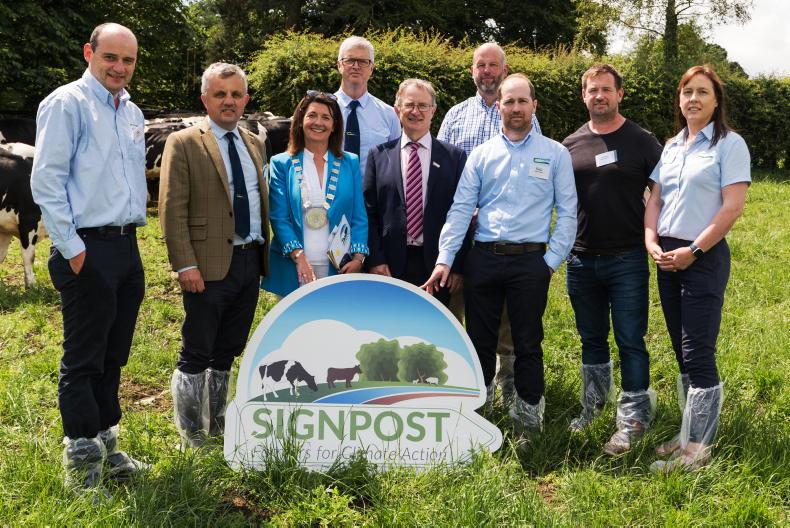
Last week, Bord Bia, Teagasc and ICBF launched a revised carbon footprint analysis as part of a new partnership programme within the Sustainable Dairy Assurance scheme (SDAS). Changes to the model used has meant some changes to the actual figures of carbon footprints calculated on farms. Overall, there is a net reduction in the carbon footprint per kilo of fat corrected milk produced from 1.13- 0.97kg carbon dioxide equivalent of fat and protein corrected milk. Methane increased as cows got bigger since the last base change in the model.
Nitrous oxide, which comes primarily from fertilisers, was reduced, as revised lower emission values for CAN and urea are now included in the updated version. The average fertiliser production and application emissions were reduced by 16% per herd.
A new sustainability survey was also launched, which aims to encourage farmers to make up-to-date reporting on carbon footprint and greenhouse gas emissions.
ADVERTISEMENT
Register for free to read this story and our free stories.
This content is available to digital subscribers and loyalty code users only. Sign in to your account, use the code or subscribe to get unlimited access.
The reader loyalty code gives you full access to the site from when you enter it until the following Wednesday at 9pm. Find your unique code on the back page of Irish Country Living every week.
CODE ACCEPTED
You have full access to the site until next Wednesday at 9pm.
CODE NOT VALID
Please try again or contact support.
Last week, Bord Bia, Teagasc and ICBF launched a revised carbon footprint analysis as part of a new partnership programme within the Sustainable Dairy Assurance scheme (SDAS). Changes to the model used has meant some changes to the actual figures of carbon footprints calculated on farms. Overall, there is a net reduction in the carbon footprint per kilo of fat corrected milk produced from 1.13- 0.97kg carbon dioxide equivalent of fat and protein corrected milk. Methane increased as cows got bigger since the last base change in the model.
Nitrous oxide, which comes primarily from fertilisers, was reduced, as revised lower emission values for CAN and urea are now included in the updated version. The average fertiliser production and application emissions were reduced by 16% per herd.
A new sustainability survey was also launched, which aims to encourage farmers to make up-to-date reporting on carbon footprint and greenhouse gas emissions.
If you would like to speak to a member of our team, please call us on 01-4199525.
Link sent to your email address
We have sent an email to your address. Please click on the link in this email to reset your password. If you can't find it in your inbox, please check your spam folder. If you can't find the email, please call us on 01-4199525.
ENTER YOUR LOYALTY CODE:
The reader loyalty code gives you full access to the site from when you enter it until the following Wednesday at 9pm. Find your unique code on the back page of Irish Country Living every week.






SHARING OPTIONS