


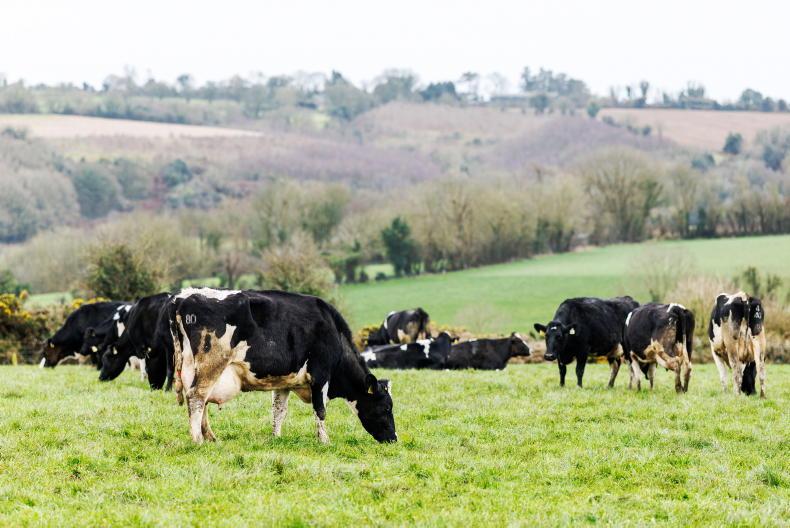
It’s been another horrendously wet week for many farms across the country.
Met Éireann data has shown all but two weather stations (Belmullet and Malin Head) as having above average rainfall, with many areas receiving 1.5 to two times above the normal amounts for the time of year.
If things had been relatively dry before this, ground had some chance of taking this level of water, but with several consistent weeks of rain land is saturated in many cases.
Saying this, there are some farmers who have been getting out with cows, even in some of the areas that have been most affected by heavy rain.
Walking land and picking with care what paddocks will take cows is the only way you will know if grass is an option or not - standing on concrete and looking out on fields will do you little good.
As always, it’s the drier fields that you will be mostly leaning towards, but some older pastures that may have more of a ‘skin’ on them or those that might not have been grazed out fully last back end might help limit any damage to scuffing on the surface.
On-off grazing
On-off grazing is a necessity in times like this - if stock aren’t eating, then they shouldn’t be out in a paddock.
Cows need to be let out with an appetite, be this through balancing what silage is in front of them prior to turn-out or having some way of locking silage away from cows, with a battery fence and a line of poly wire preventing them putting their heads through the barrier for two hours or so prior to turn-out.
A two- to three-hour grazing bout twice daily should see 90% to 95% of the dry matter intake of cows be taken in in the form of grazed grass.
Try to allocate strips so that cows are only entering a paddock twice (once for morning grazing and once for evening grazing) and keep the reduced intake of cows post-calving in mind when allocating.


SHARING OPTIONS