Since 2020, the use of sexed semen (SS) on Irish dairy farms has increased rapidly. Sexed semen allows predetermination of calf sex with ~90% accuracy, allowing farmers to get mostly heifer calves from the dairy AI straws used.
The number of farms using SS has more than tripled in the last five years and the total number of sexed straws has increased almost four-fold. There are several reasons for this increase in SS adoption:
Availability of SS from large teams of high EBI bulls.Faster herd genetic gain through targeting the best genetic merit dams to generate replacement heifers.Fewer low economic value dairy calves born.Greater opportunity to use high-DBI beef bulls to produce non-replacement beef-cross calves, increasing calf revenue.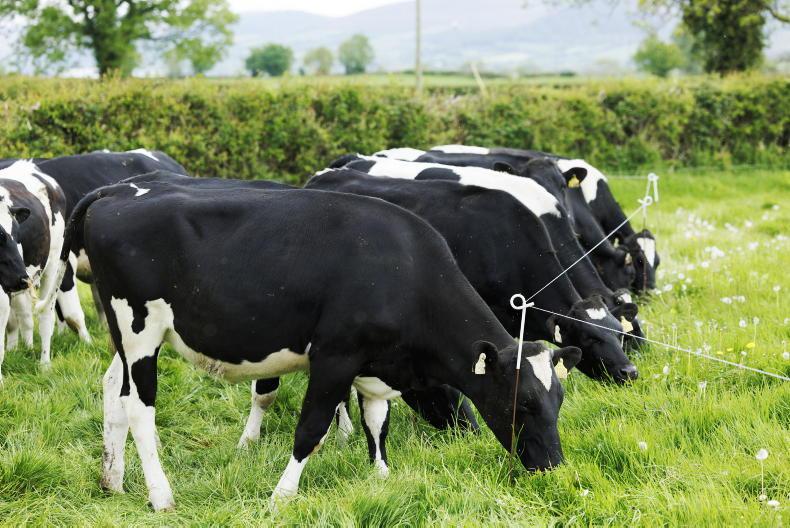
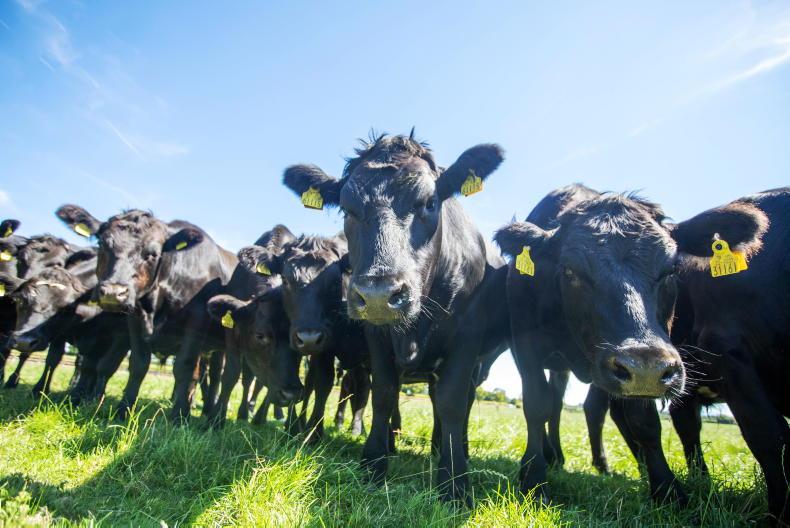
Maiden dairy heifers at grass. \ Donal O'Leary
Heifers are the primary target for SS, as they are typically the parity group with the best genetic merit and the most fertile animals in the herd.
Data analysis
To understand how SS is performing on Irish dairy farms, data was retrieved from the ICBF database. In total, almost 275,000 first insemination events on dairy heifers were included from 2022, 2023 and 2024 breeding seasons.
Most of the heifers in the study were Holstein-Friesian (79%) or Jersey crosses (12%), with the remaining 9% made up of a mix of different breeds (pedigree Jersey, other dairy breeds and other cross-breeds and dual-purpose breeds).
The study focused on spring-calving dairy herds and only included heifers between 12 and 16 months of age at their first insemination event.
If pregnancy status could not be determined because no subsequent calving event was recorded, or if heifers were sold or culled before calving, these animal records were removed.
Only sires that had a minimum of 100 inseminations and were used on at least 10 herds were included, and each herd had to have at least 20 heifers inseminated at first service.
The final analysis included almost 90,000 heifers across the three years.
Statistical analysis was conducted to compare the fertility performance for SS and conventional (CV) semen for each breeding year and accounted for factors that can affect fertility such as herd, EBI, breed, age, sire and whether the insemination was carried out by an AI technician or DIY.
A second analysis was then conducted to investigate the effect of breeding method.
For this, herds with at least 40 first service insemination events were selected to allow patterns associated with three specific breeding methods to be identified:
1. Fixed timed AI (FTAI): these herds had most or all heifers served on one day.2. Other synchronisation (OTHER SYNCH): these herds were using prostaglandin-based programs to shorten the breeding, with most breeding for eight to 14 days.3. No synchronisation (NO SYNCH): these herds had roughly equal numbers of heifers served daily for ~21 days.Results
Across herds, the P/AI for heifers inseminated with CV and SS each year from 2022 to 2024 is summarised in Figure 1. On average, the P/AI achieved with SS was between 4% and 7.6% poorer compared with conventional semen.
The relative P/AI indicates how good sexed semen was compared with conventional in each year; a value of 100% would indicate that the performance was equal. Across all three years, the relative P/AI was ~90%, meaning that sexed semen was 90% as good as conventional semen for establishing a successful pregnancy.
The overall mean P/AI figure is important, but there was a large variation in performance between herds. Most herds achieved between 40% and 75% P/AI across all years (Figure 1B). Note that a small percentage of herds had really poor mean P/AI (less than 30%), but a small percentage of herds also achieved really excellent P/AI (more than 75%). This variation was evident in herds using predominately CV, as well as those using predominately SS.
Synchronisation is commonly used in heifers during the breeding season to concentrate breeding efforts and maximise submission at the start of the breeding season. The most widely used strategies include FTAI and simple prostaglandin (PG) based protocols.
Across all three years, herds that didn’t use synchronisation or that used PG-based protocols achieved approximately 5% higher P/AI than herds that used FTAI. This difference is consistent with previous studies comparing heifers bred using FTAI versus heifers bred after detected heat.
When individual herd mean P/AI for each breeding method was examined, there was considerable variation within each breeding method. Most herds achieved P/AI between 40% and 75%, regardless of the breeding method used. A small percentage of herds achieved poor results (<30%), but this occurred across all breeding methods.
When further broken down by semen type (CV or SS), similar variation remained evident. It is important to note that a small reduction in P/AI with FTAI is compensated by achieving 100% submission rate on a single day (usually mating start date), and when combined with repeat inseminations, it is reasonable to expect more than 80% of the heifers will be pregnant by day 21 of the breeding season.
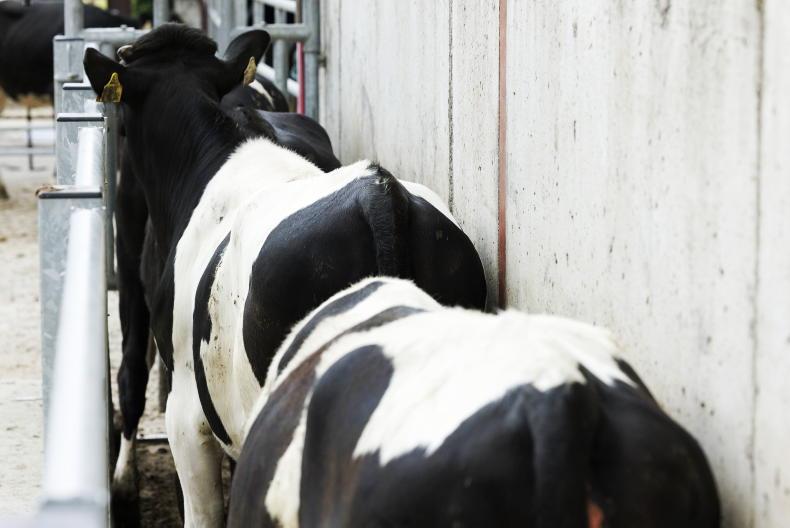
Heifers waiting to be served in the crush.
Key messages
Large herd level variation exists for P/AI in dairy heifers, regardless of semen type and breeding method.Replacement heifers should be managed from birth through to 15 months old to achieve target weights at weaning, housing, turnout and at breeding. This will ensure puberty occurs by 12 months of age and improve the fertility potential by the time of first service. Synchronisation can be used to effectively shorten the AI breeding period. If using FTAI, discuss the full details of the schedule and doses with your vet, and arrange the date and time of AI with your AI technician before starting the protocol.Use an appropriately sized bull team to match herd size to help mitigate genetic and fertility risks.Allocation of sexed semen
Heifers
Ensure heifers will have reached target weight by mating start date and cycling regularly in the weeks before.For FTAI and OTHER SYNCH: only use SS if the heifer shows a strong heat response.For FTAI: Follow the protocol correctly – no mistakes with drugs or timing .Cows
Parity 1 to 4.> 50 days in milk on day of AI.Correct BCS (=3) on the day of AI.Cycling regularly.No postpartum or health problems.
Since 2020, the use of sexed semen (SS) on Irish dairy farms has increased rapidly. Sexed semen allows predetermination of calf sex with ~90% accuracy, allowing farmers to get mostly heifer calves from the dairy AI straws used.
The number of farms using SS has more than tripled in the last five years and the total number of sexed straws has increased almost four-fold. There are several reasons for this increase in SS adoption:
Availability of SS from large teams of high EBI bulls.Faster herd genetic gain through targeting the best genetic merit dams to generate replacement heifers.Fewer low economic value dairy calves born.Greater opportunity to use high-DBI beef bulls to produce non-replacement beef-cross calves, increasing calf revenue.
Maiden dairy heifers at grass. \ Donal O'Leary
Heifers are the primary target for SS, as they are typically the parity group with the best genetic merit and the most fertile animals in the herd.
Data analysis
To understand how SS is performing on Irish dairy farms, data was retrieved from the ICBF database. In total, almost 275,000 first insemination events on dairy heifers were included from 2022, 2023 and 2024 breeding seasons.
Most of the heifers in the study were Holstein-Friesian (79%) or Jersey crosses (12%), with the remaining 9% made up of a mix of different breeds (pedigree Jersey, other dairy breeds and other cross-breeds and dual-purpose breeds).
The study focused on spring-calving dairy herds and only included heifers between 12 and 16 months of age at their first insemination event.
If pregnancy status could not be determined because no subsequent calving event was recorded, or if heifers were sold or culled before calving, these animal records were removed.
Only sires that had a minimum of 100 inseminations and were used on at least 10 herds were included, and each herd had to have at least 20 heifers inseminated at first service.
The final analysis included almost 90,000 heifers across the three years.
Statistical analysis was conducted to compare the fertility performance for SS and conventional (CV) semen for each breeding year and accounted for factors that can affect fertility such as herd, EBI, breed, age, sire and whether the insemination was carried out by an AI technician or DIY.
A second analysis was then conducted to investigate the effect of breeding method.
For this, herds with at least 40 first service insemination events were selected to allow patterns associated with three specific breeding methods to be identified:
1. Fixed timed AI (FTAI): these herds had most or all heifers served on one day.2. Other synchronisation (OTHER SYNCH): these herds were using prostaglandin-based programs to shorten the breeding, with most breeding for eight to 14 days.3. No synchronisation (NO SYNCH): these herds had roughly equal numbers of heifers served daily for ~21 days.Results
Across herds, the P/AI for heifers inseminated with CV and SS each year from 2022 to 2024 is summarised in Figure 1. On average, the P/AI achieved with SS was between 4% and 7.6% poorer compared with conventional semen.
The relative P/AI indicates how good sexed semen was compared with conventional in each year; a value of 100% would indicate that the performance was equal. Across all three years, the relative P/AI was ~90%, meaning that sexed semen was 90% as good as conventional semen for establishing a successful pregnancy.
The overall mean P/AI figure is important, but there was a large variation in performance between herds. Most herds achieved between 40% and 75% P/AI across all years (Figure 1B). Note that a small percentage of herds had really poor mean P/AI (less than 30%), but a small percentage of herds also achieved really excellent P/AI (more than 75%). This variation was evident in herds using predominately CV, as well as those using predominately SS.
Synchronisation is commonly used in heifers during the breeding season to concentrate breeding efforts and maximise submission at the start of the breeding season. The most widely used strategies include FTAI and simple prostaglandin (PG) based protocols.
Across all three years, herds that didn’t use synchronisation or that used PG-based protocols achieved approximately 5% higher P/AI than herds that used FTAI. This difference is consistent with previous studies comparing heifers bred using FTAI versus heifers bred after detected heat.
When individual herd mean P/AI for each breeding method was examined, there was considerable variation within each breeding method. Most herds achieved P/AI between 40% and 75%, regardless of the breeding method used. A small percentage of herds achieved poor results (<30%), but this occurred across all breeding methods.
When further broken down by semen type (CV or SS), similar variation remained evident. It is important to note that a small reduction in P/AI with FTAI is compensated by achieving 100% submission rate on a single day (usually mating start date), and when combined with repeat inseminations, it is reasonable to expect more than 80% of the heifers will be pregnant by day 21 of the breeding season.
Heifers waiting to be served in the crush.
Key messages
Large herd level variation exists for P/AI in dairy heifers, regardless of semen type and breeding method.Replacement heifers should be managed from birth through to 15 months old to achieve target weights at weaning, housing, turnout and at breeding. This will ensure puberty occurs by 12 months of age and improve the fertility potential by the time of first service. Synchronisation can be used to effectively shorten the AI breeding period. If using FTAI, discuss the full details of the schedule and doses with your vet, and arrange the date and time of AI with your AI technician before starting the protocol.Use an appropriately sized bull team to match herd size to help mitigate genetic and fertility risks.Allocation of sexed semen
Heifers
Ensure heifers will have reached target weight by mating start date and cycling regularly in the weeks before.For FTAI and OTHER SYNCH: only use SS if the heifer shows a strong heat response.For FTAI: Follow the protocol correctly – no mistakes with drugs or timing .Cows
Parity 1 to 4.> 50 days in milk on day of AI.Correct BCS (=3) on the day of AI.Cycling regularly.No postpartum or health problems. 






SHARING OPTIONS