Liam Roche began his dairy enterprise on a small basis, milking 12 cows on 12 acres of rented land, while his father operated on their home block just down the road.
After Liam increased his herd steadily and the two units were amalgamated, more land came on stream down through the years and the herd size grew steadily to the 417 strong herd it
is today.
The year 2020 brought a jump in cow numbers and as 120 cubicles were being built, calf facilities needed a major upgrade.
“I wasn’t going to increase cow numbers without improving the calf accommodation and putting pressure on both the calves and the staff,’’ explained Liam.
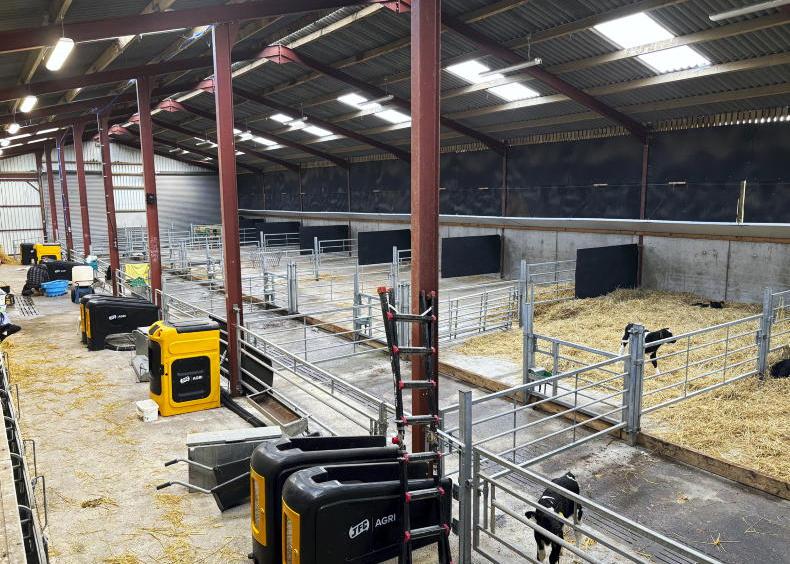
Amid all the other developments on-farm at the time, Liam opted to construct an eight-bay bespoke calf shed fit to hold 200 calves, with automatic feeders added in the years after that.
The shed is laid out in a similar manner to many well thought-out calf sheds. A large straw lie back, measuring 26ft in length and a standard bay width (15ft 9in), sits along the back wall, while to the front of the pen lies a 10ft wet area.
One of the more notable things with the lie back area is the camber; a 1:20 fall from the back wall to the wet area was installed to keep this area dry, and while some farmers feel this is excessive and causes issues with hanging gates and cleaning out pens, Liam feels it’s a necessity to allow for the flow of effluent in such a deep straw bedded area.
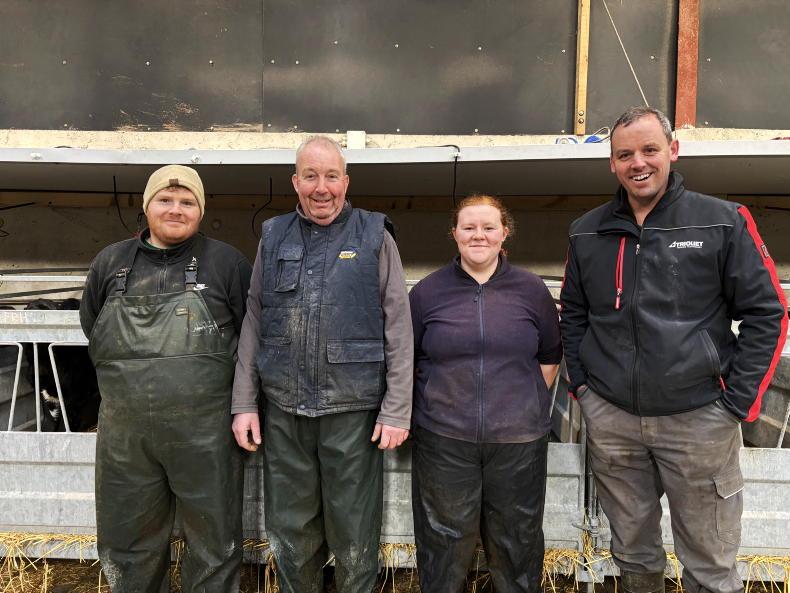
Christopher Noonan, Sean Hennessy, Kaitlynn Carroll and Liam Roche.
"It’s unbelievable the volume that comes off the straw lie back’’ he noted, with a channel centred in the middle of the wet area diverting this water to a sump.
The floor of the wet area is cambered in to this line of slats which had been previously installed in an older calf shed and reused here, with the positioning of the slats meaning that they are never driven over by any machine used for cleaning out the wet area.
Calves at a young age are cleaned out fully twice weekly, with cleaning and bedding completed each Monday and Thursday.
With the design of the gates, installed by O’Donovan Engineering, calves are easily locked in to either the wet area or dry area.
A straw spreader then spreads out five large square bales across the eight bays. but does not chop it, with Liam highlighting how the spreader creates a light, fluffy bed that allows calves to nest in the straw.
Each pen has access to its own water trough and are cleaned out twice weekly, with a hay rack and creep feeders also in place for concentrate and forage.
Approximately 280 calves are reared and retained annually on farm, which includes all Friesian heifer calves and a large proportion of the Angus calves born.
Liam has installed two JFC Evolution S4 units in the shed, giving him eight individual feed stations; one per pen.
Calves are trained on to the feeder from day five, and are easily trained on to the feeder.
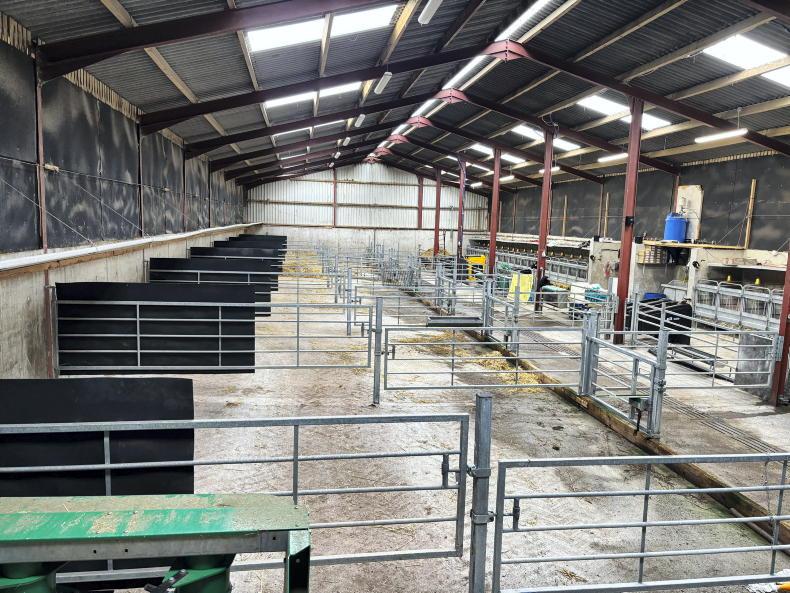
The calf shed has been cleaned and ready for the influx of calves to hit the farm, with a six week calving rate of 94%.
Just two out of 280 calves last year failed to take to the feeder. A feeding curve tailored to Liam’s preference sees calves peak at 15% of powder and six litres water/calf/day, with precision microbes also fed through the feeders, with calves fully weaned by day 75.
Each pen holds 22 calves with ease.
Numbers could be pushed to 25 per pen if pressure comes on, but as it stands Liam is satisfied with this number which gives 1.7m2 of bedded space per calf.
An outfarm with a covered silo was converted over for calf accommodation in recent years, with Yorkshire boarding installed on the sides and a second-hand JFC S4 unit installed.
Once Angus calves are trained and comfortable on the feeder at home, 80 can be accommodated in this outfarm with ease, with access to a yard and a paddock for when calves get older.
Ventilation is probably one of the most challenging things to get right in a calf shed, and something Liam and the team had to tweak several times.
Yorkshire boarding (double latted) with a 4in lat with a 1in gap was installed above the mass concrete walls.
Looking at calves, Liam could see that they were cold and that there was too much cold air coming in to the shed, with roughly 8ft of Yorkshire boarding along each side.
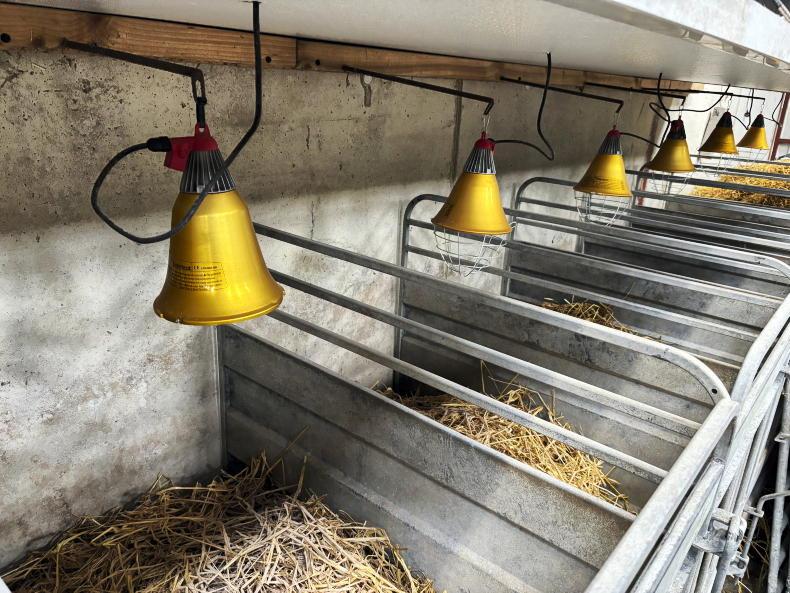
Individual calf crates bedded and ready for calves.
“We fixed sheets of stock board to the bottom of the Yorkshire boarding, and even after that if you looked you could see the straw moving at the front of the pen with the down draft, so we opted to install a second stock board above the first one.’’
After this, a winched canopy was also installed, manufactured from insulated board that is primarily used in piggery units, with the board easily raised or lowered.
Liam states that the shed is not particularly stuffy, even at full capacity, but is likely to install a ventilation tube to remove stale air.
“It’s more so to do with the location of the shed; all along the back wall is facing south west where we get the most of our wind.
"Had there been another shed there to shelter it, Yorkshire boarding would have worked fine. It’s working perfectly in the other yard.”
Despite calving not having been due to start, 30 calves were on the ground earlier this week when the Irish Farmers Journal visited.
Calves are licked by their mothers before being moved to individual calf pens where they are fed a minimum of six litres of high-quality colostrum in the first 24 hours.
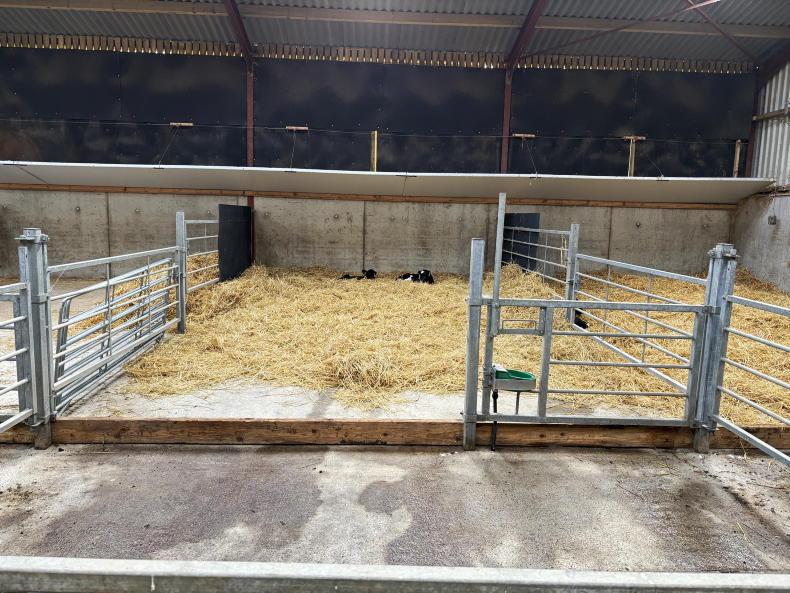
Pens measure 36ft in depth, with 26ft of this being the straw bedded area.
Heat lamps with variable temperature control are installed over each pen, while an insulated overhang also keeps calves cosy.
A simple system of writing what a calf has last drank with chalk on the pen gate allows the team to keep a check on calves slower to drink.
Calves are then fed transition milk for a number of days to pass on the antibodies of the cows who have been vaccinated for scour.
“While we never had any issues, a vet advised me for the volume of calves we were handling to vaccinate cows, so calves are kept on transition milk up to day five when they are then trained on the feeders.
"A kitchen area allows for the washing of bucket feeders or stomach tubes, serviced by a drain off, with hot water to hand, while other essentials such as iodine and tags are also within reach, and bagged colostrum in the freezer. A coffee machine and radio are also in situ.
“Anything to make the job easier and life more fun,’’ laughed Liam. "It’s not often you will get asked if you want a latte in a calf house.”
Liam credits a lot of the success of calf rearing to his team. His right hand man is Sean Hennessy, who originally worked for Liam’s father when he was 13 and joined Liam again over a decade ago.
Sean’s son Jack and Christopher Noonan are also intrinsic to the operation.
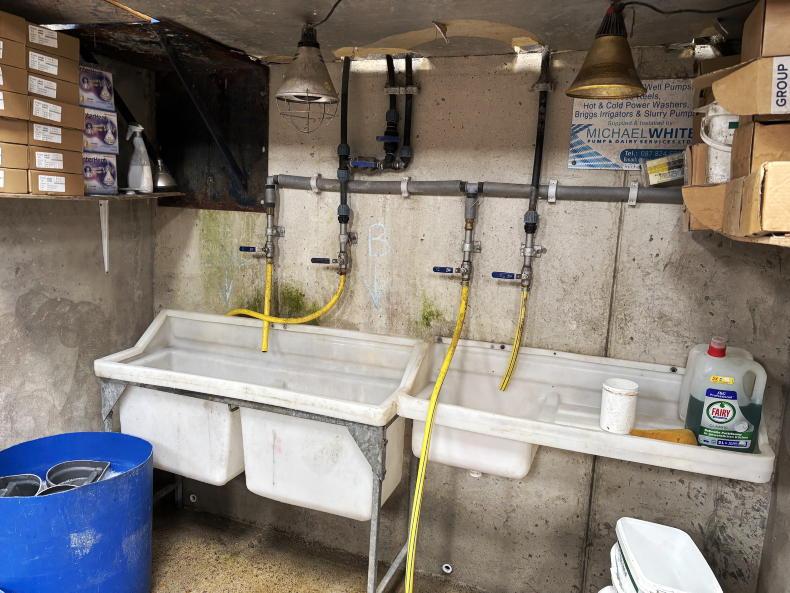
The kitchen area in the calf shed with hot and cold water, tags and other essentials to hand.
‘’I’m blessed really; they all have huge interest in doing the job right and they all get on so well together. The lads might go for a few pints or off to a hurling match.’’
Kaitlynn Carroll was busy on the day tending to newborn calves, as part of her placement for college.
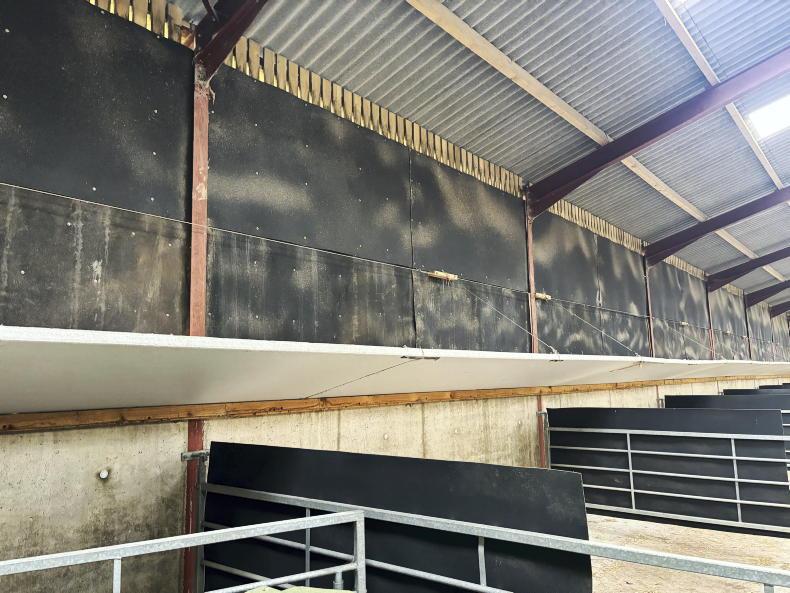
Stock board was installed on the Yorkshire boarding as the shed was too draughty.
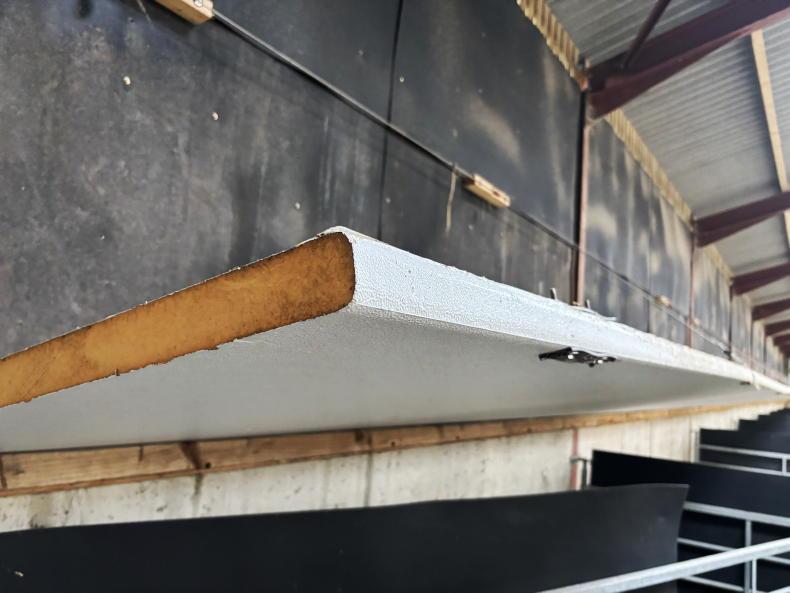
The insulated canopy is the same material used in pig housing.
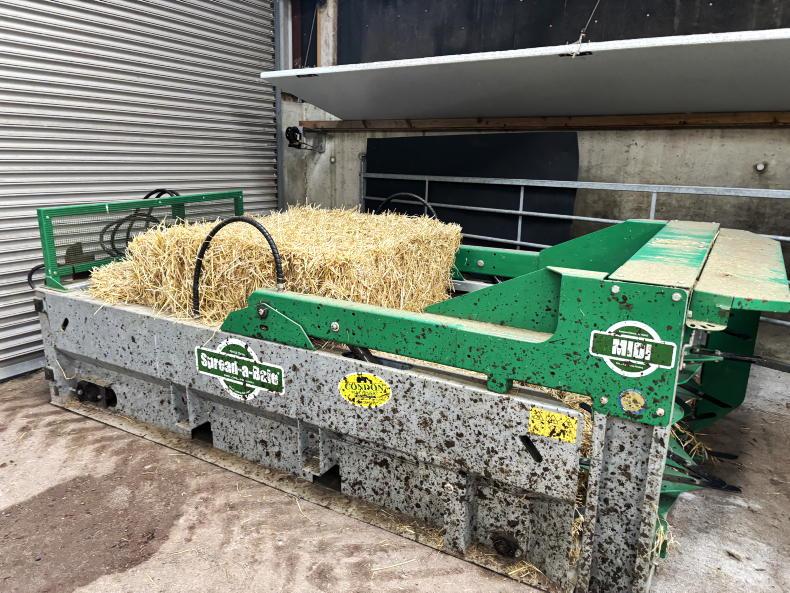
A Spread-a-Bale is used to bed the calves twice weekly, with five large squares used across the 8 pens.
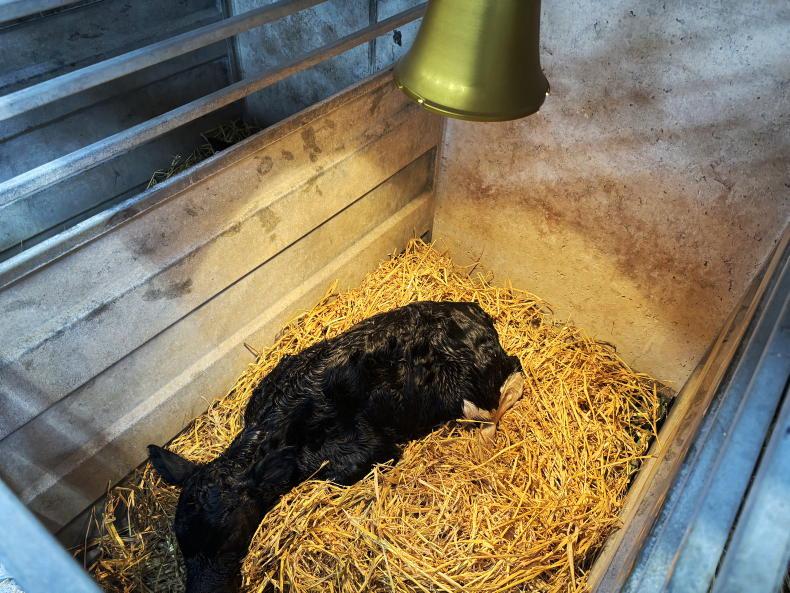
Newborn calves are licked by their mothers before being moved to the individual crates and fed colostrum.
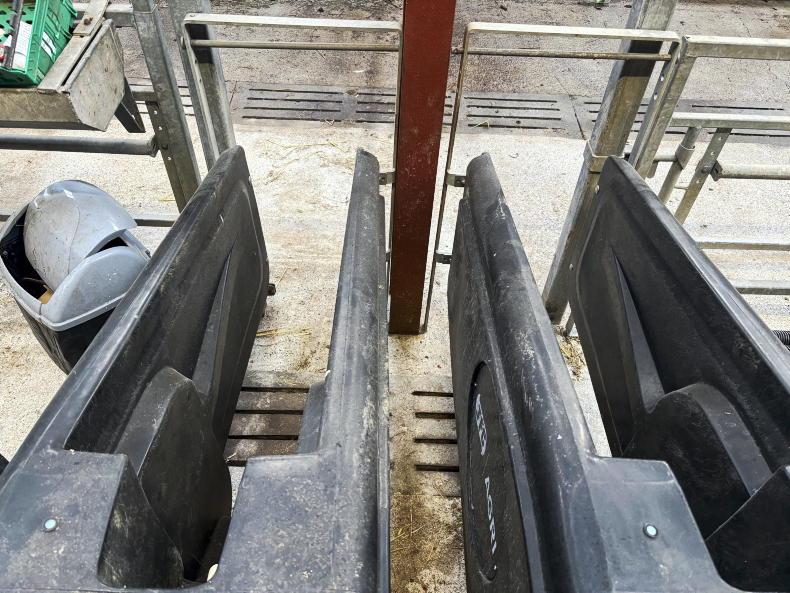
Each pen has it's own individual feed stall, with a slatted area to collect washings from the station.
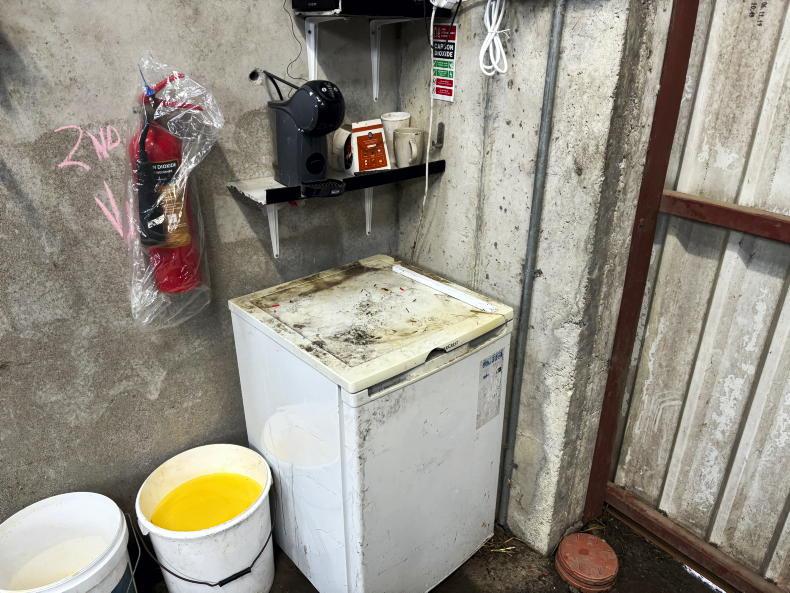
Calving essentials; freezer for holding colostrum and a coffee machine and radio for morale.
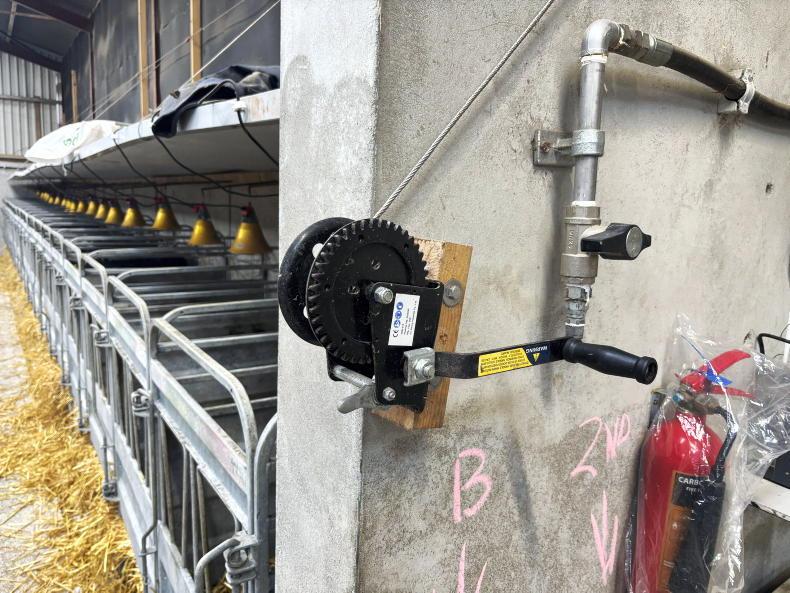
The insulated canopy is on a sinch to allow it to be raised or lowered.
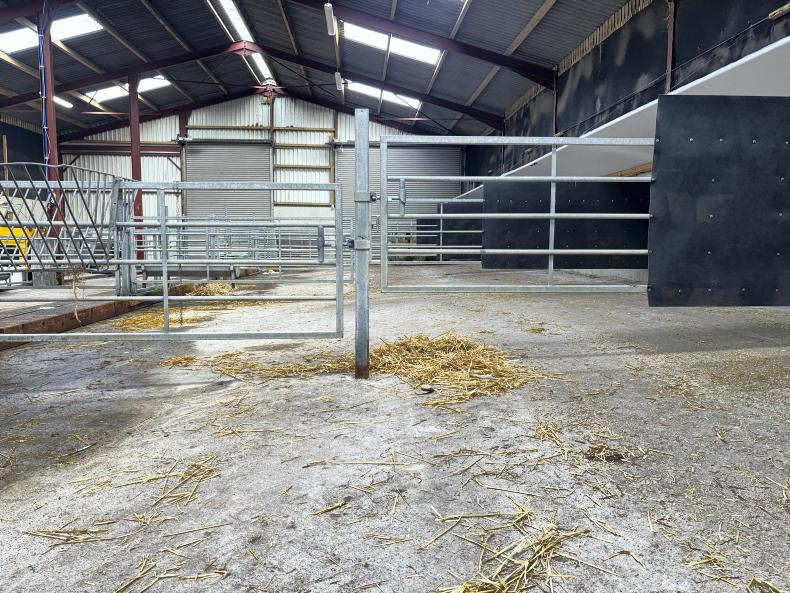
The 1:20 camber can be clearly seen here, with gates stepped to accommodate this. gates fold back to lock in calves for cleaning out, with the centre posts removed.
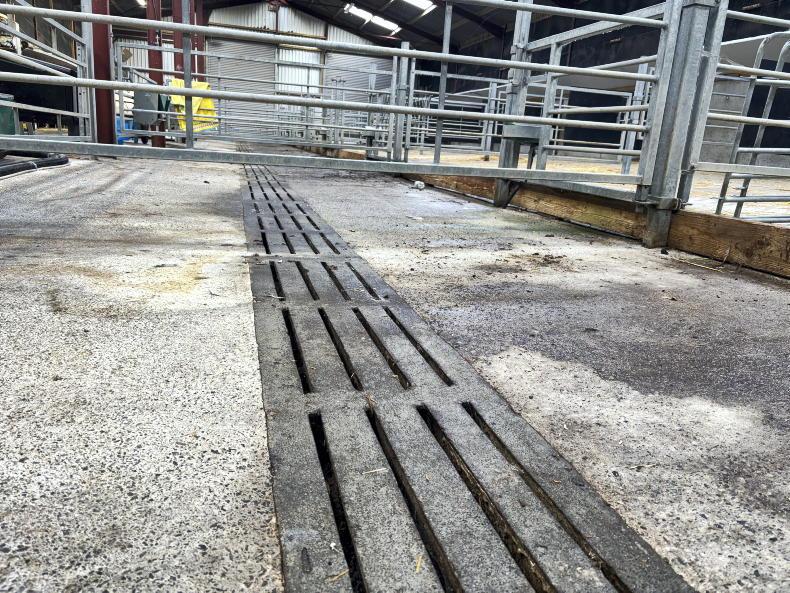
A slatted channel in the middle of the wet area diverts off any effluent to a sump.
Liam Roche began his dairy enterprise on a small basis, milking 12 cows on 12 acres of rented land, while his father operated on their home block just down the road.
After Liam increased his herd steadily and the two units were amalgamated, more land came on stream down through the years and the herd size grew steadily to the 417 strong herd it
is today.
The year 2020 brought a jump in cow numbers and as 120 cubicles were being built, calf facilities needed a major upgrade.
“I wasn’t going to increase cow numbers without improving the calf accommodation and putting pressure on both the calves and the staff,’’ explained Liam.
Amid all the other developments on-farm at the time, Liam opted to construct an eight-bay bespoke calf shed fit to hold 200 calves, with automatic feeders added in the years after that.
The shed is laid out in a similar manner to many well thought-out calf sheds. A large straw lie back, measuring 26ft in length and a standard bay width (15ft 9in), sits along the back wall, while to the front of the pen lies a 10ft wet area.
One of the more notable things with the lie back area is the camber; a 1:20 fall from the back wall to the wet area was installed to keep this area dry, and while some farmers feel this is excessive and causes issues with hanging gates and cleaning out pens, Liam feels it’s a necessity to allow for the flow of effluent in such a deep straw bedded area.
Christopher Noonan, Sean Hennessy, Kaitlynn Carroll and Liam Roche.
"It’s unbelievable the volume that comes off the straw lie back’’ he noted, with a channel centred in the middle of the wet area diverting this water to a sump.
The floor of the wet area is cambered in to this line of slats which had been previously installed in an older calf shed and reused here, with the positioning of the slats meaning that they are never driven over by any machine used for cleaning out the wet area.
Calves at a young age are cleaned out fully twice weekly, with cleaning and bedding completed each Monday and Thursday.
With the design of the gates, installed by O’Donovan Engineering, calves are easily locked in to either the wet area or dry area.
A straw spreader then spreads out five large square bales across the eight bays. but does not chop it, with Liam highlighting how the spreader creates a light, fluffy bed that allows calves to nest in the straw.
Each pen has access to its own water trough and are cleaned out twice weekly, with a hay rack and creep feeders also in place for concentrate and forage.
Approximately 280 calves are reared and retained annually on farm, which includes all Friesian heifer calves and a large proportion of the Angus calves born.
Liam has installed two JFC Evolution S4 units in the shed, giving him eight individual feed stations; one per pen.
Calves are trained on to the feeder from day five, and are easily trained on to the feeder.
The calf shed has been cleaned and ready for the influx of calves to hit the farm, with a six week calving rate of 94%.
Just two out of 280 calves last year failed to take to the feeder. A feeding curve tailored to Liam’s preference sees calves peak at 15% of powder and six litres water/calf/day, with precision microbes also fed through the feeders, with calves fully weaned by day 75.
Each pen holds 22 calves with ease.
Numbers could be pushed to 25 per pen if pressure comes on, but as it stands Liam is satisfied with this number which gives 1.7m2 of bedded space per calf.
An outfarm with a covered silo was converted over for calf accommodation in recent years, with Yorkshire boarding installed on the sides and a second-hand JFC S4 unit installed.
Once Angus calves are trained and comfortable on the feeder at home, 80 can be accommodated in this outfarm with ease, with access to a yard and a paddock for when calves get older.
Ventilation is probably one of the most challenging things to get right in a calf shed, and something Liam and the team had to tweak several times.
Yorkshire boarding (double latted) with a 4in lat with a 1in gap was installed above the mass concrete walls.
Looking at calves, Liam could see that they were cold and that there was too much cold air coming in to the shed, with roughly 8ft of Yorkshire boarding along each side.
Individual calf crates bedded and ready for calves.
“We fixed sheets of stock board to the bottom of the Yorkshire boarding, and even after that if you looked you could see the straw moving at the front of the pen with the down draft, so we opted to install a second stock board above the first one.’’
After this, a winched canopy was also installed, manufactured from insulated board that is primarily used in piggery units, with the board easily raised or lowered.
Liam states that the shed is not particularly stuffy, even at full capacity, but is likely to install a ventilation tube to remove stale air.
“It’s more so to do with the location of the shed; all along the back wall is facing south west where we get the most of our wind.
"Had there been another shed there to shelter it, Yorkshire boarding would have worked fine. It’s working perfectly in the other yard.”
Despite calving not having been due to start, 30 calves were on the ground earlier this week when the Irish Farmers Journal visited.
Calves are licked by their mothers before being moved to individual calf pens where they are fed a minimum of six litres of high-quality colostrum in the first 24 hours.
Pens measure 36ft in depth, with 26ft of this being the straw bedded area.
Heat lamps with variable temperature control are installed over each pen, while an insulated overhang also keeps calves cosy.
A simple system of writing what a calf has last drank with chalk on the pen gate allows the team to keep a check on calves slower to drink.
Calves are then fed transition milk for a number of days to pass on the antibodies of the cows who have been vaccinated for scour.
“While we never had any issues, a vet advised me for the volume of calves we were handling to vaccinate cows, so calves are kept on transition milk up to day five when they are then trained on the feeders.
"A kitchen area allows for the washing of bucket feeders or stomach tubes, serviced by a drain off, with hot water to hand, while other essentials such as iodine and tags are also within reach, and bagged colostrum in the freezer. A coffee machine and radio are also in situ.
“Anything to make the job easier and life more fun,’’ laughed Liam. "It’s not often you will get asked if you want a latte in a calf house.”
Liam credits a lot of the success of calf rearing to his team. His right hand man is Sean Hennessy, who originally worked for Liam’s father when he was 13 and joined Liam again over a decade ago.
Sean’s son Jack and Christopher Noonan are also intrinsic to the operation.
The kitchen area in the calf shed with hot and cold water, tags and other essentials to hand.
‘’I’m blessed really; they all have huge interest in doing the job right and they all get on so well together. The lads might go for a few pints or off to a hurling match.’’
Kaitlynn Carroll was busy on the day tending to newborn calves, as part of her placement for college.
Stock board was installed on the Yorkshire boarding as the shed was too draughty.
The insulated canopy is the same material used in pig housing.
A Spread-a-Bale is used to bed the calves twice weekly, with five large squares used across the 8 pens.
Newborn calves are licked by their mothers before being moved to the individual crates and fed colostrum.
Each pen has it's own individual feed stall, with a slatted area to collect washings from the station.
Calving essentials; freezer for holding colostrum and a coffee machine and radio for morale.
The insulated canopy is on a sinch to allow it to be raised or lowered.
The 1:20 camber can be clearly seen here, with gates stepped to accommodate this. gates fold back to lock in calves for cleaning out, with the centre posts removed.
A slatted channel in the middle of the wet area diverts off any effluent to a sump.







SHARING OPTIONS