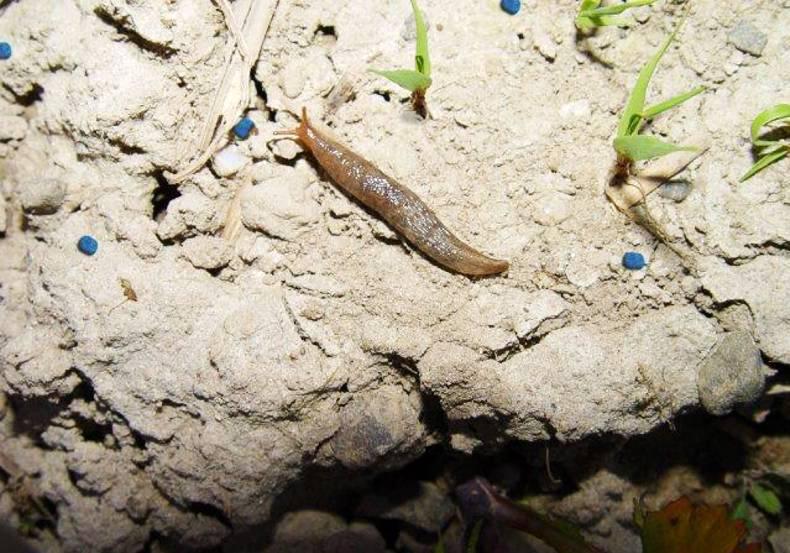
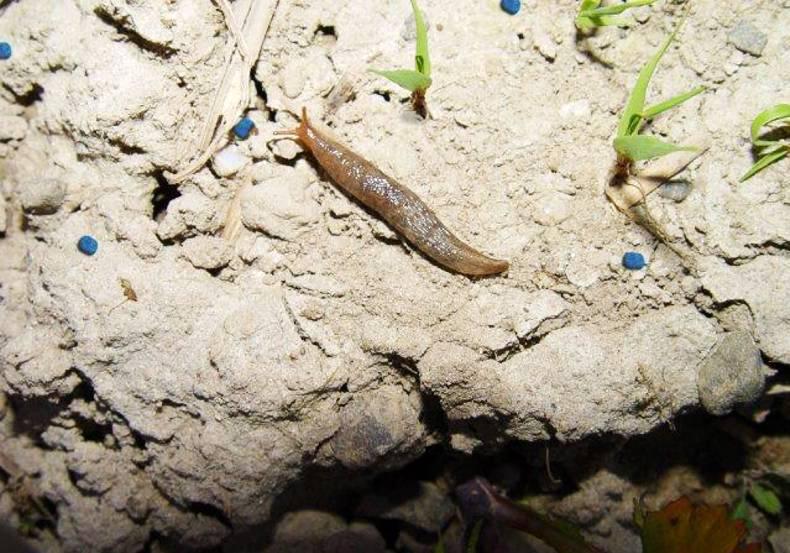
Slugs are creatures that have adapted perfectly to living in the soil. Smaller species, such as the grey field slug (deroceras reticulatum), the keeled slug (milax budapestensis) and the black garden slug (arion hortensis) can burrow deep into the soil layers to avoid hazardous conditions. This is particularly prevalent in summer when (if) soils dry out and it also happens during periods of frost in winter. This and other characteristics also mean that many of these animals are not affected by field work, making them “classical” pests of tillage crops.
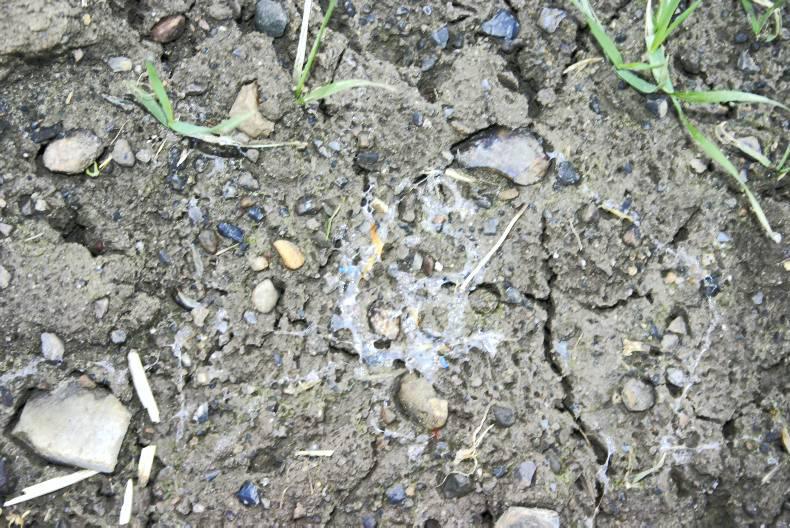
One characteristic of slugs is the mucus layer which helps keep their skin moist. However, this layer still does not provide protection against water loss and these animals are highly vulnerable to dehydration. This is said to be the primary reason behind their nocturnal feeding habits. They normally remain down in the soil during the daytime, thus avoiding water loss. So normally they only come to the surface at dawn and during the night, when air moisture is sufficiently high, for feeding and mating activity.
It is this distinct night-time activity, and their almost complete absence during the day, that makes it very difficult for farmers to assess the potential risk of slug damage, especially during the plant establishment stage. While methods such as the “saucer refuge” traps have been promoted as an easy and simple technique for estimating slug activity – and in some countries this has become a standard monitoring system – such a technique will never be entirely accurate.
Numbers recorded per trap certainly give us an indication of the activity and the density of the animals, but will never reveal an exact representative number of a field population. That’s because their activity is not synchronous; part of the population always remains hidden in the soil and this can be a significant portion.
Slugs are most active in the second half of the year, between autumn and spring. Strange as it may seem, slugs are highly resistant to the cold and are often active when temperatures are only a few degrees above freezing point. Needless to say, this makes these pests a threat to young seedlings and plants because slugs can still be active at temperatures when plants are not able to grow.
Life cycle
All three slug species have very similar life cycles but the most investigated species is the grey field slug. This is also considered to be the dominant field pest in western Europe. Its life cycle is depicted in Figure 1, with the duration of development stages given in days under laboratory conditions.
Eggs start to develop as soon as they are deposited in soil hollows. Depending on conditions (temperature and soil moisture), hatching takes place about 30 to 40 days later. The young slugs then feed and grow for about 65 to 80 days before reaching sexual maturity.
It is important to note that all three slug species are hermaphrodites. When young, each slug is effectively male but shortly after its first mating with another male, both develop their female organs and both become truly hermaphrodite. This increases their reproductive potential enormously.
After mating, the slugs continue to grow for another 30 to 50 days before they start to lay eggs. This period lasts about 90 to 120 days. With such high variation in all the stages, it is almost impossible to define the time required for a generation. But, at a minimum, it is 125 days or four months between egg laying and the first egg batches from the offspring. In other words, in a year of perfect conditions the grey field slug has the potential for three generations.
This remarkable ability to reproduce is further compounded by the species’ egg-laying capacity. Despite the wide variation between slugs, each individual animal is likely to lay between 80 and 290 eggs per laying period (about three-and-a-half months). After egg laying the animals die within about a week – they are unable to mate a second time.
The high reproduction potential of the grey field slug makes this pest difficult to predict because a massive increase can happen within months as soon as the environmental conditions became favourable.
While the grey field slug has been the subject of intensive research, the other two species – the keeled slug and the garden slug – have never been subjected to the same detailed studies. Almost no information exists about their life cycles and reproductive habits.
All we know is that they have the same basic life cycle, but observations suggest it is more closely synchronised with the seasons. It seems they have just one reproductive cycle per year, from autumn to spring. This explains why they often occur later in the year in refuge traps.
Irrespective of the lack of studies, all three slug species have the same potential to cause damage as pests of field crops.
Natural enemies of slugs
Predators will take slugs at all stages of their life cycle – from eggs to adults. Natural enemies include mammals, birds and predatory invertebrates or microbes. There is little doubt but that they all have a significant impact on slug populations but that has been impossible to quantify. Despite their predation, crops come under attack from slugs almost every year. One advantage the slug has over one of its most effective predators – ground and rove beetles – is its ability to be active at lower temperatures.
Controlling slugs
Oilseed rape and cereal crops are most vulnerable to damage at:
The germination stageFrom start of seedling growth until the four- to six-leaf stage. Good slug monitoring before sowing is very important and potential pest pressure and crop risk should be known at sowing.
An initial pellet application should ideally be carried out at, or soon after, sowing. This should serve to reduce the active slug population before the vulnerable seedlings emerge – a good pellet will be consumed by the slug in preference to the young seedling.
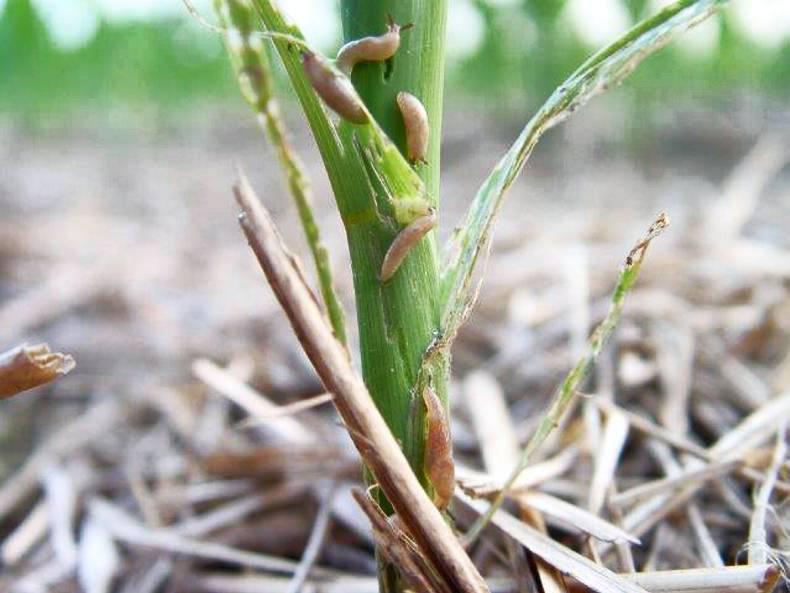
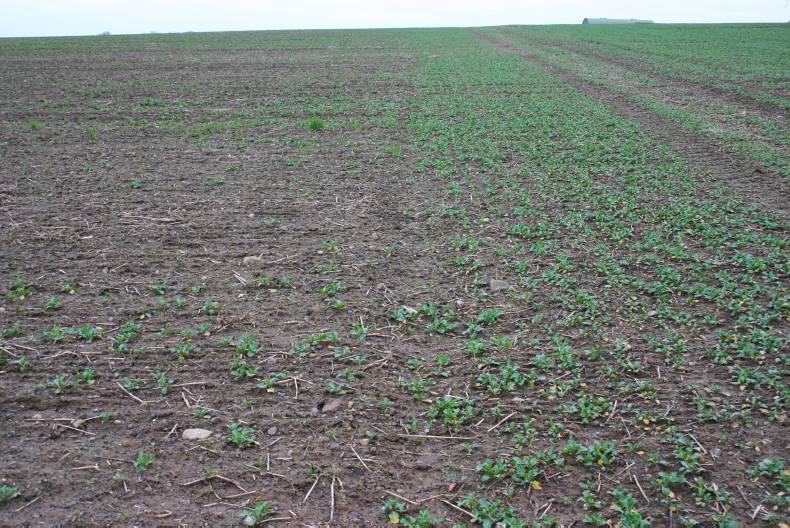
Otherwise, slugs that encounter a young seedling will normally eat it down to the germ, destroying it all and then consuming the remaining starch (seed hollowing). These plants are completely lost. And in situations where there is a high slug population, this can happen many thousands of times, causing a whole crop to fail.
On potatoes, slugs feeding on the leaves or the stems do not really harm the crop. The real threat to growers is damage to the tubers, which can result in a complete devaluation of the crop. Before there is tuber growth, slugs search for food on the soil surface at night. But as soon as the tubers start growing, slugs descend into the soil and feed on the young developing tubers. Having found a food source, they tend to stay there.
This makes it very important to control slugs before tuber growth starts. Application prior to tuber initiation provides the best chance to control most of the active slugs on the soil surface before they go down into soil to feed on the tubers. As tuber growth occurs simultaneously with the first flower buds, this provides the best gauge for growers to apply the first slug treatment.
Recent field trials, carried out by Lonza, showed that a first pellet application made when tuber growth starts gave the best results against prevention of tuber hollowing, even when slug populations were high.
Pellet choice
The recent decision to ban the use of methiocarb in slug baits will soon leave only two actives available to growers. Of these, metaldehyde is the only one that is a specific molluscicide and it has proved highly effective after more than 60 years of use.
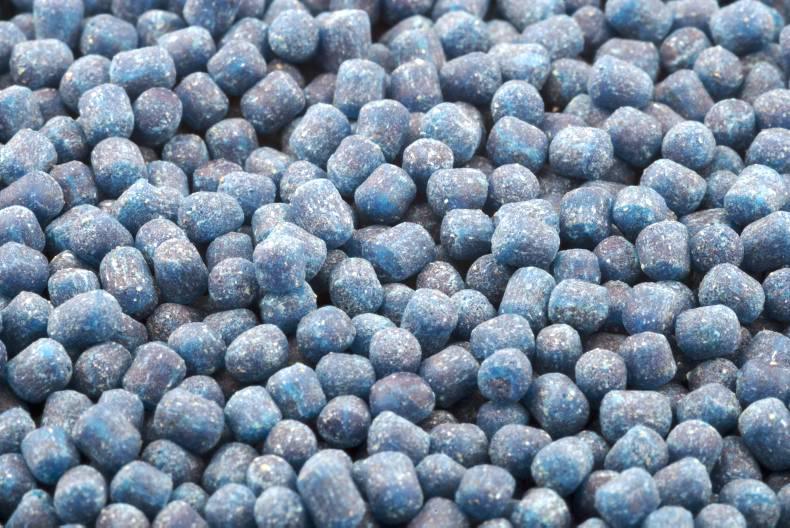
Pellet formulation is an important part of the bait also. All slug pellets are formulated as a bait – the pest must eat them to ingest the active substance. So it is very important initially that the slug be attracted to the bait.
Research shows the “secret” of good attraction is simply down to the formulation of the pellet; the addition of extra “attractants” does not improve efficacy. Palatability is also affected by the pellet’s ability to take in moisture. The most effective pellets become edible by the slug within an hour of application. Pellets need to soften to enable them to be consumed by slugs.
Finally, there is the significant issue of stewardship. Poorly made pellets, especially those using a dry or steam process manufacture, can result in metaldehyde being leached from the pellet. Not only does this make the pellet ineffective, it can also cause problems in watercourses. In some cases lower metaldehyde concentration pellets, containing lower levels of metaldehyde, can actually leach more active substance than wet-process products containing higher concentrations.
Markus Bieri lectured agronomists in soil zoology at the ETH Zurich and he is now an independent consultant for a number of slug bait companies, including Lonza.
Slugs are creatures that have adapted perfectly to living in the soil. Smaller species, such as the grey field slug (deroceras reticulatum), the keeled slug (milax budapestensis) and the black garden slug (arion hortensis) can burrow deep into the soil layers to avoid hazardous conditions. This is particularly prevalent in summer when (if) soils dry out and it also happens during periods of frost in winter. This and other characteristics also mean that many of these animals are not affected by field work, making them “classical” pests of tillage crops.
One characteristic of slugs is the mucus layer which helps keep their skin moist. However, this layer still does not provide protection against water loss and these animals are highly vulnerable to dehydration. This is said to be the primary reason behind their nocturnal feeding habits. They normally remain down in the soil during the daytime, thus avoiding water loss. So normally they only come to the surface at dawn and during the night, when air moisture is sufficiently high, for feeding and mating activity.
It is this distinct night-time activity, and their almost complete absence during the day, that makes it very difficult for farmers to assess the potential risk of slug damage, especially during the plant establishment stage. While methods such as the “saucer refuge” traps have been promoted as an easy and simple technique for estimating slug activity – and in some countries this has become a standard monitoring system – such a technique will never be entirely accurate.
Numbers recorded per trap certainly give us an indication of the activity and the density of the animals, but will never reveal an exact representative number of a field population. That’s because their activity is not synchronous; part of the population always remains hidden in the soil and this can be a significant portion.
Slugs are most active in the second half of the year, between autumn and spring. Strange as it may seem, slugs are highly resistant to the cold and are often active when temperatures are only a few degrees above freezing point. Needless to say, this makes these pests a threat to young seedlings and plants because slugs can still be active at temperatures when plants are not able to grow.
Life cycle
All three slug species have very similar life cycles but the most investigated species is the grey field slug. This is also considered to be the dominant field pest in western Europe. Its life cycle is depicted in Figure 1, with the duration of development stages given in days under laboratory conditions.
Eggs start to develop as soon as they are deposited in soil hollows. Depending on conditions (temperature and soil moisture), hatching takes place about 30 to 40 days later. The young slugs then feed and grow for about 65 to 80 days before reaching sexual maturity.
It is important to note that all three slug species are hermaphrodites. When young, each slug is effectively male but shortly after its first mating with another male, both develop their female organs and both become truly hermaphrodite. This increases their reproductive potential enormously.
After mating, the slugs continue to grow for another 30 to 50 days before they start to lay eggs. This period lasts about 90 to 120 days. With such high variation in all the stages, it is almost impossible to define the time required for a generation. But, at a minimum, it is 125 days or four months between egg laying and the first egg batches from the offspring. In other words, in a year of perfect conditions the grey field slug has the potential for three generations.
This remarkable ability to reproduce is further compounded by the species’ egg-laying capacity. Despite the wide variation between slugs, each individual animal is likely to lay between 80 and 290 eggs per laying period (about three-and-a-half months). After egg laying the animals die within about a week – they are unable to mate a second time.
The high reproduction potential of the grey field slug makes this pest difficult to predict because a massive increase can happen within months as soon as the environmental conditions became favourable.
While the grey field slug has been the subject of intensive research, the other two species – the keeled slug and the garden slug – have never been subjected to the same detailed studies. Almost no information exists about their life cycles and reproductive habits.
All we know is that they have the same basic life cycle, but observations suggest it is more closely synchronised with the seasons. It seems they have just one reproductive cycle per year, from autumn to spring. This explains why they often occur later in the year in refuge traps.
Irrespective of the lack of studies, all three slug species have the same potential to cause damage as pests of field crops.
Natural enemies of slugs
Predators will take slugs at all stages of their life cycle – from eggs to adults. Natural enemies include mammals, birds and predatory invertebrates or microbes. There is little doubt but that they all have a significant impact on slug populations but that has been impossible to quantify. Despite their predation, crops come under attack from slugs almost every year. One advantage the slug has over one of its most effective predators – ground and rove beetles – is its ability to be active at lower temperatures.
Controlling slugs
Oilseed rape and cereal crops are most vulnerable to damage at:
The germination stageFrom start of seedling growth until the four- to six-leaf stage. Good slug monitoring before sowing is very important and potential pest pressure and crop risk should be known at sowing.
An initial pellet application should ideally be carried out at, or soon after, sowing. This should serve to reduce the active slug population before the vulnerable seedlings emerge – a good pellet will be consumed by the slug in preference to the young seedling.
Otherwise, slugs that encounter a young seedling will normally eat it down to the germ, destroying it all and then consuming the remaining starch (seed hollowing). These plants are completely lost. And in situations where there is a high slug population, this can happen many thousands of times, causing a whole crop to fail.
On potatoes, slugs feeding on the leaves or the stems do not really harm the crop. The real threat to growers is damage to the tubers, which can result in a complete devaluation of the crop. Before there is tuber growth, slugs search for food on the soil surface at night. But as soon as the tubers start growing, slugs descend into the soil and feed on the young developing tubers. Having found a food source, they tend to stay there.
This makes it very important to control slugs before tuber growth starts. Application prior to tuber initiation provides the best chance to control most of the active slugs on the soil surface before they go down into soil to feed on the tubers. As tuber growth occurs simultaneously with the first flower buds, this provides the best gauge for growers to apply the first slug treatment.
Recent field trials, carried out by Lonza, showed that a first pellet application made when tuber growth starts gave the best results against prevention of tuber hollowing, even when slug populations were high.
Pellet choice
The recent decision to ban the use of methiocarb in slug baits will soon leave only two actives available to growers. Of these, metaldehyde is the only one that is a specific molluscicide and it has proved highly effective after more than 60 years of use.
Pellet formulation is an important part of the bait also. All slug pellets are formulated as a bait – the pest must eat them to ingest the active substance. So it is very important initially that the slug be attracted to the bait.
Research shows the “secret” of good attraction is simply down to the formulation of the pellet; the addition of extra “attractants” does not improve efficacy. Palatability is also affected by the pellet’s ability to take in moisture. The most effective pellets become edible by the slug within an hour of application. Pellets need to soften to enable them to be consumed by slugs.
Finally, there is the significant issue of stewardship. Poorly made pellets, especially those using a dry or steam process manufacture, can result in metaldehyde being leached from the pellet. Not only does this make the pellet ineffective, it can also cause problems in watercourses. In some cases lower metaldehyde concentration pellets, containing lower levels of metaldehyde, can actually leach more active substance than wet-process products containing higher concentrations.
Markus Bieri lectured agronomists in soil zoology at the ETH Zurich and he is now an independent consultant for a number of slug bait companies, including Lonza.






SHARING OPTIONS