Is the economic breeding index (EBI) actually working at farm level? This same question is still being asked by a cohort of sceptical non-believers, over 25 years on from the inception of the breeding index.
But why? Endless research will point to the fact that breeding for EBI is effective.
As the Teagasc statistic goes, every €1 increase in a cows EBI, will generate €2 extra in profitability. With that in mind why are some farmers still choosing to opt against best advice?
It’s a question that requires thorough discussion at every kitchen table when selecting bull teams in the future.
Joint programme
In an effort to outline real differences between herds who utilise EBI and those who don’t, Michael Monahan, a Lakeland dairy adviser – with the support of Teagasc’s James Dunne – compiled an analysis of farms, part of the Lakeland/ Teagasc joint programme.
The analysis included 30 new-entrant farmers from 2016 on, who took the joint programme advice that was offered and had opted for purchasing high EBI stock, versus 30 farmers who chose not to take the advice and purchased animals without any regard for their EBI status.
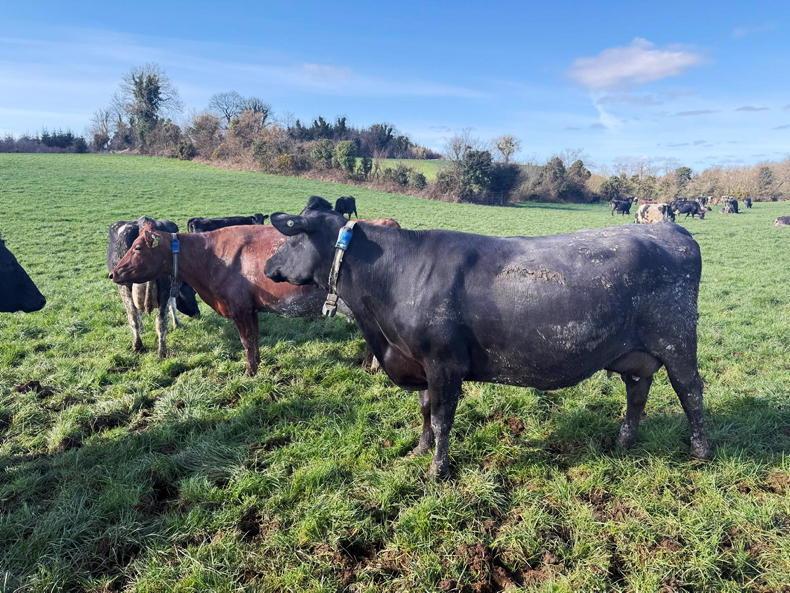
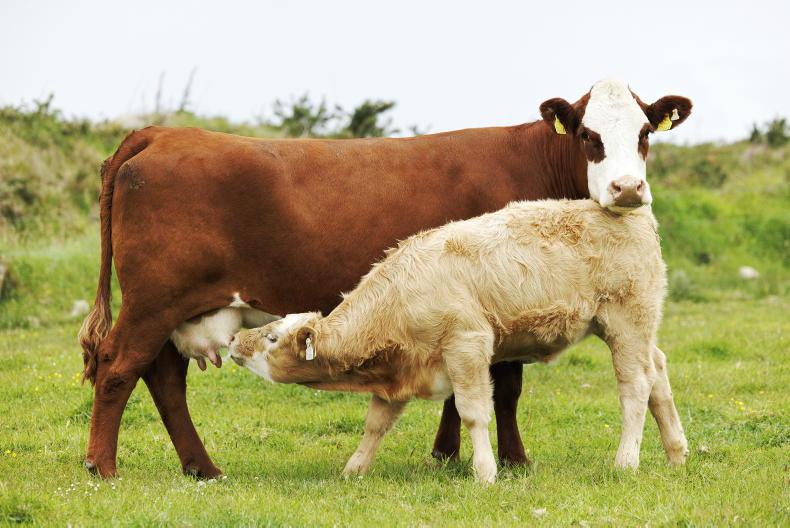
One of the original high-EBI heifers that was purchased in 2018
The average EBI of the higher-EBI group under the most recent update of the index was €144.
The low-EBI group’s average could not be calculated fully as some of the cows had no EBIs at all, but of the herds that had an EBI, the average was well below the Lakeland co-op average of €93.
The results of the analysis are remarkable. As a group average for 2025, the high EBI group of 30 farms earned an average of 56.29c/l. This was in comparison to the group of farms with low EBI, who earned an average of 49.06c/l.
That’s a 7.23c/l difference between the two groups who are farming in the same region with similar setups.
Looking more closely, the constituents of the milk produced by the high EBI group was 4.69% fat and 3.75% protein on average, versus the 4.11% fat and 3.39% protein produced by the low EBI group.
The analysis doesn’t yet take account of the profitability difference between the two groups. However, it’s highly likely that the gap between the two groups will be even wider when profit margins become available.
The higher EBI group will be significantly more profitable overall, as fertility will inevitably be better in these herds, meaning cows will be calving more compactly resulting in greater grass utilisation and reduced meal feeding levels as well as many more advantages.
Case study – Comiskey family, Co Cavan
One of the farmers that took the joint programme advice on targeting higher EBI stock was Cathal Comiskey, a dairy farmer milking 130 cows outside Ballinagh in Co Cavan.
Cathal and his family – Lakeland suppliers who had previously been calving low EBI Holstein Friesian cows for 10 months of the year – had an epiphany in 2018 after a long discussion with Teagasc adviser James Dunne.
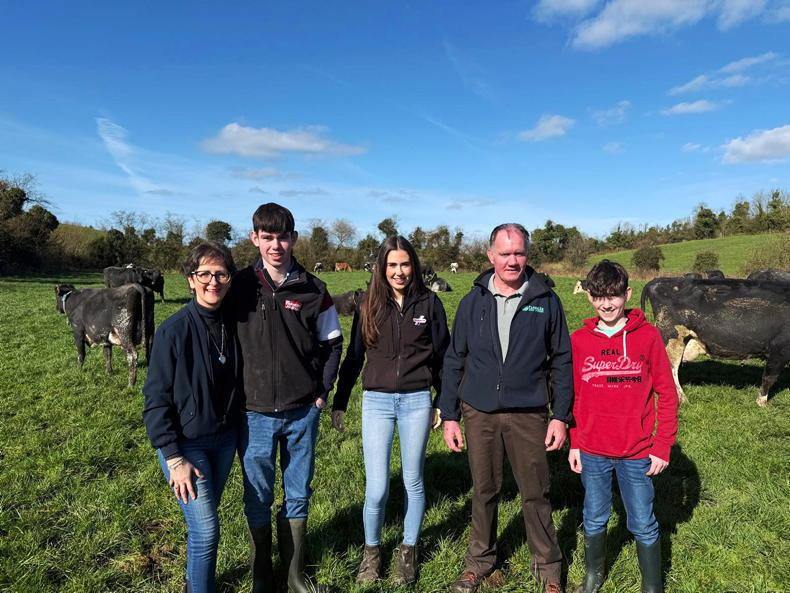
The Comiskey family (l-r), Claire Markey, Ryan, Megan, Cathal and Jamie
Up until that conversation Cathal had been running a dairy business that was more about survival, than generating real profit and he felt something had to change.
It certainly wasn’t worth committing all the time and effort without reaping the rewards. In the winter of 2017, Cathal decided he would go and source 80 high-EBI in-calf crossbred heifers.
A brave decision, but he felt that if he was going to take the plunge, he was as well to go all-in on day one.
All of the existing herd were bred to beef bulls and 80 of them were sold as they calved to make room for the heifers.
The following year, a further 30 in-calf crossbred heifers with high EBIs were purchased and the remaining cows from the original herd were sold.
The herd pre-2018 was made up of 120 big Holstein Friesian cows, the majority of which had EBIs in the minus figures and several more with no EBI at all. The herd was producing an average of 370kgs of milk solids per cow each year with a fat percentage of 3.95% and a protein of 3.24%.
The calving interval of the herd was 432 days and the six-week calving figure was just 30%.
Today
Fast forward to today and the Comiskey’s farm is in a very different place.
The current herd EBI is €174 with the average EBI of the 2025-born calves at €227.
In 2025, the herd supplied 508kgs of milk solids per cow at 4.93% fat and 3.81% protein. The calving interval had been drastically reduced to 376 days and six-week calving rate now stood at 92%.
To say the change happened overnight would be unfair to the work the Comiskey family have put in over the years. However, Cathal feels the difference from day one of the new heifers joining the herd was hard to imagine.
In year one of the change, the heifers outperformed the cows from the old herd in terms of both milk solids produced and fertility results.
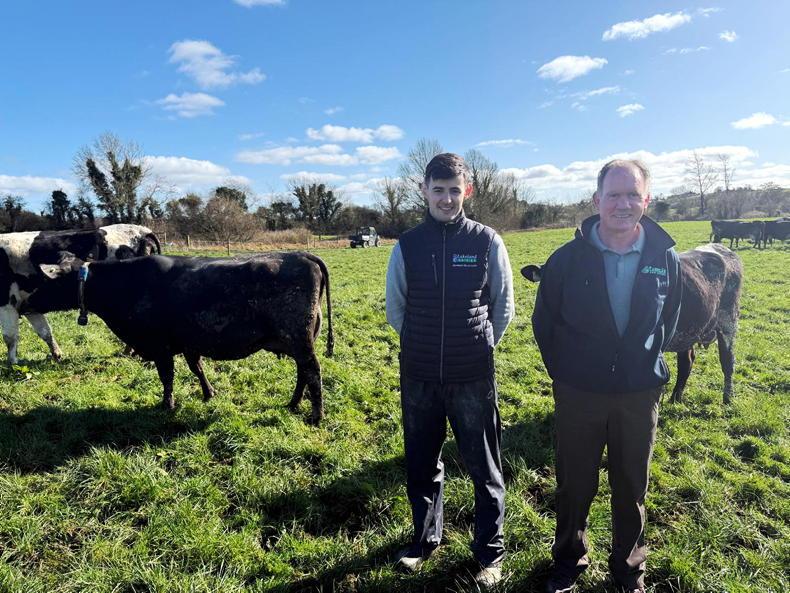
Michael Monahan, Lakeland Dairy advisor with Cathal Comiskey on the farm this week
Immediately, there was also a noticeable difference to other bills on the farm, he says.
“The level of meal required fell straight away, those heifers were far better at grazing and utilising grass than the old herd were.
“Another big change was the veterinary bill. Compared to the original herd, the vet bill is practically non-existent now.
“The cows themselves are much hardier and they are calving more compactly so there’s fewer problems with calves,” according to Cathal.
“Before that, we would have had calves on the ground most months in the year, the calf sheds weren’t getting a break and the disease burden was much higher.”
In total, the Comiskey’s fed 1.1t meal/cow on average in 2025.
This is higher than they would like but Cathal admitted they are still learning when it comes to getting the most out of the grass on the farm.
The average for the farm is around 1t/cow which is significantly less than what was fed pre-2018 – yet production is over 130kg of milk solids per cow on average.
Breeding
The breeding strategy on the farm has evolved over the last six years, but selecting higher EBI bull teams still remains the central focus.
The 2026 bull team have a weighted average of €274 for EBI. The milk figure is €106, fertility is €98 with a maintenance figure of €21. Fat and protein PTAs are 0.27% and 0.21% respectively.
Cathal started using sexed semen two years ago and is very happy with how it’s working out.
In total, 60 animals are mated with a sexed straw. Of the 60 straws used last year, 45 of the cows held.
The cows are AI’ed twice a day and once the 60 cows have been selected for mating with sexed semen there is no changing, unless the timing of heats is too far off.
Ideally, it would be the heifers getting the sexed straws as they are the animals on the farm with the highest genetic merit, but as they were being contract-reared, Cathal had opted against this.
The plan for the coming breeding season however, is to try sexed semen on the heifers using a synchronisation programme.
Back in 2018, the original heifers were Jersey x Friesian animals.
Cathal continued to use some Jersey breeding for a number of years after 2018, but now focuses on selecting Friesian-only bulls.
“The EBI on the Friesians has gotten much better and we’re getting really good heifers. When we’re selecting the Friesian bulls, we’re still looking to keep the size out of them, so we usually end up choosing bulls with slightly higher maintenance figures,” Cathal explains.
Any animal that doesn’t get a sexed dairy straw, gets a beef straw. The bulls used are a mix of Angus, Herefords and Belgian Blues. The breeding programme for the farm is completed by the advisory team at Lakeland, a service free to farmers who are part of the joint programme.
Is the economic breeding index (EBI) actually working at farm level? This same question is still being asked by a cohort of sceptical non-believers, over 25 years on from the inception of the breeding index.
But why? Endless research will point to the fact that breeding for EBI is effective.
As the Teagasc statistic goes, every €1 increase in a cows EBI, will generate €2 extra in profitability. With that in mind why are some farmers still choosing to opt against best advice?
It’s a question that requires thorough discussion at every kitchen table when selecting bull teams in the future.
Joint programme
In an effort to outline real differences between herds who utilise EBI and those who don’t, Michael Monahan, a Lakeland dairy adviser – with the support of Teagasc’s James Dunne – compiled an analysis of farms, part of the Lakeland/ Teagasc joint programme.
The analysis included 30 new-entrant farmers from 2016 on, who took the joint programme advice that was offered and had opted for purchasing high EBI stock, versus 30 farmers who chose not to take the advice and purchased animals without any regard for their EBI status.
One of the original high-EBI heifers that was purchased in 2018
The average EBI of the higher-EBI group under the most recent update of the index was €144.
The low-EBI group’s average could not be calculated fully as some of the cows had no EBIs at all, but of the herds that had an EBI, the average was well below the Lakeland co-op average of €93.
The results of the analysis are remarkable. As a group average for 2025, the high EBI group of 30 farms earned an average of 56.29c/l. This was in comparison to the group of farms with low EBI, who earned an average of 49.06c/l.
That’s a 7.23c/l difference between the two groups who are farming in the same region with similar setups.
Looking more closely, the constituents of the milk produced by the high EBI group was 4.69% fat and 3.75% protein on average, versus the 4.11% fat and 3.39% protein produced by the low EBI group.
The analysis doesn’t yet take account of the profitability difference between the two groups. However, it’s highly likely that the gap between the two groups will be even wider when profit margins become available.
The higher EBI group will be significantly more profitable overall, as fertility will inevitably be better in these herds, meaning cows will be calving more compactly resulting in greater grass utilisation and reduced meal feeding levels as well as many more advantages.
Case study – Comiskey family, Co Cavan
One of the farmers that took the joint programme advice on targeting higher EBI stock was Cathal Comiskey, a dairy farmer milking 130 cows outside Ballinagh in Co Cavan.
Cathal and his family – Lakeland suppliers who had previously been calving low EBI Holstein Friesian cows for 10 months of the year – had an epiphany in 2018 after a long discussion with Teagasc adviser James Dunne.
The Comiskey family (l-r), Claire Markey, Ryan, Megan, Cathal and Jamie
Up until that conversation Cathal had been running a dairy business that was more about survival, than generating real profit and he felt something had to change.
It certainly wasn’t worth committing all the time and effort without reaping the rewards. In the winter of 2017, Cathal decided he would go and source 80 high-EBI in-calf crossbred heifers.
A brave decision, but he felt that if he was going to take the plunge, he was as well to go all-in on day one.
All of the existing herd were bred to beef bulls and 80 of them were sold as they calved to make room for the heifers.
The following year, a further 30 in-calf crossbred heifers with high EBIs were purchased and the remaining cows from the original herd were sold.
The herd pre-2018 was made up of 120 big Holstein Friesian cows, the majority of which had EBIs in the minus figures and several more with no EBI at all. The herd was producing an average of 370kgs of milk solids per cow each year with a fat percentage of 3.95% and a protein of 3.24%.
The calving interval of the herd was 432 days and the six-week calving figure was just 30%.
Today
Fast forward to today and the Comiskey’s farm is in a very different place.
The current herd EBI is €174 with the average EBI of the 2025-born calves at €227.
In 2025, the herd supplied 508kgs of milk solids per cow at 4.93% fat and 3.81% protein. The calving interval had been drastically reduced to 376 days and six-week calving rate now stood at 92%.
To say the change happened overnight would be unfair to the work the Comiskey family have put in over the years. However, Cathal feels the difference from day one of the new heifers joining the herd was hard to imagine.
In year one of the change, the heifers outperformed the cows from the old herd in terms of both milk solids produced and fertility results.
Michael Monahan, Lakeland Dairy advisor with Cathal Comiskey on the farm this week
Immediately, there was also a noticeable difference to other bills on the farm, he says.
“The level of meal required fell straight away, those heifers were far better at grazing and utilising grass than the old herd were.
“Another big change was the veterinary bill. Compared to the original herd, the vet bill is practically non-existent now.
“The cows themselves are much hardier and they are calving more compactly so there’s fewer problems with calves,” according to Cathal.
“Before that, we would have had calves on the ground most months in the year, the calf sheds weren’t getting a break and the disease burden was much higher.”
In total, the Comiskey’s fed 1.1t meal/cow on average in 2025.
This is higher than they would like but Cathal admitted they are still learning when it comes to getting the most out of the grass on the farm.
The average for the farm is around 1t/cow which is significantly less than what was fed pre-2018 – yet production is over 130kg of milk solids per cow on average.
Breeding
The breeding strategy on the farm has evolved over the last six years, but selecting higher EBI bull teams still remains the central focus.
The 2026 bull team have a weighted average of €274 for EBI. The milk figure is €106, fertility is €98 with a maintenance figure of €21. Fat and protein PTAs are 0.27% and 0.21% respectively.
Cathal started using sexed semen two years ago and is very happy with how it’s working out.
In total, 60 animals are mated with a sexed straw. Of the 60 straws used last year, 45 of the cows held.
The cows are AI’ed twice a day and once the 60 cows have been selected for mating with sexed semen there is no changing, unless the timing of heats is too far off.
Ideally, it would be the heifers getting the sexed straws as they are the animals on the farm with the highest genetic merit, but as they were being contract-reared, Cathal had opted against this.
The plan for the coming breeding season however, is to try sexed semen on the heifers using a synchronisation programme.
Back in 2018, the original heifers were Jersey x Friesian animals.
Cathal continued to use some Jersey breeding for a number of years after 2018, but now focuses on selecting Friesian-only bulls.
“The EBI on the Friesians has gotten much better and we’re getting really good heifers. When we’re selecting the Friesian bulls, we’re still looking to keep the size out of them, so we usually end up choosing bulls with slightly higher maintenance figures,” Cathal explains.
Any animal that doesn’t get a sexed dairy straw, gets a beef straw. The bulls used are a mix of Angus, Herefords and Belgian Blues. The breeding programme for the farm is completed by the advisory team at Lakeland, a service free to farmers who are part of the joint programme.






SHARING OPTIONS