There is no denying that our weather appears to be getting more extreme, for whatever reason that may be. It’s not an argument for these pages.
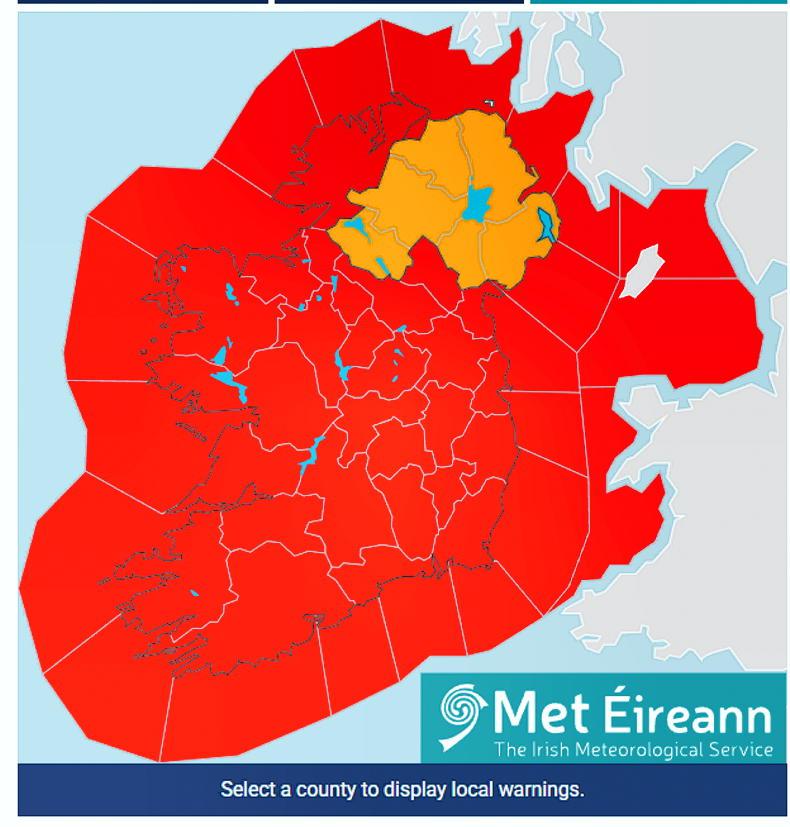
Met Éireann is the main body tasked with analysing weather patterns to predict extreme events, with warnings given where appropriate. Weather warnings are presented in three categories; yellow, orange and red, similar to a traffic light system with yellow posing the least risk and red posing the most.
Yellow warning: The concept behind yellow level weather alerts is to notify those who are at risk because of their location and/or activity, and to allow them to take preventative action. It is implicit that yellow level weather alerts are for weather conditions that do not pose an immediate threat to the general population, but only to those exposed to risk by nature of their location and/or activity. Orange warning: This category of orange level weather warnings is for weather conditions which have the capacity to impact significantly on people in the affected areas. The issuing of an orange level weather warning implies that all recipients in the affected areas should prepare themselves in an appropriate way for the anticipated conditions.Red warning: The issue of red level severe weather warnings should be a comparatively rare event and implies that recipients take action to protect themselves and/or their properties; this could be by moving their families out of the danger zone temporarily, by staying indoors or by other specific actions aimed at mitigating the effects of the weather conditions.Careful self-assessment of weather conditions needs to take place as well, as these can rapidly deteriorate, and red warnings can extend out into neighbouring counties which were previously in an orange warning zone.
For both orange and red weather alerts, aim to have all stock work completed before the alert kicks into place and avoid if at all possible working during the period.
This may not always be practical, but your own health and wellbeing is paramount.
Flooding
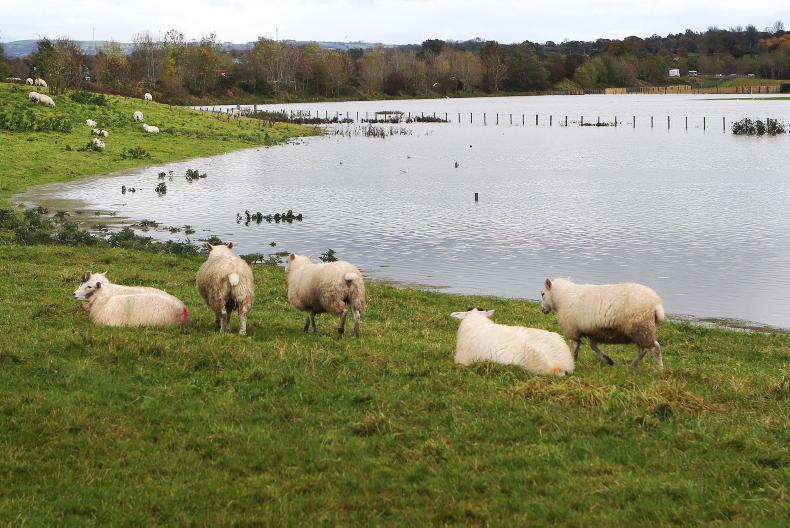
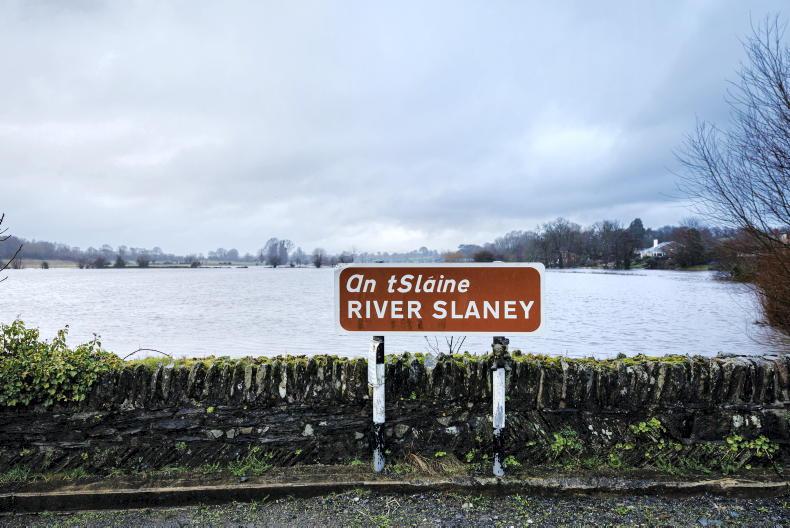
Flooding poses a risk to both dwelling houses and animal welfare. While the above weather alert system for rainfall will go some way towards planning for impending flooding, it’s always important to consult the OPW flood mapping available for your area (www.maps.opw.ie and www.floodmaps.ie).
The Office of Public Works has also provided a large amount of useful information on the website www.flooding.ie with regards to mitigating flooding damage.
Moving your livestock to areas you can access if flooding risk is high: move animals to higher ground. While the opposite is true when it comes to snowfall (where animals are usually brought down from hills), ensure animals close to rivers or other waterbodies have access to higher ground and that you have access to reach them from here for welfare reasons if required.Carefully assess the depth of floods before driving through them: tractors can usually cope with higher water levels than cars or jeeps, but you need to be certain that it is safe to do so. Roadways may have subsided or bridges may have suffered damage which can pose a serious risk to your safety.Where your yard is at risk of flooding, take the necessary actions. Ensure surrounding drains have been cleaned in the hopes that they will take the floodwater away rapidly.
Keep electrical equipment up off the floor, including any tools in the farm workshop; the same goes for chemicals such as sprays, sheep dips etc, which should be kept elevated to prevent pollution of water.
Where possible, divert water away from soiled water or slurry tanks; concrete plinths or changing the slope of concrete to direct clean water away to drains.
There is no denying that our weather appears to be getting more extreme, for whatever reason that may be. It’s not an argument for these pages.
Met Éireann is the main body tasked with analysing weather patterns to predict extreme events, with warnings given where appropriate. Weather warnings are presented in three categories; yellow, orange and red, similar to a traffic light system with yellow posing the least risk and red posing the most.
Yellow warning: The concept behind yellow level weather alerts is to notify those who are at risk because of their location and/or activity, and to allow them to take preventative action. It is implicit that yellow level weather alerts are for weather conditions that do not pose an immediate threat to the general population, but only to those exposed to risk by nature of their location and/or activity. Orange warning: This category of orange level weather warnings is for weather conditions which have the capacity to impact significantly on people in the affected areas. The issuing of an orange level weather warning implies that all recipients in the affected areas should prepare themselves in an appropriate way for the anticipated conditions.Red warning: The issue of red level severe weather warnings should be a comparatively rare event and implies that recipients take action to protect themselves and/or their properties; this could be by moving their families out of the danger zone temporarily, by staying indoors or by other specific actions aimed at mitigating the effects of the weather conditions.Careful self-assessment of weather conditions needs to take place as well, as these can rapidly deteriorate, and red warnings can extend out into neighbouring counties which were previously in an orange warning zone.
For both orange and red weather alerts, aim to have all stock work completed before the alert kicks into place and avoid if at all possible working during the period.
This may not always be practical, but your own health and wellbeing is paramount.
Flooding
Flooding poses a risk to both dwelling houses and animal welfare. While the above weather alert system for rainfall will go some way towards planning for impending flooding, it’s always important to consult the OPW flood mapping available for your area (www.maps.opw.ie and www.floodmaps.ie).
The Office of Public Works has also provided a large amount of useful information on the website www.flooding.ie with regards to mitigating flooding damage.
Moving your livestock to areas you can access if flooding risk is high: move animals to higher ground. While the opposite is true when it comes to snowfall (where animals are usually brought down from hills), ensure animals close to rivers or other waterbodies have access to higher ground and that you have access to reach them from here for welfare reasons if required.Carefully assess the depth of floods before driving through them: tractors can usually cope with higher water levels than cars or jeeps, but you need to be certain that it is safe to do so. Roadways may have subsided or bridges may have suffered damage which can pose a serious risk to your safety.Where your yard is at risk of flooding, take the necessary actions. Ensure surrounding drains have been cleaned in the hopes that they will take the floodwater away rapidly.
Keep electrical equipment up off the floor, including any tools in the farm workshop; the same goes for chemicals such as sprays, sheep dips etc, which should be kept elevated to prevent pollution of water.
Where possible, divert water away from soiled water or slurry tanks; concrete plinths or changing the slope of concrete to direct clean water away to drains.






SHARING OPTIONS