How many is too many; how much more than enough?! It always makes me smile when hearing commentators (invariably male) speak, seemingly with envy, of a colt retiring to a career at stud - as if the prospect of multiple different partners every day was just reward for a highly successful career.
Some sports horse stallions perform only by mounting a dummy and producing into a human-held AV (artificial vagina). Some of our more popular Thoroughbred stallions cover four (occasionally five) mares each day, seven days a week for several months on end. Some (mostly ponies) have the job of teasing (never mating) mares, this to check they are unlikely to kick the valuable stallion lined-up down the line. Sounds alternately unfulfilling, exhausting and frustrating more than rewarding!
Designated duties
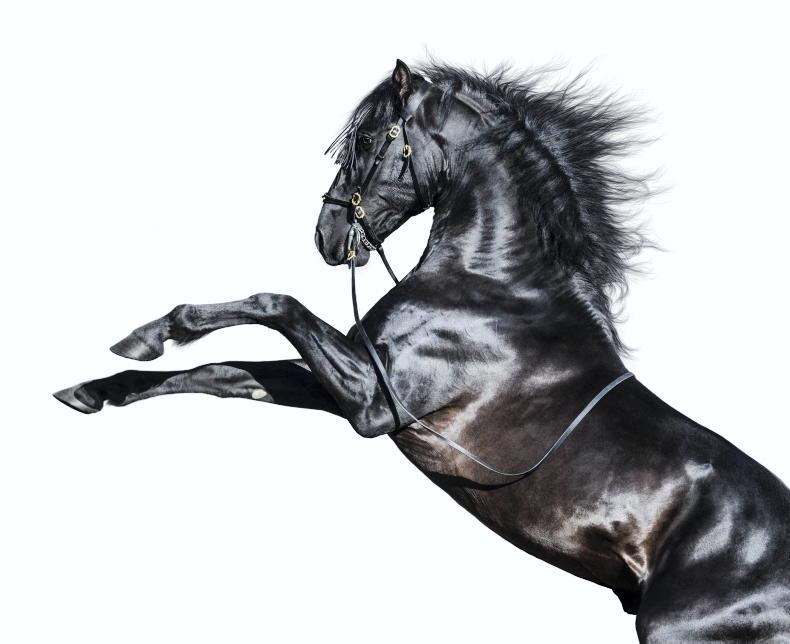
If these stallions ‘enjoy’ their designated duties you might say ‘how bad!’ Some novice stallions do go off the job if over-faced with maiden mares or coerced to mount a dummy. Some older stallions are coaxed and codded, maybe medicated, almost forced to perform when they might otherwise decline. Some sires become highly aggressive and a danger to handlers, get labelled ‘rogue’ and (mis)managed so as to make our job possible but their life one of escalating misery.

Some novice stallions do go off the job if over-faced with maiden mares or coerced to mount a dummy \ IStock
Don’t get me wrong here, handling fully-grown, hot-blooded stallions at the height of their powers and in the full throes of mating with mares is not a job for the weak or fainthearted. But do we pay sufficient heed to their welfare needs, how these are provided for and the adverse consequences to them, as well as us, if they are not?
We set up breeding enterprises structured so as to manage stallions valued at enormous figures but maybe causing them physical and mental stress in the meantime.
Peak physical condition
Much is written, rightly, about the need for breeding stallions to be in peak physical condition. Hooves must be hard and feet pain-free - stallions do lots of parading for prospective clients. Backs must be supple, hind-quarters muscular and hocks strong to rise a sire regularly and repeatably into position. Semen quality and sperm counts are supported by optimal, quality nutrition. Industry disease-control programmes are well developed and stallions vaccinated against common infectious disease (influenza, herpes and tetanus) as well as ones with breeding implications (such as Equine Viral Arteritis - EVA). Stallions are also often rigorously tested for sexually transmitted disease (Contagious Equine Metritis – CEM - for example). And stud farms generally have a means of exercising their stallions using horse walkers, lunge rings and turn-out paddocks to encourage movement and muscular activity. Do they always provide likewise for teasers, I wonder?
Welfare issues
Exercise is, as we all know, good for the mind as well as the body. But not much is researched about broader welfare issues of breeding stallions, and indeed teasers, as compared to other categories of equines.
Behavioural issues in breeding stallions are certainly known about and management strategies are often put in place to try and mitigate these, generally with a view to safeguarding staff safety, minimising stallion injury and keeping stallions working at the job we require of them. But, are we missing a trick here? Is life really all a bounty of fun and fulfillment for teasers and stallions at stud? And if not does this take from their ability to get batches of mares in foal and, in a wider sense, does it mean we are not doing right by them?
Natural
To take an equine perspective, can we try to look at what it is to be a horse, what is natural for stallions. In the wild, they live large as juveniles in bachelor groups or subsequently as a fully-fledged stallion in social groups comprising them and a harem of breeding mares plus their foals. So they spend little time alone. Contrast that with how most stallions are kept on modern stud farms - in single (yes generally spacious) stables but in a line of similar, each occupied by another stallion – done for sound, practical human and economic reasons.
Physical contact
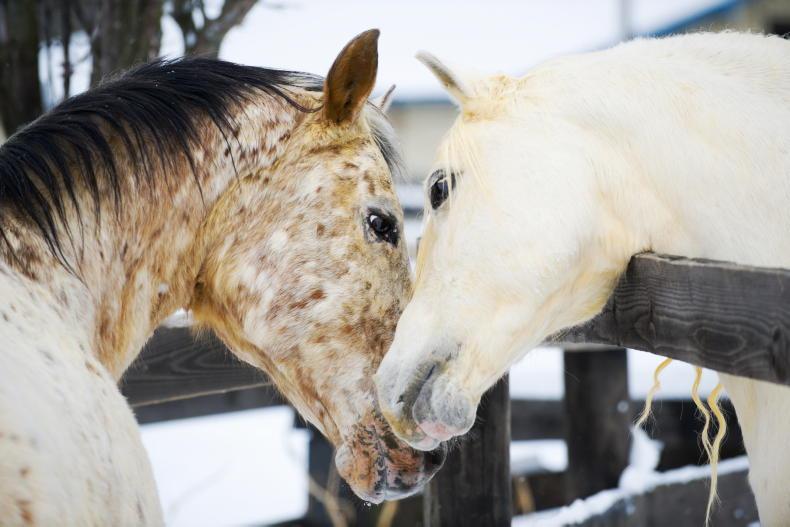
What of the relationship between stallions and other horses? Stallions may not often see but you can be sure they hear and, possibly more importantly, smell these competitor stallions and their activities 24/7. What effect does that have on libido, on fertility but also on their mental welfare? At the risk of making them seem somewhat like humans, do we know, or indeed care, what matters to stallions?

Often, for practical and safety reasons stallions used for natural mating only make physical contact with other horses during the fleeting moments of mating itself \ iStock
Often, for practical and safety reasons stallions used for natural mating only make physical contact with other horses during the fleeting moments of mating itself:
There is little opportunity for valuable stallions to engage in fore-play - that’s a job largely reserved for a far-less valuable teaser pony;Mares might wear boots or a neck protector, these are shared and thus smell of multiple other mares - is this fair on a stallion?;Some mares might be sedated or physically restrained with a twitch - do we even think that a stallion notices?;Performance may be monitored visually, probably manually (to check for ejaculation), perhaps video-recorded for the record - again have we any understanding if a stallion knows or cares?; Mating itself may well be in a venue where the smells of other stallions’ performances literally get up your nose - we do know that this can affect some stallions quite profoundly.Do your duty as required, my son; wham-bam and thank you mam!
In contrast to Throughbred sires that almost always do the business first on the racetrack before some are deemed worthy of studfarm duties, many stallions used for AI continue with their career as athletes while also producing foals. There are sound reasons for this:
Thoroughbred breeding rules do not permit AI;Sports-horse stallions tend to reach peak athletic performance at an older age then racehorses; andBreed temperament may be less fiery than that of the average Thoroughbred stallion’s. Breeding while still competing means that commercial value can continue to be added before a horse’s first few foals have yet reached athletic maturity themselves. These sires rarely get to perform a natural cover but instead are trained to mount a dummy when on mating duty but not behave as breeding animals when in public, at shows and events, i.e. when in equine company. This separation of duties largely works for us; it may work for them; and unlike teaser stallions it might be said that at least the stallion gets to follow through!
Disrespect
Teasers are considered by some stallion masters the most indispensable male on the premises but treated with disrespect by others and I’ve encountered both attitudes during my veterinary career. Some say that it is the can’t-do-without teaser that gets the mares safely and effectively in foal and keeps the vet bills reasonably in check!
Pony teasers are commonly allowed to ‘jump’ mares - ‘educating’ maidens, testing to see which will stand without fuss for service but also reducing the numbers on the list for a ‘vet check’ (or is that cheque!). But I also recall stallion-handlers dismissive of the consequences of running the teaser straight up behind unknown mares or of not putting padded back-boots on mares when teasing as they do for mating. Short-sighted I say, because allowing a teaser to be unnecessarily put off the job or injured, especially early in the season, is a false economy as well as basic bad animal welfare. I’ve heard varying answers, too, to the question of whether a teaser should be allowed to complete the job with the occasional mare (a pony or foster mare usually). Does it hinder or help his mental welfare? I can’t say that I know, perhaps it depends on the individual?
Basic needs
We mustn’t forget that stallions are ‘just’ equines with the same basic needs as others, such as:
For good fibre-based feed, trickle fedFor clean drinking water, available ad libFor shelter from adverse weather and irritants such as fliesFor air free from fungal spores and toxic gases;For a dry, secure place with sufficient space to lieBut stallions have more specific needs too. For example, there has been increased interest recently in keeping stallions in conditions more natural to them, allowing ‘ordinary’ (not just sexual) contact with other horses. Schemes range from replacing solid, opaque walls between the stables of sympathetic (not antagonistic) stallions with sturdy vertical bars; allowing a young stallion in his first term to live with an again sturdy older companion; to allowing stallions, especially out of breeding season, to roam extensive areas shared with mares and geldings.
Aggression
Yes, some aggressive behaviour can be seen with these models especially in the early stages of interaction.
Yes, some stallions need living quarters including covering areas entirely be pure posturing - fronting up to make an impression - and many draught-type stallions seem to settle down once the pecking order has been established. Admittedly, few owners of multi-million euro blood stallions will leap at these suggestions, being largely protective of their investment, but animal welfare science moves on all the time and new Kept Animals Regulations are in development that could bring new requirements.
We must be prepared to adapt in the interests of enhancing the lives of the horses we keep; adapting in practical ways that meaningfully improve their welfare and don’t simply speak to tired old stereotypes that wistfully ‘wish they’d retire me to stud someday!’.
How many is too many; how much more than enough?! It always makes me smile when hearing commentators (invariably male) speak, seemingly with envy, of a colt retiring to a career at stud - as if the prospect of multiple different partners every day was just reward for a highly successful career.
Some sports horse stallions perform only by mounting a dummy and producing into a human-held AV (artificial vagina). Some of our more popular Thoroughbred stallions cover four (occasionally five) mares each day, seven days a week for several months on end. Some (mostly ponies) have the job of teasing (never mating) mares, this to check they are unlikely to kick the valuable stallion lined-up down the line. Sounds alternately unfulfilling, exhausting and frustrating more than rewarding!
Designated duties
If these stallions ‘enjoy’ their designated duties you might say ‘how bad!’ Some novice stallions do go off the job if over-faced with maiden mares or coerced to mount a dummy. Some older stallions are coaxed and codded, maybe medicated, almost forced to perform when they might otherwise decline. Some sires become highly aggressive and a danger to handlers, get labelled ‘rogue’ and (mis)managed so as to make our job possible but their life one of escalating misery.
Some novice stallions do go off the job if over-faced with maiden mares or coerced to mount a dummy \ IStock
Don’t get me wrong here, handling fully-grown, hot-blooded stallions at the height of their powers and in the full throes of mating with mares is not a job for the weak or fainthearted. But do we pay sufficient heed to their welfare needs, how these are provided for and the adverse consequences to them, as well as us, if they are not?
We set up breeding enterprises structured so as to manage stallions valued at enormous figures but maybe causing them physical and mental stress in the meantime.
Peak physical condition
Much is written, rightly, about the need for breeding stallions to be in peak physical condition. Hooves must be hard and feet pain-free - stallions do lots of parading for prospective clients. Backs must be supple, hind-quarters muscular and hocks strong to rise a sire regularly and repeatably into position. Semen quality and sperm counts are supported by optimal, quality nutrition. Industry disease-control programmes are well developed and stallions vaccinated against common infectious disease (influenza, herpes and tetanus) as well as ones with breeding implications (such as Equine Viral Arteritis - EVA). Stallions are also often rigorously tested for sexually transmitted disease (Contagious Equine Metritis – CEM - for example). And stud farms generally have a means of exercising their stallions using horse walkers, lunge rings and turn-out paddocks to encourage movement and muscular activity. Do they always provide likewise for teasers, I wonder?
Welfare issues
Exercise is, as we all know, good for the mind as well as the body. But not much is researched about broader welfare issues of breeding stallions, and indeed teasers, as compared to other categories of equines.
Behavioural issues in breeding stallions are certainly known about and management strategies are often put in place to try and mitigate these, generally with a view to safeguarding staff safety, minimising stallion injury and keeping stallions working at the job we require of them. But, are we missing a trick here? Is life really all a bounty of fun and fulfillment for teasers and stallions at stud? And if not does this take from their ability to get batches of mares in foal and, in a wider sense, does it mean we are not doing right by them?
Natural
To take an equine perspective, can we try to look at what it is to be a horse, what is natural for stallions. In the wild, they live large as juveniles in bachelor groups or subsequently as a fully-fledged stallion in social groups comprising them and a harem of breeding mares plus their foals. So they spend little time alone. Contrast that with how most stallions are kept on modern stud farms - in single (yes generally spacious) stables but in a line of similar, each occupied by another stallion – done for sound, practical human and economic reasons.
Physical contact
What of the relationship between stallions and other horses? Stallions may not often see but you can be sure they hear and, possibly more importantly, smell these competitor stallions and their activities 24/7. What effect does that have on libido, on fertility but also on their mental welfare? At the risk of making them seem somewhat like humans, do we know, or indeed care, what matters to stallions?
Often, for practical and safety reasons stallions used for natural mating only make physical contact with other horses during the fleeting moments of mating itself \ iStock
Often, for practical and safety reasons stallions used for natural mating only make physical contact with other horses during the fleeting moments of mating itself:
There is little opportunity for valuable stallions to engage in fore-play - that’s a job largely reserved for a far-less valuable teaser pony;Mares might wear boots or a neck protector, these are shared and thus smell of multiple other mares - is this fair on a stallion?;Some mares might be sedated or physically restrained with a twitch - do we even think that a stallion notices?;Performance may be monitored visually, probably manually (to check for ejaculation), perhaps video-recorded for the record - again have we any understanding if a stallion knows or cares?; Mating itself may well be in a venue where the smells of other stallions’ performances literally get up your nose - we do know that this can affect some stallions quite profoundly.Do your duty as required, my son; wham-bam and thank you mam!
In contrast to Throughbred sires that almost always do the business first on the racetrack before some are deemed worthy of studfarm duties, many stallions used for AI continue with their career as athletes while also producing foals. There are sound reasons for this:
Thoroughbred breeding rules do not permit AI;Sports-horse stallions tend to reach peak athletic performance at an older age then racehorses; andBreed temperament may be less fiery than that of the average Thoroughbred stallion’s. Breeding while still competing means that commercial value can continue to be added before a horse’s first few foals have yet reached athletic maturity themselves. These sires rarely get to perform a natural cover but instead are trained to mount a dummy when on mating duty but not behave as breeding animals when in public, at shows and events, i.e. when in equine company. This separation of duties largely works for us; it may work for them; and unlike teaser stallions it might be said that at least the stallion gets to follow through!
Disrespect
Teasers are considered by some stallion masters the most indispensable male on the premises but treated with disrespect by others and I’ve encountered both attitudes during my veterinary career. Some say that it is the can’t-do-without teaser that gets the mares safely and effectively in foal and keeps the vet bills reasonably in check!
Pony teasers are commonly allowed to ‘jump’ mares - ‘educating’ maidens, testing to see which will stand without fuss for service but also reducing the numbers on the list for a ‘vet check’ (or is that cheque!). But I also recall stallion-handlers dismissive of the consequences of running the teaser straight up behind unknown mares or of not putting padded back-boots on mares when teasing as they do for mating. Short-sighted I say, because allowing a teaser to be unnecessarily put off the job or injured, especially early in the season, is a false economy as well as basic bad animal welfare. I’ve heard varying answers, too, to the question of whether a teaser should be allowed to complete the job with the occasional mare (a pony or foster mare usually). Does it hinder or help his mental welfare? I can’t say that I know, perhaps it depends on the individual?
Basic needs
We mustn’t forget that stallions are ‘just’ equines with the same basic needs as others, such as:
For good fibre-based feed, trickle fedFor clean drinking water, available ad libFor shelter from adverse weather and irritants such as fliesFor air free from fungal spores and toxic gases;For a dry, secure place with sufficient space to lieBut stallions have more specific needs too. For example, there has been increased interest recently in keeping stallions in conditions more natural to them, allowing ‘ordinary’ (not just sexual) contact with other horses. Schemes range from replacing solid, opaque walls between the stables of sympathetic (not antagonistic) stallions with sturdy vertical bars; allowing a young stallion in his first term to live with an again sturdy older companion; to allowing stallions, especially out of breeding season, to roam extensive areas shared with mares and geldings.
Aggression
Yes, some aggressive behaviour can be seen with these models especially in the early stages of interaction.
Yes, some stallions need living quarters including covering areas entirely be pure posturing - fronting up to make an impression - and many draught-type stallions seem to settle down once the pecking order has been established. Admittedly, few owners of multi-million euro blood stallions will leap at these suggestions, being largely protective of their investment, but animal welfare science moves on all the time and new Kept Animals Regulations are in development that could bring new requirements.
We must be prepared to adapt in the interests of enhancing the lives of the horses we keep; adapting in practical ways that meaningfully improve their welfare and don’t simply speak to tired old stereotypes that wistfully ‘wish they’d retire me to stud someday!’.







SHARING OPTIONS