


There have been some hugely significant advances in sport horse breeding over the last two decades. For many, embryo transfer was a giant leap forward in the breeding of horses. Similarly, cloning was an idea far from reach, but it has now become an option for some breeders.
Although it’s still early days, there are cloned horses competing across the world. With the recent announcement that the Irish Sport Horse stallions Cruising and Samgemjee have been cloned, we take a closer look at cloning.
How likely are we to see more clones of an Irish Sport Horse? Very likely, considering Edward Doyle has told the Irish Farmers Journal that he will attempt to clone Samgemjee again shortly. It has also been confirmed to us that other Irish breeders have made attempts to clone a number of other Irish horses.
Replica Farm in America, who are forerunners in cloning horses and the new owners of Dilligaf, (Vechta x Flexing) which was bred by Edward Doyle, have also told us they are currently concentrating on Dilligaf’s Grand Prix career at the moment, but they have not ruled out cloning him in the future. With the Irish horse board now willing to register clones, the door is open for science.
According to the Kathleen McNulty, owner of Replica Farm (authorised representative of ViaGen, Inc, who is the world leader in commercial equine cloning service) many of her clients clone their horses to produce breeding stock. Especially if the donor was a famous gelding and they want to access the bloodline by creating a breeding stallion, prolonging the availability of semen from a famous stallion, or producing quality broodmares from famous performance mares.
In recent years, she has noticed a change in direction, as clients are breeding performance horses.
“The breeding value of a cloned stallion is identical to its donor, it has the same DNA and this will be passed to its offspring. This has been proven by geneticists. For this reason, some clients prefer not to compete a cloned horse because of concerns that the public will compare the donor’s show record to the clone’s and base their breeding decision on that rather than the success earned by the donor over its entire show career.”
However, Kathleen says that many people are realising that the genetics that produced the original horse may result in a cloned horse with the same athletic ability, conformation, movement and jumping style.
“Many of my clients are now cloning horses specifically for performance, realising that a cloned horse is extremely similar to the donor, allowing them to train and ride a horse whose genetics produced success for them in the past.”
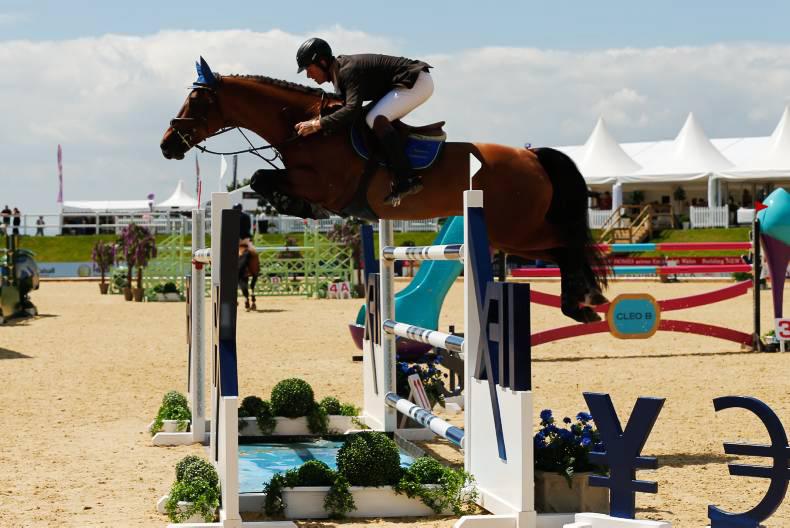
Although there are clones performing in show jumping, they still are yet to reach the highest level of the sport.
In comparison to other animals, cloning horses has proved more successful. According to Katrin Hinrichs (DVM, PhD, professor in mare reproductive studies, college of veterinary medicine and biomedical sciences, Texas A&M University): “The cattle and sheep industries see a high incidence of abnormalities with clones,” said Hinrichs, “such as abnormally large offspring, fluid accumulation, abnormal placentae, and heart and lung abnormalities.”
However, if we look at Dolly the sheep, she lived for seven years before being euthanised due to viral lung disease. In the interim, Dolly gave birth to healthy lambs, all conceived by natural mating.
How accessible is cloning? From our research, we found many facilities with the capabilities of cloning from start to finish, but few that clone horses. ViaGen, who produced the two Cruising clones, not only clone horses but also cattle, pigs, goats and offer long-term preservation of your pet’s cells.
The laboratory of Dr Cesare Galli in Italy has cloned horses on a small scale and has two companies in Argentina, Crestview and Kheiron.
Recently, another company in Brazil has also claimed to have successfully cloned a horse. Without a doubt, it is a difficult technique and few labs can do it successfully. In addition, ViaGen claims to own all the cloning patents in the world and aggressively defends them.
How likely is cloning to become the choice of breeders? Along with having the right genetic material, another major factor is the cost. As expected, cloning is not affordable to the average breeder. Replica Farm, who offers cloning via ViaGen, estimates the cost to produce one copy of a horse is currently $165,000.
This includes processing of a tissue sample usually taken from the horse’s neck, producing cloned embryos, transfer of these into recipient mares, care of the pregnant mares, foaling and 60 days of care for the mare and foal.
Should the pregnancy fail, another embryo is transferred. ViaGen’s success rate is quite good.
“This programme has been very successful and has produced several hundred cloned foals that are genetically identical twins of their donor,” states Kathleen McNulty of Replica Farm.
Cloning and Polo
Cloning has become increasingly popular in the world of polo. Polo enthusiast Alan Meeker became interested in cloning and went into business with World Champion player Adolfo Cambiaso.
Through his investment, Meeker discovered the potential of cloning some of the world’s best horses. His firm, Crestview Genetics, produced their first foal through ViaGen in 2010 and since then have successfully generated 70 champion equine replicas at a cost of roughly $150,000 each.
Meeker’s reasoning behind cloning is simple: “It’s a bargain, given that a clone of another of Cambiaso’s champion mares, Cuartetera, fetched $800,000 at auction.”
CLONING
Where it all began
The first horse was successfully cloned in Italy in 2003 – a filly named Prometea – and since then many other famous horses have successfully been cloned. Salzgeber’s champion dressage horse Rusty has been cloned. Rusty, a Latvian warmblood by Rebus and out of Akra, retired after the 2004 Athens Olympic Games, where he won individual silver and team gold medals. Team Murka has added the Gem Twist clone Murka’s Gem to its stable. Murka’s Gem is the second clone of Gem Twist, one of the most successful show jumping horses of all time. The first was Gemini, who was foaled in 2008. Zangersheide has had multiple horses cloned. See page 14.
Original vs Clone
How you know if you are getting semen from the original stallion or the clone? Eric Palmer from Cryozootech addresses this in a paper entitled Traceability of Original vs Clone Semen DNA.
The nuclear DNA of the spermatozoa is the same in that of the original and that of the clone; the Mitochondria DNA of the semen is the same as that of the clone, but is different from the MT DNA of the original. In a nutshell, there is a way to tell sperm from the original stallion from sperm from his clone, as the mitochondria will be different. However, at this time, there is no way to differentiate between the offspring of a clone and the offspring of a stallion.
According to Katrin, scientists are looking at methods that might lead to this ability in the near future. The other issue around this concerns the dilemma down the road in competition as to whether a rider is competing on the offspring of a clone or the offspring of the original horse.
FEI Stance
“An up-to-date review on cloning, resulting in an increased understanding of the science was presented to the FEI Sports Forum in 2013,” explained an FEI spokesperson.
“The performance of a cloned horse is unlikely to match that of the original horse for a number of reasons, including the maternal uterine environment, nutrition, training and the understanding that clones are not exactly the same as the original. Additionally, as progeny of cloned horses will be produced by conventional reproductive methods, such as natural covering or artificial insemination, the FEI’s 2007 objective of maintaining fair play is upheld. The FEI will, therefore, not forbid participation of clones or their progenies in FEI competitions. However, we will continue to monitor further scientific research, especially with regard to any implications for horse welfare.”
The FEI spokesperson also confirmed that there is no current requirement to state that a horse is cloned in the passport.
Turf Club Stance
A cloned horse could not be named and therefore could not race under the Rules of Racing and Irish National Hunt Steeplechase Rules. See rules 1(ii), 86(xi) and 87(i).
A method of improvement?
Dr Alan Fahey, animal breeding and genetics expert, explained: “Many people have been asking the question, is cloning a useful tool for genetic improvement?
“Cloning is a method of genetic replication rather than a method of genetic improvement. The aim of a genetic improvement programme is to improve the performance of the next generation compared to the current generation. One way in which cloning may be beneficial to a national horse breeding programme would be in the event of a gelding achieving international success, cloning this gelding would be a method of disseminating these genetics. However, with the current cost of cloning, this could be prohibitive.
“Another important point to consider is that clones may not necessarily look, behave, or perform the same. The reason for this is that the environment in which the animal lives will affect the expression of their genes.
“So, two clones being managed and trained in different environments could have much different temperaments and performance levels. Therefore, there is no guarantee that a performance stallion’s clone will reach the heights of success that the original stallion achieved.”


SHARING OPTIONS