The run up to Christmas can be a very stressful time for families in rural Ireland. Finances, relationships and health can all be put under tremendous strain despite the endless narrative that this is ‘the most wonderful time of the year’.
For the many families living with domestic abuse, the coming weeks are a particularly precarious time. The stress of the festive season can take its toll, bringing an increased level of violence – from emotional to financial, digital or physical abuse – to the doors of countless women, men and children.
Tara Farrell is chief executive of Longford Women’s Link. She says the demand for services has been increasing year-round but adds that the weeks leading up to and immediately after Christmas see a surge in calls for help from domestic violence victims.
“We would always say that while there is not a lot of difference in the form of domestic abuse in rural compared to urban areas, the situation for women living in rural Ireland involves a different set of dynamics,” she explains.
“Agricultural settings and farms can be insidious places for victims of domestic violence and approximately half of the women we are currently supporting are from rural homes.
“It is much easier to control victims in a rural setting, where there is patchy broadband which means they can’t use WhatsApp. The use of CCTV can be justified to combat rural crime but it can also be manipulated to track victims, and the increase in this form of digital abuse is frightening.”
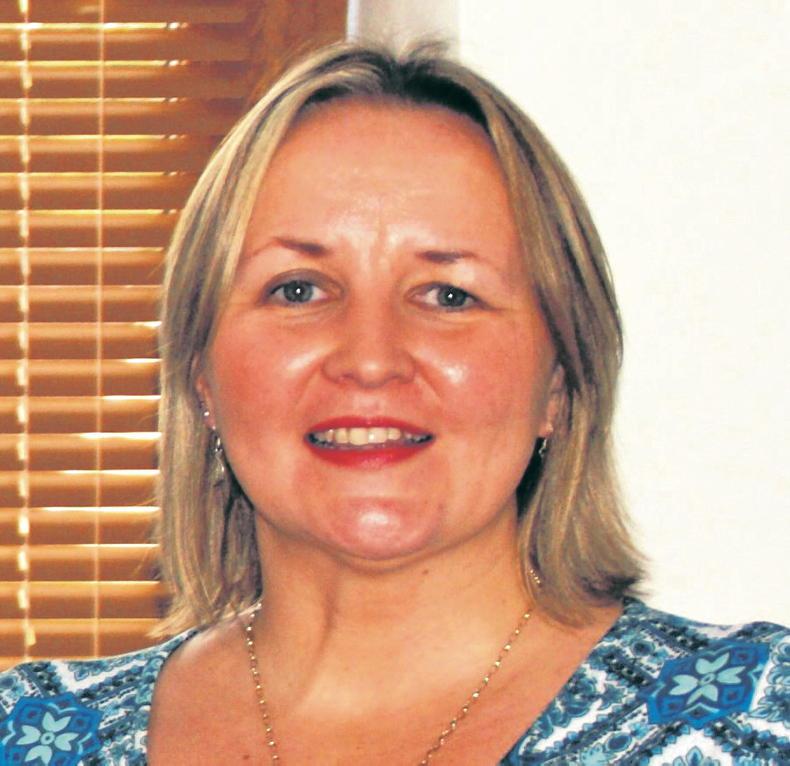
Tara Farrell is chief executive of Longford Women’s Link.
Traditional values
Tara urges people to reach out to their local services if they are experiencing an intensity in abuse in the coming weeks.
“Local support services are so important at this time of year. By reaching out for help, you are not having to make any big decisions on your future, but you are getting the information on how to develop a plan to keep you and your children safe.
“I would also urge anyone who suspects a friend or family member is a domestic violence victim to keep in contact with them, even if they don’t get regular replies to calls and texts.
One of the biggest tactics of perpetrators is to isolate the victim, meaning their world gets very small. Even though you may not get a response, keep in contact with the person and at some stage they may decide to confide in you.
If and when that happens, your first and only job is to listen. Don’t judge them or believe that this could never happen to you. Signpost them to the services that can offer support; the most important thing is that the victim feels seen.
Tara says many people seem to think domestic abuse is just physical violence but it extends to coercive control, financial, digital and emotional abuse.
“Farm implements can pose an additional danger to victims, from legally held shotguns to the quantity of fuel, which is often used as a threat to burn down the home with the children inside.
“There are traditional values around land and when an order is obtained in divorce proceedings to sell land, it can cause huge problems.”
She also says one worrying issue is the fact that so many women living in rural areas are unaware of the services available locally.
“There is so much misinformation out there where people think that if they contact a service, they have to leave their homes or their marriages.
“Generally speaking, the women who contact us have been managing a violent situation for some time. When they reach out to us, we follow their lead in how they want to handle things.
“A lot of women will never leave an abusive relationship and if that’s the right thing to do for them, particularly if there are children involved, then we support their decision and work with them to conduct a risk assessment and develop a safety plan.
“Reaching out to us can simply give victims the chance to talk to someone. In sharing what they’re going through, it can help release the trauma and the stress they are under.”
Tara says the number of older women in rural Ireland contacting support agencies is increasing, and believes this is down to the increased visibility of information on how to get help.
“We have our leaflets on display in GP surgeries and in the local paper and older farm women seem to be getting our number from these places and ringing us to offload the burden of enduring an abusive relationship for many years,” she adds.
Isolated farm women
“Farm women will often go down to the sheds or out on the fields to speak with us and we are very conscious of not placing them in any further danger, but domestic abuse is never straightforward, there is always a complex web to navigate.
Women have told us they dread hedge-cutting season as there is no privacy at their homes, in that if they call the gardaí the squad car will be seen by the neighbours.
We had one case where a lady said her father knew she was in an abusive relationship but because he was an elderly farmer, he relied on her husband to work the farm – so she was expected to put up with it.
“Rural Ireland is known for its great community spirit but when that turns on you, it’s a totally different environment and we find that women who move into an area, with no family around them and no friends to support them, become particularly isolated.
“But the situation is getting better in that there is more awareness around the issue and the supports that are available, even though we still have a long way to go.”
The IFA’s Farm Family and Social Affairs Committee has plans to launch an initiative in the new year to raise awareness of and educate the farming community on domestic violence and how to support victims.
“Domestic violence is very much part of our Farm Families programme and we are committed to working with support agencies across the country to highlight the services available to help people experiencing this type of abuse,” says Teresa Roche, committee chair.
Teresa Roche IFA National Farm Families and Social Affairs Committee chairperson.
“We are not a health organisation but we can build awareness in the same way we have done regarding cardiovascular health through our collaboration with Croí. Our heart health checks have been a huge success with farmers.
“Domestic violence is a big issue in rural Ireland and in the farming community. It is not confined to couples, married or otherwise. We have come across many cases of sibling abuse, where victims are living with brothers or sisters, often in very remote, rural parts of the country and we find that men are every bit as vulnerable in these situations.
“There is a lot of shame attached to domestic violence, particularly in the farming community so we are working on an initiative that we hope to be able to deliver in 2026.”
Detective chief superintendent Colm Noonan says the introduction of new legislation in recent years is helping to adequately punish those responsible for inflicting domestic violence on their loved ones.
“In Ireland we are one of only three countries worldwide that has a specific offence for coercive control,” he says.
“The Criminal Justice Miscellaneous Provisions Act 2023 saw further standalone offenses for stalking, non-fatal strangulation, and non-fatal suffocation and while those offences always existed, this legislation calls them out as specific crimes in a language that people can understand.
“It is the case that researchers and law enforcement officials have determined that non-fatal strangulation is a leading indicator in escalating violence in a relationship and it is a significant risk factor in homicide in women.
“Since that offence was introduced in November 2023, a significant number of prosecutions relate to domestic abuse, which shows the critical value of that standalone offence.”
Chief supt Noonan said the gardaí were acutely aware of the difficulty victims faced in reaching out for support, but urged anyone living in a violent or abusive home to seek help.
“We know that domestic violence has a cruelty and a relentlessness to it. It destroys every part of a person’s life. We understand that domestic abuse forces a person to stay silent and therefore contacting the gardaí can be so daunting,” he adds. “The reality for us is that while the number of people reaching out to the gardaí is increasing, we see that as a positive reflection on the trust and the confidence people have in us.
“In saying that, we also know and we understand there are still hundreds of people who cannot make that call to their local Garda station to let us know that they need help.”
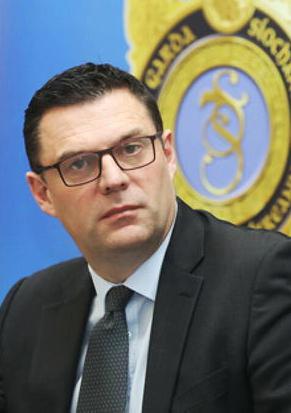
Detective chief superintendent Colm Noonan.
Domestic violence: the different types of abuse and how they can affect you
Figures from Women’s Aid in 2024 reveal the scale of domestic abuse in Ireland. The organsiation received 32,144 contacts, which included 24,396 calls to the Women’s Aid 24-hour National Freephone Helpline.
Support services were used by 7,748 people seeking help.
These numbers underscore a stark reality: countless women continue to reach out for help, information, and safety. The statistics highlight why it is so vital to understand the many different forms domestic violence can take.
Domestic violence: the different types of abuse and how they can affect you
Physical abuse: punching, slapping, nipping, tripping, strangling, kicking, pushing and shaking – which can lead to broken bones, black eyes, bruising, hair loss, concussion, hearing loss and death.
Verbal abuse: name calling, humiliation, threatening, undermining, sneering, brainwashing, using abusive language, put-downs, shouting, snide comments that leaves a victim with a loss of self-confidence, no self-worth and a breakdown in healthy communication.
Emotional abuse: degradation, criticism, controlling behaviour, threatening violence, ignoring, isolation, bullying and withholding love or support which leads to depression, alcohol/drug abuse, poor mental health, and suicidal tendencies.
Financial abuse: abusers use money as a means of control over their victim to gain power and dominance and to isolate the person by leaving them financially dependent and reliant on their abuser for money. This leads to a restricted lifestyle, a lack of basic human needs such as clothes/food, and a loss of dignity.
Coercive control: this form of abuse presents as a pattern of intimidation or humiliation which involves psychological or emotional abuse that leads to the victim changing their behaviour in order to satisfy the abuser. The victim is afraid to do things their own way and can feel like they are walking on eggshells.
Digital abuse: digital abuse is the use of technology like phones, social media, and the internet to threaten, control, monitor, or harass someone. It can include sending abusive messages, tracking a person’s movements, demanding passwords, or sharing intimate images without consent. This can overwhelm and distress victims, leaving them feeling like they have no safe space, even in their own home
Gaslighting: this is a term used to describe abusive behaviour where the abuser manipulates certain information in a way that makes the victim question their sanity, they doubt their own memories and their perception of reality.
Helplines open 24 hours a day
There are 37 domestic abuse services located in towns right across Ireland. Services are free and available in every county. Go to on safeireland.ie for the full range of services.
The Women’s Aid 24-hour National Freephone Helpline is a free, non-judgmental, and confidential service that offers support to women subjected to domestic abuse including coercive control. Call 1800 341 900, 24 hours, seven days a week.
Men’s Aid offers a confidential National Support Line: 01 5543811 that is open Monday-Friday, 9am to 5pm. If you require a callback, the phone number will show up as a private number.
The run up to Christmas can be a very stressful time for families in rural Ireland. Finances, relationships and health can all be put under tremendous strain despite the endless narrative that this is ‘the most wonderful time of the year’.
For the many families living with domestic abuse, the coming weeks are a particularly precarious time. The stress of the festive season can take its toll, bringing an increased level of violence – from emotional to financial, digital or physical abuse – to the doors of countless women, men and children.
Tara Farrell is chief executive of Longford Women’s Link. She says the demand for services has been increasing year-round but adds that the weeks leading up to and immediately after Christmas see a surge in calls for help from domestic violence victims.
“We would always say that while there is not a lot of difference in the form of domestic abuse in rural compared to urban areas, the situation for women living in rural Ireland involves a different set of dynamics,” she explains.
“Agricultural settings and farms can be insidious places for victims of domestic violence and approximately half of the women we are currently supporting are from rural homes.
“It is much easier to control victims in a rural setting, where there is patchy broadband which means they can’t use WhatsApp. The use of CCTV can be justified to combat rural crime but it can also be manipulated to track victims, and the increase in this form of digital abuse is frightening.”
Tara Farrell is chief executive of Longford Women’s Link.
Traditional values
Tara urges people to reach out to their local services if they are experiencing an intensity in abuse in the coming weeks.
“Local support services are so important at this time of year. By reaching out for help, you are not having to make any big decisions on your future, but you are getting the information on how to develop a plan to keep you and your children safe.
“I would also urge anyone who suspects a friend or family member is a domestic violence victim to keep in contact with them, even if they don’t get regular replies to calls and texts.
One of the biggest tactics of perpetrators is to isolate the victim, meaning their world gets very small. Even though you may not get a response, keep in contact with the person and at some stage they may decide to confide in you.
If and when that happens, your first and only job is to listen. Don’t judge them or believe that this could never happen to you. Signpost them to the services that can offer support; the most important thing is that the victim feels seen.
Tara says many people seem to think domestic abuse is just physical violence but it extends to coercive control, financial, digital and emotional abuse.
“Farm implements can pose an additional danger to victims, from legally held shotguns to the quantity of fuel, which is often used as a threat to burn down the home with the children inside.
“There are traditional values around land and when an order is obtained in divorce proceedings to sell land, it can cause huge problems.”
She also says one worrying issue is the fact that so many women living in rural areas are unaware of the services available locally.
“There is so much misinformation out there where people think that if they contact a service, they have to leave their homes or their marriages.
“Generally speaking, the women who contact us have been managing a violent situation for some time. When they reach out to us, we follow their lead in how they want to handle things.
“A lot of women will never leave an abusive relationship and if that’s the right thing to do for them, particularly if there are children involved, then we support their decision and work with them to conduct a risk assessment and develop a safety plan.
“Reaching out to us can simply give victims the chance to talk to someone. In sharing what they’re going through, it can help release the trauma and the stress they are under.”
Tara says the number of older women in rural Ireland contacting support agencies is increasing, and believes this is down to the increased visibility of information on how to get help.
“We have our leaflets on display in GP surgeries and in the local paper and older farm women seem to be getting our number from these places and ringing us to offload the burden of enduring an abusive relationship for many years,” she adds.
Isolated farm women
“Farm women will often go down to the sheds or out on the fields to speak with us and we are very conscious of not placing them in any further danger, but domestic abuse is never straightforward, there is always a complex web to navigate.
Women have told us they dread hedge-cutting season as there is no privacy at their homes, in that if they call the gardaí the squad car will be seen by the neighbours.
We had one case where a lady said her father knew she was in an abusive relationship but because he was an elderly farmer, he relied on her husband to work the farm – so she was expected to put up with it.
“Rural Ireland is known for its great community spirit but when that turns on you, it’s a totally different environment and we find that women who move into an area, with no family around them and no friends to support them, become particularly isolated.
“But the situation is getting better in that there is more awareness around the issue and the supports that are available, even though we still have a long way to go.”
The IFA’s Farm Family and Social Affairs Committee has plans to launch an initiative in the new year to raise awareness of and educate the farming community on domestic violence and how to support victims.
“Domestic violence is very much part of our Farm Families programme and we are committed to working with support agencies across the country to highlight the services available to help people experiencing this type of abuse,” says Teresa Roche, committee chair.
Teresa Roche IFA National Farm Families and Social Affairs Committee chairperson.
“We are not a health organisation but we can build awareness in the same way we have done regarding cardiovascular health through our collaboration with Croí. Our heart health checks have been a huge success with farmers.
“Domestic violence is a big issue in rural Ireland and in the farming community. It is not confined to couples, married or otherwise. We have come across many cases of sibling abuse, where victims are living with brothers or sisters, often in very remote, rural parts of the country and we find that men are every bit as vulnerable in these situations.
“There is a lot of shame attached to domestic violence, particularly in the farming community so we are working on an initiative that we hope to be able to deliver in 2026.”
Detective chief superintendent Colm Noonan says the introduction of new legislation in recent years is helping to adequately punish those responsible for inflicting domestic violence on their loved ones.
“In Ireland we are one of only three countries worldwide that has a specific offence for coercive control,” he says.
“The Criminal Justice Miscellaneous Provisions Act 2023 saw further standalone offenses for stalking, non-fatal strangulation, and non-fatal suffocation and while those offences always existed, this legislation calls them out as specific crimes in a language that people can understand.
“It is the case that researchers and law enforcement officials have determined that non-fatal strangulation is a leading indicator in escalating violence in a relationship and it is a significant risk factor in homicide in women.
“Since that offence was introduced in November 2023, a significant number of prosecutions relate to domestic abuse, which shows the critical value of that standalone offence.”
Chief supt Noonan said the gardaí were acutely aware of the difficulty victims faced in reaching out for support, but urged anyone living in a violent or abusive home to seek help.
“We know that domestic violence has a cruelty and a relentlessness to it. It destroys every part of a person’s life. We understand that domestic abuse forces a person to stay silent and therefore contacting the gardaí can be so daunting,” he adds. “The reality for us is that while the number of people reaching out to the gardaí is increasing, we see that as a positive reflection on the trust and the confidence people have in us.
“In saying that, we also know and we understand there are still hundreds of people who cannot make that call to their local Garda station to let us know that they need help.”
Detective chief superintendent Colm Noonan.
Domestic violence: the different types of abuse and how they can affect you
Figures from Women’s Aid in 2024 reveal the scale of domestic abuse in Ireland. The organsiation received 32,144 contacts, which included 24,396 calls to the Women’s Aid 24-hour National Freephone Helpline.
Support services were used by 7,748 people seeking help.
These numbers underscore a stark reality: countless women continue to reach out for help, information, and safety. The statistics highlight why it is so vital to understand the many different forms domestic violence can take.
Domestic violence: the different types of abuse and how they can affect you
Physical abuse: punching, slapping, nipping, tripping, strangling, kicking, pushing and shaking – which can lead to broken bones, black eyes, bruising, hair loss, concussion, hearing loss and death.
Verbal abuse: name calling, humiliation, threatening, undermining, sneering, brainwashing, using abusive language, put-downs, shouting, snide comments that leaves a victim with a loss of self-confidence, no self-worth and a breakdown in healthy communication.
Emotional abuse: degradation, criticism, controlling behaviour, threatening violence, ignoring, isolation, bullying and withholding love or support which leads to depression, alcohol/drug abuse, poor mental health, and suicidal tendencies.
Financial abuse: abusers use money as a means of control over their victim to gain power and dominance and to isolate the person by leaving them financially dependent and reliant on their abuser for money. This leads to a restricted lifestyle, a lack of basic human needs such as clothes/food, and a loss of dignity.
Coercive control: this form of abuse presents as a pattern of intimidation or humiliation which involves psychological or emotional abuse that leads to the victim changing their behaviour in order to satisfy the abuser. The victim is afraid to do things their own way and can feel like they are walking on eggshells.
Digital abuse: digital abuse is the use of technology like phones, social media, and the internet to threaten, control, monitor, or harass someone. It can include sending abusive messages, tracking a person’s movements, demanding passwords, or sharing intimate images without consent. This can overwhelm and distress victims, leaving them feeling like they have no safe space, even in their own home
Gaslighting: this is a term used to describe abusive behaviour where the abuser manipulates certain information in a way that makes the victim question their sanity, they doubt their own memories and their perception of reality.
Helplines open 24 hours a day
There are 37 domestic abuse services located in towns right across Ireland. Services are free and available in every county. Go to on safeireland.ie for the full range of services.
The Women’s Aid 24-hour National Freephone Helpline is a free, non-judgmental, and confidential service that offers support to women subjected to domestic abuse including coercive control. Call 1800 341 900, 24 hours, seven days a week.
Men’s Aid offers a confidential National Support Line: 01 5543811 that is open Monday-Friday, 9am to 5pm. If you require a callback, the phone number will show up as a private number.





SHARING OPTIONS