Over €4m of taxpayers’ money was spent clearing rural Ireland of illegally dumped waste in 2025, in what has become a ‘scourge’ of the countryside, according to local representatives.
The figure was obtained through a series of Freedom of Information requests, made by Irish Country Living, to all 25 local authorities outside Dublin, to determine how much illegal dumping is costing rural parts of the country.
Some authorities were unable to release the clean-up figures, as they are not yet determined in overall budgets, while others refused to extract illegal dumping clean-up costs from more general budgetary figures.
The research also discovered that despite the huge costs involved, the total number of fines and prosecutions issued by county councils across the country remains stubbornly low at 263, with many councils failing to issue any fines or proceedings against offenders.
Government supports each local authority through an Anti-Dumping Initiative fund, set up in 2017 to identify high-risk or problem areas. The fund has provided over €23m in the past nine years, helping to remove over 26,400 tonnes of waste from the countryside.
Kildare County Council had the highest expenditure in 2025, with €535,877 spent clearing illegally dumped waste. The local authority received €39,083 through the Government’s Anti-Dumping Initiative fund.
At the other end of the scale, Leitrim County Council spent €27,166 in clean- up costs, while it received €136,803.18 under the Anti-Dumping Initiative.
In Wexford, the 2025 bill stands at €413,800. Local Fianna Fáil councillor John Fleming says it is time for a national environmental campaign to combat the problem once and for all.
Cllr Fleming, who has represented the New Ross Municipal District since 2014, has been trying to clean up his local area for many years.
“Illegal dumping has become a scourge of the countryside and it is quite annoying at this stage,” he explains.
Countryside scourge
“We are finding a lot of waste, some of it hazardous, being dumped near forestry land as more and more people are going further up into the mountains to find quieter, more concealed areas to dump stuff.
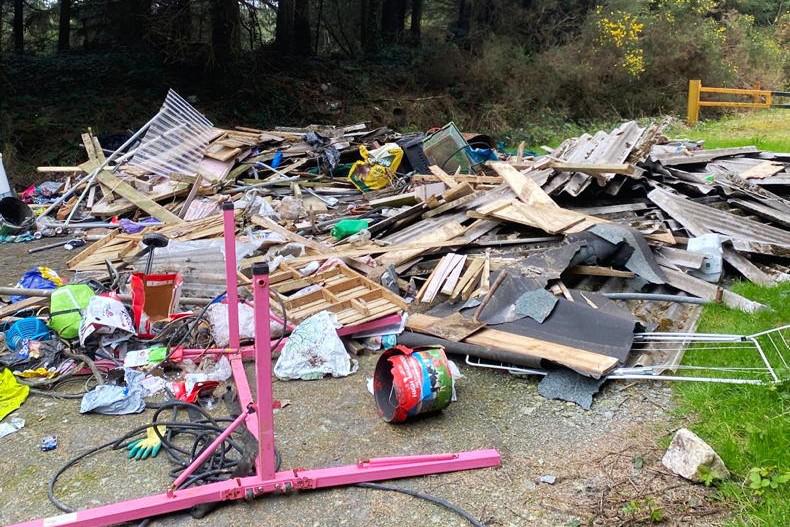
“You can’t begin to imagine the kind of waste you find left on the side of rural roads. In the most recent incident, we found industrial waste that contained asbestos. That required a specialist clean-up operation, but I’ve no problem going through household rubbish to find some kind of information that would identify the culprits. I’d have to use gloves and a picker to keep myself safe from glass and needles, but I’m willing to do it.
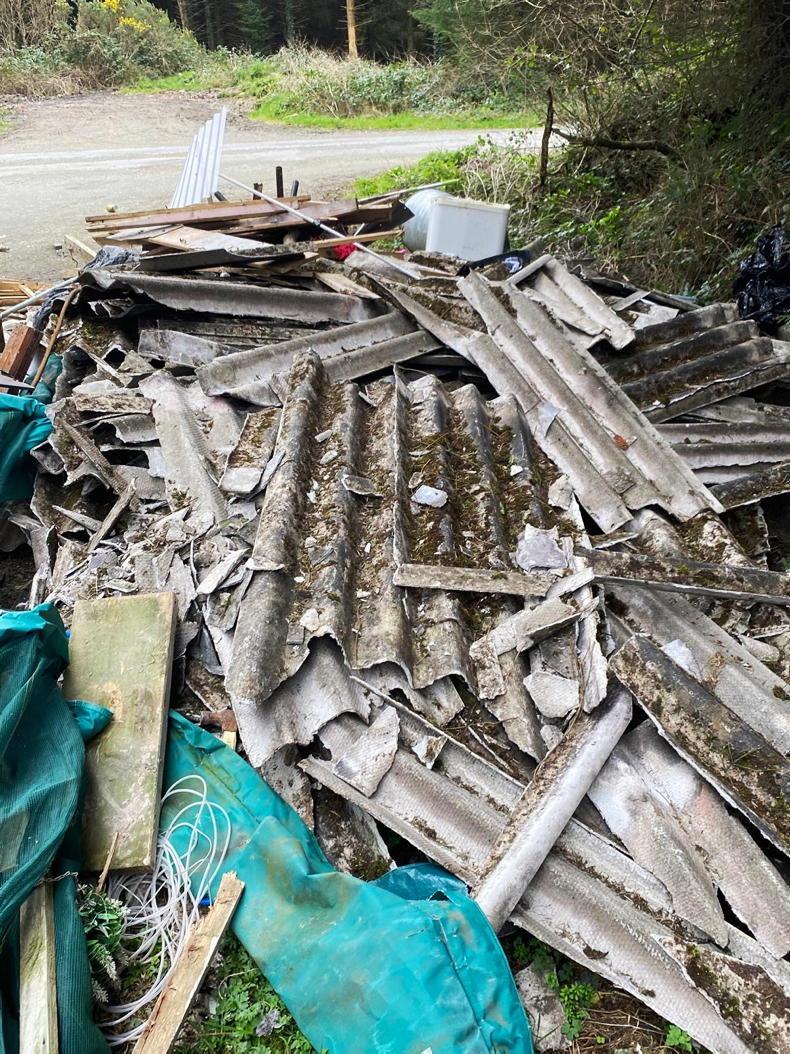
illegally dumped waste at Ballywilliam Co Wexford.
“I’ve told people in my own community that if they find rubbish, not to touch it, but let me know and I’ll happily go through it myself. I’ve been in court many times as a witness in prosecutions and at this stage, I’m sure I’ve over 20 summons put through the council process.”
John believes the low level of fines for offenders is enabling the problem to continue, as is the lack of enforcement on the payment of fines.
“One thing that really annoys me as a councillor is the fact I have no way of finding out if a fine has been paid,” he adds.
“The fines are too low, what’s €150 to people nowadays? That’s if they even bother paying it. I think the penalty should be increased to a minimum of €500 and that we should have a list of offenders, named and shamed. That might deter people from this kind of thing.”
The local authority in Wexford has recently passed a motion to introduce CCTV cameras in a number of litter black spots in the county, but Cllr Fleming believes more should be done.
“We have found waste dumped from other counties here in Wexford. It seems rogue waste operators are at work here, dumping lorry loads of stuff which is frightening,” says John.

Wexford Fianna Fáil Cllr John Fleming.
“While it’s good to see the introduction of CCTV for litter black spots, it isn’t the solution. Primary school children seem to have a very good understanding of how to care for the environment but I’m not sure enough is being done to reinforce the message in secondary schools.
“People should have to prove they are disposing of their waste legally as the effects of illegal dumping are huge and it’s not just the environment.
“I’m an auctioneer and when I’m showing properties to prospective buyers, if they see rubbish on the roads leading up to a house, they’re going to think an area is rough and not want to move there. Similarly, the impression this gives tourists to the area is awful.”
Drones in Westmeath
Up in Westmeath, where the clean up costs for removing illegal dumping are also towards the upper end of the scale at €470,640, another local councillor says getting people to take pride in their communities would help combat the problem.
Cllr Tom Farrell, is a Fine Gael representative for the Athlone Moate Muncipal district on the local authority.
He says the amount of money being spent cleaning up rubbish dumped illegally could be better spent delivering services to constituents throughout the county.
“The bogs around here are particular black spots for illegal dumping as they are easily accessed and have multiple entry and exit points,” he explains.

Fine Gael Cllr Tom Farrell in Westmeath.
“We are trying to use a number of measures to combat the problem including the introduction of drones in recent months, although the jury is out so far on how effective this technology is.
“We are relying on people to do the right thing in disposing of their rubbish legally. Unfortunately, a large cohort of the public are ignoring this and dumping in the countryside.
“Tidy Towns groups throughout the county do amazing work and deserve huge credit for what they’re doing especially in Moate, Kilbeggan and Tyrrellspass.
“However, we need to reinforce the message that people need to have pride of place in their communities.
“In our area in Drumraney, we take a road each, with locals coming together to clear it of rubbish, which we bag up and then the council comes and takes it away. The message is getting through to some, but we need to keep the pressure on.
“People standing up against illegal dumping, and reporting those they believe responsible, is the only way we will combat it.”
What you can do to report waste
The PURE Project in Co Wicklow, that takes in the Dublin mountains is credited with keeping the local authority’s annual spend on illegal dumping clean- up operations relatively low (€149,815 in 2025), compared to other county councils. The Positive Use of Remote Environment initiative uses educational programmes and community initiatives such as the Pure Mile.The See it? Say it! app has been developed to help people report any environmental pollution they see, via their phones. It is designed to make it easier to point out environmental pollution such as dumping of litter.A 24-hour National Environmental Complaints hotline to report illegal dumping can be reached on 1800 365 123. In most cases you should contact your local authority if you have a query or complaint about litter, dumping or burning of waste. If you want to explore the environment in your area, you can find up-to-date information about water quality, air quality, radon gas, noise levels and more from the Environmental Protection Agency. See epa.ie/our-services
Over €4m of taxpayers’ money was spent clearing rural Ireland of illegally dumped waste in 2025, in what has become a ‘scourge’ of the countryside, according to local representatives.
The figure was obtained through a series of Freedom of Information requests, made by Irish Country Living, to all 25 local authorities outside Dublin, to determine how much illegal dumping is costing rural parts of the country.
Some authorities were unable to release the clean-up figures, as they are not yet determined in overall budgets, while others refused to extract illegal dumping clean-up costs from more general budgetary figures.
The research also discovered that despite the huge costs involved, the total number of fines and prosecutions issued by county councils across the country remains stubbornly low at 263, with many councils failing to issue any fines or proceedings against offenders.
Government supports each local authority through an Anti-Dumping Initiative fund, set up in 2017 to identify high-risk or problem areas. The fund has provided over €23m in the past nine years, helping to remove over 26,400 tonnes of waste from the countryside.
Kildare County Council had the highest expenditure in 2025, with €535,877 spent clearing illegally dumped waste. The local authority received €39,083 through the Government’s Anti-Dumping Initiative fund.
At the other end of the scale, Leitrim County Council spent €27,166 in clean- up costs, while it received €136,803.18 under the Anti-Dumping Initiative.
In Wexford, the 2025 bill stands at €413,800. Local Fianna Fáil councillor John Fleming says it is time for a national environmental campaign to combat the problem once and for all.
Cllr Fleming, who has represented the New Ross Municipal District since 2014, has been trying to clean up his local area for many years.
“Illegal dumping has become a scourge of the countryside and it is quite annoying at this stage,” he explains.
Countryside scourge
“We are finding a lot of waste, some of it hazardous, being dumped near forestry land as more and more people are going further up into the mountains to find quieter, more concealed areas to dump stuff.
“You can’t begin to imagine the kind of waste you find left on the side of rural roads. In the most recent incident, we found industrial waste that contained asbestos. That required a specialist clean-up operation, but I’ve no problem going through household rubbish to find some kind of information that would identify the culprits. I’d have to use gloves and a picker to keep myself safe from glass and needles, but I’m willing to do it.
illegally dumped waste at Ballywilliam Co Wexford.
“I’ve told people in my own community that if they find rubbish, not to touch it, but let me know and I’ll happily go through it myself. I’ve been in court many times as a witness in prosecutions and at this stage, I’m sure I’ve over 20 summons put through the council process.”
John believes the low level of fines for offenders is enabling the problem to continue, as is the lack of enforcement on the payment of fines.
“One thing that really annoys me as a councillor is the fact I have no way of finding out if a fine has been paid,” he adds.
“The fines are too low, what’s €150 to people nowadays? That’s if they even bother paying it. I think the penalty should be increased to a minimum of €500 and that we should have a list of offenders, named and shamed. That might deter people from this kind of thing.”
The local authority in Wexford has recently passed a motion to introduce CCTV cameras in a number of litter black spots in the county, but Cllr Fleming believes more should be done.
“We have found waste dumped from other counties here in Wexford. It seems rogue waste operators are at work here, dumping lorry loads of stuff which is frightening,” says John.
Wexford Fianna Fáil Cllr John Fleming.
“While it’s good to see the introduction of CCTV for litter black spots, it isn’t the solution. Primary school children seem to have a very good understanding of how to care for the environment but I’m not sure enough is being done to reinforce the message in secondary schools.
“People should have to prove they are disposing of their waste legally as the effects of illegal dumping are huge and it’s not just the environment.
“I’m an auctioneer and when I’m showing properties to prospective buyers, if they see rubbish on the roads leading up to a house, they’re going to think an area is rough and not want to move there. Similarly, the impression this gives tourists to the area is awful.”
Drones in Westmeath
Up in Westmeath, where the clean up costs for removing illegal dumping are also towards the upper end of the scale at €470,640, another local councillor says getting people to take pride in their communities would help combat the problem.
Cllr Tom Farrell, is a Fine Gael representative for the Athlone Moate Muncipal district on the local authority.
He says the amount of money being spent cleaning up rubbish dumped illegally could be better spent delivering services to constituents throughout the county.
“The bogs around here are particular black spots for illegal dumping as they are easily accessed and have multiple entry and exit points,” he explains.
Fine Gael Cllr Tom Farrell in Westmeath.
“We are trying to use a number of measures to combat the problem including the introduction of drones in recent months, although the jury is out so far on how effective this technology is.
“We are relying on people to do the right thing in disposing of their rubbish legally. Unfortunately, a large cohort of the public are ignoring this and dumping in the countryside.
“Tidy Towns groups throughout the county do amazing work and deserve huge credit for what they’re doing especially in Moate, Kilbeggan and Tyrrellspass.
“However, we need to reinforce the message that people need to have pride of place in their communities.
“In our area in Drumraney, we take a road each, with locals coming together to clear it of rubbish, which we bag up and then the council comes and takes it away. The message is getting through to some, but we need to keep the pressure on.
“People standing up against illegal dumping, and reporting those they believe responsible, is the only way we will combat it.”
What you can do to report waste
The PURE Project in Co Wicklow, that takes in the Dublin mountains is credited with keeping the local authority’s annual spend on illegal dumping clean- up operations relatively low (€149,815 in 2025), compared to other county councils. The Positive Use of Remote Environment initiative uses educational programmes and community initiatives such as the Pure Mile.The See it? Say it! app has been developed to help people report any environmental pollution they see, via their phones. It is designed to make it easier to point out environmental pollution such as dumping of litter.A 24-hour National Environmental Complaints hotline to report illegal dumping can be reached on 1800 365 123. In most cases you should contact your local authority if you have a query or complaint about litter, dumping or burning of waste. If you want to explore the environment in your area, you can find up-to-date information about water quality, air quality, radon gas, noise levels and more from the Environmental Protection Agency. See epa.ie/our-services









SHARING OPTIONS