‘Nois cúpla ceist’ is a line featured in the lyrics of the hugely popular Belfast rap group Kneecap’s song, H.O.O.D, one of many that are being credited with giving the Irish language a renewed popularity among an ever-growing audience.
While the bilingual trio from Belfast are known for their controversial stage performances, the cúpla ceist being asked throughout the country in recent years is how those who have a simmering grá for the teanga, can return to speaking it after they’ve left the Modh Coinníollach and the Tuiseal Ginideach of their schooldays firmly behind.
Rap isn’t the most inclusive of musical genres across the generations, but a growing number of pop-up Gaeltachts and coircal comhrá groups around the country are seeing a rise in numbers as more and more people return to their native tongue.
Brian Foy is a member of Athlone’s pop-up Gaeltacht that has proven so successful since it was established eight years ago, it has spawned a second, spin-off group, Tóg Sos Linn, in the town.
“The pop-up Gaeltacht group meet in pubs throughout the town every Thursday night and typically between 12 and 14 people show up every week,” explains Brian.
“The night is divided into a Bun Rang (beginners) that runs from 7pm-8pm, followed by a Mean rang (moderate) from 8pm-9pm and after that it’s an open group from 9pm, with some people staying all night to enjoy the caint (chat) and often a bit of ceol (music).
Younger generation
“Tóg Sos Linn meet on Monday mornings in Café Nero in the town where they set aside a table and welcome us wholeheartedly. This suits those people who may not be comfortable going to a pub or who just prefer to meet up during the day. We find that when the other patrons in the café hear us speaking Irish, they try to join in.
We have a great mix of people from retired to younger people who want to resurrect their Irish. We even have some teachers who want to improve their Irish and don’t feel as much pressure as if they attended a formal class.”
Brian decided to address his own level of Irish when his son started attending Gaelscoil Naomh Pádraig in Lucan, where he lived before moving to Athlone.
“I started learning Irish again in 2007 when I was asked to join the parents’ association at my son’s gaelscoil,” he says.
“I always had an interest in education and then when I was asked to join the school’s board of management, I was conscious that my Irish wasn’t good enough. I had to interview people for jobs when I ended up as BoM chair so I was very glad I had decided to brush up on my Irish, having studied an online degree with what was then the National University of Ireland, Galway,” he adds.
Brian says he found the pop-up Gaeltacht a wonderful way to meet new people when he first moved to Athlone.
“I had heard about the pop-up Gaeltacht and the first night I wandered into the wrong pub. When I asked the barman where it was, he knew where to send me. From that night on I’ve never looked back.
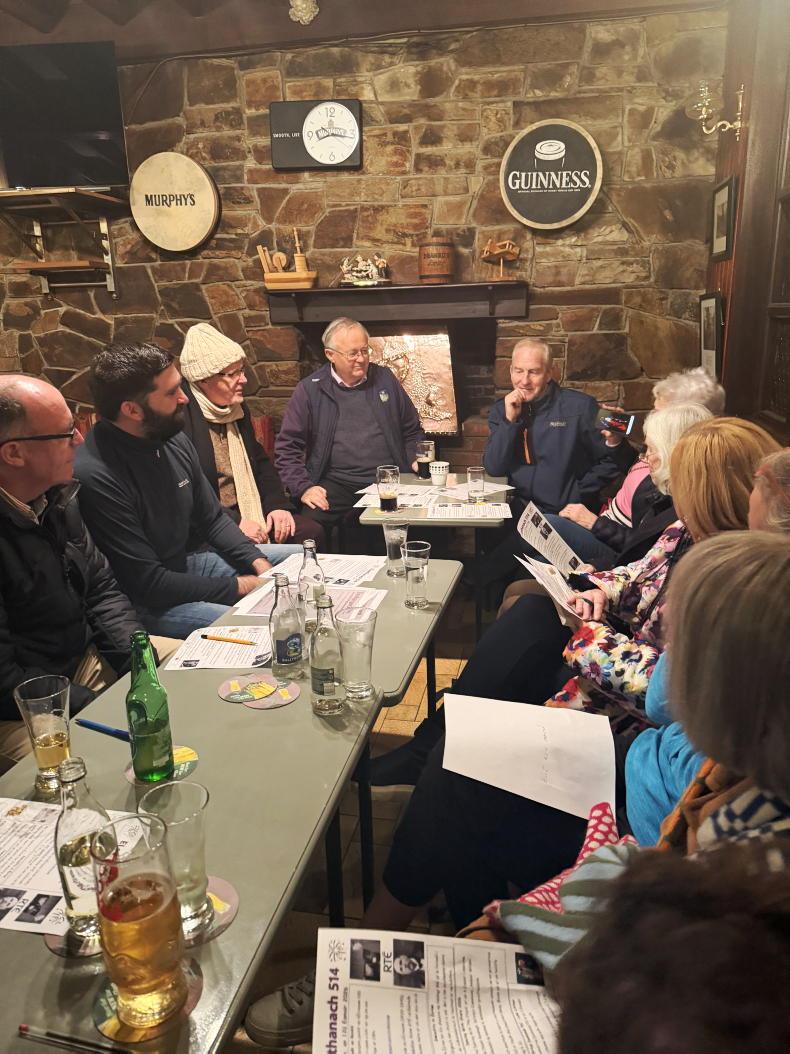
Coircal Comhrá in Ardmore, Co Waterford.
Cultural respect
“The biggest problem outside of media and education is that there is no opportunity for the general public to use the language on a daily basis.
“As Ireland has become more multi-cultural, people are realising that language is interlinked with identity and they see the value in having their own.
“A quarter of a century ago there was little to no respect for the Irish language on a mainstream level but there is now a cultural respect for it, especially among our younger generation,” says Brian.
“We would love to see more younger people attend our group, and we know the interest is there, but they probably look on us as a bunch of old fogeys. So, we’re hoping someone young will take the initiative to set up their own group.
“It used to be the case that people who had survived Irish in the school system were afraid to use it once they left education as the grammar police would put them off if they weren’t speaking the language perfectly.
“But it’s amazing how many doors open around the world when you start speaking Irish and I don’t put it all down to the popularity of the likes of Kneecap. I think people are realising the value of their own language and using it has become a positive experience.”

Belfast rappers Kneecap
Pronunciation
Teresa Lenane and her brother Nicholas are involved in a Ciorcal Comhrá in Ardmore, Co Waterford, set up last year by Teresa and Dungarvan businesswoman Isabel Ronanye Healy.
“Isabel is the owner of Isabel’s Place in Dungarvan, where she uses Irish every day in the shop, through bilingual product labels, complete with pronunciation. She encourages her customers to use their cúpla focail and the response led us to set up a ciorcal here in Ardmore and see what kind of interest there was locally,” says Teresa.
“Nicholas is our facilitator whereas I get to help out with the promotion and the other fun stuff. We have been running the weekly ciorcal since last April and haven’t missed a week since, even over Christmas.”
The Ardmore ciorcal ground themselves in a weekly newsletter distributed by Maynooth University to kickstart the conversation at the start of their meet-up.
“We start every week going through the eLeathanach and that progresses into reading, translating and chatting as Gaeilge, where we can talk about anything from music to poetry to history,” adds Teresa.
“Highlights throughout our first year included a visit from the grandson of Antarctic explorer Tom Crean, who told stories about his grandad as Gaeilge. Some of our ciorcal regulars have featured in a local Irish film as extras. We tend to bring the ciorcal to a close each week with Irish songs, organised by Sean Dunne who brings his guitar and we’ve also had an approach by the Dungarvan ciorcal to join our group.”
Teresa says one of the reasons the group has proven so successful is the support of Caroline Keevers, owner of the local pub where the group meet up.
“Keevers Bar have been great supporters of us since we started, facilitating our ciorcal every week and Caroline has a special appreciation of the value in supporting and promoting our native language,” she says.
“She has worked in languages for over 35 years, and as a co-founder of the TEFL Institute she knows how impactful it is to help people learn and improve their language skills.
“Our ciorcal has been driven by the local community who want to address the lack of services and facilities in rural Ireland and to celebrate the Irish language which is so special.
“It’s not so long ago that people weren’t allowed to even speak Irish in this country so we know it’s a privilege and being able to speak and practice our native language is an honour, no matter to what extent.
“We’ve had over 100 people through the door in the past 11 months and we’d have between 10 and 20 people on any given night. We welcome everyone of all ages and all abilities. We’ve even had tourists come in who’ve been trying to learn on Duolingo, and local people aged from 18 all the way to 80.”
See @athlonegaeltacht and @keevers_barardmore on Instagram.
Get the Irish conversation circle started
There are many conversation circles taking place around the country, including Irish language community groups, walking groups through Irish and sports teams that operate through Irish. There are groups that are suitable to every level and ability of the language.
These conversation circles give people the opportunity to use their Irish, and it doesn’t matter if you’re a learner with a cúpla focal or a native speaker who wants to meet new people with the language.
There’s no cost or extra time needed to be a part of the Caint & Comhrá network, from a lunch break or a coffee break that people would be taking anyway, but now it will be taken in a different setting in the company of other people with an interest in the language.
When the time, place and contact details for the conversation circle are sorted, you can send the details to caint@cnag.ie or you can register the event on scéal.ie yourself.
You can find all of the information on existing conversation circles in your area. See scéal.ie
Caint & Comhrá logo.
As Gaeilge
Is iomaí Ciorcal Comhrá atá ar siúl ar fud na tíre, maraon le grúpaí pobail Ghaeilge, grúpaí siúil trí Ghaeilge agus foirne spóirt a fheidhmíonn trí Ghaeilge.
Tá grúpaí éagsúla in oiriúint do gach leibhéal agus cumas teanga. Tugann na ciorcal chomhrá seo deis do dhaoine a gcuid Gaeilge a úsáid, is cuma más foghlaimeoir le cúpla focal iad nó cainteoir ó dhúchais atá ag iarraidh bualadh le daoine nua le Gaeilge acu.
Níl aon chostas nó am breise de dhíth chun páirt a ghlacadh i ngréasán Gaeilge Caint & Comhrá, ó seo am lóin nó sos caife a bheadh á ghlacadh ag daoine ar aon nós, ach beidh sé á ghlacadh acu i suíomh éagsúil anois i dteannta daoine eile sa tsuim sa teanga. Nuair atá am, áit agus sonraí teagmhála agat don chiorcal comhrá, seol na sonraí chuig: caint@cnag.ie nó is féidir imeachtaí a chlarú ar scéal.ie féin.
Is féidir teacht ar Chiorcal Comhrá i do cheantar fhéin ag baint úsáid as rannóg “Imeachtaí” ar scéal.ie
‘Nois cúpla ceist’ is a line featured in the lyrics of the hugely popular Belfast rap group Kneecap’s song, H.O.O.D, one of many that are being credited with giving the Irish language a renewed popularity among an ever-growing audience.
While the bilingual trio from Belfast are known for their controversial stage performances, the cúpla ceist being asked throughout the country in recent years is how those who have a simmering grá for the teanga, can return to speaking it after they’ve left the Modh Coinníollach and the Tuiseal Ginideach of their schooldays firmly behind.
Rap isn’t the most inclusive of musical genres across the generations, but a growing number of pop-up Gaeltachts and coircal comhrá groups around the country are seeing a rise in numbers as more and more people return to their native tongue.
Brian Foy is a member of Athlone’s pop-up Gaeltacht that has proven so successful since it was established eight years ago, it has spawned a second, spin-off group, Tóg Sos Linn, in the town.
“The pop-up Gaeltacht group meet in pubs throughout the town every Thursday night and typically between 12 and 14 people show up every week,” explains Brian.
“The night is divided into a Bun Rang (beginners) that runs from 7pm-8pm, followed by a Mean rang (moderate) from 8pm-9pm and after that it’s an open group from 9pm, with some people staying all night to enjoy the caint (chat) and often a bit of ceol (music).
Younger generation
“Tóg Sos Linn meet on Monday mornings in Café Nero in the town where they set aside a table and welcome us wholeheartedly. This suits those people who may not be comfortable going to a pub or who just prefer to meet up during the day. We find that when the other patrons in the café hear us speaking Irish, they try to join in.
We have a great mix of people from retired to younger people who want to resurrect their Irish. We even have some teachers who want to improve their Irish and don’t feel as much pressure as if they attended a formal class.”
Brian decided to address his own level of Irish when his son started attending Gaelscoil Naomh Pádraig in Lucan, where he lived before moving to Athlone.
“I started learning Irish again in 2007 when I was asked to join the parents’ association at my son’s gaelscoil,” he says.
“I always had an interest in education and then when I was asked to join the school’s board of management, I was conscious that my Irish wasn’t good enough. I had to interview people for jobs when I ended up as BoM chair so I was very glad I had decided to brush up on my Irish, having studied an online degree with what was then the National University of Ireland, Galway,” he adds.
Brian says he found the pop-up Gaeltacht a wonderful way to meet new people when he first moved to Athlone.
“I had heard about the pop-up Gaeltacht and the first night I wandered into the wrong pub. When I asked the barman where it was, he knew where to send me. From that night on I’ve never looked back.
Coircal Comhrá in Ardmore, Co Waterford.
Cultural respect
“The biggest problem outside of media and education is that there is no opportunity for the general public to use the language on a daily basis.
“As Ireland has become more multi-cultural, people are realising that language is interlinked with identity and they see the value in having their own.
“A quarter of a century ago there was little to no respect for the Irish language on a mainstream level but there is now a cultural respect for it, especially among our younger generation,” says Brian.
“We would love to see more younger people attend our group, and we know the interest is there, but they probably look on us as a bunch of old fogeys. So, we’re hoping someone young will take the initiative to set up their own group.
“It used to be the case that people who had survived Irish in the school system were afraid to use it once they left education as the grammar police would put them off if they weren’t speaking the language perfectly.
“But it’s amazing how many doors open around the world when you start speaking Irish and I don’t put it all down to the popularity of the likes of Kneecap. I think people are realising the value of their own language and using it has become a positive experience.”
Belfast rappers Kneecap
Pronunciation
Teresa Lenane and her brother Nicholas are involved in a Ciorcal Comhrá in Ardmore, Co Waterford, set up last year by Teresa and Dungarvan businesswoman Isabel Ronanye Healy.
“Isabel is the owner of Isabel’s Place in Dungarvan, where she uses Irish every day in the shop, through bilingual product labels, complete with pronunciation. She encourages her customers to use their cúpla focail and the response led us to set up a ciorcal here in Ardmore and see what kind of interest there was locally,” says Teresa.
“Nicholas is our facilitator whereas I get to help out with the promotion and the other fun stuff. We have been running the weekly ciorcal since last April and haven’t missed a week since, even over Christmas.”
The Ardmore ciorcal ground themselves in a weekly newsletter distributed by Maynooth University to kickstart the conversation at the start of their meet-up.
“We start every week going through the eLeathanach and that progresses into reading, translating and chatting as Gaeilge, where we can talk about anything from music to poetry to history,” adds Teresa.
“Highlights throughout our first year included a visit from the grandson of Antarctic explorer Tom Crean, who told stories about his grandad as Gaeilge. Some of our ciorcal regulars have featured in a local Irish film as extras. We tend to bring the ciorcal to a close each week with Irish songs, organised by Sean Dunne who brings his guitar and we’ve also had an approach by the Dungarvan ciorcal to join our group.”
Teresa says one of the reasons the group has proven so successful is the support of Caroline Keevers, owner of the local pub where the group meet up.
“Keevers Bar have been great supporters of us since we started, facilitating our ciorcal every week and Caroline has a special appreciation of the value in supporting and promoting our native language,” she says.
“She has worked in languages for over 35 years, and as a co-founder of the TEFL Institute she knows how impactful it is to help people learn and improve their language skills.
“Our ciorcal has been driven by the local community who want to address the lack of services and facilities in rural Ireland and to celebrate the Irish language which is so special.
“It’s not so long ago that people weren’t allowed to even speak Irish in this country so we know it’s a privilege and being able to speak and practice our native language is an honour, no matter to what extent.
“We’ve had over 100 people through the door in the past 11 months and we’d have between 10 and 20 people on any given night. We welcome everyone of all ages and all abilities. We’ve even had tourists come in who’ve been trying to learn on Duolingo, and local people aged from 18 all the way to 80.”
See @athlonegaeltacht and @keevers_barardmore on Instagram.
Get the Irish conversation circle started
There are many conversation circles taking place around the country, including Irish language community groups, walking groups through Irish and sports teams that operate through Irish. There are groups that are suitable to every level and ability of the language.
These conversation circles give people the opportunity to use their Irish, and it doesn’t matter if you’re a learner with a cúpla focal or a native speaker who wants to meet new people with the language.
There’s no cost or extra time needed to be a part of the Caint & Comhrá network, from a lunch break or a coffee break that people would be taking anyway, but now it will be taken in a different setting in the company of other people with an interest in the language.
When the time, place and contact details for the conversation circle are sorted, you can send the details to caint@cnag.ie or you can register the event on scéal.ie yourself.
You can find all of the information on existing conversation circles in your area. See scéal.ie
Caint & Comhrá logo.
As Gaeilge
Is iomaí Ciorcal Comhrá atá ar siúl ar fud na tíre, maraon le grúpaí pobail Ghaeilge, grúpaí siúil trí Ghaeilge agus foirne spóirt a fheidhmíonn trí Ghaeilge.
Tá grúpaí éagsúla in oiriúint do gach leibhéal agus cumas teanga. Tugann na ciorcal chomhrá seo deis do dhaoine a gcuid Gaeilge a úsáid, is cuma más foghlaimeoir le cúpla focal iad nó cainteoir ó dhúchais atá ag iarraidh bualadh le daoine nua le Gaeilge acu.
Níl aon chostas nó am breise de dhíth chun páirt a ghlacadh i ngréasán Gaeilge Caint & Comhrá, ó seo am lóin nó sos caife a bheadh á ghlacadh ag daoine ar aon nós, ach beidh sé á ghlacadh acu i suíomh éagsúil anois i dteannta daoine eile sa tsuim sa teanga. Nuair atá am, áit agus sonraí teagmhála agat don chiorcal comhrá, seol na sonraí chuig: caint@cnag.ie nó is féidir imeachtaí a chlarú ar scéal.ie féin.
Is féidir teacht ar Chiorcal Comhrá i do cheantar fhéin ag baint úsáid as rannóg “Imeachtaí” ar scéal.ie





SHARING OPTIONS