A self-confessed townie even though he lived in a village, Michael B Barry chuckles as he recalls vivid memories of travelling on a horse and cart the couple of miles from his homeplace in west Cork to his uncle’s farm as a youngster.
“I remember going on the horse and cart from Ballydehob out the two or three miles to stay on my uncle’s farm in Goleen, and I loved it, of course. I spent lots of summers there. When you scratch most people in Ireland, they are only a generation or two away from a farm.”
While he subsequently lived in cities in the years afterwards, Michael always found farming life interesting, noting that it is “built into the Irish”.
He leant into this experience and the fond memories of his childhood for a beautiful chronicle of life on the land, all told through over 200 colourised photos from the late 19th century to the end of the 20th century.
Rather than a technical tome, The Irish Farm in Colour, by Michael B Barry and John O’Byrne, is an attempt, the authors say, to capture the essence of Irish farming, its rhythms, its resilience and a deep connection to the land via photos, history and storytelling.
Author Alice Taylor, writing in her introduction, captures this idea beautifully when she talks about walking back into the Ireland that nurtured all our roots within the covers of the book.
“In the first part I was introduced to an Ireland recalled by my parents, grandmother and old neighbours, and in the second half I walked back into an Ireland that I myself remembered.”
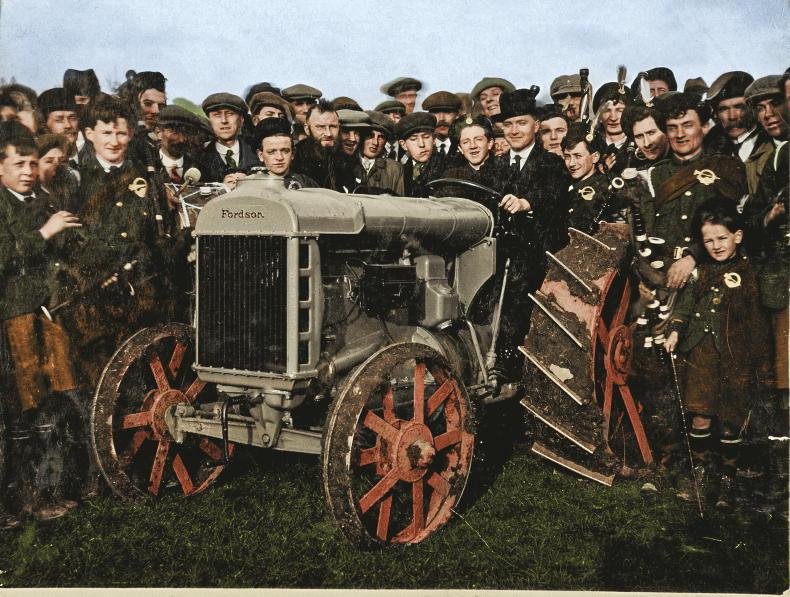
Cork Lord Mayor Tomás MacCurtain pictured on the Fordson Major manufactured in the city by Henry Ford in 1920.
Living memories
This is something Michael can identify with too because at 76, many of the photos used evoke living memories for him, from rural electrification to ‘The Stations’ to the visit of the circus or travelling in a horse and cart.
Using a fantastic treasure trove of photos from a variety of sources, the evolution of the countryside of the past is brought to life in glorious colour. These include collections in the National Library, photos taken for the Congested Districts Board, private collections and, interestingly, many from the Library of Congress in Washington, taken by American photographers who visited Ireland to document life in the countryside.
Asked what surprised him most throughout this book journey, Michael replies that several things stood out for him. The first was the stark contrast between life in the countryside on the west coast versus the east.
“The American photographers [of the 19th century] seem to focus on the picturesque [west coast] and the peasant outside the cabin. Remember, it was the Atlantic seaboard where the poverty was. By contrast, the farming people on the east coast were on the good land, whether they were tenants or owners of small farms – they lived in decent houses and were well dressed. I suppose the Americans were looking for the picturesque and the quaint.”
One thing he didn’t like was the disparaging tone of some of these photos, perhaps reflecting the WASP-ish sentiment in the States following huge influxes of Irish emigrants in the 19th century. And, while he expected poverty and evictions to feature strongly, he was taken aback by the militant nature of the latter.
“These evictions were heavy-duty; there is one great photo [from Co Clare in 1888] showing about 150 army and RIC men with a big battering ram to beat down the door. There’s a picture of the bailiffs with wicker shields to protect them from the scalding water being thrown on them. Following that, there are pictures of tenants who are living in holes in the ground after being evicted.”
Land agitation benefits
Another interesting fact he learned researching and writing the book was how the land agitation of the late 19th century and the Land League led to the British government passing several “socially advanced” land acts, which actually granted Irish farmers the opportunity to buy their land from the landlord. This contrasted hugely with the situation for farmers elsewhere.
“Strangely enough, they didn’t have that [land ownership] in England or Scotland,” he reveals. “I think it is around 30 or 40% of farmers in England who are still tenants. Ireland, treated badly in the Union, still leapt ahead in social advances (land ownership).”
A former civil engineer with 20 books under his belt, Michael was also fascinated by the move from working by hand in the fields to, say, the horse-drawn mower, which was four times faster, to then, years later, the steam tractor and the diesel tractor in the 20th century.
“I wanted the social aspect and the whole joy of rural life as well (to be in the book),” he explains, referring to events like dancing at the crossroads and the various Fleadhs or religious ceremonies.
“I always remember the circus came to town once a year. There’s a great picture of Duffy’s Circus wintering in Dunmanway. Talk about being exotic in a west Cork town,” he laughs.
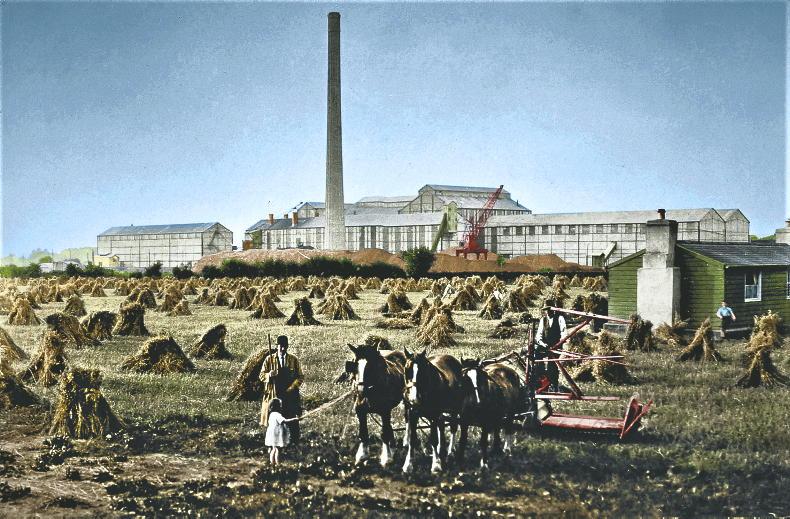
A view of haymaking in the shadow of the sugar factory in Carlow.
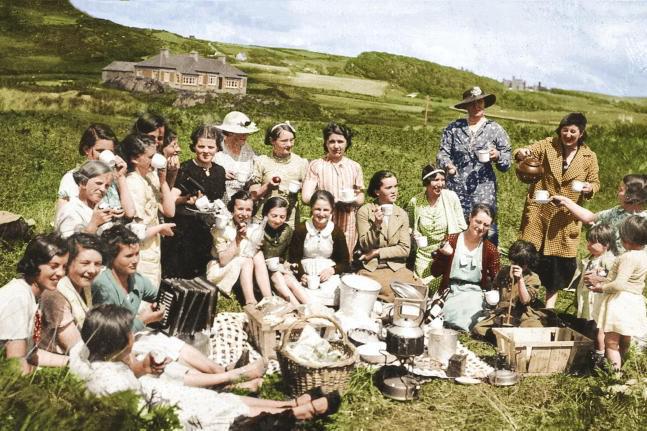
“Another I like is the family saying the Angelus in the field because it is very evocative of a very famous French painting by Jean-François Millet (1859). This scene is in Ballina.” He also mentions favourably a photo of an ICA group visiting Owenahincha beach in Rosscarbery, supplied by a friend of his whose father did photography in Co Cork.
“I remember going to ‘The Stations’ [mass in homes]. There were very social occasions, and there is a photo there from the Holy Year where they are carrying a cross from Inniskeen in Co Cork. My uncle in Goleen was responsible for putting the cross up on the mountain nearby, Cnoc na Madra,” he recalls.
“In the political end of things, I was surprised to see the picture of the Lord Mayor of Cork, Tomás MacCurtain, driving a Fordson tractor just months before he was assassinated.”
For Michael, the “seminal” advance for country dwellers was rural electrification, described in the book as the greatest social revolution in rural life since the land reforms of the late 19th century. While the populace were somewhat sceptical at the start, they were soon won over. Several wonderful photos illustrate this magnificently; one in particular shows an ESB man demonstrating to a farmer and his wife how it would change their life for the better by showcasing a fridge, an iron, an oven and an electric kettle.
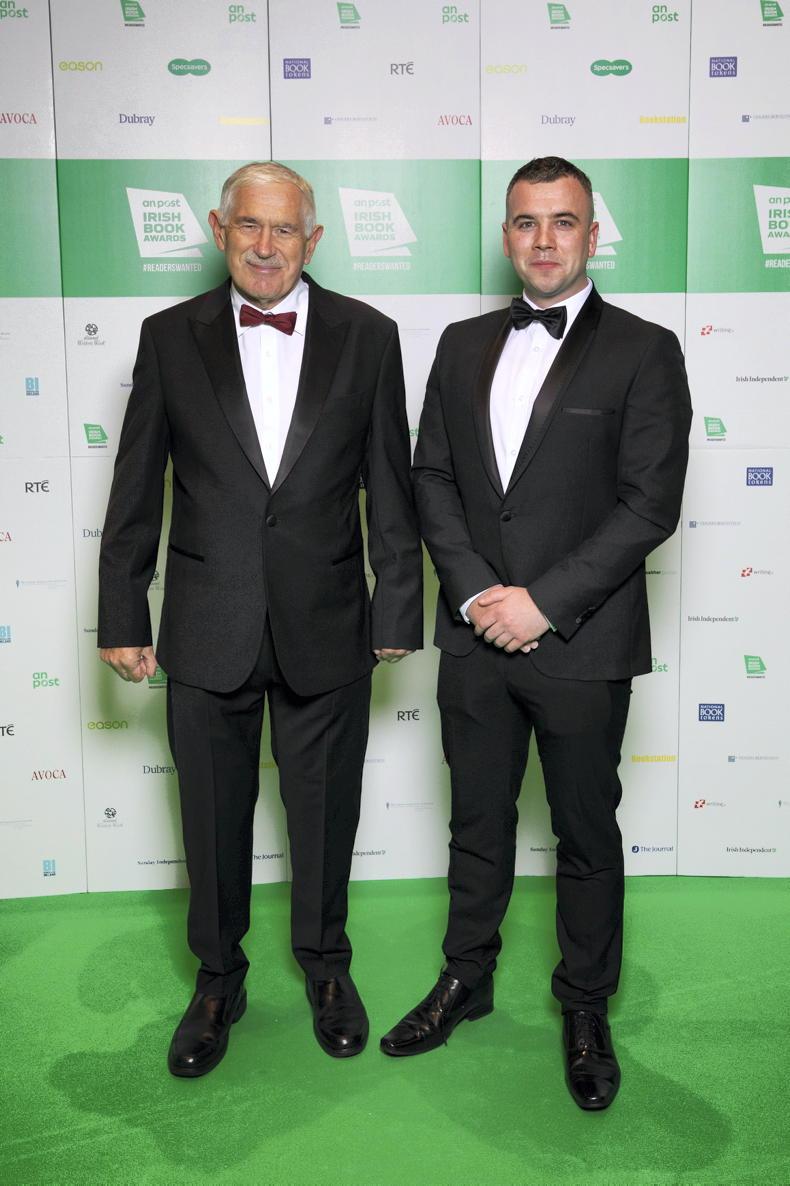
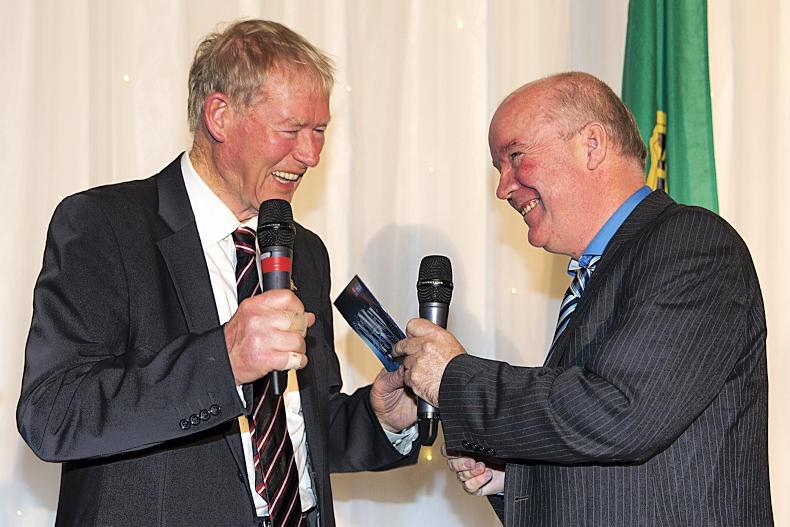
Michael B Barry and John O'Byrne pictured at last year’s An Post Irish Book Awards in late November.
While Michael is responsible for the words and context, the book would be nothing without the evocative photos, and he is full of praise for John O’Byrne’s part in the project, the fourth in the series they have worked on together. Unlike others, Michael says John colourises the pictures individually rather than using AI. He also painstakingly researches the colours of the uniforms in the photos and the correct shades for the many different elements of country life.
“We feel this gives it a richer, more natural result, and the proof is in the pudding. It has been a very successful partnership – John and I,” he enthuses. For Michael, nothing beats the “thrill and joy of getting the first book into your hands”, and he hopes to enjoy that feeling again in the future.
The Irish Farm in Colour is published by Gill, €27.99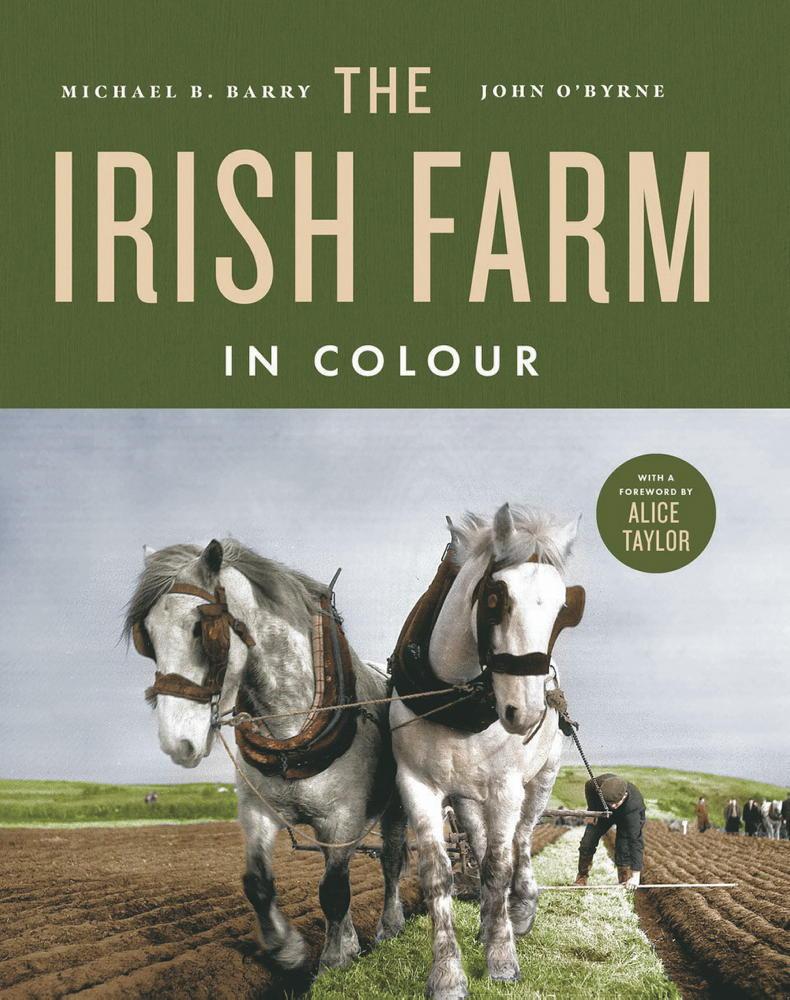
A self-confessed townie even though he lived in a village, Michael B Barry chuckles as he recalls vivid memories of travelling on a horse and cart the couple of miles from his homeplace in west Cork to his uncle’s farm as a youngster.
“I remember going on the horse and cart from Ballydehob out the two or three miles to stay on my uncle’s farm in Goleen, and I loved it, of course. I spent lots of summers there. When you scratch most people in Ireland, they are only a generation or two away from a farm.”
While he subsequently lived in cities in the years afterwards, Michael always found farming life interesting, noting that it is “built into the Irish”.
He leant into this experience and the fond memories of his childhood for a beautiful chronicle of life on the land, all told through over 200 colourised photos from the late 19th century to the end of the 20th century.
Rather than a technical tome, The Irish Farm in Colour, by Michael B Barry and John O’Byrne, is an attempt, the authors say, to capture the essence of Irish farming, its rhythms, its resilience and a deep connection to the land via photos, history and storytelling.
Author Alice Taylor, writing in her introduction, captures this idea beautifully when she talks about walking back into the Ireland that nurtured all our roots within the covers of the book.
“In the first part I was introduced to an Ireland recalled by my parents, grandmother and old neighbours, and in the second half I walked back into an Ireland that I myself remembered.”
Cork Lord Mayor Tomás MacCurtain pictured on the Fordson Major manufactured in the city by Henry Ford in 1920.
Living memories
This is something Michael can identify with too because at 76, many of the photos used evoke living memories for him, from rural electrification to ‘The Stations’ to the visit of the circus or travelling in a horse and cart.
Using a fantastic treasure trove of photos from a variety of sources, the evolution of the countryside of the past is brought to life in glorious colour. These include collections in the National Library, photos taken for the Congested Districts Board, private collections and, interestingly, many from the Library of Congress in Washington, taken by American photographers who visited Ireland to document life in the countryside.
Asked what surprised him most throughout this book journey, Michael replies that several things stood out for him. The first was the stark contrast between life in the countryside on the west coast versus the east.
“The American photographers [of the 19th century] seem to focus on the picturesque [west coast] and the peasant outside the cabin. Remember, it was the Atlantic seaboard where the poverty was. By contrast, the farming people on the east coast were on the good land, whether they were tenants or owners of small farms – they lived in decent houses and were well dressed. I suppose the Americans were looking for the picturesque and the quaint.”
One thing he didn’t like was the disparaging tone of some of these photos, perhaps reflecting the WASP-ish sentiment in the States following huge influxes of Irish emigrants in the 19th century. And, while he expected poverty and evictions to feature strongly, he was taken aback by the militant nature of the latter.
“These evictions were heavy-duty; there is one great photo [from Co Clare in 1888] showing about 150 army and RIC men with a big battering ram to beat down the door. There’s a picture of the bailiffs with wicker shields to protect them from the scalding water being thrown on them. Following that, there are pictures of tenants who are living in holes in the ground after being evicted.”
Land agitation benefits
Another interesting fact he learned researching and writing the book was how the land agitation of the late 19th century and the Land League led to the British government passing several “socially advanced” land acts, which actually granted Irish farmers the opportunity to buy their land from the landlord. This contrasted hugely with the situation for farmers elsewhere.
“Strangely enough, they didn’t have that [land ownership] in England or Scotland,” he reveals. “I think it is around 30 or 40% of farmers in England who are still tenants. Ireland, treated badly in the Union, still leapt ahead in social advances (land ownership).”
A former civil engineer with 20 books under his belt, Michael was also fascinated by the move from working by hand in the fields to, say, the horse-drawn mower, which was four times faster, to then, years later, the steam tractor and the diesel tractor in the 20th century.
“I wanted the social aspect and the whole joy of rural life as well (to be in the book),” he explains, referring to events like dancing at the crossroads and the various Fleadhs or religious ceremonies.
“I always remember the circus came to town once a year. There’s a great picture of Duffy’s Circus wintering in Dunmanway. Talk about being exotic in a west Cork town,” he laughs.
A view of haymaking in the shadow of the sugar factory in Carlow.
“Another I like is the family saying the Angelus in the field because it is very evocative of a very famous French painting by Jean-François Millet (1859). This scene is in Ballina.” He also mentions favourably a photo of an ICA group visiting Owenahincha beach in Rosscarbery, supplied by a friend of his whose father did photography in Co Cork.
“I remember going to ‘The Stations’ [mass in homes]. There were very social occasions, and there is a photo there from the Holy Year where they are carrying a cross from Inniskeen in Co Cork. My uncle in Goleen was responsible for putting the cross up on the mountain nearby, Cnoc na Madra,” he recalls.
“In the political end of things, I was surprised to see the picture of the Lord Mayor of Cork, Tomás MacCurtain, driving a Fordson tractor just months before he was assassinated.”
For Michael, the “seminal” advance for country dwellers was rural electrification, described in the book as the greatest social revolution in rural life since the land reforms of the late 19th century. While the populace were somewhat sceptical at the start, they were soon won over. Several wonderful photos illustrate this magnificently; one in particular shows an ESB man demonstrating to a farmer and his wife how it would change their life for the better by showcasing a fridge, an iron, an oven and an electric kettle.
Michael B Barry and John O'Byrne pictured at last year’s An Post Irish Book Awards in late November.
While Michael is responsible for the words and context, the book would be nothing without the evocative photos, and he is full of praise for John O’Byrne’s part in the project, the fourth in the series they have worked on together. Unlike others, Michael says John colourises the pictures individually rather than using AI. He also painstakingly researches the colours of the uniforms in the photos and the correct shades for the many different elements of country life.
“We feel this gives it a richer, more natural result, and the proof is in the pudding. It has been a very successful partnership – John and I,” he enthuses. For Michael, nothing beats the “thrill and joy of getting the first book into your hands”, and he hopes to enjoy that feeling again in the future.
The Irish Farm in Colour is published by Gill, €27.99





SHARING OPTIONS