As soaring energy prices set to increase the pressure on farm families across the country, rural households are being urged to educate themselves on understanding their utility bills in order to save money.
The Government announced a package of measures last week to ease rising fuel prices with a cut in the excise duty of 20 cent a litre on diesel and 15 cent on petrol until the end of May.
A further two cent National Oil Reserves Agency (NORA) level was also paused for two months, which applies to both fuels and home heating oil.
Rising fertiliser prices are also likely to have a big impact on food prices in the months ahead, further increasing pressure on over-stretched families all over the country.
Global uncertainty
An information clinic hosted by Offaly County Council’s Climate Action Team has been demystifying electricity bills for people as well as highlighting how much the average household spends on wasted energy by leaving appliances on standby mode.
These ‘energy vipers’ or ‘always on’ costs can lead to bill payers spending hundreds of euros on unused electricity, with a breakdown of the worst offenders outlined at the event that was held in Tullamore Library last week.
Sinead McEvoy is the community climate action officer with the council. Along with her colleague Jerome Shannon, energy officer for Offaly County Council, she encouraged those at the clinic to learn how to read their electricity bills to maximise savings and monitor their energy usage.
“Shopping around for electricity providers before your current deal expires is the quickest and easiest way to save money on your bill, but it also helps to understand what you’re paying for,” she explains.
“That is one of the main reasons we are hosting this event, to help people understand their bills and what the different figures represent and how they’re applied to unit rates and standing charges.
“I’ve been sharing my own household bill with people and by doing so I’ve discovered I’m spending as much on electricity for cooking purposes as I am on these ‘always on’ appliances.”
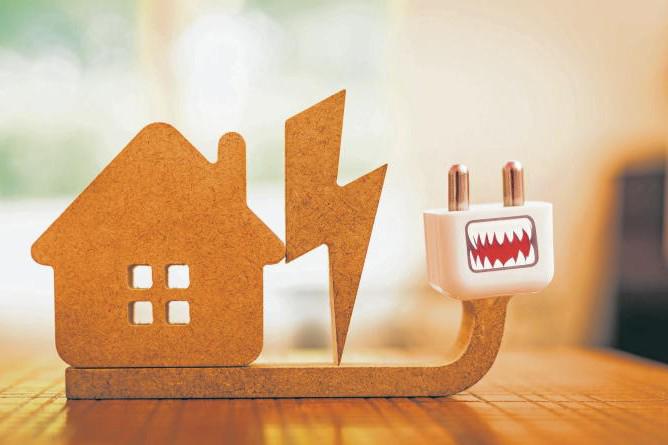
A good habit is to review your electricity bills regularly to understand your average monthly and annual energy consumption. \iStock
With oils prices increasing again this week, no end in sight to the global uncertainty affecting international markets, and a warning from the head of the International Energy Agency that the global economy is facing a major, major threat because of the US/Israel-Iran war, families are braced for further financial pressure.
Household applicances
Sandra Mullins lives on the outskirts of Tullamore town. The mother of three adult children, all of whom live at home, says she has become very conscious of the rising cost of living in recent months.
“I’m trying to cut back all the time and now that two of my three children have recently moved home, I’m finding it harder and harder to keep on top of things,” she says. “My husband recently changed both our electricity provider and our phone provider and we cancelled our TV subscription as it didn’t make financial sense to be paying out that kind of money every month. For a long time now, I’ve had to be very careful what I put into my shopping basket but I still want to learn more about other ways I can save.”
If anything, you’re probably being overcharged given so many of these bills are estimates. But the real benefit of a smart meter is the fact it is read every 15 to 30 minutes so you can keep track of your energy usage, even if you don’t sign up to a smart plan
When Sandra was shown the table of how much energy is consumed by common household appliances when left on standby instead of being turned off and unplugged, she was happy that her suspicions had been proven correct.
“My husband doesn’t believe in energy vipers and I’m constantly going around the house unplugging chargers that have been left in sockets with the switches turned on. The kids all have TVs in their bedrooms so it’s shocking to discover how much energy we’re paying for that is being wasted when things aren’t turned off.
“I’ll be pinning this table up to the fridge so that I can show them the fact of the matter.”
Sandra says she was advised against installing a smart meter, but says she is open to changing her mind on the issue if doing so could save her money. Jerome says the only difference between smart and conventional meters is the ability of smart meters to track energy usage, which customers can then use to their advantage.
“It’s an urban myth that the springs on older meters, where the energy usage is clocked on an analogue device, grow less efficient over time and you’re charged less than the energy you use,” he explains.
“If anything, you’re probably being overcharged given so many of these bills are estimates. But the real benefit of a smart meter is the fact it is read every 15 to 30 minutes so you can keep track of your energy usage, even if you don’t sign up to a smart plan.”
Sinead says most people have the best of intentions when it comes to conserving energy, particularly in light of current global events that have predicted a very rocky road ahead for energy prices.
But she believes changing habits is the bit everyone struggles with.
“With the best will in the world, we won’t remember to turn everything off or to schedule our dishwasher or washing machine to come on after midnight, but even if you only change one behaviour, you will see the difference in your bill,” she adds.
“I’ve only discovered through preparing for this clinic that I’m spending as much money on my ‘always on’ appliances – those things like phone chargers and the TV, as I am on my cooking appliances. Which is ridiculous when I could be saving that money simply by turning things off.”

Sinead McEvoy, Community Climate Action Officer Offaly County Council.
Sinead also argues that whatever your stance on smart meters, it is worth contacting your energy supplier to ensure you are on the right plan.
“By setting up an account on ESB Networks, once you have a smart meter installed, you can download your usage and then upload this information on to an energy cost calculator that will give you the best option for you in terms of what plan is most cost effective,” she explains.
“No one knows what lies ahead in terms of energy shortages and we anticipate that more and more people will need to know how to moderate their consumption, both in terms of affordability and availability of energy in the months ahead.”
While attendance at last week’s event was sporadic, the Climate Action Team are planning to host another similar clinic over the summer, when they expect rising costs that will have impacted more families will force people to confront the issue.
“We urged people to bring along their electricity bills so maybe that was a step too far for some, but we are here to help,” adds Sinead.
“Things are hard enough trying to pay for everything. When there’s a way to save money, we are hoping that people will feel confident to make that call to other energy providers, or to engage with their existing company to secure a better deal. That’s going to be a lot easier if you understand what ways you use electricity now and how changing a few habits could lead to significant savings.”
Below shows the appliances that drain your energy, and your purse, when left on standby mode, which include a TV, a mini fridge, a room dehumidifier and an Xbox games console.
Customers with a smart meter can request their energy usage and upload it to the UCD Energy Institute’s energy cost calculator, energycostcalculator.ie, to learn how to save money on energy bills. Helpful hints are available on seai.ie
As soaring energy prices set to increase the pressure on farm families across the country, rural households are being urged to educate themselves on understanding their utility bills in order to save money.
The Government announced a package of measures last week to ease rising fuel prices with a cut in the excise duty of 20 cent a litre on diesel and 15 cent on petrol until the end of May.
A further two cent National Oil Reserves Agency (NORA) level was also paused for two months, which applies to both fuels and home heating oil.
Rising fertiliser prices are also likely to have a big impact on food prices in the months ahead, further increasing pressure on over-stretched families all over the country.
Global uncertainty
An information clinic hosted by Offaly County Council’s Climate Action Team has been demystifying electricity bills for people as well as highlighting how much the average household spends on wasted energy by leaving appliances on standby mode.
These ‘energy vipers’ or ‘always on’ costs can lead to bill payers spending hundreds of euros on unused electricity, with a breakdown of the worst offenders outlined at the event that was held in Tullamore Library last week.
Sinead McEvoy is the community climate action officer with the council. Along with her colleague Jerome Shannon, energy officer for Offaly County Council, she encouraged those at the clinic to learn how to read their electricity bills to maximise savings and monitor their energy usage.
“Shopping around for electricity providers before your current deal expires is the quickest and easiest way to save money on your bill, but it also helps to understand what you’re paying for,” she explains.
“That is one of the main reasons we are hosting this event, to help people understand their bills and what the different figures represent and how they’re applied to unit rates and standing charges.
“I’ve been sharing my own household bill with people and by doing so I’ve discovered I’m spending as much on electricity for cooking purposes as I am on these ‘always on’ appliances.”
A good habit is to review your electricity bills regularly to understand your average monthly and annual energy consumption. \iStock
With oils prices increasing again this week, no end in sight to the global uncertainty affecting international markets, and a warning from the head of the International Energy Agency that the global economy is facing a major, major threat because of the US/Israel-Iran war, families are braced for further financial pressure.
Household applicances
Sandra Mullins lives on the outskirts of Tullamore town. The mother of three adult children, all of whom live at home, says she has become very conscious of the rising cost of living in recent months.
“I’m trying to cut back all the time and now that two of my three children have recently moved home, I’m finding it harder and harder to keep on top of things,” she says. “My husband recently changed both our electricity provider and our phone provider and we cancelled our TV subscription as it didn’t make financial sense to be paying out that kind of money every month. For a long time now, I’ve had to be very careful what I put into my shopping basket but I still want to learn more about other ways I can save.”
If anything, you’re probably being overcharged given so many of these bills are estimates. But the real benefit of a smart meter is the fact it is read every 15 to 30 minutes so you can keep track of your energy usage, even if you don’t sign up to a smart plan
When Sandra was shown the table of how much energy is consumed by common household appliances when left on standby instead of being turned off and unplugged, she was happy that her suspicions had been proven correct.
“My husband doesn’t believe in energy vipers and I’m constantly going around the house unplugging chargers that have been left in sockets with the switches turned on. The kids all have TVs in their bedrooms so it’s shocking to discover how much energy we’re paying for that is being wasted when things aren’t turned off.
“I’ll be pinning this table up to the fridge so that I can show them the fact of the matter.”
Sandra says she was advised against installing a smart meter, but says she is open to changing her mind on the issue if doing so could save her money. Jerome says the only difference between smart and conventional meters is the ability of smart meters to track energy usage, which customers can then use to their advantage.
“It’s an urban myth that the springs on older meters, where the energy usage is clocked on an analogue device, grow less efficient over time and you’re charged less than the energy you use,” he explains.
“If anything, you’re probably being overcharged given so many of these bills are estimates. But the real benefit of a smart meter is the fact it is read every 15 to 30 minutes so you can keep track of your energy usage, even if you don’t sign up to a smart plan.”
Sinead says most people have the best of intentions when it comes to conserving energy, particularly in light of current global events that have predicted a very rocky road ahead for energy prices.
But she believes changing habits is the bit everyone struggles with.
“With the best will in the world, we won’t remember to turn everything off or to schedule our dishwasher or washing machine to come on after midnight, but even if you only change one behaviour, you will see the difference in your bill,” she adds.
“I’ve only discovered through preparing for this clinic that I’m spending as much money on my ‘always on’ appliances – those things like phone chargers and the TV, as I am on my cooking appliances. Which is ridiculous when I could be saving that money simply by turning things off.”
Sinead McEvoy, Community Climate Action Officer Offaly County Council.
Sinead also argues that whatever your stance on smart meters, it is worth contacting your energy supplier to ensure you are on the right plan.
“By setting up an account on ESB Networks, once you have a smart meter installed, you can download your usage and then upload this information on to an energy cost calculator that will give you the best option for you in terms of what plan is most cost effective,” she explains.
“No one knows what lies ahead in terms of energy shortages and we anticipate that more and more people will need to know how to moderate their consumption, both in terms of affordability and availability of energy in the months ahead.”
While attendance at last week’s event was sporadic, the Climate Action Team are planning to host another similar clinic over the summer, when they expect rising costs that will have impacted more families will force people to confront the issue.
“We urged people to bring along their electricity bills so maybe that was a step too far for some, but we are here to help,” adds Sinead.
“Things are hard enough trying to pay for everything. When there’s a way to save money, we are hoping that people will feel confident to make that call to other energy providers, or to engage with their existing company to secure a better deal. That’s going to be a lot easier if you understand what ways you use electricity now and how changing a few habits could lead to significant savings.”
Below shows the appliances that drain your energy, and your purse, when left on standby mode, which include a TV, a mini fridge, a room dehumidifier and an Xbox games console.
Customers with a smart meter can request their energy usage and upload it to the UCD Energy Institute’s energy cost calculator, energycostcalculator.ie, to learn how to save money on energy bills. Helpful hints are available on seai.ie









SHARING OPTIONS