One third of Irish people have taken up sea swimming since the pandemic, and it’s lauded as one of the best activities for our mental health and wellbeing. But there’s a real difference between a casual dip and having the confidence to swim in open water.
The reality is that open water swimming is a skill that requires guidance and instruction. It involves learning how to stay in cold water for long periods of time, how to control and manage your breath, and how to read the conditions of changing tides and roving waves. Swim coaches around the country have stepped in to fill that knowledge gap, offering open water training for all abilities.
Swim Ireland
Swim Ireland deliver open water programmes every summer in 46 different locations around Ireland. Last year, they ran over 305 programmes and booking for this year will open in the next few weeks. The open water page on the Swim Ireland website contains all the information you need. Rebecca Rolston, who is responsible for the growth of open water swimming at Swim Ireland, says that their courses cater for all abilities. “We have four levels. Level one is for people who have never swam before, maybe not even in a pool. Level four is aimed at people doing a triathlon or swimming events.”
One session costs €10 (or €60 for six sessions). According to Rebecca, demand for Swim Ireland events is growing every year. “I think people are just really enjoying being in the outdoors and connecting with nature. It’s a nice way to bring people back into the sport.”
• swimireland.ie/open-water/swim-ireland-open-water-programmes

Rebecca Rolston of Swim Ireland says they ran over 305 water programmes last year.
Natalie’s lessons
Natalie Shaw-Hamilton runs courses in Clonee Strand, Dungarvan, Co Waterford. She runs intensive week-long courses (€150) catered to triathletes and seasoned open water swimmers, as well as 30-minute lessons for children. Natalie’s weekly classes cost €15 per class or you can purchase a block of six weeks for €90. Natalie also runs sea swimming courses in Fountainstown, Co Cork with her sister Sarah Galvin.
The swim and triathlon coach says that swimming is “an amazing skill to learn”, and she is particularly proud of working with people who “are quite nervous” about swimming, but, through coaching, “overcome that fear.” She adds that lessons are as much about enjoyment as they are about safety, though. “Be safe, make sure you’re with somebody, never dip alone and respect the flags and the beaches massively,” Natalie cautions. •natalieshawhamilton@hotmail.com
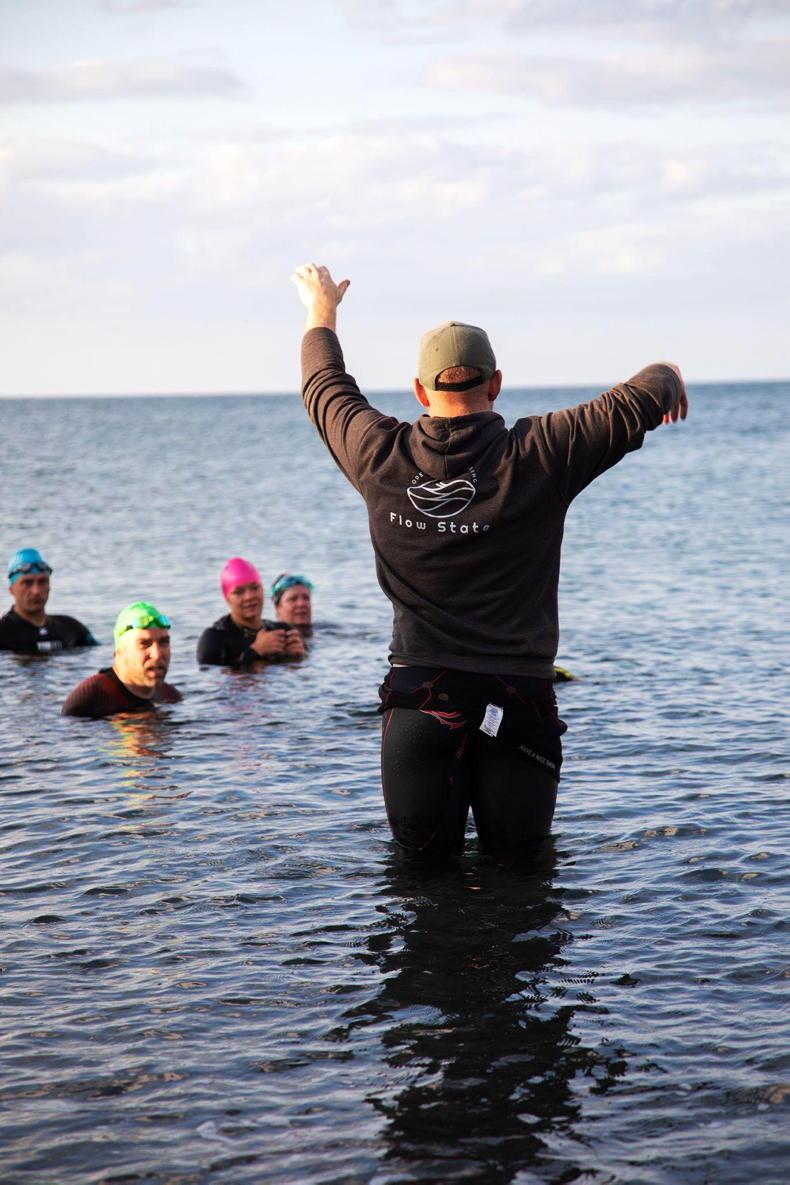
Damien Wildes of Flow State. \ Dylan Troy
Flow State
Swim coach Damien Wildes of Flow State works between Greystones and Bray in Co Wicklow, training adult improvers who want to increase their distance or improve their times. “We work with everybody from short course triathletes to iron men, and also marathon and long-distance swimmers,” says Damien. Between the months of May and September, he runs open water clinics (€45) where the participants learn about the mechanics of taking their stroke from the pool to open water.
These 90-minute open water sessions help swimmers with open water skills like sighting, considering the swim conditions, and course navigation, explains Damien. Flow State also organises overseas open water camps in Majorca that run in May and October. “We have a group of 20 going in May, and we’ll have another group of 20 going over in October,” adds Damien. “It is a performance-focused camp over a couple of days and people enjoy it because they can lock in good training, and good people to train with. And obviously, sunshine helps as well.” Damien shares open water swimming tips on his Instagram
@flowstateswimming. •flowstateswimming.ie
West Cork Swim Coaching
Grainne Caulfield and Poppy Bament provide coaching for swimmers of all abilities from the months of May to September in Clonakilty in west Cork.
According to Grainne, most of the demand is for beginner classes – casual dippers who want to go further. “Dipping and swim are two completely different things,” she says. “Once you put your head in, that’s another level altogether. There’s a huge market for people who want to go from the whole dipping thing to the swimming thing. A lot of women, actually, it’s nearly 75% women.”
A huge part of their clientele are also people who are new to the water or scared of it, she adds. Poppy is trained in aquaphobia and they run very small courses (two to four people maximum) for people who have a phobia of water.
“I had a lady a few years ago, and she graduated from screaming when water went over her ankle to swimming 10k”, says Grainne.
“There’s a big emphasis on safety with all of our groups,” Grainne continues. “We do a good five to 10 minutes safety briefing every single time, and we teach people not only how to swim, but about the environment where they’re swimming, what to look out for, how to cope with rip currents and tides. Prices start at €110 for six weeks of coaching. •@westcorkswimcoaching on Instagram
What gear do I need?
If you are thinking about spending more time in the water this summer, then it would be wise to invest in some proper gear.
If you are a casual dipper, this section is not for you – a swimsuit, towel and warm layers for after are really all you need. But if you are training for a sporting event or taking lessons in the open water, you’ll need more than just a pair of togs. Within a budget of €200 or less, you can buy the appropriate swim gear to keep you comfortable and safe in the open waters.
Wetsuit: This is Ireland. The water is cold. Irish coastal sea temperatures typically range from 6°C to 10°C in winter and rarely exceed 18–19°C in summer. A wet suit is therefore an absolute must for a longer séjour in the sea. Wetsuits come in a range of designs and a basic wet suit costs around €100 to €120.
You may wish to purchase a pair of swim gloves and shoes with your wetsuit. Not only will these keep your hands and toes warm, but you’ll also be glad of them on the very humbling walk (or wobble) back to your swim spot, protecting you from any ragged rocks or stray stones underfoot.
Swim cap: Did you know we lose most of our heat through our heads? A swim cap will help maintain your body temperature during your swim, and it also makes sure that you are visible to others. If you have ever spotted a string of pink, green or luminous yellow capped heads bobbing through the waves on a summer’s day, you’ll know what we’re talking about. But the eye-catching hats worn by swimmers is about anything but style, it’s about safety and being seen.
Googles: It would be useful to see where you’re going as you swim, right? A good pair of googles will transform your swimming experience, quite literally opening your eyes to the beauty of the coastline around you and what lies beneath the waves. Using swimming googles also prevents your eyes from the sting of salt water, reducing the likelihood of infection. A good pair of googles should wrap around your eyes like a watertight seal.
Tow float: A tow float is an inflatable, brightly coloured bag on a string that you attach around your waist and it keeps you visible during your swim. Don’t worry, it won’t slow you down because the float has zero resistance and will lag discreetly behind as you swim.
- Understand the effect of weather and tides.
- Know the signs of hypothermia.
- Bring someone with you.
- Get in slowly to avoid cold water shock.
- Wear a watch to monitor your time.
- Swim parallel to shore.
- Bring extra layers for after and a hot drink, or soup.
- Always respect the open water, know your own limits and listen to advice from officials regarding weather and water conditions.
- If you are planning open water sessions for your club and want to know what safety cover is required and recommended, or you are going to a coached open water session and want to know what safety cover to expect, please review Swim Ireland’s guidelines on swimireland.ie
One third of Irish people have taken up sea swimming since the pandemic, and it’s lauded as one of the best activities for our mental health and wellbeing. But there’s a real difference between a casual dip and having the confidence to swim in open water.
The reality is that open water swimming is a skill that requires guidance and instruction. It involves learning how to stay in cold water for long periods of time, how to control and manage your breath, and how to read the conditions of changing tides and roving waves. Swim coaches around the country have stepped in to fill that knowledge gap, offering open water training for all abilities.
Swim Ireland
Swim Ireland deliver open water programmes every summer in 46 different locations around Ireland. Last year, they ran over 305 programmes and booking for this year will open in the next few weeks. The open water page on the Swim Ireland website contains all the information you need. Rebecca Rolston, who is responsible for the growth of open water swimming at Swim Ireland, says that their courses cater for all abilities. “We have four levels. Level one is for people who have never swam before, maybe not even in a pool. Level four is aimed at people doing a triathlon or swimming events.”
One session costs €10 (or €60 for six sessions). According to Rebecca, demand for Swim Ireland events is growing every year. “I think people are just really enjoying being in the outdoors and connecting with nature. It’s a nice way to bring people back into the sport.”
• swimireland.ie/open-water/swim-ireland-open-water-programmes
Rebecca Rolston of Swim Ireland says they ran over 305 water programmes last year.
Natalie’s lessons
Natalie Shaw-Hamilton runs courses in Clonee Strand, Dungarvan, Co Waterford. She runs intensive week-long courses (€150) catered to triathletes and seasoned open water swimmers, as well as 30-minute lessons for children. Natalie’s weekly classes cost €15 per class or you can purchase a block of six weeks for €90. Natalie also runs sea swimming courses in Fountainstown, Co Cork with her sister Sarah Galvin.
The swim and triathlon coach says that swimming is “an amazing skill to learn”, and she is particularly proud of working with people who “are quite nervous” about swimming, but, through coaching, “overcome that fear.” She adds that lessons are as much about enjoyment as they are about safety, though. “Be safe, make sure you’re with somebody, never dip alone and respect the flags and the beaches massively,” Natalie cautions. •natalieshawhamilton@hotmail.com
Damien Wildes of Flow State. \ Dylan Troy
Flow State
Swim coach Damien Wildes of Flow State works between Greystones and Bray in Co Wicklow, training adult improvers who want to increase their distance or improve their times. “We work with everybody from short course triathletes to iron men, and also marathon and long-distance swimmers,” says Damien. Between the months of May and September, he runs open water clinics (€45) where the participants learn about the mechanics of taking their stroke from the pool to open water.
These 90-minute open water sessions help swimmers with open water skills like sighting, considering the swim conditions, and course navigation, explains Damien. Flow State also organises overseas open water camps in Majorca that run in May and October. “We have a group of 20 going in May, and we’ll have another group of 20 going over in October,” adds Damien. “It is a performance-focused camp over a couple of days and people enjoy it because they can lock in good training, and good people to train with. And obviously, sunshine helps as well.” Damien shares open water swimming tips on his Instagram
@flowstateswimming. •flowstateswimming.ie
West Cork Swim Coaching
Grainne Caulfield and Poppy Bament provide coaching for swimmers of all abilities from the months of May to September in Clonakilty in west Cork.
According to Grainne, most of the demand is for beginner classes – casual dippers who want to go further. “Dipping and swim are two completely different things,” she says. “Once you put your head in, that’s another level altogether. There’s a huge market for people who want to go from the whole dipping thing to the swimming thing. A lot of women, actually, it’s nearly 75% women.”
A huge part of their clientele are also people who are new to the water or scared of it, she adds. Poppy is trained in aquaphobia and they run very small courses (two to four people maximum) for people who have a phobia of water.
“I had a lady a few years ago, and she graduated from screaming when water went over her ankle to swimming 10k”, says Grainne.
“There’s a big emphasis on safety with all of our groups,” Grainne continues. “We do a good five to 10 minutes safety briefing every single time, and we teach people not only how to swim, but about the environment where they’re swimming, what to look out for, how to cope with rip currents and tides. Prices start at €110 for six weeks of coaching. •@westcorkswimcoaching on Instagram
What gear do I need?
If you are thinking about spending more time in the water this summer, then it would be wise to invest in some proper gear.
If you are a casual dipper, this section is not for you – a swimsuit, towel and warm layers for after are really all you need. But if you are training for a sporting event or taking lessons in the open water, you’ll need more than just a pair of togs. Within a budget of €200 or less, you can buy the appropriate swim gear to keep you comfortable and safe in the open waters.
Wetsuit: This is Ireland. The water is cold. Irish coastal sea temperatures typically range from 6°C to 10°C in winter and rarely exceed 18–19°C in summer. A wet suit is therefore an absolute must for a longer séjour in the sea. Wetsuits come in a range of designs and a basic wet suit costs around €100 to €120.
You may wish to purchase a pair of swim gloves and shoes with your wetsuit. Not only will these keep your hands and toes warm, but you’ll also be glad of them on the very humbling walk (or wobble) back to your swim spot, protecting you from any ragged rocks or stray stones underfoot.
Swim cap: Did you know we lose most of our heat through our heads? A swim cap will help maintain your body temperature during your swim, and it also makes sure that you are visible to others. If you have ever spotted a string of pink, green or luminous yellow capped heads bobbing through the waves on a summer’s day, you’ll know what we’re talking about. But the eye-catching hats worn by swimmers is about anything but style, it’s about safety and being seen.
Googles: It would be useful to see where you’re going as you swim, right? A good pair of googles will transform your swimming experience, quite literally opening your eyes to the beauty of the coastline around you and what lies beneath the waves. Using swimming googles also prevents your eyes from the sting of salt water, reducing the likelihood of infection. A good pair of googles should wrap around your eyes like a watertight seal.
Tow float: A tow float is an inflatable, brightly coloured bag on a string that you attach around your waist and it keeps you visible during your swim. Don’t worry, it won’t slow you down because the float has zero resistance and will lag discreetly behind as you swim.
- Understand the effect of weather and tides.
- Know the signs of hypothermia.
- Bring someone with you.
- Get in slowly to avoid cold water shock.
- Wear a watch to monitor your time.
- Swim parallel to shore.
- Bring extra layers for after and a hot drink, or soup.
- Always respect the open water, know your own limits and listen to advice from officials regarding weather and water conditions.
- If you are planning open water sessions for your club and want to know what safety cover is required and recommended, or you are going to a coached open water session and want to know what safety cover to expect, please review Swim Ireland’s guidelines on swimireland.ie







SHARING OPTIONS