Three and a half years after its introduction, the Vacant Property Refurbishment Grant (VPRG) is helping to restore thousands of older homes to liveable status throughout rural Ireland, with Government figures revealing over 4,500 grants have been paid out to homeowners since 2023.
The grant offers €50,000 to homeowners renovating a vacant property and €70,000 where the property is deemed derelict. It has been credited with offering greater choice to prospective homeowners, particularly those who cannot afford spiralling house prices in urban areas, which show no sign of abating.
Delivered by the Department of Housing’s Croí na Conaithe policy, the VPRG grant has paid out a total of €246,902,441 since its inception in 2022. The Government has issued an ambitious target of bringing 20,000 homes back into use by 2030, through the grant. Last year, it was extended to include ‘over the shop properties’ whose owners can avail of a grant of up to €140,000.
To qualify for the scheme, all properties must have been built before 2007 and be vacant for two years or more at the time of application, with evidence required to prove this.
While the grant is administered through local authorities, some are proving more timely than others in releasing funds on completion of the works.
Looking towards the counties with the highest success rate of grant drawdown, Leinster steals the march. Kildare takes the top spot with 61% of successful applications being paid out by the local authority by December 2025. County councils in Laois (56%), Louth (45%) and Meath (44%) are also at the upper end of the table.
At the other end of the scale, Galway homeowners have only a 23% success rate so far, with Cavan (26%), Kerry (27%), Mayo (28%) and Wicklow (28%) among those with the lowest drawdown rates.
Irish Country Living has spoken to two families in neighbouring counties, Westmeath and Roscommon, who are at opposite ends of their home renovation journey to hear of their experience in applying for and drawing down VRPG funding.

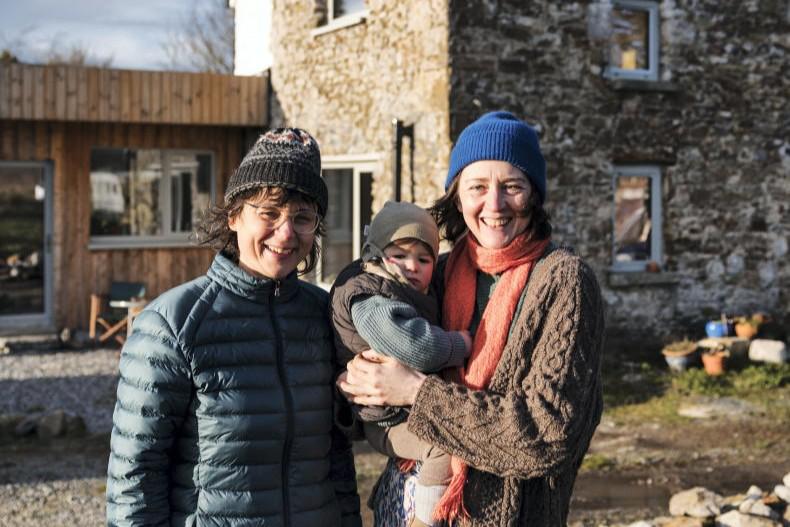
Rose Greene and Margaux Dejardin with their daughter Violet.
Rose Greene and
Margaux Dejardin
Rose Greene and her partner Margaux Dejardin live in a 200-year-old farmhouse at Rathinaspick, close to the Longford/Westmeath border which they have returned to a family home, thanks to the VPRG.
“We bought the house in 2019 after we returned to Ireland from France, and had moved back in to my family home. There were some barns included with the house and we renovated them to develop our food business,” explains Rose.
Rose says she and Margaux were lucky in that they had already purchased their home, before the grant came along.
“There has been criticism around the grant in some quarters with claims that the money has led to price inflation in the property market in rural towns and villages, for older homes that were previously overlooked,” she remarks.
“We were lucky that we found the house before the grant was introduced as we know a lot of areas where people reckon the VPRG is responsible for pushing up the price of derelict houses.
“The house is a traditional two-up, two-down farmhouse and was vacant for 10 years before we bought it. It was like stepping into history when we went through the front door for the first time as everything had been left as it had been when the previous owner passed away. There were broken roof tiles and ivy covering the southside of the house, along with crumbling lime mortar on the interior walls so we knew we had a big job ahead of us.
“We were very naïve buying it, but as we didn’t qualify for a mortgage and had used our savings to purchase the house, we had no option but to upskill and do the work ourselves to keep costs low. We also wanted to ensure we maintained the building’s original features, using traditional methods.
“As soon as we heard about the VPRG we applied for it as we knew that we needed an extension to the house. We were very fortunate to deal with Westmeath County Council as we know from talking to friends that each local authority seems to have different criteria. The man we dealt with, Mark Fitzpatrick, was so helpful and made the process easy.
“Having to get quotations for everything took an awful lot of time but it was time well spent as if we hadn’t got the grant we probably wouldn’t have been able to live in the house.”
Rose says one of the benefits of the VPRG is the freedom given to recipients to shop around for the best supply
deals.
“The beauty of VPRG is it allows you to buy the materials yourself, which was a big help in terms of getting quality suppliers at the right price. I know some people aren’t happy with the Sustainable Energy Authority of Ireland (SEAI) grants, where the contractor doing the work sources the materials and that feels slightly unjust,” she explains.
“We were also lucky that my brother works in construction so he was a huge help to us and we also weren’t paying rent while waiting for the work to be done on the house. We are very aware of the fact a lot of people don’t have that kind of support.
“It was scary at times but there’s no way we could have paid a contractor to do the work that the VPRG allowed us to do. We were facing a lot of challenges at the time it was all happening, from going through fertility treatment and
suffering miscarriages, to caring for my sick mum.
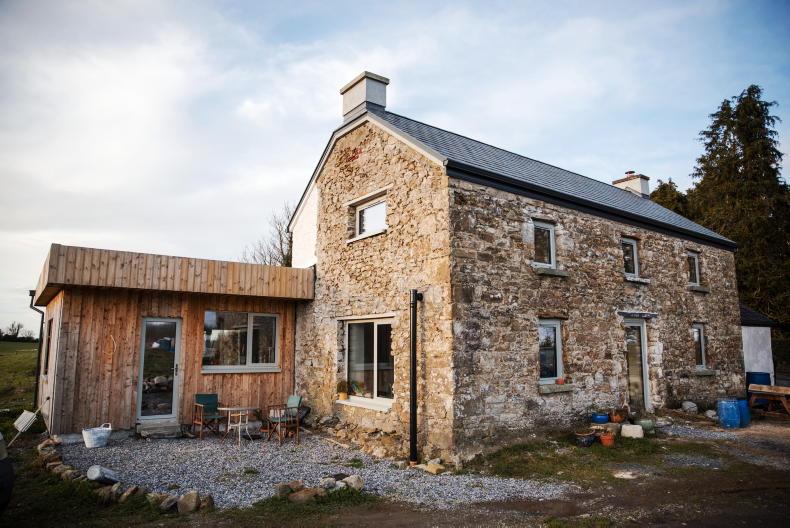
Rose Greene and Margaux Dejardin spent the past three years restoring their 200-year-old farmhouse with the aid of the VPRG. \Claire Nash
“Looking back, we are so glad we persevered. We were able to draw down our grant of €70,000 last February and have been enjoying our new home ever since.
“It’s a great initiative and one people should consider if they are open to buying an older property that can be renovated to a forever home.”
Kevin King
Meanwhile over in Co Roscommon, Kevin King is at the start of his VPRG journey having secured a €70,000 grant to help restore an old cottage he inherited near Castlerea.
Speaking to Irish Country Living Kevin says the grant is a win-win for rural Ireland and the wider country as it is increasing both housing stock and exchequer funds.
“I inherited an old three-bed cottage from my uncle about 15 years ago, along with a bit of land in the village of Treen,” he explains.
“I planted the land with trees and didn’t really know what to do with the house until last year when I decided I would do it up to rent it out. I’ve most of the land planted with forestry so there’s about an acre left around the house, which had become a bit of an eyesore.
“This grant means I can now do the work needed to get it back in shape and rent it out to a family. Even though it took me the bones of 13 months to clear all the hurdles with the grant, we’re ready to go now and hope to have it finished by the end of the year.”
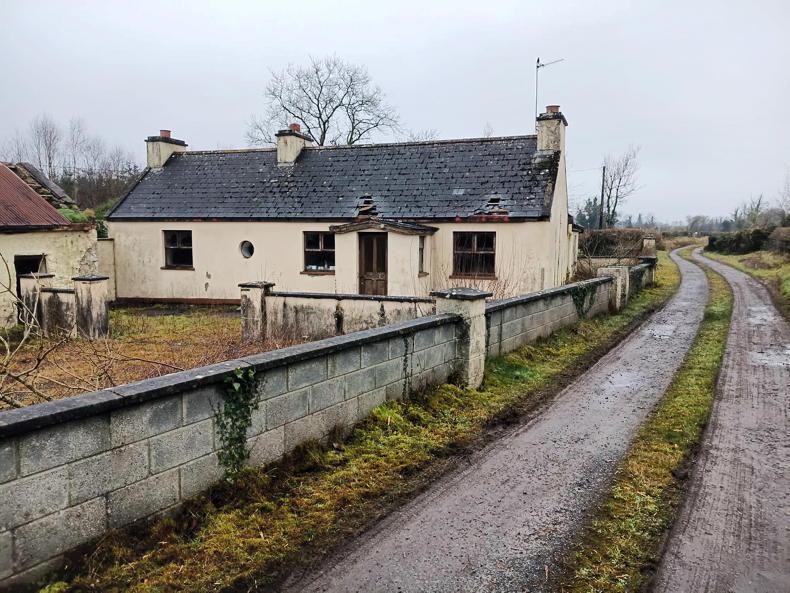
The derelict cottage in Treen, Co Roscommon, owned by Kevin King, who has been granted VPRG funding to restore the property.
Securing the grant
Kevin says he has spent approximately €2,500 on securing the grant, including the cost of an engineer’s report to confirm dereliction, and solicitors’ fees.
He also had to sign a declaration that confirmed he would lease the property out when the all repair and building works were complete on the property.
“I’ve never done anything like this before. The paperwork is a bit complicated and a little costly but the way I see it, if I’m bringing a house back onto the market then that has to be a win,” he adds.
“The biggest winner in all of this is the State as they’ll be getting their property tax on all these renovated, formerly vacant and derelict houses. In my case, they’ll also be getting half the rental income I make, in tax.
“People give out about the VPRG but I can’t see it as anything other than a success. To get these rural houses lived in again and be contributing to the economy is a win-win.”

Figure 1.
Three and a half years after its introduction, the Vacant Property Refurbishment Grant (VPRG) is helping to restore thousands of older homes to liveable status throughout rural Ireland, with Government figures revealing over 4,500 grants have been paid out to homeowners since 2023.
The grant offers €50,000 to homeowners renovating a vacant property and €70,000 where the property is deemed derelict. It has been credited with offering greater choice to prospective homeowners, particularly those who cannot afford spiralling house prices in urban areas, which show no sign of abating.
Delivered by the Department of Housing’s Croí na Conaithe policy, the VPRG grant has paid out a total of €246,902,441 since its inception in 2022. The Government has issued an ambitious target of bringing 20,000 homes back into use by 2030, through the grant. Last year, it was extended to include ‘over the shop properties’ whose owners can avail of a grant of up to €140,000.
To qualify for the scheme, all properties must have been built before 2007 and be vacant for two years or more at the time of application, with evidence required to prove this.
While the grant is administered through local authorities, some are proving more timely than others in releasing funds on completion of the works.
Looking towards the counties with the highest success rate of grant drawdown, Leinster steals the march. Kildare takes the top spot with 61% of successful applications being paid out by the local authority by December 2025. County councils in Laois (56%), Louth (45%) and Meath (44%) are also at the upper end of the table.
At the other end of the scale, Galway homeowners have only a 23% success rate so far, with Cavan (26%), Kerry (27%), Mayo (28%) and Wicklow (28%) among those with the lowest drawdown rates.
Irish Country Living has spoken to two families in neighbouring counties, Westmeath and Roscommon, who are at opposite ends of their home renovation journey to hear of their experience in applying for and drawing down VRPG funding.
Rose Greene and Margaux Dejardin with their daughter Violet.
Rose Greene and
Margaux Dejardin
Rose Greene and her partner Margaux Dejardin live in a 200-year-old farmhouse at Rathinaspick, close to the Longford/Westmeath border which they have returned to a family home, thanks to the VPRG.
“We bought the house in 2019 after we returned to Ireland from France, and had moved back in to my family home. There were some barns included with the house and we renovated them to develop our food business,” explains Rose.
Rose says she and Margaux were lucky in that they had already purchased their home, before the grant came along.
“There has been criticism around the grant in some quarters with claims that the money has led to price inflation in the property market in rural towns and villages, for older homes that were previously overlooked,” she remarks.
“We were lucky that we found the house before the grant was introduced as we know a lot of areas where people reckon the VPRG is responsible for pushing up the price of derelict houses.
“The house is a traditional two-up, two-down farmhouse and was vacant for 10 years before we bought it. It was like stepping into history when we went through the front door for the first time as everything had been left as it had been when the previous owner passed away. There were broken roof tiles and ivy covering the southside of the house, along with crumbling lime mortar on the interior walls so we knew we had a big job ahead of us.
“We were very naïve buying it, but as we didn’t qualify for a mortgage and had used our savings to purchase the house, we had no option but to upskill and do the work ourselves to keep costs low. We also wanted to ensure we maintained the building’s original features, using traditional methods.
“As soon as we heard about the VPRG we applied for it as we knew that we needed an extension to the house. We were very fortunate to deal with Westmeath County Council as we know from talking to friends that each local authority seems to have different criteria. The man we dealt with, Mark Fitzpatrick, was so helpful and made the process easy.
“Having to get quotations for everything took an awful lot of time but it was time well spent as if we hadn’t got the grant we probably wouldn’t have been able to live in the house.”
Rose says one of the benefits of the VPRG is the freedom given to recipients to shop around for the best supply
deals.
“The beauty of VPRG is it allows you to buy the materials yourself, which was a big help in terms of getting quality suppliers at the right price. I know some people aren’t happy with the Sustainable Energy Authority of Ireland (SEAI) grants, where the contractor doing the work sources the materials and that feels slightly unjust,” she explains.
“We were also lucky that my brother works in construction so he was a huge help to us and we also weren’t paying rent while waiting for the work to be done on the house. We are very aware of the fact a lot of people don’t have that kind of support.
“It was scary at times but there’s no way we could have paid a contractor to do the work that the VPRG allowed us to do. We were facing a lot of challenges at the time it was all happening, from going through fertility treatment and
suffering miscarriages, to caring for my sick mum.
Rose Greene and Margaux Dejardin spent the past three years restoring their 200-year-old farmhouse with the aid of the VPRG. \Claire Nash
“Looking back, we are so glad we persevered. We were able to draw down our grant of €70,000 last February and have been enjoying our new home ever since.
“It’s a great initiative and one people should consider if they are open to buying an older property that can be renovated to a forever home.”
Kevin King
Meanwhile over in Co Roscommon, Kevin King is at the start of his VPRG journey having secured a €70,000 grant to help restore an old cottage he inherited near Castlerea.
Speaking to Irish Country Living Kevin says the grant is a win-win for rural Ireland and the wider country as it is increasing both housing stock and exchequer funds.
“I inherited an old three-bed cottage from my uncle about 15 years ago, along with a bit of land in the village of Treen,” he explains.
“I planted the land with trees and didn’t really know what to do with the house until last year when I decided I would do it up to rent it out. I’ve most of the land planted with forestry so there’s about an acre left around the house, which had become a bit of an eyesore.
“This grant means I can now do the work needed to get it back in shape and rent it out to a family. Even though it took me the bones of 13 months to clear all the hurdles with the grant, we’re ready to go now and hope to have it finished by the end of the year.”
The derelict cottage in Treen, Co Roscommon, owned by Kevin King, who has been granted VPRG funding to restore the property.
Securing the grant
Kevin says he has spent approximately €2,500 on securing the grant, including the cost of an engineer’s report to confirm dereliction, and solicitors’ fees.
He also had to sign a declaration that confirmed he would lease the property out when the all repair and building works were complete on the property.
“I’ve never done anything like this before. The paperwork is a bit complicated and a little costly but the way I see it, if I’m bringing a house back onto the market then that has to be a win,” he adds.
“The biggest winner in all of this is the State as they’ll be getting their property tax on all these renovated, formerly vacant and derelict houses. In my case, they’ll also be getting half the rental income I make, in tax.
“People give out about the VPRG but I can’t see it as anything other than a success. To get these rural houses lived in again and be contributing to the economy is a win-win.”
Figure 1.





SHARING OPTIONS