‘Home is where you moor it,” the sign hanging in the boat window says, looking out on the still waters of the Royal Canal on a cool, spring day in Co Kildare.
Inside though, it’s cosy, warm, and surprisingly spacious with a clever design and a keen eye for interiors, making this bright green houseboat look like a bijou flat in a trendy neighbourhood.
While Niamh Owens Khalid and her husband Sammy admit living on the water is not for everyone, they are delighted with how it has worked out. “We thought it was a two-year solution, and then we just fell in love with it,” says Niamh.
Despite its challenges and limitations, the couple have been enjoying the tranquil, canal life in Confey, just a stone’s throw from Leixlip, with their two children Aya (4) and Freya (2) for the last two and a half years.
Niamh’s mother actually suggested the idea to the couple when they were looking to buy in the area and staying with Sammy’s parents. Realising that it was not possible, they decided to rent for a while, and again, they hit a brick wall.
“My mam said, I’ve heard of people living on houseboats, and I was like, that’s a joke. You can’t live on a houseboat with two kids. I thought it was mad,” Niamh, a music therapist, recalls. “We’d never even lived by a river or been on a boat,” adds Sammy, an art director with a gaming company, smiling.

A view of the kitchen area on board. \ Claire Nash
However, the adventurous pair had travelled around Asia for a year before returning to Ireland with just a 10kg backpack, so they knew they could “live minimal”.
They started looking into the idea and checking out boats around Kildare. Then one spring day in Robertstown, they saw a group enjoying a cuppa outside and loved the scene.
“We saw this couple with their neighbours having a coffee, and it looked so idyllic. And it really can be idyllic like that and there’s a real close community.
“I said, ‘Do you mind me asking what it’s like to live on a boat?’ They were like, sure, come on in to our boat. They brought us in and gave us a boat tour.”
They filled them in on the good and bad points of living on the canal.
“Walking in, instantly I was — I like this,” recalls Sammy. “It was cold like today, but it was lovely and cosy inside,” adds Niamh.
Within three months they had purchased a 57 ft by 10 ft steel boat called Awareness for €115,000 with the help of a loan and invested in solar panels and other upgrades.
While Niamh believes it could be a housing solution for some people, she cautions that it is not for the fainthearted.
“It’s super cosy in here, but on a rainy day I have to get my shopping and two young children from there [canal banks] to here,” pointing out to the entrance plank and hatch, which is not easy.
Then there’s managing water in the tank, timed showers, getting in your fuel for the stove, organising bins and keeping batteries charged.
Neither were particularly eco-conscious beforehand, but both agree that they have become “seriously green” living on the boat, simply because of the way of life. You naturally conserve more and use less.
It’s quite roomy, the size of a small two-bed flat, similar to what his sister is looking to buy in London, Sammy says. Another aspect Niamh mentions is “how freeing it is to have less stuff”.

Niamh and Sammy pictured inside their houseboat home in Co Kildare. \ Claire Nash
Hi-tech boat living
In saying that, in boating terms, they joke that they are “super hi-tech”. That''s because they have a mini dishwasher – Niamh’s “prized possession" – as well as a washing machine, toaster, and 5G broadband, which most people would not have.
“We have solar panels all along the roof, so from February to October that’s our power [source]. In the winter, during the evenings, we use a generator, maybe for an hour,” says Niamh. They also have a portable battery which needs to be charged up.
“We use a lot less power than a house. We conserve more water. We have a diesel heater; we have radiators on the boat, so it’s very low consumption,“ explains Niamh. Unlike many people, they had power during the recent storm and barring the noise, felt little because the boat was well tied down.
While parenting two young children on a floating home would be a concern for some, Niamh says she actually finds it more difficult to mind them in a house with more space.
“I’d be worried if a child came on here, and I’d be watching them like a hawk if they didn’t live on a boat because they don’t know how it works. My children have grown up on a boat, and they know about the edge. You have to teach them,” says Niamh.
“You watch them and you parent. You do a good parenting job, and they will be fine. I explained that the water is the duck’s swimming pool; it’s not ours,” explains Niamh.
We lived in estates; we lived in London for five years, where you didn’t know your neighbour, whereas here, I can just go knock on the door of the children’s friends and they can go and play
They both agree the “best thing” about houseboating is the sense of community among the boat dwellers. If something goes wrong on your boat, there is always someone to assist you or provide advice.
“Everyone helps each other, and they’ve generally had the problem [you’re having] before, so they know what to do,” says Niamh.
“You do have to rely on the community, and there are a lot of handy people who live on boats. It’s just mind-blowing that they’ll come over and do a couple of hours of work for free for you,” Sammy adds.
While the winters are hard, the summers are bliss, according to the couple, who delight in the social side of houseboating with regular meet-ups and events a feature.
“It’s like Ireland 50 years ago. I can just walk onto my neighbour’s boat. I don’t need to be texting; if I do, they are like, just come onto the boat.
“We lived in estates; we lived in London for five years, where you didn’t know your neighbour, whereas here, I can just go knock on the door of the children’s friends,” she says, "and they can go and play."
Living in a small space, you naturally spend more time outdoors too, walking the towpaths or biking, Niamh says, while displaying some of her plants in her “greenhouse” at the entrance of the boat. She grows all kinds of herbs, vegetables and even strawberries out front. The couple also take the kids on boating holidays to their friends in Castleknock or Enfield.
To secure a space on Confey slipway, the couple pay a yearly permit to Waterways Ireland of €278; however, unlike other areas, there are no services there.
“Some places have services like Sallins, where they have pump-out facilities and bins. Most people here go to the recycling centre; we pay for our bins. Everybody has to figure out their own thing here,“ explains Niamh.

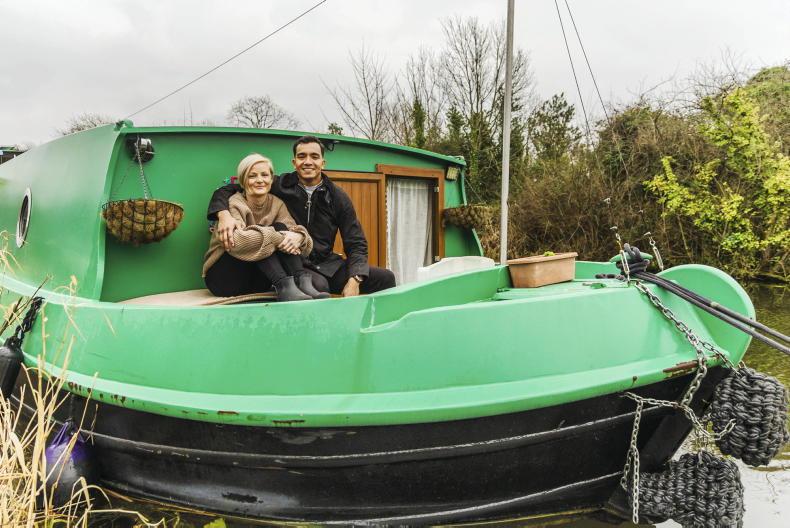
A view of the houseboat in Confey, outside Leixlip in Co Kildare.
Bye-laws
Like many houseboaters, the pair are opposed to new bye-laws that Waterways Ireland want to introduce. This could hike up their permit to five times what they pay now and more for others, something they say has galvanised boat dwellers through the Irish Residential Boat Owners Association (IRBOA).
“They want us to pay upfront for the promise of services,” says Sammy, which they believe will take several years to come. They have no issue paying for services if they are there, they stress.
The pair believe Waterways Ireland, wants to discourage houseboaters and concentrate on leisure boating. The IRBOA is hoping to meet Minister of State at the Department of Housing, Local Government and Heritage, Christopher O''Sullivan on the potential bye-laws soon.
“This life is not for everyone. You’re not cut out for it if you are afraid of the rain or the cold or being outside. It’s not an easy life, but it’s a beautiful life. The trade-offs are worth it for us,” says Niamh. “I might see a comorant or a moorhen or a heron in the lashing rain, and then I think – do you know what, this is worth it.”
‘Home is where you moor it,” the sign hanging in the boat window says, looking out on the still waters of the Royal Canal on a cool, spring day in Co Kildare.
Inside though, it’s cosy, warm, and surprisingly spacious with a clever design and a keen eye for interiors, making this bright green houseboat look like a bijou flat in a trendy neighbourhood.
While Niamh Owens Khalid and her husband Sammy admit living on the water is not for everyone, they are delighted with how it has worked out. “We thought it was a two-year solution, and then we just fell in love with it,” says Niamh.
Despite its challenges and limitations, the couple have been enjoying the tranquil, canal life in Confey, just a stone’s throw from Leixlip, with their two children Aya (4) and Freya (2) for the last two and a half years.
Niamh’s mother actually suggested the idea to the couple when they were looking to buy in the area and staying with Sammy’s parents. Realising that it was not possible, they decided to rent for a while, and again, they hit a brick wall.
“My mam said, I’ve heard of people living on houseboats, and I was like, that’s a joke. You can’t live on a houseboat with two kids. I thought it was mad,” Niamh, a music therapist, recalls. “We’d never even lived by a river or been on a boat,” adds Sammy, an art director with a gaming company, smiling.
A view of the kitchen area on board. \ Claire Nash
However, the adventurous pair had travelled around Asia for a year before returning to Ireland with just a 10kg backpack, so they knew they could “live minimal”.
They started looking into the idea and checking out boats around Kildare. Then one spring day in Robertstown, they saw a group enjoying a cuppa outside and loved the scene.
“We saw this couple with their neighbours having a coffee, and it looked so idyllic. And it really can be idyllic like that and there’s a real close community.
“I said, ‘Do you mind me asking what it’s like to live on a boat?’ They were like, sure, come on in to our boat. They brought us in and gave us a boat tour.”
They filled them in on the good and bad points of living on the canal.
“Walking in, instantly I was — I like this,” recalls Sammy. “It was cold like today, but it was lovely and cosy inside,” adds Niamh.
Within three months they had purchased a 57 ft by 10 ft steel boat called Awareness for €115,000 with the help of a loan and invested in solar panels and other upgrades.
While Niamh believes it could be a housing solution for some people, she cautions that it is not for the fainthearted.
“It’s super cosy in here, but on a rainy day I have to get my shopping and two young children from there [canal banks] to here,” pointing out to the entrance plank and hatch, which is not easy.
Then there’s managing water in the tank, timed showers, getting in your fuel for the stove, organising bins and keeping batteries charged.
Neither were particularly eco-conscious beforehand, but both agree that they have become “seriously green” living on the boat, simply because of the way of life. You naturally conserve more and use less.
It’s quite roomy, the size of a small two-bed flat, similar to what his sister is looking to buy in London, Sammy says. Another aspect Niamh mentions is “how freeing it is to have less stuff”.
Niamh and Sammy pictured inside their houseboat home in Co Kildare. \ Claire Nash
Hi-tech boat living
In saying that, in boating terms, they joke that they are “super hi-tech”. That''s because they have a mini dishwasher – Niamh’s “prized possession" – as well as a washing machine, toaster, and 5G broadband, which most people would not have.
“We have solar panels all along the roof, so from February to October that’s our power [source]. In the winter, during the evenings, we use a generator, maybe for an hour,” says Niamh. They also have a portable battery which needs to be charged up.
“We use a lot less power than a house. We conserve more water. We have a diesel heater; we have radiators on the boat, so it’s very low consumption,“ explains Niamh. Unlike many people, they had power during the recent storm and barring the noise, felt little because the boat was well tied down.
While parenting two young children on a floating home would be a concern for some, Niamh says she actually finds it more difficult to mind them in a house with more space.
“I’d be worried if a child came on here, and I’d be watching them like a hawk if they didn’t live on a boat because they don’t know how it works. My children have grown up on a boat, and they know about the edge. You have to teach them,” says Niamh.
“You watch them and you parent. You do a good parenting job, and they will be fine. I explained that the water is the duck’s swimming pool; it’s not ours,” explains Niamh.
We lived in estates; we lived in London for five years, where you didn’t know your neighbour, whereas here, I can just go knock on the door of the children’s friends and they can go and play
They both agree the “best thing” about houseboating is the sense of community among the boat dwellers. If something goes wrong on your boat, there is always someone to assist you or provide advice.
“Everyone helps each other, and they’ve generally had the problem [you’re having] before, so they know what to do,” says Niamh.
“You do have to rely on the community, and there are a lot of handy people who live on boats. It’s just mind-blowing that they’ll come over and do a couple of hours of work for free for you,” Sammy adds.
While the winters are hard, the summers are bliss, according to the couple, who delight in the social side of houseboating with regular meet-ups and events a feature.
“It’s like Ireland 50 years ago. I can just walk onto my neighbour’s boat. I don’t need to be texting; if I do, they are like, just come onto the boat.
“We lived in estates; we lived in London for five years, where you didn’t know your neighbour, whereas here, I can just go knock on the door of the children’s friends,” she says, "and they can go and play."
Living in a small space, you naturally spend more time outdoors too, walking the towpaths or biking, Niamh says, while displaying some of her plants in her “greenhouse” at the entrance of the boat. She grows all kinds of herbs, vegetables and even strawberries out front. The couple also take the kids on boating holidays to their friends in Castleknock or Enfield.
To secure a space on Confey slipway, the couple pay a yearly permit to Waterways Ireland of €278; however, unlike other areas, there are no services there.
“Some places have services like Sallins, where they have pump-out facilities and bins. Most people here go to the recycling centre; we pay for our bins. Everybody has to figure out their own thing here,“ explains Niamh.
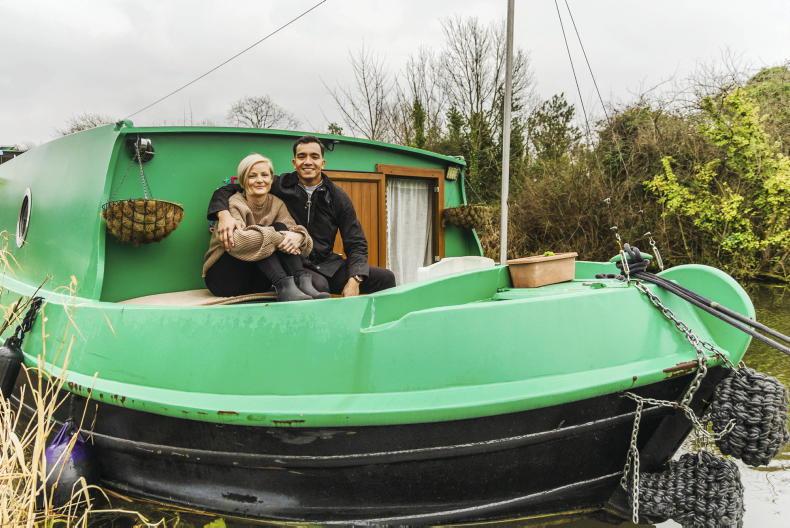
A view of the houseboat in Confey, outside Leixlip in Co Kildare.
Bye-laws
Like many houseboaters, the pair are opposed to new bye-laws that Waterways Ireland want to introduce. This could hike up their permit to five times what they pay now and more for others, something they say has galvanised boat dwellers through the Irish Residential Boat Owners Association (IRBOA).
“They want us to pay upfront for the promise of services,” says Sammy, which they believe will take several years to come. They have no issue paying for services if they are there, they stress.
The pair believe Waterways Ireland, wants to discourage houseboaters and concentrate on leisure boating. The IRBOA is hoping to meet Minister of State at the Department of Housing, Local Government and Heritage, Christopher O''Sullivan on the potential bye-laws soon.
“This life is not for everyone. You’re not cut out for it if you are afraid of the rain or the cold or being outside. It’s not an easy life, but it’s a beautiful life. The trade-offs are worth it for us,” says Niamh. “I might see a comorant or a moorhen or a heron in the lashing rain, and then I think – do you know what, this is worth it.”





SHARING OPTIONS