Efforts to increase the provision of Meals on Wheels services to every town in the country is one of the commitments of the current programme for Government.
However, an ambitious plan is being proposed that would see the current model supported by an innovative initiative to address the wider issue of social isolation in rural Ireland.
Government funding for the Meals on Wheels scheme, which will have served 2.7m meals around the country by the end of 2025, was increased by 30% (€2m) to €12m in last month’s budget.
Yet the rise in funding was deemed insufficient by the National Meals on Wheels Network who say it will not meet the growing demand for services and rising costs of food, energy and transport.
One group in the west of Ireland is looking at alternative ways to support people to remain living at home longer.
Mayo Social is a social innovation project aimed at addressing the challenges and opportunities of an ageing society and economy.
It has submitted a proposal to the Minister for Rural Affairs, Dara Calleary for an 18-month initial project, at a cost of €150,000, to identify opportunities and prepare a business plan to support a not-for-profit organisation that would involve local communities coming together to support older populations.
If successful, the project would be supported by a National Social Innovation Fund and rolled out nationally at a projected cost of between €250m and €300m over a three to five-year period. It is also being proposed that the Western Development Commission would support the project, where practicable, in terms of monitoring social impact.
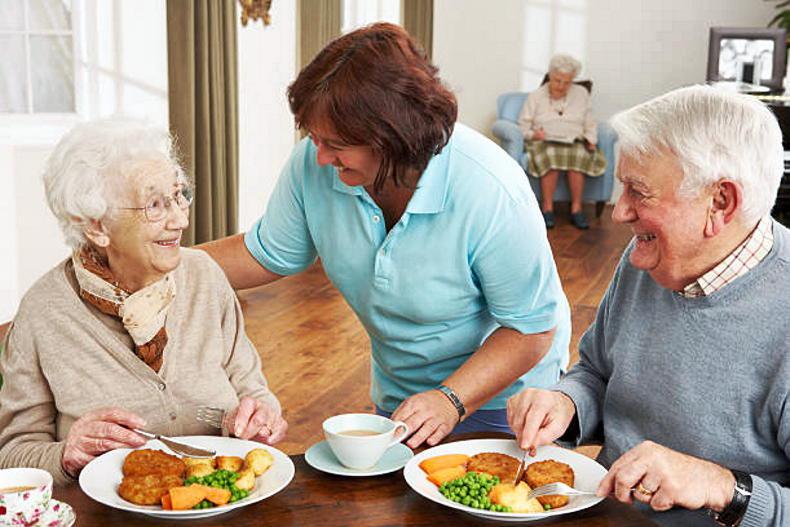
One of the schemes identified by Mayo Social would see an alternative model of Meals on Wheels delivered, where older people would gather in community hubs to eat and socialise together, to tackle one of the biggest health challenges in older life: loneliness.
The Wheels on Meals programme would require massive buy-in from communities, but one of those involved in the Mayo Social project believes community collaborations are already thriving in many rural areas.
Ageing population
Mervyn Taylor of Sage Advocacy, the national advocacy service for older people, says new thinking and innovation is the only way to improve the quality of life for our ageing population.
“It’s not going to work leaving things the way they are,” he explains.
“The Commission on Care for Older People report carried statistics concerning the rise in ageing and the actual impact that is having on rural areas, particularly in the west and northwest of the country where the ageing is at its highest.

Minister of State Kieran O’Donnell.
“We have also known for many years, due to research carried out by TILDA, The Irish Longitudinal Study on Ageing, that the most important factor in wellbeing of older people is social connections.
“Perhaps we aren’t connecting the right services to the people who need them. In the case of Meals on Wheels, which is a very valuable service, bringing food to someone but then leaving them to eat alone, is not addressing that social connection piece.
“The irony is the food is prepared collectively but consumed individually so we need more innovative thinking as to how we can improve this service.”
The Mayo Social project proposes a new social institution, dubbed the ‘GAA for Care’, which Mervyn says is severely lacking in Ireland.
“We have all seen the success of the GAA, the Credit Unions, even the traditional music scene, which all foster strong and unique connections among their members,” adds Mervyn.
Transport limitations
“If we could harness the work being done by Meals on Wheels providers all over rural Ireland, starting off in Mayo as a pilot project, we could identify the common areas for collaboration and work from there.
“This would also address the economic life of rural areas as you’d be supporting cafes or hotels that could host the programme, or even in the case of GAA clubhouses with catering facilities, you’re utilising existing facilities in a different way. It’s all about bringing people together, which in the case of elderly or vulnerable people you’d be doing so much more than just ensuring their nutritional needs were being met in a hot meal every day.”
Acknowledging the challenges in supporting such a scheme in areas of little or no public transport, Mervyn says this is where community buy in is crucial.
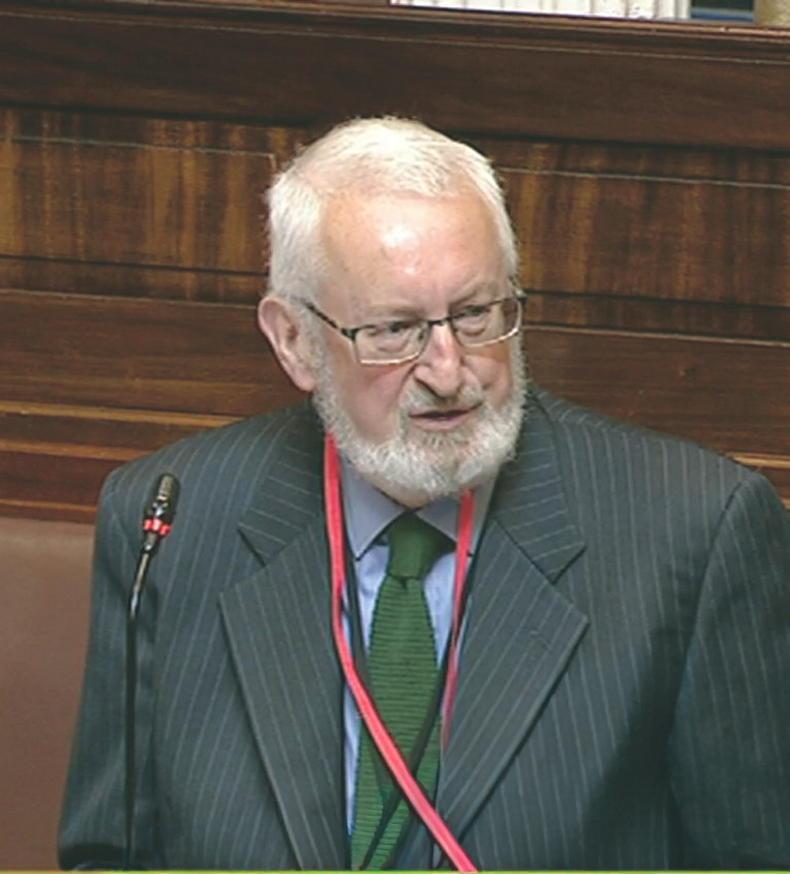
Mervyn Taylor, Sage Advocacy.
“Transport is a key component of this plan and this is why you need everyone to come together to deliver solutions to the challenges we face,” he says.
“There is a role for community cars and the Local Link service to be involved, as transport is a key limitation for many older people. But there are solutions to these challenges if we get people talking and coming up with ways to support this one small part of a much bigger overall picture in supporting people in old age.”
Speaking in the Dáil in recent weeks, Minister of State at the Department of Health, Kieran O’Donnell, said the Government was committed to supporting the country’s ageing population.
“Improving access and support for older people in our communities is a priority for this Government and me, and under the programme for Government there are a number of areas we plan to expand services to support older people in their communities,” he said.
Local innovation
“Older people in our community can avail of a number of community-based supports such as Home Support services, Day Care services, Senior Alert scheme and Meals on Wheels services. These provide valuable health support to their clients and offer a social outlet which can be particularly beneficial in rural communities.”
Mervyn believes that while the support of Government and state agencies is crucial, not least through sufficient funding streams, the success of a Wheels on Meals programme comes down to small scale innovation at a local level.
“Meals on Wheels was set up in the 1970s by social service centres around the country when the majority of families only had one person out working and more people available to volunteer in their communities,” he explains.
“The availability of volunteer hours cannot be taken for granted any more when most households have two working adults with very little free time. The Government is talking about bringing meals on wheels to every town in the country, but it makes more sense to look at the overall social and economic story of a town. Is there a better way to support more people by opening up closed pubs or supporting cafes and restaurants that may be struggling by providing a service there that people can come to?
“You’d also have the option of widening the school meals scheme, if you had a community hub that could support a multigenerational aspect to the programme. The possibilities are endless, once you get people talking and moving together.
“The trick is bringing people together and encouraging them to do more by showing them the patterns possible.”
In its submission to the Commission on Care for Older People, Mayo Social is calling for a social enterprise approach to supporting older people in communities and said this requires ‘a strong partnership between the State, non-governmental organisations (NGOs) and the public and crucially a sustainable funding model’.

Graph 1.
It also calls on the Commission to give “serious consideration to the need for a significant innovation fund to ensure that the necessary infrastructure and supports are in place to enable the development of more effective locally-based responses to the needs of an ageing population”.
The Commission on Care for Older People was established in 2023 and examines the health and social care services and supports for older people, as well as making recommendations for their strategic development.
It is chaired by Professor Alan Barrett (CEO, Economic and Social Research Institute) and is comprised of independent experts in geriatrics, gerontology, health economics, health policy and management, primary care, health ethics, health technologies, and ageing and disability, as well as representation of the community and voluntary sector and of older people.
The National Meals on Wheels Network was formed in 2015 under the umbrella of Irish Rural Link.
In its pre-budget submission, it called for a 40% increase in funding, along with annual top up funding to help launch new services and multi-year, core funding to support staff salaries, meal delivery and insurance.
Efforts to increase the provision of Meals on Wheels services to every town in the country is one of the commitments of the current programme for Government.
However, an ambitious plan is being proposed that would see the current model supported by an innovative initiative to address the wider issue of social isolation in rural Ireland.
Government funding for the Meals on Wheels scheme, which will have served 2.7m meals around the country by the end of 2025, was increased by 30% (€2m) to €12m in last month’s budget.
Yet the rise in funding was deemed insufficient by the National Meals on Wheels Network who say it will not meet the growing demand for services and rising costs of food, energy and transport.
One group in the west of Ireland is looking at alternative ways to support people to remain living at home longer.
Mayo Social is a social innovation project aimed at addressing the challenges and opportunities of an ageing society and economy.
It has submitted a proposal to the Minister for Rural Affairs, Dara Calleary for an 18-month initial project, at a cost of €150,000, to identify opportunities and prepare a business plan to support a not-for-profit organisation that would involve local communities coming together to support older populations.
If successful, the project would be supported by a National Social Innovation Fund and rolled out nationally at a projected cost of between €250m and €300m over a three to five-year period. It is also being proposed that the Western Development Commission would support the project, where practicable, in terms of monitoring social impact.
One of the schemes identified by Mayo Social would see an alternative model of Meals on Wheels delivered, where older people would gather in community hubs to eat and socialise together, to tackle one of the biggest health challenges in older life: loneliness.
The Wheels on Meals programme would require massive buy-in from communities, but one of those involved in the Mayo Social project believes community collaborations are already thriving in many rural areas.
Ageing population
Mervyn Taylor of Sage Advocacy, the national advocacy service for older people, says new thinking and innovation is the only way to improve the quality of life for our ageing population.
“It’s not going to work leaving things the way they are,” he explains.
“The Commission on Care for Older People report carried statistics concerning the rise in ageing and the actual impact that is having on rural areas, particularly in the west and northwest of the country where the ageing is at its highest.
Minister of State Kieran O’Donnell.
“We have also known for many years, due to research carried out by TILDA, The Irish Longitudinal Study on Ageing, that the most important factor in wellbeing of older people is social connections.
“Perhaps we aren’t connecting the right services to the people who need them. In the case of Meals on Wheels, which is a very valuable service, bringing food to someone but then leaving them to eat alone, is not addressing that social connection piece.
“The irony is the food is prepared collectively but consumed individually so we need more innovative thinking as to how we can improve this service.”
The Mayo Social project proposes a new social institution, dubbed the ‘GAA for Care’, which Mervyn says is severely lacking in Ireland.
“We have all seen the success of the GAA, the Credit Unions, even the traditional music scene, which all foster strong and unique connections among their members,” adds Mervyn.
Transport limitations
“If we could harness the work being done by Meals on Wheels providers all over rural Ireland, starting off in Mayo as a pilot project, we could identify the common areas for collaboration and work from there.
“This would also address the economic life of rural areas as you’d be supporting cafes or hotels that could host the programme, or even in the case of GAA clubhouses with catering facilities, you’re utilising existing facilities in a different way. It’s all about bringing people together, which in the case of elderly or vulnerable people you’d be doing so much more than just ensuring their nutritional needs were being met in a hot meal every day.”
Acknowledging the challenges in supporting such a scheme in areas of little or no public transport, Mervyn says this is where community buy in is crucial.
Mervyn Taylor, Sage Advocacy.
“Transport is a key component of this plan and this is why you need everyone to come together to deliver solutions to the challenges we face,” he says.
“There is a role for community cars and the Local Link service to be involved, as transport is a key limitation for many older people. But there are solutions to these challenges if we get people talking and coming up with ways to support this one small part of a much bigger overall picture in supporting people in old age.”
Speaking in the Dáil in recent weeks, Minister of State at the Department of Health, Kieran O’Donnell, said the Government was committed to supporting the country’s ageing population.
“Improving access and support for older people in our communities is a priority for this Government and me, and under the programme for Government there are a number of areas we plan to expand services to support older people in their communities,” he said.
Local innovation
“Older people in our community can avail of a number of community-based supports such as Home Support services, Day Care services, Senior Alert scheme and Meals on Wheels services. These provide valuable health support to their clients and offer a social outlet which can be particularly beneficial in rural communities.”
Mervyn believes that while the support of Government and state agencies is crucial, not least through sufficient funding streams, the success of a Wheels on Meals programme comes down to small scale innovation at a local level.
“Meals on Wheels was set up in the 1970s by social service centres around the country when the majority of families only had one person out working and more people available to volunteer in their communities,” he explains.
“The availability of volunteer hours cannot be taken for granted any more when most households have two working adults with very little free time. The Government is talking about bringing meals on wheels to every town in the country, but it makes more sense to look at the overall social and economic story of a town. Is there a better way to support more people by opening up closed pubs or supporting cafes and restaurants that may be struggling by providing a service there that people can come to?
“You’d also have the option of widening the school meals scheme, if you had a community hub that could support a multigenerational aspect to the programme. The possibilities are endless, once you get people talking and moving together.
“The trick is bringing people together and encouraging them to do more by showing them the patterns possible.”
In its submission to the Commission on Care for Older People, Mayo Social is calling for a social enterprise approach to supporting older people in communities and said this requires ‘a strong partnership between the State, non-governmental organisations (NGOs) and the public and crucially a sustainable funding model’.
Graph 1.
It also calls on the Commission to give “serious consideration to the need for a significant innovation fund to ensure that the necessary infrastructure and supports are in place to enable the development of more effective locally-based responses to the needs of an ageing population”.
The Commission on Care for Older People was established in 2023 and examines the health and social care services and supports for older people, as well as making recommendations for their strategic development.
It is chaired by Professor Alan Barrett (CEO, Economic and Social Research Institute) and is comprised of independent experts in geriatrics, gerontology, health economics, health policy and management, primary care, health ethics, health technologies, and ageing and disability, as well as representation of the community and voluntary sector and of older people.
The National Meals on Wheels Network was formed in 2015 under the umbrella of Irish Rural Link.
In its pre-budget submission, it called for a 40% increase in funding, along with annual top up funding to help launch new services and multi-year, core funding to support staff salaries, meal delivery and insurance.





SHARING OPTIONS