We all like structure in our gardens. It helps strengthen a formal design, frame views and create focal points. In creating these we usually look to hedges, pergolas, arbour’s and fences. These divide up a garden, create mystery and make it more interesting for the viewer. There are other ways to do this however with the use of topiary to achieve a similar result.
Topiary is the art of trimming and training certain plants into shapes and maintaining them by regular clipping to maintain those shapes.
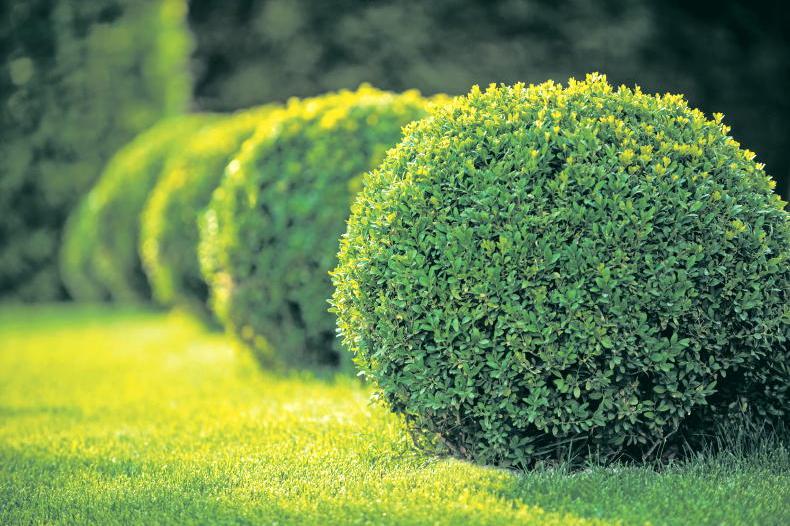
One of the simplest approaches is the use of finely cut hedges that create different spaces within a garden – these are classified as topiary when they are trained to a formal shape. We see the effects of this in famous formal gardens throughout Europe. In these cases, the use of box, privet and yew are used with great effect. Of course, we know that box is having its challenges with box blight but it is treatable to some extent.
A good replacement for box is Ilex crenata, it has a very similar leaf. It is a slow growing holly that can be nicely shaped and will not suffer the same fate as box. It is not plentiful on the market yet but supply will catch up with demand.
Lonicera nitida is a small leaved shrub perfectly suitable for topiary. I have seen it cut into animal shapes or geometric cubes which demands dedication. The golden variant L. nitida ‘Baggesens Gold’ is a brighter coloured plant with golden yellow foliage. Pittosporum tenuifolium ‘Tom Thumb’ has spectacularly coloured purple foliage and is naturally a round ball shape, perfect for topiary. It is also low growing and perfect for spot planting, almost like a full stop at corners.
Laurus nobilis is a long time on the market as a topiary specimen and still works well. While clipping is the best method to manage your topiary, in this case secateurs is essential to maintain the shape as this avoids chopping the foliage.
Taxus baccata commonly known as yew is excellent as a hedge for formal gardens and trouble free too. Its dark green foliage forms an impenetrable boundary. It also can be grown and shaped into many forms from pyramid to columnar shapes and cubes. Ligustrum ovalifolium,best known as privet, with its green and golden variegated form performs well but needs more trimming and shaping to achieve the effect.
Thuja ‘Smaragd’ is an evergreen conifer that is naturally pyramidal shaped and takes clipping well to maintain its shape, it can grow to 4m. It has rich green coloured foliage and makes a wonderful statement in a formal garden setting.
Chamaecyparis lawsoniana ‘Ellwoods Gold’ is a dwarf conifer suitable for the smaller gardens, it will grow to 3m given time.
Pleaching from the top
Pleaching is an art only practiced by nurserymen, creating what is akin to a hedge on legs. They use lime or hornbeam as a subject for this treatment.
They can be trained to 3m in height so this allows for complete enclosure of a space and lower planting can be featured underneath. It is also used for screening where height is required for privacy from overlooking properties.
The maintenance is something that requires trimming twice a year using sturdy stepladders or platforms. Some gardeners leave this work to professional garden maintenance companies.
Two trees to consider for larger spaces that reinforces formality are Acer platanoides ‘Globosum’, a Norway maple with a mop-head of green foliage over the summer months. It grows to a maximum height of 8m and is easily managed in terms of keeping it in shape.
A. pseudoplatanus ‘Brilliantissimum’ is similar in height but looser in shape. It has wonderful golden variegated foliage which brightens any garden. It is more suited as a specimen tree, but can be used to hold a formal garden together.
As with all planting, ground preparation is key in gardening and the more attention you give this work, the more benefits your plants will reap.
Q&A: How do I care for my winter aconite?
My winter aconites, which were a gift to me, are finished flowering now and producing foliage, what do I need to do to keep them going? – Jennifer, Co Leitrim.
What a wonderful gift and one that will continue to give pleasure and hold memories for many years to come. Winter Aconite is Eranthis hyemalis which is yellow flowered it or could be E. cilicica which is deeper yellow and later flowering. Whichever you have, there is little maintenance needed.
They are best grown under deciduous trees where they will self-seed, slowly increasing the size of the patch, giving you a bright yellow carpet after Christmas. You should have low growing green foliage at the moment so allow that to die back naturally as it is feeding the little tubers to provide next year’s display.
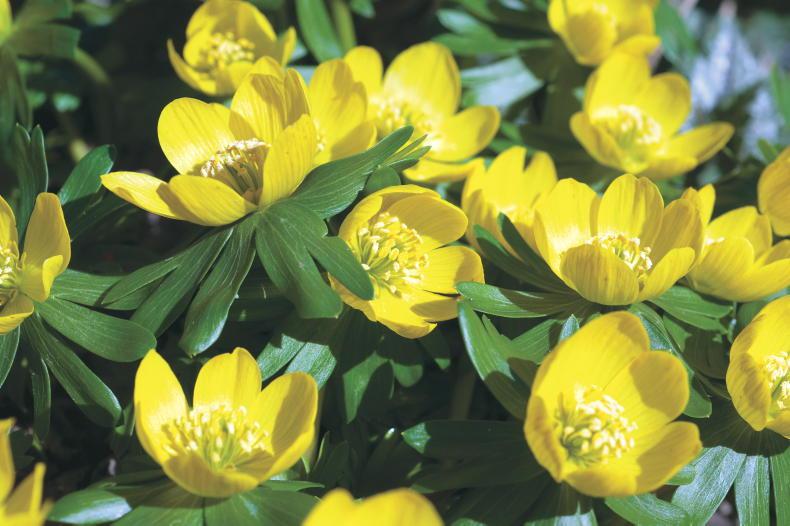
Yellow flowered winter aconites. \iStock
Lawns: after the wet winter moss is most likely predominant in your garden. Use a spring tined rake to remove the heaviest of it. Apply a proprietary lawn feed at the recommended rate.
Roses: if you have not pruned you can still do so now, cutting out old woody stems.
Climbers: prune back wayward shoots or tie in to the wiring. Feed climbers now.
Weeding: with ground warming up weeds will be well ahead of other plants. Now is the time to remove them.
We all like structure in our gardens. It helps strengthen a formal design, frame views and create focal points. In creating these we usually look to hedges, pergolas, arbour’s and fences. These divide up a garden, create mystery and make it more interesting for the viewer. There are other ways to do this however with the use of topiary to achieve a similar result.
Topiary is the art of trimming and training certain plants into shapes and maintaining them by regular clipping to maintain those shapes.
One of the simplest approaches is the use of finely cut hedges that create different spaces within a garden – these are classified as topiary when they are trained to a formal shape. We see the effects of this in famous formal gardens throughout Europe. In these cases, the use of box, privet and yew are used with great effect. Of course, we know that box is having its challenges with box blight but it is treatable to some extent.
A good replacement for box is Ilex crenata, it has a very similar leaf. It is a slow growing holly that can be nicely shaped and will not suffer the same fate as box. It is not plentiful on the market yet but supply will catch up with demand.
Lonicera nitida is a small leaved shrub perfectly suitable for topiary. I have seen it cut into animal shapes or geometric cubes which demands dedication. The golden variant L. nitida ‘Baggesens Gold’ is a brighter coloured plant with golden yellow foliage. Pittosporum tenuifolium ‘Tom Thumb’ has spectacularly coloured purple foliage and is naturally a round ball shape, perfect for topiary. It is also low growing and perfect for spot planting, almost like a full stop at corners.
Laurus nobilis is a long time on the market as a topiary specimen and still works well. While clipping is the best method to manage your topiary, in this case secateurs is essential to maintain the shape as this avoids chopping the foliage.
Taxus baccata commonly known as yew is excellent as a hedge for formal gardens and trouble free too. Its dark green foliage forms an impenetrable boundary. It also can be grown and shaped into many forms from pyramid to columnar shapes and cubes. Ligustrum ovalifolium,best known as privet, with its green and golden variegated form performs well but needs more trimming and shaping to achieve the effect.
Thuja ‘Smaragd’ is an evergreen conifer that is naturally pyramidal shaped and takes clipping well to maintain its shape, it can grow to 4m. It has rich green coloured foliage and makes a wonderful statement in a formal garden setting.
Chamaecyparis lawsoniana ‘Ellwoods Gold’ is a dwarf conifer suitable for the smaller gardens, it will grow to 3m given time.
Pleaching from the top
Pleaching is an art only practiced by nurserymen, creating what is akin to a hedge on legs. They use lime or hornbeam as a subject for this treatment.
They can be trained to 3m in height so this allows for complete enclosure of a space and lower planting can be featured underneath. It is also used for screening where height is required for privacy from overlooking properties.
The maintenance is something that requires trimming twice a year using sturdy stepladders or platforms. Some gardeners leave this work to professional garden maintenance companies.
Two trees to consider for larger spaces that reinforces formality are Acer platanoides ‘Globosum’, a Norway maple with a mop-head of green foliage over the summer months. It grows to a maximum height of 8m and is easily managed in terms of keeping it in shape.
A. pseudoplatanus ‘Brilliantissimum’ is similar in height but looser in shape. It has wonderful golden variegated foliage which brightens any garden. It is more suited as a specimen tree, but can be used to hold a formal garden together.
As with all planting, ground preparation is key in gardening and the more attention you give this work, the more benefits your plants will reap.
Q&A: How do I care for my winter aconite?
My winter aconites, which were a gift to me, are finished flowering now and producing foliage, what do I need to do to keep them going? – Jennifer, Co Leitrim.
What a wonderful gift and one that will continue to give pleasure and hold memories for many years to come. Winter Aconite is Eranthis hyemalis which is yellow flowered it or could be E. cilicica which is deeper yellow and later flowering. Whichever you have, there is little maintenance needed.
They are best grown under deciduous trees where they will self-seed, slowly increasing the size of the patch, giving you a bright yellow carpet after Christmas. You should have low growing green foliage at the moment so allow that to die back naturally as it is feeding the little tubers to provide next year’s display.
Yellow flowered winter aconites. \iStock
Lawns: after the wet winter moss is most likely predominant in your garden. Use a spring tined rake to remove the heaviest of it. Apply a proprietary lawn feed at the recommended rate.
Roses: if you have not pruned you can still do so now, cutting out old woody stems.
Climbers: prune back wayward shoots or tie in to the wiring. Feed climbers now.
Weeding: with ground warming up weeds will be well ahead of other plants. Now is the time to remove them.






SHARING OPTIONS