This week marks Eating Disorder Awareness Week, but for the families advocating for increased support, the struggle for eating disorder services is one that continues throughout the year.
Eating disorders have the highest mortality rate of all mental health illnesses in Ireland, and increasing numbers of children, adolescents and adults are being referred for specialist treatment each year. A recent study by the Health Research Board shows a 121% rise in hospital admissions for eating disorders among under-18s in Ireland.
In January of this year, Martina Queally, regional executive officer for HSE Dublin and southeast, told the Oireachtas Health Committee that: “In 2024, referrals to specialist eating disorder teams increased by 33%.” Over half of the assessments were for children and adolescents, while adult assessments increased by over 50%.
“Almost 500 people were engaged with specialist eating disorder teams at the end of 2024, representing a 20% increase on the previous year,” Martina told the Oireachtas committee.
She acknowledged that the demand for services has grown beyond what was anticipated when the Model of Care (the national strategy for the delivery of eating disorder services) was published in 2018.
There are still only three adult specialist eating disorder beds in Ireland, all in south Dublin for patients in that catchment area. More than 20 new beds were due to be opened between 2018 and 2023 – but none were delivered. Minister of State Mary Butler, who has responsibility for mental health, said that 19 more beds will be provided, but no timeline has been given.
The HSE Model of Care was introduced in 2018 with a goal of delivering 16 community eating disorder teams. Eight years later, there are currently 11 teams in Ireland (six for adults, five for children) and three teams currently in recruitment.
The HSE has committed a further €2.3m in funding to secure two additional teams in 2026. Demand has increased significantly, but services remain understaffed, incomplete, and 14 counties have no eating disorder services at all.
A postcode lottery is one problem for families trying to access services, but the transition from Children and Adolescent Mental Health Services (CAMHS) to Adult Mental Health Services (AMHS) is another. The transition between child to adult services is a challenge within the system because once a young person turns 18, they are discharged and put on a waiting list. This can cause a regression in their condition.
One solution is to co-locate children and adult specialist eating disorder services. At present, this is happening in two locations in Riverside House (Dublin) and Cork. The HSE told Irish Country Living that: “Work is underway to develop this in north Dublin and Galway.”
When all the clinicians are working together in the same building, it means patients transitioning to adult services will be familiar with the building and staff.
Family concerns
One Kildare mother Ann* tells Irish Country Living that she is extremely concerned about what will happen to her daughter Lisa* when she turns 18 next year. Lisa (16) was diagnosed with anorexia in May 2024, but in April of the following year, she was aged out from Children’s Health Ireland (CHI) and paediatric medical services.
This is because, according to the HSE: “Children who are already under the care of CHI for specific conditions who become 16 naturally transition to adult services in a timeline that is appropriate to the patient and the service.”
Lisa is still in child psychiatric care as an outpatient with a CAMHS specialist eating disorder service in Dublin. But since she turned 16, she is now required to attend adult hospitals for emergency medical purposes. However she can only be admitted if medically unstable (not mentally unstable).
It is not hard to see why accessing eating disorder treatment can be confusing for families. In terms of emergency care, patients aged 16 and above present to adult emergency departments for treatment. But any young person under the age of 18 is treated within the CAMHS service.
When Ann presented twice to a Dublin adult hospital with Lisa for her mental health, begging for help stating she didn’t want to live, she was sent home and asked to attend CAMHS when they reopen after the weekend. Ann was told they can only admit patients over 18 for psychiatry.
“For an eating disorder, the minute you’re 16 and require hospital, you move to adult services. You can no longer present there, even though they have all your history, they have all of your admissions, your diagnosis, everything. They just close the door on you at 16.
“That’s a real big problem because eating disorders always needs medical and psychiatry linked in. I was in the Dáil before Lisa’s 16th birthday during Eating Disorder Awareness Week last year begging for this to be extended to 18.”
Lisa has been admitted as an inpatient eight times to CHI in Dublin. One of her admissions was three months long. She has also been admitted as an inpatient in a private psychiatric hospital twice and a CAMHS inpatient unit twice.
“Since turning 16, Lisa’s first inpatient stay in a Dublin adult hospital was horrendous and after 10 nights, she was discharged. They told us not to attend again as it is not our catchment.
“Two days later, Lisa was admitted to a midlands hospital and has required a second admission there since. We have been to hell and back.
“We are very lucky in the outpatient sense that our address allows access to a specialist eating disorder CAMHS outpatients. The problem is when things get really bad, and Lisa needs to be admitted for medical stabilisation as an inpatient. That’s where we’re having our biggest problem. We go to a midlands hospital now. While they have a bit more empathy and have allowed her stay on a paediatric ward, they have no eating disorder expertise at all.
“In many admissions she’s on an NG feeding tube [a tube inserted through the nose into the stomach to deliver nutrition] because she’s not able to eat at all. We don’t have any choice but to go there, because it’s the only way to save her life.
“Our biggest concern now is that we only have one year left with CAMHS. Then we’re sent into adult services.
“She has already voiced that she’s afraid of what she’ll do without her psychiatrist. Where we’re at now is the fear of actually entering proper adult services, and the unknown of, where will she go?
“There should be continuity. There should be adult eating disorder services that are completely linked in with the paediatric side for a smooth transition.”
Menopausal women
An eating disorder is often considered to be a condition affecting a younger cohort of the population, but there has been a spike in eating disorder cases among perimenopausal and menopausal women.
Addressing the Oireachtas Health Committee, Harriet Parsons of BodyWhys, a charity supporting people with eating disorders, said: “our typical helpline caller is a woman over 36 who has had an eating disorder for over 10 years.” She told the committee that the BodyWhys helpline responded to almost 1,300 calls in 2024, and almost one-quarter of callers were people over 36.
Dietician and founder of the Dublin Nutrition Centre Aveen Bannon says that she has “definitely” seen an increase in people both younger and older presenting in her clinic.

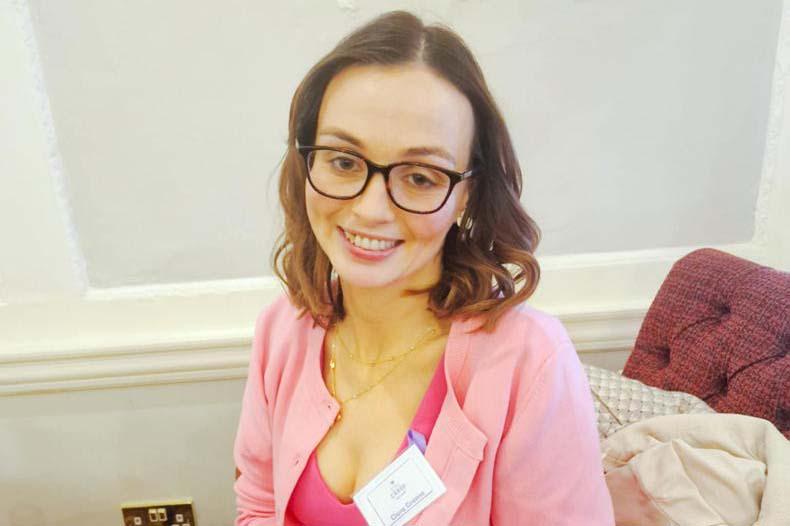
Dietician Aveen Bannon has seen a spike in eating disorders among midlife women in her Dublin clinic.
“I have women now coming to me in early 40s, late 30s and I have patients with eating disorders who are in their 50s who say: I’ve actually had this since I was 16, but back then, nobody knew what it was.”
Aveen says the perimenopause age bracket is “a really high-risk period for a relapse or an onset of an eating disorder”.
“It needs to be understood that eating disorders don’t just affect teenage girls. It affects women in that phase of life where they’re trying to hold on to their career, have ageing parents, care for children, and are now under pressure to give them the perfect diet and be perfect themselves.
With menopause and perimenopause, there are hormonal changes and body composition shifts that are natural.
“There was some research from the Butterfly Foundation in Australia that shows that 55% of women say perimenopause or menopause leaves them dissatisfied with their bodies. The one positive thing about these numbers is people actually understanding that they can get help. People in their 50s are getting help for the first time,” adds Aveen.
Living with bulimia
Nicola* (51) has lived with bulimia since she was 12 years old. Bulimia is an eating disorder characterised by repeated episodes of binge eating and behaviours like self-induced vomiting. Nicola can’t remember “where I even came up with the idea of making myself sick to lose weight”.
“I’m not entirely sure how I even thought to do it, and I started to think this is great, because I loved food. The more I eat here and I just get sick and I don’t put on weight. Maybe I can even try and lose weight this way, and control, which I know is the key word here. I think it just escalated from there.”
Nicola has never told any of her friends about it, because of the “sense of shame”.
“In stressful situations, I would always seek the sweet things, go for them, but then feel tremendous guilt. I’d get sick after it.”
Nicola tried a counselling service that dealt with eating disorders when she was about 19 years old. But it was too expensive to continue. “That’s why I never proceeded to get any help because I thought I’m going to try and figure this out on my own.”
Now going through perimenopause, Nicola says she is “afraid” to put onweight. “You get this perimenopause, and you lose control – again, the word control – of where you’re going with the whole weight thing. Now it’s nearly flipped the other way in that I’m so adamant I’m not putting on weight again. I eat the same thing every morning.”
The only time Nicola did not purge was during the pregnancies of her three children. She finds Christmas and birthdays difficult because “there’s a big emphasis” on food. “The presence of certain foods around that time of year, I would always do it [purge].”
“I don’t keep sweet things in the house, primarily because I know what I’ll do with them. We never have ice cream because that’s a major trigger.”
*Names have been changed to protect the privacy of individuals.
BodyWhys is the national voluntary organisation supporting people affected by eating disorders. Their helpline is 01- 2107906 and they also run free online support groups. See bodywhys.ieThe HSE has useful links on their website on eating disorders. They also have a list of contact lists for eating disorder teams in Ireland.Email ncped@hse.ie. hse.ie
Cared Ireland is a voluntary group comprised of families and carers affected by eating disorders. They advocate for an improvement in eating disorder services in Ireland. See caredireland.ieThe College of Psychiatrics of Ireland is a partner of the National Clinical Programme for Eating Disorders and has public information on eating disorders. See irishpsychiatry.ie
This week marks Eating Disorder Awareness Week, but for the families advocating for increased support, the struggle for eating disorder services is one that continues throughout the year.
Eating disorders have the highest mortality rate of all mental health illnesses in Ireland, and increasing numbers of children, adolescents and adults are being referred for specialist treatment each year. A recent study by the Health Research Board shows a 121% rise in hospital admissions for eating disorders among under-18s in Ireland.
In January of this year, Martina Queally, regional executive officer for HSE Dublin and southeast, told the Oireachtas Health Committee that: “In 2024, referrals to specialist eating disorder teams increased by 33%.” Over half of the assessments were for children and adolescents, while adult assessments increased by over 50%.
“Almost 500 people were engaged with specialist eating disorder teams at the end of 2024, representing a 20% increase on the previous year,” Martina told the Oireachtas committee.
She acknowledged that the demand for services has grown beyond what was anticipated when the Model of Care (the national strategy for the delivery of eating disorder services) was published in 2018.
There are still only three adult specialist eating disorder beds in Ireland, all in south Dublin for patients in that catchment area. More than 20 new beds were due to be opened between 2018 and 2023 – but none were delivered. Minister of State Mary Butler, who has responsibility for mental health, said that 19 more beds will be provided, but no timeline has been given.
The HSE Model of Care was introduced in 2018 with a goal of delivering 16 community eating disorder teams. Eight years later, there are currently 11 teams in Ireland (six for adults, five for children) and three teams currently in recruitment.
The HSE has committed a further €2.3m in funding to secure two additional teams in 2026. Demand has increased significantly, but services remain understaffed, incomplete, and 14 counties have no eating disorder services at all.
A postcode lottery is one problem for families trying to access services, but the transition from Children and Adolescent Mental Health Services (CAMHS) to Adult Mental Health Services (AMHS) is another. The transition between child to adult services is a challenge within the system because once a young person turns 18, they are discharged and put on a waiting list. This can cause a regression in their condition.
One solution is to co-locate children and adult specialist eating disorder services. At present, this is happening in two locations in Riverside House (Dublin) and Cork. The HSE told Irish Country Living that: “Work is underway to develop this in north Dublin and Galway.”
When all the clinicians are working together in the same building, it means patients transitioning to adult services will be familiar with the building and staff.
Family concerns
One Kildare mother Ann* tells Irish Country Living that she is extremely concerned about what will happen to her daughter Lisa* when she turns 18 next year. Lisa (16) was diagnosed with anorexia in May 2024, but in April of the following year, she was aged out from Children’s Health Ireland (CHI) and paediatric medical services.
This is because, according to the HSE: “Children who are already under the care of CHI for specific conditions who become 16 naturally transition to adult services in a timeline that is appropriate to the patient and the service.”
Lisa is still in child psychiatric care as an outpatient with a CAMHS specialist eating disorder service in Dublin. But since she turned 16, she is now required to attend adult hospitals for emergency medical purposes. However she can only be admitted if medically unstable (not mentally unstable).
It is not hard to see why accessing eating disorder treatment can be confusing for families. In terms of emergency care, patients aged 16 and above present to adult emergency departments for treatment. But any young person under the age of 18 is treated within the CAMHS service.
When Ann presented twice to a Dublin adult hospital with Lisa for her mental health, begging for help stating she didn’t want to live, she was sent home and asked to attend CAMHS when they reopen after the weekend. Ann was told they can only admit patients over 18 for psychiatry.
“For an eating disorder, the minute you’re 16 and require hospital, you move to adult services. You can no longer present there, even though they have all your history, they have all of your admissions, your diagnosis, everything. They just close the door on you at 16.
“That’s a real big problem because eating disorders always needs medical and psychiatry linked in. I was in the Dáil before Lisa’s 16th birthday during Eating Disorder Awareness Week last year begging for this to be extended to 18.”
Lisa has been admitted as an inpatient eight times to CHI in Dublin. One of her admissions was three months long. She has also been admitted as an inpatient in a private psychiatric hospital twice and a CAMHS inpatient unit twice.
“Since turning 16, Lisa’s first inpatient stay in a Dublin adult hospital was horrendous and after 10 nights, she was discharged. They told us not to attend again as it is not our catchment.
“Two days later, Lisa was admitted to a midlands hospital and has required a second admission there since. We have been to hell and back.
“We are very lucky in the outpatient sense that our address allows access to a specialist eating disorder CAMHS outpatients. The problem is when things get really bad, and Lisa needs to be admitted for medical stabilisation as an inpatient. That’s where we’re having our biggest problem. We go to a midlands hospital now. While they have a bit more empathy and have allowed her stay on a paediatric ward, they have no eating disorder expertise at all.
“In many admissions she’s on an NG feeding tube [a tube inserted through the nose into the stomach to deliver nutrition] because she’s not able to eat at all. We don’t have any choice but to go there, because it’s the only way to save her life.
“Our biggest concern now is that we only have one year left with CAMHS. Then we’re sent into adult services.
“She has already voiced that she’s afraid of what she’ll do without her psychiatrist. Where we’re at now is the fear of actually entering proper adult services, and the unknown of, where will she go?
“There should be continuity. There should be adult eating disorder services that are completely linked in with the paediatric side for a smooth transition.”
Menopausal women
An eating disorder is often considered to be a condition affecting a younger cohort of the population, but there has been a spike in eating disorder cases among perimenopausal and menopausal women.
Addressing the Oireachtas Health Committee, Harriet Parsons of BodyWhys, a charity supporting people with eating disorders, said: “our typical helpline caller is a woman over 36 who has had an eating disorder for over 10 years.” She told the committee that the BodyWhys helpline responded to almost 1,300 calls in 2024, and almost one-quarter of callers were people over 36.
Dietician and founder of the Dublin Nutrition Centre Aveen Bannon says that she has “definitely” seen an increase in people both younger and older presenting in her clinic.
Dietician Aveen Bannon has seen a spike in eating disorders among midlife women in her Dublin clinic.
“I have women now coming to me in early 40s, late 30s and I have patients with eating disorders who are in their 50s who say: I’ve actually had this since I was 16, but back then, nobody knew what it was.”
Aveen says the perimenopause age bracket is “a really high-risk period for a relapse or an onset of an eating disorder”.
“It needs to be understood that eating disorders don’t just affect teenage girls. It affects women in that phase of life where they’re trying to hold on to their career, have ageing parents, care for children, and are now under pressure to give them the perfect diet and be perfect themselves.
With menopause and perimenopause, there are hormonal changes and body composition shifts that are natural.
“There was some research from the Butterfly Foundation in Australia that shows that 55% of women say perimenopause or menopause leaves them dissatisfied with their bodies. The one positive thing about these numbers is people actually understanding that they can get help. People in their 50s are getting help for the first time,” adds Aveen.
Living with bulimia
Nicola* (51) has lived with bulimia since she was 12 years old. Bulimia is an eating disorder characterised by repeated episodes of binge eating and behaviours like self-induced vomiting. Nicola can’t remember “where I even came up with the idea of making myself sick to lose weight”.
“I’m not entirely sure how I even thought to do it, and I started to think this is great, because I loved food. The more I eat here and I just get sick and I don’t put on weight. Maybe I can even try and lose weight this way, and control, which I know is the key word here. I think it just escalated from there.”
Nicola has never told any of her friends about it, because of the “sense of shame”.
“In stressful situations, I would always seek the sweet things, go for them, but then feel tremendous guilt. I’d get sick after it.”
Nicola tried a counselling service that dealt with eating disorders when she was about 19 years old. But it was too expensive to continue. “That’s why I never proceeded to get any help because I thought I’m going to try and figure this out on my own.”
Now going through perimenopause, Nicola says she is “afraid” to put onweight. “You get this perimenopause, and you lose control – again, the word control – of where you’re going with the whole weight thing. Now it’s nearly flipped the other way in that I’m so adamant I’m not putting on weight again. I eat the same thing every morning.”
The only time Nicola did not purge was during the pregnancies of her three children. She finds Christmas and birthdays difficult because “there’s a big emphasis” on food. “The presence of certain foods around that time of year, I would always do it [purge].”
“I don’t keep sweet things in the house, primarily because I know what I’ll do with them. We never have ice cream because that’s a major trigger.”
*Names have been changed to protect the privacy of individuals.
BodyWhys is the national voluntary organisation supporting people affected by eating disorders. Their helpline is 01- 2107906 and they also run free online support groups. See bodywhys.ieThe HSE has useful links on their website on eating disorders. They also have a list of contact lists for eating disorder teams in Ireland.Email ncped@hse.ie. hse.ie
Cared Ireland is a voluntary group comprised of families and carers affected by eating disorders. They advocate for an improvement in eating disorder services in Ireland. See caredireland.ieThe College of Psychiatrics of Ireland is a partner of the National Clinical Programme for Eating Disorders and has public information on eating disorders. See irishpsychiatry.ie





SHARING OPTIONS