Calving down 235 cows across a winter- and spring-calving system and growing some barley, Thomas Murphy farms alongside his parents.
Based near the village of Kiltormer in Co Galway, Thomas is a cow man at heart, with a love for machinery. The majority of machinery work on the farm is carried out in-house, with the exception of the silage and the maize work.
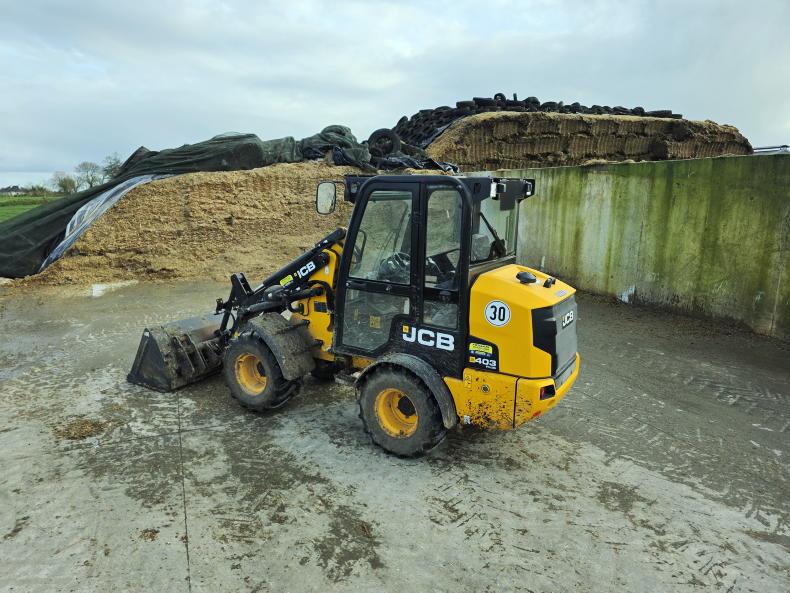
Previous to buying the JCB 403, all the cubicle scraping was carried out with a Ford 4610. The same trusty tractor was used to clean out the straw-bedded sheds, push in zero grazed grass and carry out general duties around the yard, with the help of a New Holland telehandler.
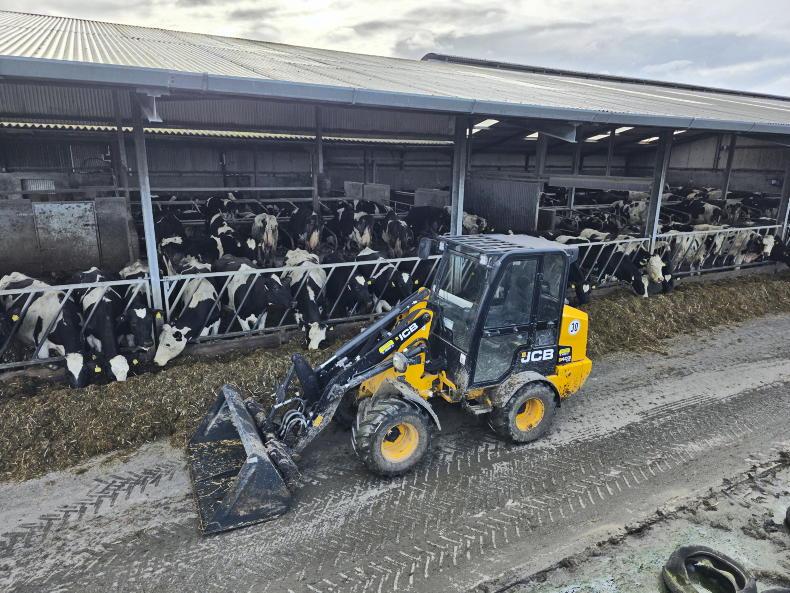
The 60l/min gear pump provides oil for the articulated chassis steering, lift arms and front-end attachments.
“In 2024, the engine in the Ford was going porous, we knew it had its work done and that we had to buy something to scrape down the cubicles and clean out sheds,” Thomas said. “We contemplated going down several routes, such as a mini articulated loader, a skid steer or another small tractor. We felt that from a versatility, visibility and functionality point of view, a small articulated loader would be the best option for us,” he said.
Why JCB?
“The day you buy, is the day you sell. We were buying a machine to keep long term, so it was important that we made the correct decision,” Thomas explained.
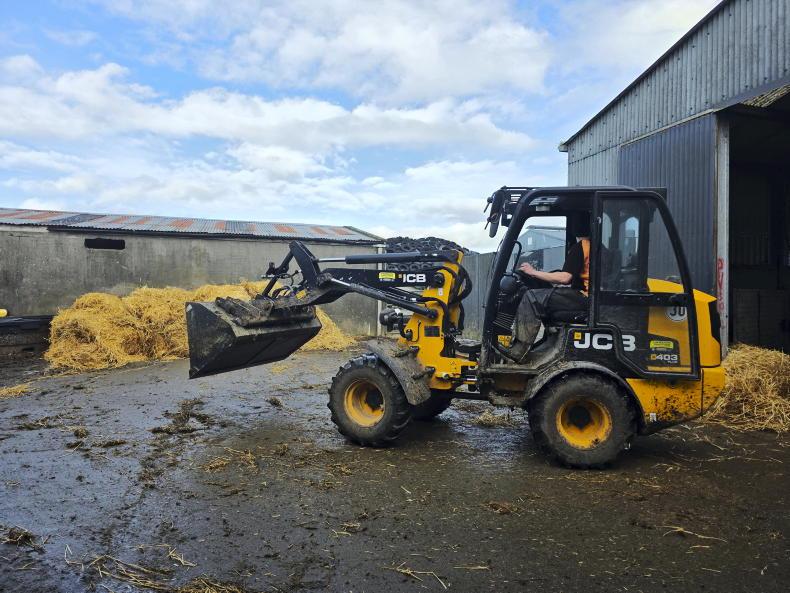
It comes with a choice of lift arm sizes –a load-over height of 2.6m, or the extended option taking this to 2.8m.
“We spent time looking at several machines, to see what suited our farm best. We looked at the Weidemann Hoftrac, a Manitou loader and some of the Chinese brands such as the Adare and DGM. The Weidemann was €3,000 more expensive than the JCB, while the Manitou was a slightly bigger machine, but it was also considerably more expensive than the JCB.
“In terms of the Chinese-built loaders, we just didn’t think they were built strong enough or finished well enough. An equivalent New Holland skid steer was €6,000 more. At the end of the day, we found it hard to pass the JCB loader; it was well-built, well-finished and was put together with the best of components such as the Kubota engine, Bosch Rexroth transmission and ZF axles. After looking at the market place, we bought a new 403 Agri Plus model, which was sourced by our local tractor dealer, Hogan Tractors in Eyrecourt,” Thomas said.
Engine
Five years ago, JCB took a fresh look at the 403 offering, and unveiled the 403 Plus model, which mirrored the size and layout of the firm’s then-single model 25hp offering, namely the 403 Smart Power.
Although fitted with the same 1.498l four-cylinder Kubota engine, the Plus model features an additional 25hp, increasing the offering to 50hp, which is coupled with a 60l/min hydraulic capacity.
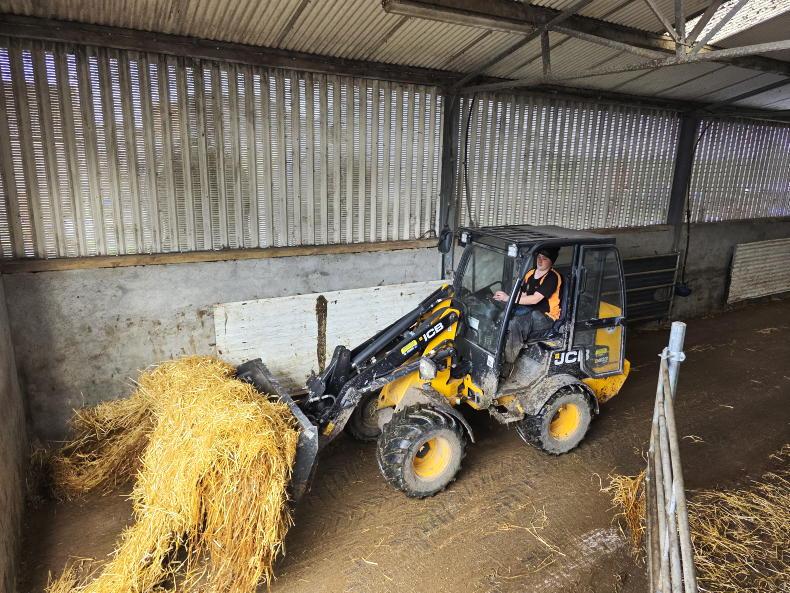
A towing option is available with clevis and 50mm ball hitches, both with a capacity of 750kg.
The 403 Plus is also equipped with an auto-stop feature to shut down the engine if left idle for a time-adjustable period. The 403 is JCB’s smallest wheel loader, but the new Plus version has a power-to-weight ratio equivalent to its biggest machines.
Transmission
The 403 Plus model has a two-speed hydrostatic Bosch Rexroth transmission. It comes in 20km/h and 30km/h options, with Thomas opting for the 30km/h version.
The driveline works in parallel with a combined braking/inching system on the footbrake. This offers multi-functioning and increased control during loading and rehandling. Thomas opted for the differential lock option in both front and rear axles for ultimate traction when its needed.
The 60l/min gear pump provides oil for the articulated chassis steering, lift arms and front-end attachments. The auxiliary control lever provides a constant flow of up to 40l/min to operate attachments providing constant flow for attachments like sweepers and feeder buckets. Flow can be controlled using a regular lever valve or the optional electric control on the loader’s joystick. The loader comes fitted with ZF axles.
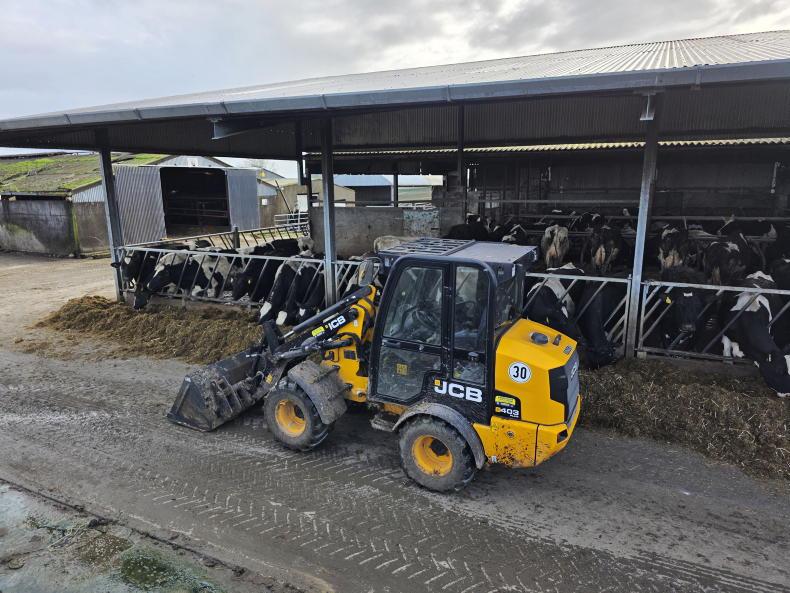
It comes with three choices of cab: a fully glazed cab, semi-glazed rigid canopy or low-height fold-down frame.
It comes with a choice of lift arm sizes – a load-over height of 2.6m, or the extended option taking this to 2.8m. Overall height is 2.2m but can be lowered to 1.84m, while the overall width is 1.1m on narrow tyres. The oscillating centre joint allows all four wheels to adjust to the contours of the ground and maintain maximum tractive effort at all times.
Cab
It comes with three choices of cab: a fully glazed cab, semi-glazed rigid canopy or low-height fold-down frame. Thomas opted for the full spec: glazed and enclosed cab. It offers all the luxuries and pretty much the same cab layout as JCB’s larger loaders, such as a heater and a radio and the joystick control system with directional shuttle changes. Switching between high and low travel speeds on the move takes just a click of a button on the joystick.
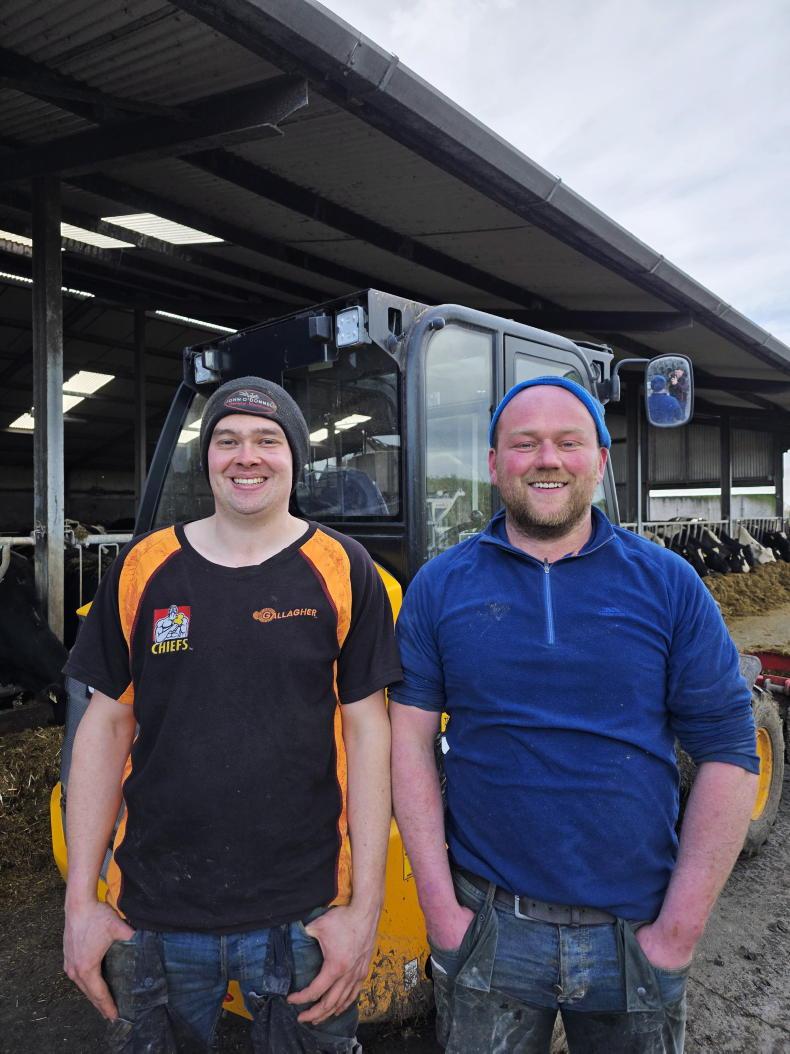
Kevin Rigney and Thomas Murphy.
A towing option is available with clevis and 50mm ball hitches, both with a capacity of 750kg. JCB LiveLink telemetry is now installed on the new Plus model to provide remote location, fault early warning alerts and operational records.
“We took delivery of the loader in the autumn of 2024, and we have less than 300 hours clocked on it. There isn’t a day on the farm or in the yard that the machine isn’t doing something. The reality is though that it’s never used for more than 10-20 minutes per day,” Thomas said.
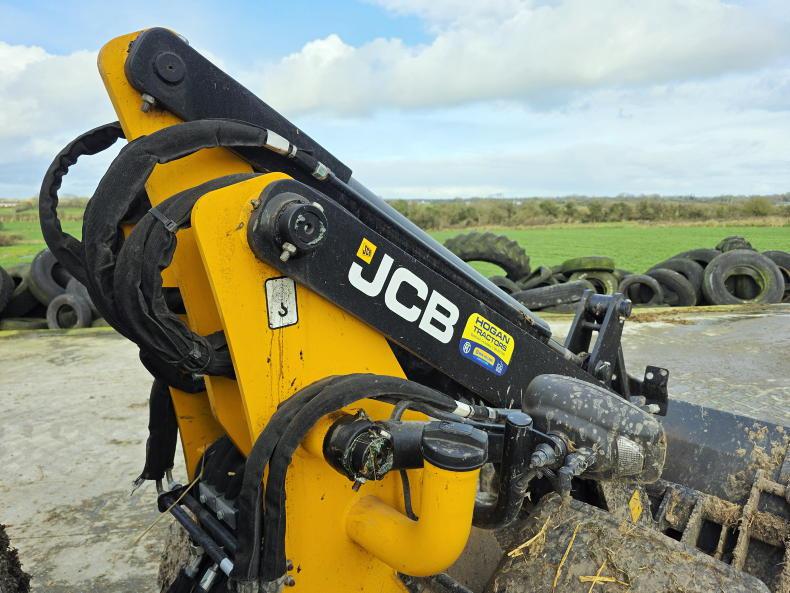
The diesel tank is built into the front boom.
“This time of the year, we use it for cleaning out the calf sheds, scraping the cubicle shed, pushing in the silage along the feed barrier and soon for pushing in zero-grazed grass. Even during the summer, we bring it fencing. We can clean out the old straw in the six-bay calf shed in 10 minutes. Because it’s so easy, you will do it more regular. It’s amazing what a machine like this can do in 15 minutes.
“When you get used to a machine like this around the yard, you’ll be asking yourself how did you ever do without it. In terms of attachments, we have a 5ft bucket, a 5ft tine grab, a set of spikes and V-silage pusher,” he added.
“We would be very happy with the build quality, the finish, the performance and the hydraulics on the machine. The only gripe we have is that we feel it’s a little on the lighter side of things at the front of the machine. That doesn’t really impact its performance though.
“Depending on the spec of the machine, it can be configured to lift from 465kg up to 593kg, but in reality, its is capable of lifting a lot more weight.
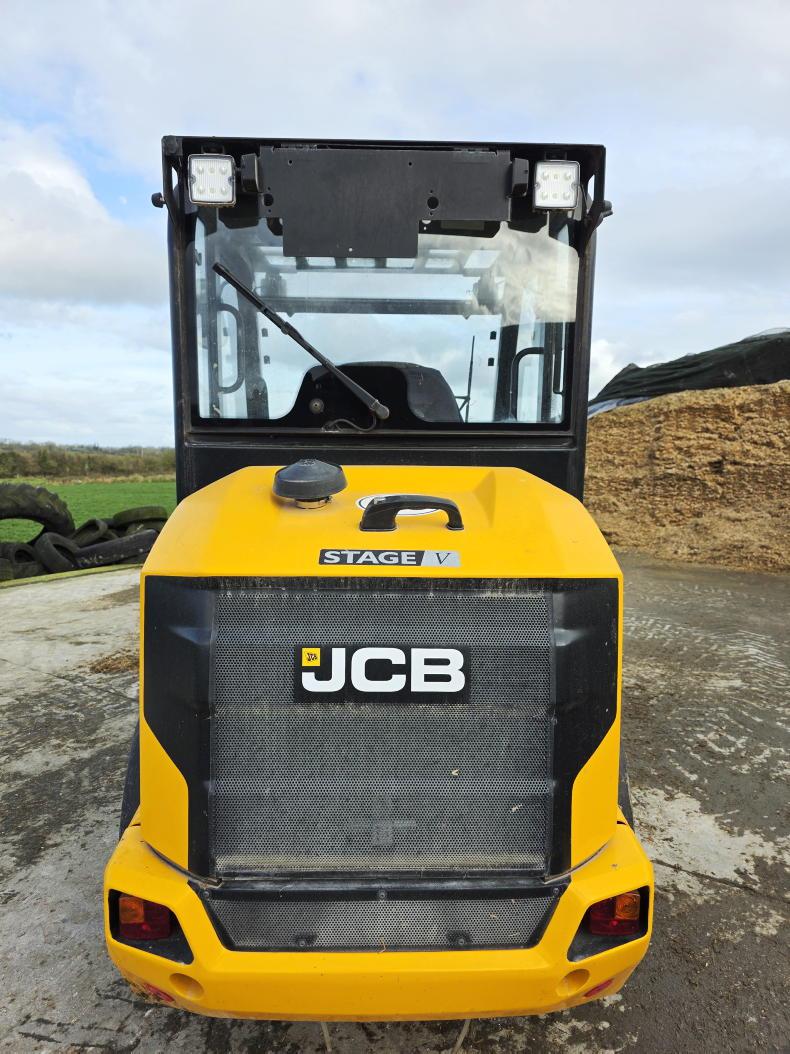
The overall width is 1.1m on narrow tyres.
“For a small machine, the cab has lots of room, and visibility is very good. We’re delighted with it and it hasn’t given us a minute’s trouble since it arrived,” said Thomas.
Manoeuvrability.Visibility.Build quality.The machine is a bit on the lighter side on the front.Engine: 1.5l 50hp Kubota. Transmission: two speed hydrostatic.Top speed: 30km/h.Hydraulics: 60l/minute.Weight: 2,850kg.Payload: 465-593kg. Ground clearance: 241mm.Width: 1.1 metres.Height: 2.2 metres.Starting price: €51,500 plus VAT (incl three-year or 2,000-hour warranty). 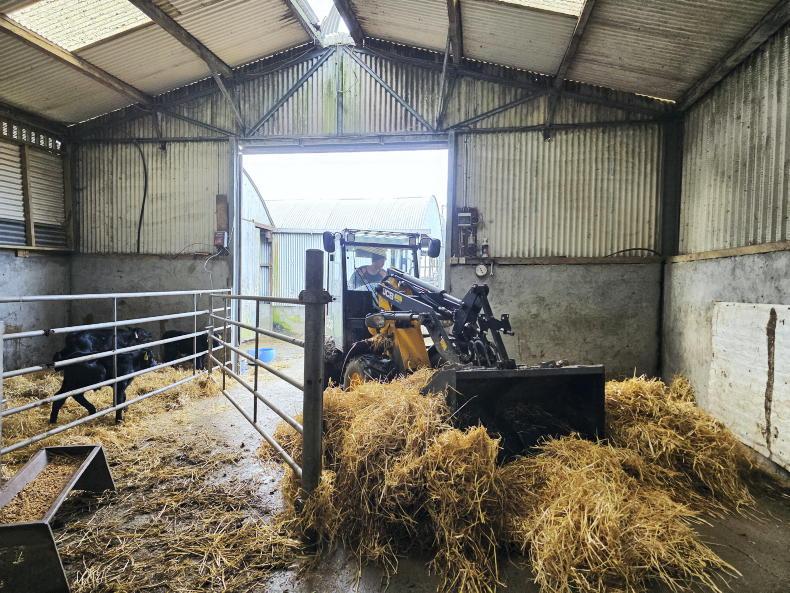
Calving down 235 cows across a winter- and spring-calving system and growing some barley, Thomas Murphy farms alongside his parents.
Based near the village of Kiltormer in Co Galway, Thomas is a cow man at heart, with a love for machinery. The majority of machinery work on the farm is carried out in-house, with the exception of the silage and the maize work.
Previous to buying the JCB 403, all the cubicle scraping was carried out with a Ford 4610. The same trusty tractor was used to clean out the straw-bedded sheds, push in zero grazed grass and carry out general duties around the yard, with the help of a New Holland telehandler.
The 60l/min gear pump provides oil for the articulated chassis steering, lift arms and front-end attachments.
“In 2024, the engine in the Ford was going porous, we knew it had its work done and that we had to buy something to scrape down the cubicles and clean out sheds,” Thomas said. “We contemplated going down several routes, such as a mini articulated loader, a skid steer or another small tractor. We felt that from a versatility, visibility and functionality point of view, a small articulated loader would be the best option for us,” he said.
Why JCB?
“The day you buy, is the day you sell. We were buying a machine to keep long term, so it was important that we made the correct decision,” Thomas explained.
It comes with a choice of lift arm sizes –a load-over height of 2.6m, or the extended option taking this to 2.8m.
“We spent time looking at several machines, to see what suited our farm best. We looked at the Weidemann Hoftrac, a Manitou loader and some of the Chinese brands such as the Adare and DGM. The Weidemann was €3,000 more expensive than the JCB, while the Manitou was a slightly bigger machine, but it was also considerably more expensive than the JCB.
“In terms of the Chinese-built loaders, we just didn’t think they were built strong enough or finished well enough. An equivalent New Holland skid steer was €6,000 more. At the end of the day, we found it hard to pass the JCB loader; it was well-built, well-finished and was put together with the best of components such as the Kubota engine, Bosch Rexroth transmission and ZF axles. After looking at the market place, we bought a new 403 Agri Plus model, which was sourced by our local tractor dealer, Hogan Tractors in Eyrecourt,” Thomas said.
Engine
Five years ago, JCB took a fresh look at the 403 offering, and unveiled the 403 Plus model, which mirrored the size and layout of the firm’s then-single model 25hp offering, namely the 403 Smart Power.
Although fitted with the same 1.498l four-cylinder Kubota engine, the Plus model features an additional 25hp, increasing the offering to 50hp, which is coupled with a 60l/min hydraulic capacity.
A towing option is available with clevis and 50mm ball hitches, both with a capacity of 750kg.
The 403 Plus is also equipped with an auto-stop feature to shut down the engine if left idle for a time-adjustable period. The 403 is JCB’s smallest wheel loader, but the new Plus version has a power-to-weight ratio equivalent to its biggest machines.
Transmission
The 403 Plus model has a two-speed hydrostatic Bosch Rexroth transmission. It comes in 20km/h and 30km/h options, with Thomas opting for the 30km/h version.
The driveline works in parallel with a combined braking/inching system on the footbrake. This offers multi-functioning and increased control during loading and rehandling. Thomas opted for the differential lock option in both front and rear axles for ultimate traction when its needed.
The 60l/min gear pump provides oil for the articulated chassis steering, lift arms and front-end attachments. The auxiliary control lever provides a constant flow of up to 40l/min to operate attachments providing constant flow for attachments like sweepers and feeder buckets. Flow can be controlled using a regular lever valve or the optional electric control on the loader’s joystick. The loader comes fitted with ZF axles.
It comes with three choices of cab: a fully glazed cab, semi-glazed rigid canopy or low-height fold-down frame.
It comes with a choice of lift arm sizes – a load-over height of 2.6m, or the extended option taking this to 2.8m. Overall height is 2.2m but can be lowered to 1.84m, while the overall width is 1.1m on narrow tyres. The oscillating centre joint allows all four wheels to adjust to the contours of the ground and maintain maximum tractive effort at all times.
Cab
It comes with three choices of cab: a fully glazed cab, semi-glazed rigid canopy or low-height fold-down frame. Thomas opted for the full spec: glazed and enclosed cab. It offers all the luxuries and pretty much the same cab layout as JCB’s larger loaders, such as a heater and a radio and the joystick control system with directional shuttle changes. Switching between high and low travel speeds on the move takes just a click of a button on the joystick.
Kevin Rigney and Thomas Murphy.
A towing option is available with clevis and 50mm ball hitches, both with a capacity of 750kg. JCB LiveLink telemetry is now installed on the new Plus model to provide remote location, fault early warning alerts and operational records.
“We took delivery of the loader in the autumn of 2024, and we have less than 300 hours clocked on it. There isn’t a day on the farm or in the yard that the machine isn’t doing something. The reality is though that it’s never used for more than 10-20 minutes per day,” Thomas said.
The diesel tank is built into the front boom.
“This time of the year, we use it for cleaning out the calf sheds, scraping the cubicle shed, pushing in the silage along the feed barrier and soon for pushing in zero-grazed grass. Even during the summer, we bring it fencing. We can clean out the old straw in the six-bay calf shed in 10 minutes. Because it’s so easy, you will do it more regular. It’s amazing what a machine like this can do in 15 minutes.
“When you get used to a machine like this around the yard, you’ll be asking yourself how did you ever do without it. In terms of attachments, we have a 5ft bucket, a 5ft tine grab, a set of spikes and V-silage pusher,” he added.
“We would be very happy with the build quality, the finish, the performance and the hydraulics on the machine. The only gripe we have is that we feel it’s a little on the lighter side of things at the front of the machine. That doesn’t really impact its performance though.
“Depending on the spec of the machine, it can be configured to lift from 465kg up to 593kg, but in reality, its is capable of lifting a lot more weight.
The overall width is 1.1m on narrow tyres.
“For a small machine, the cab has lots of room, and visibility is very good. We’re delighted with it and it hasn’t given us a minute’s trouble since it arrived,” said Thomas.
Manoeuvrability.Visibility.Build quality.The machine is a bit on the lighter side on the front.Engine: 1.5l 50hp Kubota. Transmission: two speed hydrostatic.Top speed: 30km/h.Hydraulics: 60l/minute.Weight: 2,850kg.Payload: 465-593kg. Ground clearance: 241mm.Width: 1.1 metres.Height: 2.2 metres.Starting price: €51,500 plus VAT (incl three-year or 2,000-hour warranty).





SHARING OPTIONS