Increasing engine performance, or “turning up”, is not a new concept. On older engines this was a more straightforward mechanical process whereby adjustments were made to an engine’s fuel pump – hence the term “turned up”. Today, on more modern engines, the process of remapping or chipping in most cases isn’t as simple.
Engines today consist of huge amounts of electronics and added components to meet the latest emissions standards. Huge advances have been made over the past 20 years in the reduction of tractor engine emissions. The latest Stage V emission standards, for example, require nitrogen oxide (NOx) and particulate matter (PM) values of no more than 0.40 g/kWh and 0.015g/kWh respectively, compared to values of 9.2 g/kWh and 0.54g/kWh in 1999. So it is clear these added components on modern engines serve a practical purpose.
What to be aware of?
Despite the complexity of modern engines, many farmers and contractors continue to remap or chip engines to boost performance.
Now that the process is mainly electronic, there are two common methods. The first involves placing a tweaked map on the tractor’s electronic control unit (ECU). This is a common method for increasing performance of cars and vans. But when a vehicle goes to the dealer for a service or to have an issue rectified, a software update may be done and the remap may be overwritten. So, if opting for this particular type of remap, ask your supplier can they provide assurance to reinstall the remap in the event of this happening.
The second method is the less invasive type. It involves add-on modules that, for example, increase common-rail pressure or injector opening times. There are many manufacturers and suppliers of these types of units built worldwide, claiming to offer improved engine performance. The most favoured are those that increase injector opening times.

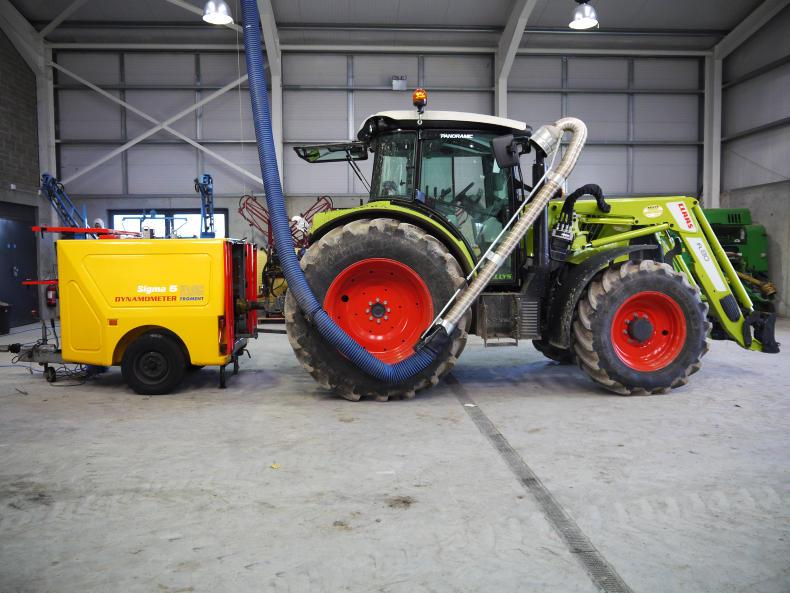
The tractor should be tested on a dyno before and after to check its performance.
Trusted service providers
Before remapping or altering an engine’s performance, it is important that some research has been done by the customer to find a reliable provider. Speak to a customer who has had machines remapped or tuned by the company or individual and find out about their experience. This is not something that should be based entirely on value as it could have serious financial consequences if done wrong.
It needs to be pointed out that there are a number of firms and individuals offering performance enhancing solutions and services. Not all work the same or have a positive effect on power and torque. Such issues that may arise if the job is done poorly or incorrectly include overheating, particularly if remapped too much, diesel knock, black smoke and the triggering of engine fault codes. These are just some of the possible symptoms that may occur as result of a bad remap.
Once done responsibly and sensibly, remapping can enhance a tractor’s performance with little or no detrimental effect. In some cases, fuel economy can be improved while giving more power and torque. Technology around remapping is improving all the time, with more and more reputable companies and solutions coming on board. As mentioned, this is a service that is worth spending money on wisely and getting done by a professional.

Engine condition should be assessed beforehand and be in good working order.
Dynameters
It is important a dyno is used during the chipping or remapping process, both before and after, otherwise everything is pretty much guesswork. Every machine, even though stickers on the bonnet may be the same, will have slightly different horsepower and torque outputs. In some cases these differences may be as high as 10-12%. Engines can differ depending on many variables, including engine hours, diesel quality and the tractor’s past if secondhand – maybe it was remapped or chipped previously without you knowing? A dyno reading before starting removes a lot of the guesswork and provides a good starting point. Once this starting point has been established, the end point or the desired horsepower can be calculated. Many will say remapping without a dyno reading is like working in the dark.
How it works
Most of the established names in the business offer the less invasive plug and play solution, claiming performance boosts of up to 25%. The chip or boost module, is typically similar in size to the tractor’s ECU and is plugged into the ECU’s output. No additional equipment or modifications are needed, leaving this the most manufacturer-friendly solution, with no footprint obvious if removed. This leaves the ECU able to be updated without fear of losing the added performance.
Some of the more popular systems work by lengthening the diesel injection period, not affecting either boost or rail pressure, therefore not having a negative effect on the engine’s fuel injection system or turbo. Many of these better systems can be set up so that the module is not always active, only kicking in when the engine is under load or when the set parameters are met. These more advanced systems have the ability to monitor relevant engine data and make changes accordingly, for instance monitoring of engine and sensors within the fuel injection system to determine operating temperatures. If temperatures are above where they should be, then additional performance provided by the unit is ramped down until normal operating temperatures resume, before restoring performance gradually when safe to do so.
These more advanced systems are worth paying extra for as they protect the longevity of your engine.
Warranty
The words remapping and manufacturer’s warranty aren’t best placed in a sentence together as it tends to be an area lacking clarity. In some cases, the dealer ends up as the middleman as the manufacturer is obviously not very keen on the idea of altering a tractor’s performance. While at the same time the dealer wants to look after its customer and may turn a blind eye in some circumstances, but the general rule of thumb is that chipping or remapping of any machine will void the manufacturer’s warranty.
Some remapping vendors argue that their particular solution will not exceed the manufacturer’s tolerances for engine or transmission components where standard service intervals are adhered to as recommended by the manufacturer.
Almost all remapping or chipping companies do not provide warranty due to the varying conditions machines are subject to and because there’s no proof proper service intervals were adhered to. But many offer standard warranty on wiring looms and modules that have been fitted for the procedure.
Before remapping or chipping, know the risks involved and ensure care is taken to source a trusted specialist with a proven track record.
Only then should it be further considered. A cheap job often isn’t the best job and a bad job can often lead to a costly repair. The add-on module or chip is the least invasive method and is usually not affected by software updates etc.
The use of a dyno before and after is important, to give a good starting point and then after to ensure the tractor is outputting what was intended to be achieved from a safe remap. Proceed with caution and know the possible consequences. Pricing varies considerably, but generally as the saying goes ‘you get what you pay for’.
An installation of recognised brand module into a six cylinder tractor with a dyno test before and after could cost anywhere up to €1,100-€1,300 plus VAT. Discounts are generally given if more than one machine is being done.
Finally, beware that when boosting a machines performance, you are generally taking all potential risks into your own hands in the event something may go wrong.
Increasing engine performance, or “turning up”, is not a new concept. On older engines this was a more straightforward mechanical process whereby adjustments were made to an engine’s fuel pump – hence the term “turned up”. Today, on more modern engines, the process of remapping or chipping in most cases isn’t as simple.
Engines today consist of huge amounts of electronics and added components to meet the latest emissions standards. Huge advances have been made over the past 20 years in the reduction of tractor engine emissions. The latest Stage V emission standards, for example, require nitrogen oxide (NOx) and particulate matter (PM) values of no more than 0.40 g/kWh and 0.015g/kWh respectively, compared to values of 9.2 g/kWh and 0.54g/kWh in 1999. So it is clear these added components on modern engines serve a practical purpose.
What to be aware of?
Despite the complexity of modern engines, many farmers and contractors continue to remap or chip engines to boost performance.
Now that the process is mainly electronic, there are two common methods. The first involves placing a tweaked map on the tractor’s electronic control unit (ECU). This is a common method for increasing performance of cars and vans. But when a vehicle goes to the dealer for a service or to have an issue rectified, a software update may be done and the remap may be overwritten. So, if opting for this particular type of remap, ask your supplier can they provide assurance to reinstall the remap in the event of this happening.
The second method is the less invasive type. It involves add-on modules that, for example, increase common-rail pressure or injector opening times. There are many manufacturers and suppliers of these types of units built worldwide, claiming to offer improved engine performance. The most favoured are those that increase injector opening times.
The tractor should be tested on a dyno before and after to check its performance.
Trusted service providers
Before remapping or altering an engine’s performance, it is important that some research has been done by the customer to find a reliable provider. Speak to a customer who has had machines remapped or tuned by the company or individual and find out about their experience. This is not something that should be based entirely on value as it could have serious financial consequences if done wrong.
It needs to be pointed out that there are a number of firms and individuals offering performance enhancing solutions and services. Not all work the same or have a positive effect on power and torque. Such issues that may arise if the job is done poorly or incorrectly include overheating, particularly if remapped too much, diesel knock, black smoke and the triggering of engine fault codes. These are just some of the possible symptoms that may occur as result of a bad remap.
Once done responsibly and sensibly, remapping can enhance a tractor’s performance with little or no detrimental effect. In some cases, fuel economy can be improved while giving more power and torque. Technology around remapping is improving all the time, with more and more reputable companies and solutions coming on board. As mentioned, this is a service that is worth spending money on wisely and getting done by a professional.
Engine condition should be assessed beforehand and be in good working order.
Dynameters
It is important a dyno is used during the chipping or remapping process, both before and after, otherwise everything is pretty much guesswork. Every machine, even though stickers on the bonnet may be the same, will have slightly different horsepower and torque outputs. In some cases these differences may be as high as 10-12%. Engines can differ depending on many variables, including engine hours, diesel quality and the tractor’s past if secondhand – maybe it was remapped or chipped previously without you knowing? A dyno reading before starting removes a lot of the guesswork and provides a good starting point. Once this starting point has been established, the end point or the desired horsepower can be calculated. Many will say remapping without a dyno reading is like working in the dark.
How it works
Most of the established names in the business offer the less invasive plug and play solution, claiming performance boosts of up to 25%. The chip or boost module, is typically similar in size to the tractor’s ECU and is plugged into the ECU’s output. No additional equipment or modifications are needed, leaving this the most manufacturer-friendly solution, with no footprint obvious if removed. This leaves the ECU able to be updated without fear of losing the added performance.
Some of the more popular systems work by lengthening the diesel injection period, not affecting either boost or rail pressure, therefore not having a negative effect on the engine’s fuel injection system or turbo. Many of these better systems can be set up so that the module is not always active, only kicking in when the engine is under load or when the set parameters are met. These more advanced systems have the ability to monitor relevant engine data and make changes accordingly, for instance monitoring of engine and sensors within the fuel injection system to determine operating temperatures. If temperatures are above where they should be, then additional performance provided by the unit is ramped down until normal operating temperatures resume, before restoring performance gradually when safe to do so.
These more advanced systems are worth paying extra for as they protect the longevity of your engine.
Warranty
The words remapping and manufacturer’s warranty aren’t best placed in a sentence together as it tends to be an area lacking clarity. In some cases, the dealer ends up as the middleman as the manufacturer is obviously not very keen on the idea of altering a tractor’s performance. While at the same time the dealer wants to look after its customer and may turn a blind eye in some circumstances, but the general rule of thumb is that chipping or remapping of any machine will void the manufacturer’s warranty.
Some remapping vendors argue that their particular solution will not exceed the manufacturer’s tolerances for engine or transmission components where standard service intervals are adhered to as recommended by the manufacturer.
Almost all remapping or chipping companies do not provide warranty due to the varying conditions machines are subject to and because there’s no proof proper service intervals were adhered to. But many offer standard warranty on wiring looms and modules that have been fitted for the procedure.
Before remapping or chipping, know the risks involved and ensure care is taken to source a trusted specialist with a proven track record.
Only then should it be further considered. A cheap job often isn’t the best job and a bad job can often lead to a costly repair. The add-on module or chip is the least invasive method and is usually not affected by software updates etc.
The use of a dyno before and after is important, to give a good starting point and then after to ensure the tractor is outputting what was intended to be achieved from a safe remap. Proceed with caution and know the possible consequences. Pricing varies considerably, but generally as the saying goes ‘you get what you pay for’.
An installation of recognised brand module into a six cylinder tractor with a dyno test before and after could cost anywhere up to €1,100-€1,300 plus VAT. Discounts are generally given if more than one machine is being done.
Finally, beware that when boosting a machines performance, you are generally taking all potential risks into your own hands in the event something may go wrong.










SHARING OPTIONS