The need for small electric cars has always made sense to me ever since I first drove the prototype electric version of the Mini some 12 years ago.
Despite this, many of the car companies have put more emphasis on electrifying large SUVs that are heavier, less efficient in their use of battery power and require significantly more metal to build, thus costing more.
Every major feeder route into our cities, such as Dublin, Cork, Limerick, Galway and Waterford, has become a nightmare for commuter traffic jams.
Cars pile up with a single occupant because there are simply no other travel options.
Far too many of these motors are larger cars and SUVs and an increasing number of these are fitted with large and expensive battery systems to ensure a reasonable range on a full charge.
They are being bought with SEAI purchase grants and, in the case of company cars with lower benefit-in-kind (BIK) tax benefits, again for single-occupancy use.
Is it time to review the scheme?
In most cases, the people who really need to change to electric cars cannot afford them and don’t qualify for BIK tax benefits. So, is it time to review the scheme? Should there be more emphasis on supporting the drivers of single occupancy smaller and more efficient cars who need cars to get to work rather than need their cars for work, and is there a distinct difference?
The nature of the new car market is changing. Electric car use is increasing, while incentives are dropping and will continue to decline up to 2028. New electric car sales have risen by 4.6% in 2025 compared with 2024 and now account for 18.79% of all new cars sold (see Table 1).
So, is it time for a BEV to work scheme (battery electric vehicle to work scheme), where only smaller cars are supported with a proper financial incentive for change?
Most commuters from rural towns and villages who drive to work rather than drive for work, are driving less than 50km to their job. They don’t need large electric SUVs to do that. So, let’s explore what would be available with value in a tailored small car BEV to work scheme.
The benefits of electric car ownership are obvious in terms of running costs, the challenge has been to get over the relatively high initial purchase price. Re-sale values are beginning to build and so too is long-term ownership confidence.
This is because new reports are showing battery degeneration levels are low over 10-year battery use levels.
Nearly 25,000 Irish people have availed of grant aid to purchase a bike in the Government’s Bike to Work scheme, per year over the last four years. If a similar financial percentage incentive was made available only to buyers of smaller electric cars in a BEV to work scheme, for those needing a car to get to work, I expect that the uptake would be similar. It would transform the commuter landscape, not to mention lowering CO2 emission levels.
Thankfully, there are now plenty of small electric cars to choose from to meet the needs of a BEV to work scheme.
This week, I’ve looked at some relatively new cars; the Citroen C3, two models of which I’ve driven in recent weeks, the award-winning Renault 5, and the new Nissan Micra, which is on the way. All three offer fully electric and all are a more affordable option.
You need also to consider other small car options such as the BYD Dolphin Surf, Dacia Spring, Hyundai Inster, and Peugeot’s e-208, all of which are very attractive entry-level BEVs. The challenge is to get a compact electric car for under €25,000 in 2026.
The table with this article compares all the necessary practical features. There are several similar features, including equal eight-year battery warranty, and five-year car warranty.
Renault 5
This year’s Irish Car of the Year is the new Renault 5, which is a very attractive car to drive and comes with an impressive range of over 400km that I found is achievable with reasonable driving.

Ireland’s Car of the Year for 2026 is the new Renault 5 which is now only available as a battery electric vehicle.
The car’s battery power will deliver in terms of acceleration. The consumption level is a little higher than the average of the Nissan Micra, but lower than Citroen’s e-C3.
The Renault 5 comes with good fast charging ability, if there is a high-speed charger on your route or in your local town. The boot space is relatively small, and the overall car length is compact.

The new Renault 5 is an attractive package in terms of range and performance. Entry prices are high, starting at €29,495.
Out on the road, the Renault 5 is very attractive to drive. There is a good seat position, the controls are clear and easy to use and, overall, it’s a car that you’ll feel good driving about in.
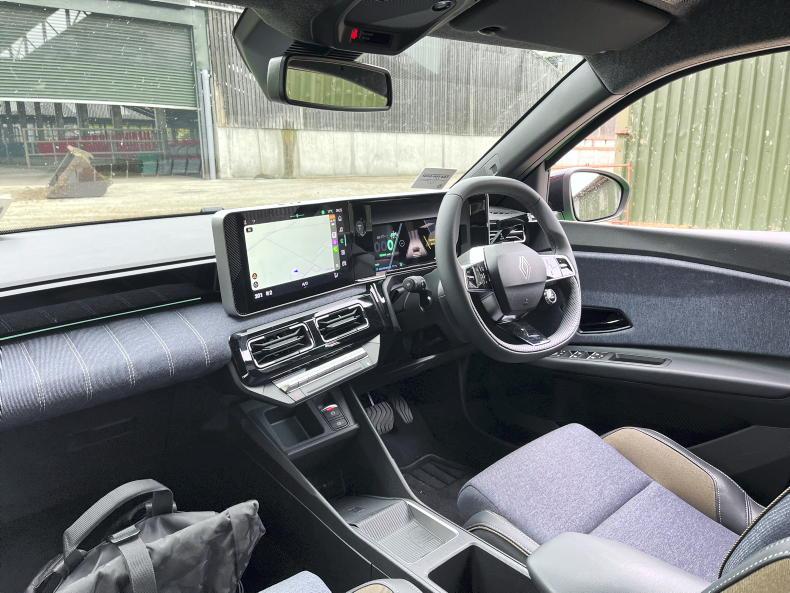
The dash layout on the new Renault 5 makes for easy driving.
Citroen e-C3
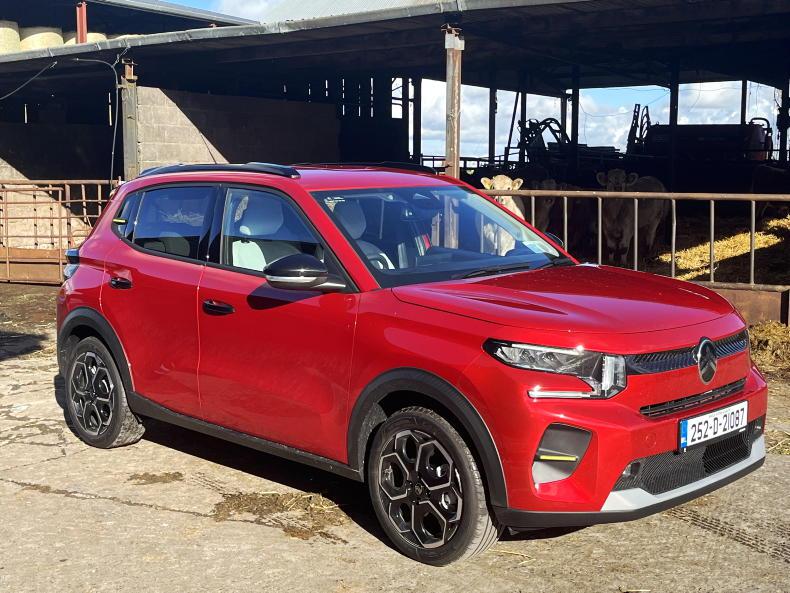
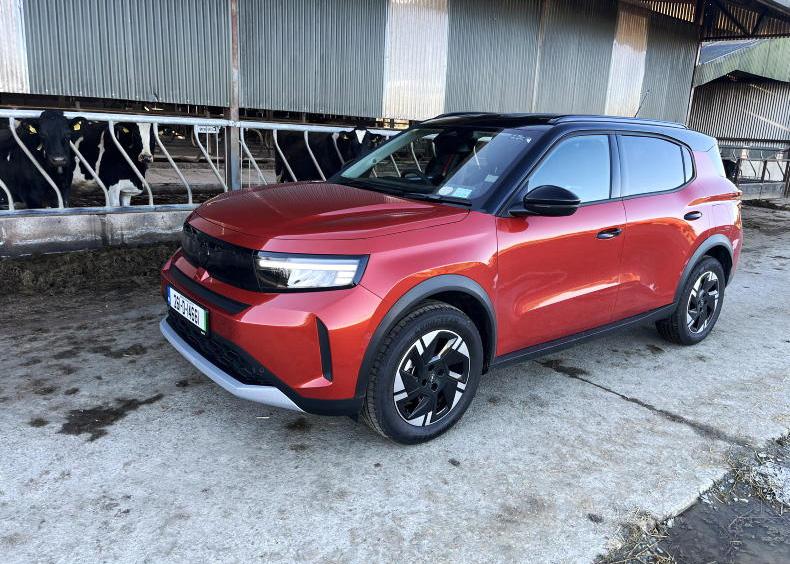
The Citroen e-C3 is one of the most competitively priced small SUVs on the Irish market, be it electric or petrol engine driven.

The dash layout on the Citroen e-C3 model is clear and functional.
The e-C3 is an attractive small car that’s also available with a petrol hybrid option. The battery electric version is the one that I liked best, but its range at 320km on a full charge failed me and is more limited than that of the Renault 5 and Nissan Micra.
This is not a car for long-distance driving. Out on the motorway on a trip to Wexford the battery level was dropping before my eyes, even as I cruised at a modest 100km/hr. For more local driving, the experience was different and much less anxious.
Nissan Micra
The new Nissan Micra is now only available in battery electric vehicle (BEV) format. This car shares lots of technology with the Renault 5; they are very similar apart from the badging and the colour options.

Nissan will be giving a big push to the new all-electric Micra in 2026, it is based on the Renault 5 design and a shade cheaper at €25,595.
I expect that this car will drive very like the Renault 5 on that basis, which will make for a very enjoyable car to drive. The Nissan Micra pricing is more competitive than the Renault 5, while more expensive than the Citroen e-C3.
The Renault 5 is the nicest car of these three to drive, while the Citroen e-C3 has a pleasant appearance. The higher SUV-type appearance gives better road visibility and comes out with the highest rating for me.
All three are very acceptable cars, while the Renault 5 and Nissan Micra are far too expensive as entry-level BEVs, especially compared with the impressive features included as standard in the Citroen e-C3. That value offer, coupled with styling and impressive Citroen comfort, prompts me to make it my overall top choice, even though it was not considered by all of my motoring journalist colleagues when they gave the Renault 5 their top votes.
If Irish commuters and many IFJ readers among this group were to get a one-third financial incentive in a BEV to work scheme in association with their employers, for a fixed period of three years, it would transform the Irish commuter world with value, clean the air in our cities and ensure that the Government’s BEV projections would get back on target.
The need for small electric cars has always made sense to me ever since I first drove the prototype electric version of the Mini some 12 years ago.
Despite this, many of the car companies have put more emphasis on electrifying large SUVs that are heavier, less efficient in their use of battery power and require significantly more metal to build, thus costing more.
Every major feeder route into our cities, such as Dublin, Cork, Limerick, Galway and Waterford, has become a nightmare for commuter traffic jams.
Cars pile up with a single occupant because there are simply no other travel options.
Far too many of these motors are larger cars and SUVs and an increasing number of these are fitted with large and expensive battery systems to ensure a reasonable range on a full charge.
They are being bought with SEAI purchase grants and, in the case of company cars with lower benefit-in-kind (BIK) tax benefits, again for single-occupancy use.
Is it time to review the scheme?
In most cases, the people who really need to change to electric cars cannot afford them and don’t qualify for BIK tax benefits. So, is it time to review the scheme? Should there be more emphasis on supporting the drivers of single occupancy smaller and more efficient cars who need cars to get to work rather than need their cars for work, and is there a distinct difference?
The nature of the new car market is changing. Electric car use is increasing, while incentives are dropping and will continue to decline up to 2028. New electric car sales have risen by 4.6% in 2025 compared with 2024 and now account for 18.79% of all new cars sold (see Table 1).
So, is it time for a BEV to work scheme (battery electric vehicle to work scheme), where only smaller cars are supported with a proper financial incentive for change?
Most commuters from rural towns and villages who drive to work rather than drive for work, are driving less than 50km to their job. They don’t need large electric SUVs to do that. So, let’s explore what would be available with value in a tailored small car BEV to work scheme.
The benefits of electric car ownership are obvious in terms of running costs, the challenge has been to get over the relatively high initial purchase price. Re-sale values are beginning to build and so too is long-term ownership confidence.
This is because new reports are showing battery degeneration levels are low over 10-year battery use levels.
Nearly 25,000 Irish people have availed of grant aid to purchase a bike in the Government’s Bike to Work scheme, per year over the last four years. If a similar financial percentage incentive was made available only to buyers of smaller electric cars in a BEV to work scheme, for those needing a car to get to work, I expect that the uptake would be similar. It would transform the commuter landscape, not to mention lowering CO2 emission levels.
Thankfully, there are now plenty of small electric cars to choose from to meet the needs of a BEV to work scheme.
This week, I’ve looked at some relatively new cars; the Citroen C3, two models of which I’ve driven in recent weeks, the award-winning Renault 5, and the new Nissan Micra, which is on the way. All three offer fully electric and all are a more affordable option.
You need also to consider other small car options such as the BYD Dolphin Surf, Dacia Spring, Hyundai Inster, and Peugeot’s e-208, all of which are very attractive entry-level BEVs. The challenge is to get a compact electric car for under €25,000 in 2026.
The table with this article compares all the necessary practical features. There are several similar features, including equal eight-year battery warranty, and five-year car warranty.
Renault 5
This year’s Irish Car of the Year is the new Renault 5, which is a very attractive car to drive and comes with an impressive range of over 400km that I found is achievable with reasonable driving.
Ireland’s Car of the Year for 2026 is the new Renault 5 which is now only available as a battery electric vehicle.
The car’s battery power will deliver in terms of acceleration. The consumption level is a little higher than the average of the Nissan Micra, but lower than Citroen’s e-C3.
The Renault 5 comes with good fast charging ability, if there is a high-speed charger on your route or in your local town. The boot space is relatively small, and the overall car length is compact.
The new Renault 5 is an attractive package in terms of range and performance. Entry prices are high, starting at €29,495.
Out on the road, the Renault 5 is very attractive to drive. There is a good seat position, the controls are clear and easy to use and, overall, it’s a car that you’ll feel good driving about in.
The dash layout on the new Renault 5 makes for easy driving.
Citroen e-C3
The Citroen e-C3 is one of the most competitively priced small SUVs on the Irish market, be it electric or petrol engine driven.
The dash layout on the Citroen e-C3 model is clear and functional.
The e-C3 is an attractive small car that’s also available with a petrol hybrid option. The battery electric version is the one that I liked best, but its range at 320km on a full charge failed me and is more limited than that of the Renault 5 and Nissan Micra.
This is not a car for long-distance driving. Out on the motorway on a trip to Wexford the battery level was dropping before my eyes, even as I cruised at a modest 100km/hr. For more local driving, the experience was different and much less anxious.
Nissan Micra
The new Nissan Micra is now only available in battery electric vehicle (BEV) format. This car shares lots of technology with the Renault 5; they are very similar apart from the badging and the colour options.
Nissan will be giving a big push to the new all-electric Micra in 2026, it is based on the Renault 5 design and a shade cheaper at €25,595.
I expect that this car will drive very like the Renault 5 on that basis, which will make for a very enjoyable car to drive. The Nissan Micra pricing is more competitive than the Renault 5, while more expensive than the Citroen e-C3.
The Renault 5 is the nicest car of these three to drive, while the Citroen e-C3 has a pleasant appearance. The higher SUV-type appearance gives better road visibility and comes out with the highest rating for me.
All three are very acceptable cars, while the Renault 5 and Nissan Micra are far too expensive as entry-level BEVs, especially compared with the impressive features included as standard in the Citroen e-C3. That value offer, coupled with styling and impressive Citroen comfort, prompts me to make it my overall top choice, even though it was not considered by all of my motoring journalist colleagues when they gave the Renault 5 their top votes.
If Irish commuters and many IFJ readers among this group were to get a one-third financial incentive in a BEV to work scheme in association with their employers, for a fixed period of three years, it would transform the Irish commuter world with value, clean the air in our cities and ensure that the Government’s BEV projections would get back on target.







SHARING OPTIONS