Sustaining close to 25,000 jobs in Ireland, the farm machinery sector has a total annual economic value worth €4.76bn to the Irish economy. This is according to the first-ever Economic Report on the Value of the Farm Machinery Industry in Ireland, which has been compiled by The Farm Tractor & Machinery Trade Association (FTMTA), in partnership with ifac.
For comparison, international tourism brought in €6.2bn in 2024, according to the Irish Tourism Industry Confederation (ITIC). The study highlights the industry’s strategic importance to rural Ireland, climate action and national competitiveness – positioning it as one of Ireland’s most valuable yet often overlooked indigenous sectors.
This figure of €4.76bn represents the combined value of direct sales, supply chain effects and additional consumption expenditure, driven by wages earned in the sector and its supply chain.
The farm machinery sector’s total direct output is estimated at €2.57bn annually, encompassing new and second-hand machinery sales, domestic manufacturing, imports, exports, spare parts and after-sales services. In terms of export, the report places an annual value of over €700m on international exports from the farm machinery sector. The Irish farm machinery manufacturing sector exported to 61 countries in 2024. The Government tax take from the sector is estimated to be a staggering €226m annually. For every €1 of direct sector output, an additional €0.85 circulates through the Irish economy. In terms of the report, 55% of those surveyed are in distribution and sales, 31% in retail services and 14% in manufacturing.
Sector value – machine breakdown
Delving a bit deeper into the sector’s total direct output of €2.57bn annually, new tractor sales are the largest contributor, accounting for €331m, followed by used imported tractors, accounting for €241m. An average of 1,980 new tractors were sold per annum in Ireland from 2015-2024, while an average of 3,012 second- hand tractors were sold per annum in the same period.
New self-propelled machinery tally to €161m, while used self-propelled machinery accounts for a further €62m. Other new farm equipment, which is largely assumed to be implements, account for €500m, while used farm equipment tallies to €186m. The export of farm machinery, most of which is assumed to be Irish manufactured, account for €713m. And finally, the after sales service, maintenance and parts account for €380m.
For example, on average it is estimated that 85,000 agricultural tyres are sold in Ireland annually. The annual value of these tyre sales in Ireland per annum is €63.8m.
Current market
The report also included a survey of the FTMTA’s members. A total of 53% describe the current business environment as positive, while 56% said sentiment has improved over the last 12 months. Meanwhile, 51% of respondents anticipate an increase in turnover in 2026.
Less than one in five surveyed, predict declines in the year ahead, pointing to possible pressures from reduced farm margins in some farming sectors (such as tillage), tighter lending conditions and delayed capital expenditure in response to broader economic headwinds.
Encouragingly, 67% of survey respondents have indicated plans for significant investment, either currently underway or scheduled to begin within the next year. This is a strong sign of sector confidence and signals an expectation of sustained market demand.
The primary reasons for making investment are around increasing efficiencies (37%) and expanding company operations (25%).
At 53% of respondents, the majority of investment being undertaken and planned to be undertaken is of a magnitude of greater than €300,000.
Interestingly, 94% of respondents to the survey indicated that most investments they are making or planning on making within the business and premises will be without any grant support.
Employment
It is estimated that the farm machinery sector contributes 24,629 jobs, which breaks down to 14,926 direct and 9,703 indirect positions. These are diverse in skills profile, ranging from highly skilled engineers and welders to specialist technicians, software developers, precision agriculture consultants, supply chain managers, retail workers and sales executives.
The employment impact is reinforced by the fact that a high proportion of sector employees live in rural communities, where their wages support local retailers, service providers and social infrastructure. In this way, the farm machinery sector serves as a direct channel for transferring value from the agricultural economy into the broader rural economy.
By sustaining well paid, stable jobs, the sector helps counteract rural depopulation trends and strengthens community resilience.
According to the report, recruitment, retention and training of staff continue to create pressures in all areas of the sector. The report acknowledges that skilled staff are difficult to get, with recruitment from as far away as Southeast Asia increasing, to fill positions. Only 39% of respondents have a clear succession plan in place for the businesses that they manage, with 25% not having any plan in place.
The report notes that research shows that rural economic activity often has a higher local retention rate, meaning a greater proportion of each euro spent circulates within the local economy.
It also outlines that one of the most significant and measurable cost increases affecting the farm machinery sector has been the systematic escalation of wages. The national average weekly wage has increased from €799.96 in Q1 2019 to €1,026.20 in Q1 2025. This is a rise of over 28% from 2020 to 2025.
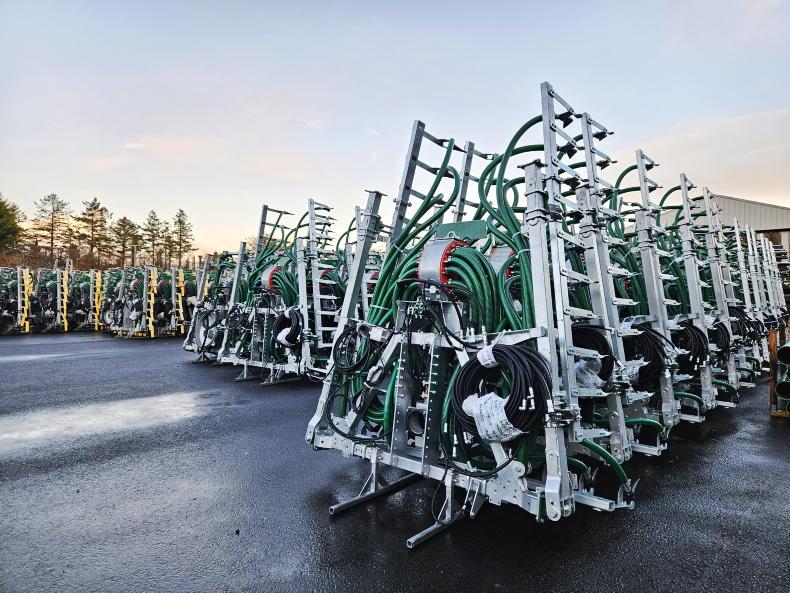
From a survey of FTMTA members, 51% of respondents anticipate an increase in turnover in 2026.
In Ireland, agricultural employment fell from 24% of the workforce in 1973 to just 4% in 2022, a decline of 83% over nearly five decades. This represents one of the most significant sectoral employment shifts in modern Irish economic history, rivalling even the decline in manufacturing, which dropped from 31% to 19% over the same period. This trend is not unique to Ireland, but reflects a broader European pattern.
The report notes that economic development has created more attractive employment opportunities in urban centres, drawing young people away from rural areas. Additionally, the economies of scale required for competitive farming have led to larger, more efficient operations that can produce more output with fewer workers. However, the most significant driver of this has been the advancement in agricultural technology and mechanisation. In the last 40 years the actual number of farm holdings in Ireland has fallen from over 233,000 in 1980 to just over 133,000 in 2023.
Huge increase in costs
Looking to the costs of running a business since 2020, the report concludes that labour has risen by 28%, electricity by 68% and gas by 75%. Steel has gone up 125%, while transport is up 40%, insurance is up 13% and finally, interest rates are up by 75%. Financial service costs, including banking fees and credit facilities, have also increased as interest rates have risen from historic lows to more normalised levels, affecting businesses’ access to working capital and expansion financing.
According to the report, for a typical farm machinery business, these cost increases compound to create substantial operational pressure. A business with €1m in annual operating costs in 2020 might face costs of €1.4m to €1.6m for the same level of operation in 2025, assuming no operational efficiency improvements.
It outlines that the situation in the rest of the EU reflects the same challenges as here in Ireland with latest Eurostat data illustrated showing the cost of doing business is circa 37% higher compared to early 2021. It notes that the imposition of tariffs by the US is going to further squeeze margins.
The report notes that while businesses have tried to offset rising costs by increasing prices, the agricultural sector’s high price sensitivity and the volatility of farm incomes have limited how much can be passed on to customers. As a result, it says that many farm machinery businesses are experiencing compressed margins due to incomplete cost recovery.
Irish farm machinery leasing sector
According to the report, collated industry estimates and the Central Bank’s new lending report indicates that around 50% of machinery and equipment financing now occurs through leasing and hire purchase (HP) arrangements. In 2024, leasing and HP financing were estimated to account for approximately €320m.
Over the last 10 years, the highest amount of money was borrowed in 2017, at close to €400m. Obviously, growth in this area has been driven by rising machinery costs, increasing technological complexity and farmers’ need for greater financial flexibility.
The total outstanding bank lending over the last 15 years in agriculture is also examined. Interestingly, the balance is at its lowest in 2024 and is 36% lower than at the end of 2010. These figures ignore inflation which if factored in would result in an even bigger reduction.
This segment features specialised agricultural lenders, traditional banks and international leasing companies. Many manufacturers also have their own leasing offerings in the market. In the last number of years, the Credit Union has become more active in the agricultural lending market, driven by its Cultivate loan product. Latest figures from Cultivate show a 23% increase in lending applications during 2024 in comparison to 2023, which currently stands at over €64m. Farm tractors and equipment accounted for 35% of Cultivate loans in 2024.
TAMS
The Targeted Agricultural Modernisation Scheme (TAMS) has been recognised by the industry as a key element of Ireland’s rural and agricultural policy toolkit. To date over €465m has been paid under TAMS II (37,681 payments) and €94m in TAMS III (10,576 payments), the figure for TAMS III will increase drastically in the next number of years with a budget for total spend of €370m by 2027.
The uptake of LESS systems, for example, has grown from single digits to over 60% of dairy and livestock farms using these systems since targeted grant support was introduced.
Sustaining close to 25,000 jobs in Ireland, the farm machinery sector has a total annual economic value worth €4.76bn to the Irish economy. This is according to the first-ever Economic Report on the Value of the Farm Machinery Industry in Ireland, which has been compiled by The Farm Tractor & Machinery Trade Association (FTMTA), in partnership with ifac.
For comparison, international tourism brought in €6.2bn in 2024, according to the Irish Tourism Industry Confederation (ITIC). The study highlights the industry’s strategic importance to rural Ireland, climate action and national competitiveness – positioning it as one of Ireland’s most valuable yet often overlooked indigenous sectors.
This figure of €4.76bn represents the combined value of direct sales, supply chain effects and additional consumption expenditure, driven by wages earned in the sector and its supply chain.
The farm machinery sector’s total direct output is estimated at €2.57bn annually, encompassing new and second-hand machinery sales, domestic manufacturing, imports, exports, spare parts and after-sales services. In terms of export, the report places an annual value of over €700m on international exports from the farm machinery sector. The Irish farm machinery manufacturing sector exported to 61 countries in 2024. The Government tax take from the sector is estimated to be a staggering €226m annually. For every €1 of direct sector output, an additional €0.85 circulates through the Irish economy. In terms of the report, 55% of those surveyed are in distribution and sales, 31% in retail services and 14% in manufacturing.
Sector value – machine breakdown
Delving a bit deeper into the sector’s total direct output of €2.57bn annually, new tractor sales are the largest contributor, accounting for €331m, followed by used imported tractors, accounting for €241m. An average of 1,980 new tractors were sold per annum in Ireland from 2015-2024, while an average of 3,012 second- hand tractors were sold per annum in the same period.
New self-propelled machinery tally to €161m, while used self-propelled machinery accounts for a further €62m. Other new farm equipment, which is largely assumed to be implements, account for €500m, while used farm equipment tallies to €186m. The export of farm machinery, most of which is assumed to be Irish manufactured, account for €713m. And finally, the after sales service, maintenance and parts account for €380m.
For example, on average it is estimated that 85,000 agricultural tyres are sold in Ireland annually. The annual value of these tyre sales in Ireland per annum is €63.8m.
Current market
The report also included a survey of the FTMTA’s members. A total of 53% describe the current business environment as positive, while 56% said sentiment has improved over the last 12 months. Meanwhile, 51% of respondents anticipate an increase in turnover in 2026.
Less than one in five surveyed, predict declines in the year ahead, pointing to possible pressures from reduced farm margins in some farming sectors (such as tillage), tighter lending conditions and delayed capital expenditure in response to broader economic headwinds.
Encouragingly, 67% of survey respondents have indicated plans for significant investment, either currently underway or scheduled to begin within the next year. This is a strong sign of sector confidence and signals an expectation of sustained market demand.
The primary reasons for making investment are around increasing efficiencies (37%) and expanding company operations (25%).
At 53% of respondents, the majority of investment being undertaken and planned to be undertaken is of a magnitude of greater than €300,000.
Interestingly, 94% of respondents to the survey indicated that most investments they are making or planning on making within the business and premises will be without any grant support.
Employment
It is estimated that the farm machinery sector contributes 24,629 jobs, which breaks down to 14,926 direct and 9,703 indirect positions. These are diverse in skills profile, ranging from highly skilled engineers and welders to specialist technicians, software developers, precision agriculture consultants, supply chain managers, retail workers and sales executives.
The employment impact is reinforced by the fact that a high proportion of sector employees live in rural communities, where their wages support local retailers, service providers and social infrastructure. In this way, the farm machinery sector serves as a direct channel for transferring value from the agricultural economy into the broader rural economy.
By sustaining well paid, stable jobs, the sector helps counteract rural depopulation trends and strengthens community resilience.
According to the report, recruitment, retention and training of staff continue to create pressures in all areas of the sector. The report acknowledges that skilled staff are difficult to get, with recruitment from as far away as Southeast Asia increasing, to fill positions. Only 39% of respondents have a clear succession plan in place for the businesses that they manage, with 25% not having any plan in place.
The report notes that research shows that rural economic activity often has a higher local retention rate, meaning a greater proportion of each euro spent circulates within the local economy.
It also outlines that one of the most significant and measurable cost increases affecting the farm machinery sector has been the systematic escalation of wages. The national average weekly wage has increased from €799.96 in Q1 2019 to €1,026.20 in Q1 2025. This is a rise of over 28% from 2020 to 2025.
From a survey of FTMTA members, 51% of respondents anticipate an increase in turnover in 2026.
In Ireland, agricultural employment fell from 24% of the workforce in 1973 to just 4% in 2022, a decline of 83% over nearly five decades. This represents one of the most significant sectoral employment shifts in modern Irish economic history, rivalling even the decline in manufacturing, which dropped from 31% to 19% over the same period. This trend is not unique to Ireland, but reflects a broader European pattern.
The report notes that economic development has created more attractive employment opportunities in urban centres, drawing young people away from rural areas. Additionally, the economies of scale required for competitive farming have led to larger, more efficient operations that can produce more output with fewer workers. However, the most significant driver of this has been the advancement in agricultural technology and mechanisation. In the last 40 years the actual number of farm holdings in Ireland has fallen from over 233,000 in 1980 to just over 133,000 in 2023.
Huge increase in costs
Looking to the costs of running a business since 2020, the report concludes that labour has risen by 28%, electricity by 68% and gas by 75%. Steel has gone up 125%, while transport is up 40%, insurance is up 13% and finally, interest rates are up by 75%. Financial service costs, including banking fees and credit facilities, have also increased as interest rates have risen from historic lows to more normalised levels, affecting businesses’ access to working capital and expansion financing.
According to the report, for a typical farm machinery business, these cost increases compound to create substantial operational pressure. A business with €1m in annual operating costs in 2020 might face costs of €1.4m to €1.6m for the same level of operation in 2025, assuming no operational efficiency improvements.
It outlines that the situation in the rest of the EU reflects the same challenges as here in Ireland with latest Eurostat data illustrated showing the cost of doing business is circa 37% higher compared to early 2021. It notes that the imposition of tariffs by the US is going to further squeeze margins.
The report notes that while businesses have tried to offset rising costs by increasing prices, the agricultural sector’s high price sensitivity and the volatility of farm incomes have limited how much can be passed on to customers. As a result, it says that many farm machinery businesses are experiencing compressed margins due to incomplete cost recovery.
Irish farm machinery leasing sector
According to the report, collated industry estimates and the Central Bank’s new lending report indicates that around 50% of machinery and equipment financing now occurs through leasing and hire purchase (HP) arrangements. In 2024, leasing and HP financing were estimated to account for approximately €320m.
Over the last 10 years, the highest amount of money was borrowed in 2017, at close to €400m. Obviously, growth in this area has been driven by rising machinery costs, increasing technological complexity and farmers’ need for greater financial flexibility.
The total outstanding bank lending over the last 15 years in agriculture is also examined. Interestingly, the balance is at its lowest in 2024 and is 36% lower than at the end of 2010. These figures ignore inflation which if factored in would result in an even bigger reduction.
This segment features specialised agricultural lenders, traditional banks and international leasing companies. Many manufacturers also have their own leasing offerings in the market. In the last number of years, the Credit Union has become more active in the agricultural lending market, driven by its Cultivate loan product. Latest figures from Cultivate show a 23% increase in lending applications during 2024 in comparison to 2023, which currently stands at over €64m. Farm tractors and equipment accounted for 35% of Cultivate loans in 2024.
TAMS
The Targeted Agricultural Modernisation Scheme (TAMS) has been recognised by the industry as a key element of Ireland’s rural and agricultural policy toolkit. To date over €465m has been paid under TAMS II (37,681 payments) and €94m in TAMS III (10,576 payments), the figure for TAMS III will increase drastically in the next number of years with a budget for total spend of €370m by 2027.
The uptake of LESS systems, for example, has grown from single digits to over 60% of dairy and livestock farms using these systems since targeted grant support was introduced.






SHARING OPTIONS