


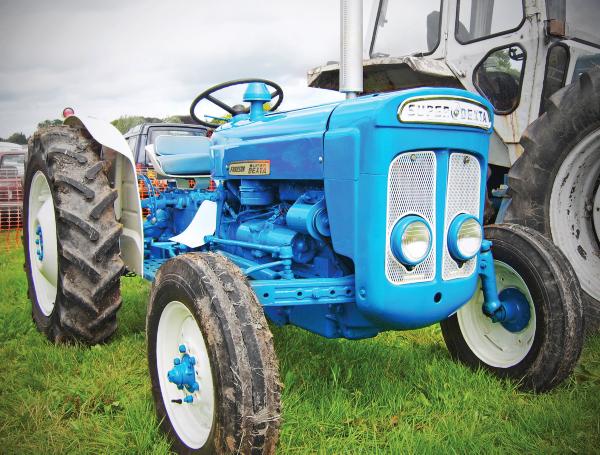
The first Fordson Major, designated E27N, was introduced in 1945, replacing the ageing Standard N.
Many of these petrol/tvo machines were converted to diesel power using engines supplied by companies such as Frank Perkins Limited, the most popular of which was the six-cylinder P6.
The E27N was superseded by the Fordson Major E1A in 1951, and the diesel version of this ‘New Major’ tractor proved very popular indeed. Indeed, the E1A’s 42hp four-cylinder power plant was one of the easiest starting diesel engines ever built, winning the tractor many fans.
Recognising the need for a smaller model to rival tractors such as the Ferguson 35, the 32hp three-cylinder Dexta was added to the Fordson range in 1957.
Both the Dexta and Major tractors had a high/low gearbox offering six forward and two reverse speeds, mated to the engine using a 11” dry clutch. The tractors’ styling was also similar, as was their empire blue and orange livery. The Dexta was fitted with category one rear linkage, the Major category two.
Live-drive was optional on both tractors, its fitment denoted by a small plaque located on their front chaff screens. Other optional extras available on the Major included a two-speed belt pulley, rear hydraulics and a pto.
In 1958, the Fordson Major E1A was replaced by the Power Major. This tractor was fitted with an updated version of the E1A’s diesel engine that produced 52 hp and had live-drive as standard.
The Power Major can be distinguished from its predecessor by its silver front chaff screens, three as opposed to four-spoke cast front wheels, scalloped rear wheels, bucket seat and dash gauges which were now mounted on the tractor’s fuel tank.
The Fordson Super Major was unveiled in December 1960, and can be easily identified by the position of its headlights inside the front chaff screens as opposed to being mounted either side of the nosecone.
The smaller Dexta received the same styling modification. The Super Major was fitted with a differential lock, disc brakes and draft and position control as standard.
In 1961, the 39.5hp Super Dexta was launched. Unlike the Super Major, the Super Dexta did not supersede the outgoing standard Dexta tractor but was manufactured alongside it at Dagenham. The Super Dexta’s taller front nosecone identifies it as the more powerful tractor.
The New Performance Fordson Super Major and Dexta models were unveiled in 1963. The tractors sported a new blue and light grey livery similar to that of their successors, the 6X ‘Pre-Force’ range.
diesel engine
The New Performance Super Dexta was powered by a 44.5hp diesel engine, while its larger sibling had a modified version of its predecessor’s four-cylinder power plant with an improved cylinder head design and a power output of 54hp.
The New Performance Super Major was also fitted with pressed steel as opposed to cast front wheels, a new hydraulic pump and a ‘Rest-O-Ride’ seat, as standard.
The reign of the New Performance Fordson Super Dexta and Major tractors was short-lived, however, as they were superseded by the 6X Ford ‘Pre-Force’ range in 1964.
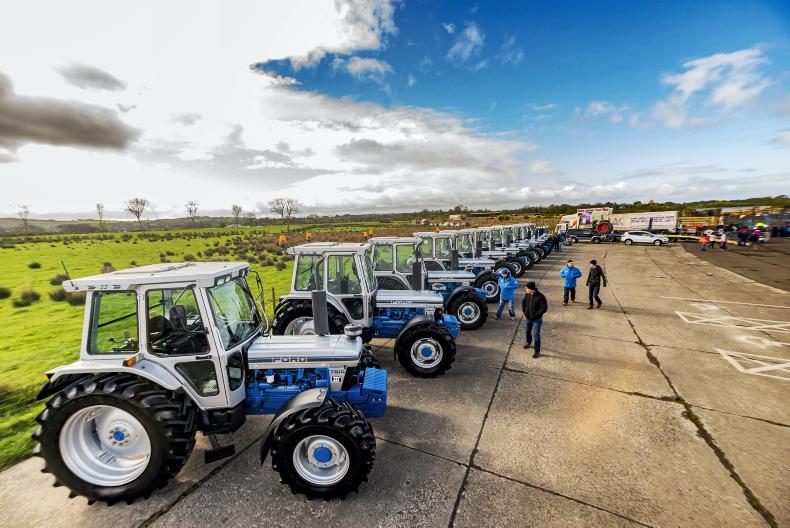
The new Ford 2000, 3000, 4000 and 5,000 tractors did at least bear the name of their Dexta, Super Dexta, Major and Super Major predecessors for a short time!
*robertkierans@hotmail.com



SHARING OPTIONS