Arable woes – despite favourable weather conditions, including at the all-important harvest period, it has been another tough year financially for growers. At harvest time, quotes from local feed mills typically started from £180/t for dried barley and £190/t for dried wheat, with deals for green grain starting from the low £150’s.
Bluetongue – two years after first emerging in the Netherlands, the BTV-3 strain of bluetongue finally arrived in NI in late November. There is likely to be limited opportunity for disease spread over the winter as midge activity is low, but concerns are already building for next spring.
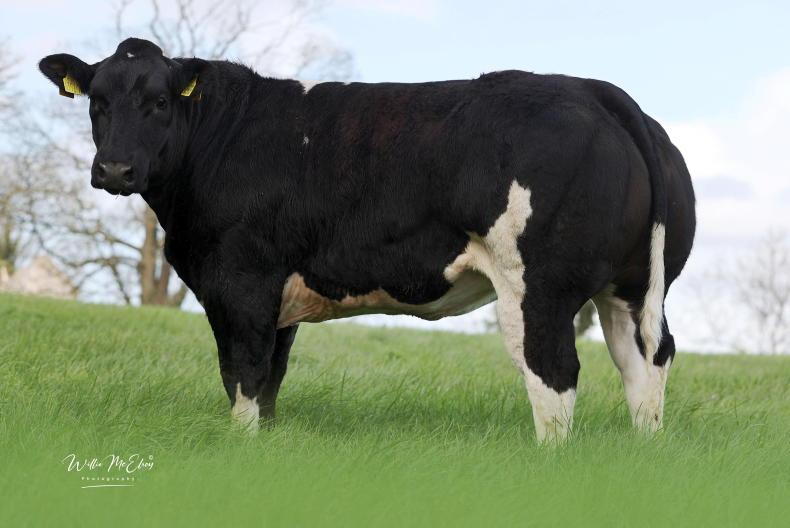
Cattle prices – the beef trade went off the charts in the spring. U3 steers were averaging 533p/kg in early January and peaked at 692p/kg by mid-April. Prices eased back slightly after that, but have remained buoyant, with U3 steers still averaging 657p/kg in mid-December. It has turbo charged prices in the live ring, with the value of some classes of store cattle rising by 66% by the autumn.
Dale Farm-Aurivo – in October, dairy co-ops Dale Farm and Aurivo announced that discussions were under way to explore how the two dairy processors could “maximise synergies”. In the weeks that followed, it became clear that a merger was on the cards. However, there are obstacles, including the approval of dairy exporter Ornua, as well as each co-op’s shareholders.
Environmental regulator – in November, a review by a three-person panel recommended that enforcement powers held by the NI Environment Agency, which is part of DAERA, should be moved to a new independent body. Agriculture Minister Andrew Muir agrees and wants to set up a new regulator, but he needs approval from the NI Executive.
Feed mills – output at local feed mills ran well ahead of 2024 levels for most of the year. Strong prices for milk and beef led farmers to increase feed input, especially during the first half of 2025. Feed prices remained reasonably favourable for farmers, with some price cuts applying in early winter.
Great year – overall, 2025 will largely be remembered as a great year in terms of weather. It was the lambing season of dreams for shepherds, conditions were near-perfect for all cuts of silage, grazing conditions held up well throughout the year and arable producers had a good harvest.
Hogget trade – when compared to the seasonal spikes of previous years, the sheep trade was reasonably steady throughout 2025. Factory prices for hoggets and lambs sat around the mid 600s (p/kg) for most of the year. Breeding sales performed especially well during the autumn. A key benchmark sale in Ballymena Mart in August saw Mule hogget prices up almost £100/head in two years.
Investment Scheme – in September, DAERA officials confirmed that a new £40m grant scheme is in the works. Under the Sustainable Farming Investment Scheme, farms will have a maximum claim of £25,000 which will provide up to 40% funding for eligible items that have an environmental benefit.
Judging cancelled – the bluetongue outbreak in Co Down led to all livestock classes being cancelled at the Royal Ulster Winter Fair in December. Initially, organisers hoped to run a scaled back livestock show, but all classes were pulled a few days before the event. With over 200 trade stands, the Winter Fair still attracted a large crowd of visitors on the day.

Despite no livestock classes, there was still a large crowd at the 2025 Winter Fair. \ Peter Houston
Kill stats – across all types of clean cattle, throughput at NI factories was down 6% year on year by mid-December. The cow kill was running 8% behind 2024 levels and the sheep kill was down 15%. By early December, sheep exports for direct slaughter in the Republic of Ireland were down 27%, but exports to Britain were up 127%.
Land eligibility – the final days of 2025 are effectively the last days of land eligibility rules. From 2026, all land in NI will be eligible for claiming the new Farm Sustainability Payment. The only exceptions are hard features, such as farmyards and laneways, and large blocks of woodland.
Milk prices – for most of 2025, milk prices were buoyant. DAERA figures show that the average price paid in NI over the first nine months of the year was 43.6ppl. However, by the late autumn, the outlook became very gloomy with international dairy markets in retreat. Base prices from local processors dipped below 30ppl and there were warnings of more cuts in the months ahead.
NAP – the review of the Nutrients Action Programme caused a furore among NI farmers in May. Tight rules for 3,500 intensive farms were proposed in a public consultation, including the need to reach a phosphorus balance of 10kg/ha/year by 2027, dropping to 8kg/ha/year in 2029. Following a backlash, Minister Muir agreed to set up a stakeholder group and hold a second public consultation in 2026.

Breeding stock were a lively trade at the 2025 sheep sales.
Opt in – to claim payment under the new Suckler Cow Scheme, farmers first need to complete a short online form to officially “opt in”. Projections from DAERA indicate that 12,150 farm businesses should be eligible to claim the new headage payment. By late November, just over 9,000 of the projected eligible farms had registered. The deadline is 31 March 2026.
Planning – getting planning for agricultural buildings remains a costly, lengthy and often impossible process for most NI farmers. DAERA has been urged to follow the lead of authorities in England by reforming planning guidance on ammonia. In particular, Natural England gives more flexibility to replacement buildings that reduce emissions.
Quality assurance – back in January, a review found that farm quality assurance schemes in the UK should be made simpler with less inspections for farmers. The report was commissioned in response to a backlash from farmers in 2024 over plans for new environmental standards. By October, Red Tractor said it had “increased transparency around decision making” and was “exploring ways to reduce audit burden”.

DAERA Minister Andrew Muir with environmental governance panel members John McCallister, Dr Viviane Gravey and Diane Ruddock.
Regionalisation – it emerged towards the end of the year that DAERA is planning a so-called “regionalisation” approach to wildlife intervention for TB control. A Test, Vaccinate and Remove project is to be conducted in a cross-border area near Derry and Strabane. The project is to be supported with €6.4m of funding from the Irish government.
Sustainability Standards – seven new Farm Sustainability Standards are to effectively replace the long-standing cross-compliance requirements for farm schemes in NI. From 2026, the new rules cover areas such as prevention of water pollution, protection of habitats, animal welfare and livestock identification.
Transferrable – in the 2025 Autumn Budget, Chancellor Rachel Reeves announced that a new £1m limit on agricultural and business property relief for inheritance tax will be transferrable between spouses. The change is fairly small but should prove helpful for many farming families by making succession planning slightly less complicated.

Dale Farm CEO Nick Whelan speaking to Aidan Brennan from the Irish Farmers Journal about merger talks with Aurivo. \ Peter Houston
Unexpected payment – in early October, NI farmers received an unexpected payment from DAERA, which came from leftover funding from the 2024/2025 agricultural budget. The top-up was worth 8% of entitlement values and it more than made up for payment cuts which had been applied earlier in the year to fund the new Suckler Cow Scheme.
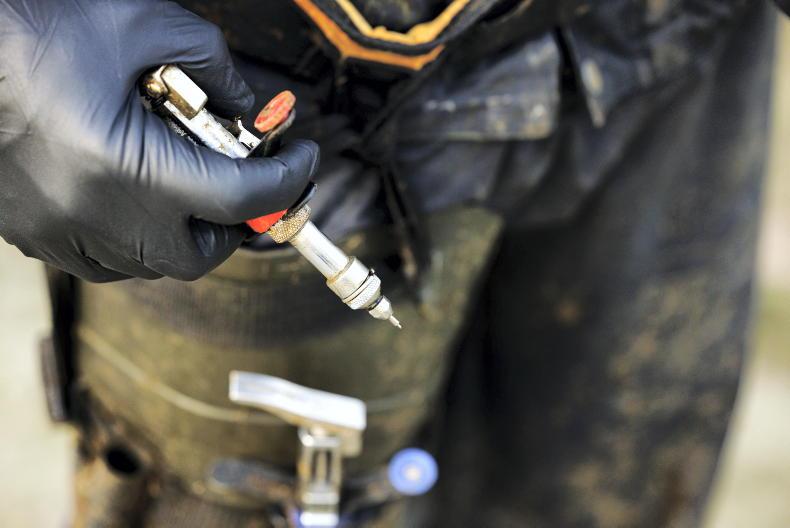
Veterinary medicines – a temporary grace period is set to expire at the end of 2025 which could have implications for the availability of certain veterinary medicines in NI. The long-running issue stems from NI needing to follow EU regulations on veterinary medicines as part of post-Brexit trade arrangements.
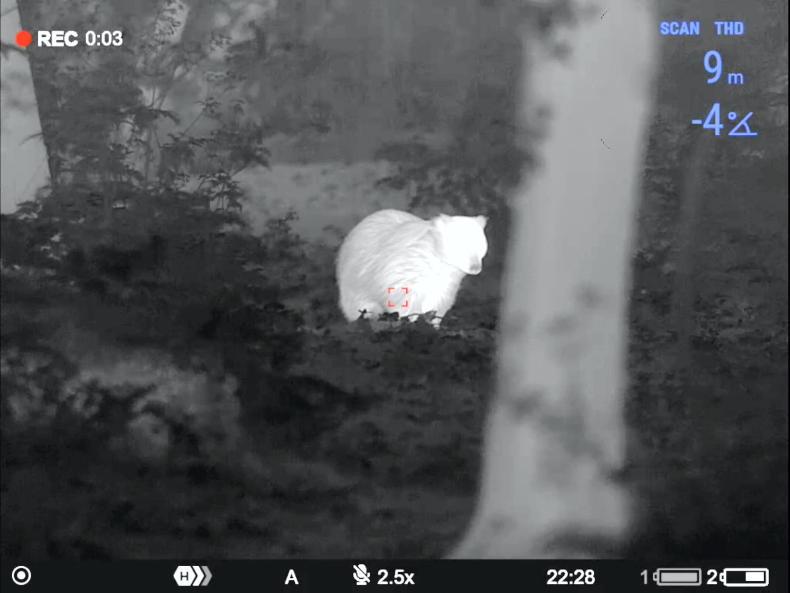
Researchers at Queen’s University Belfast are using thermal imaging technology to count badgers. \ Emily Currie.
Wildlife survey – in June, it emerged that early results from a new research project has found badger populations in NI could be ten times higher than previously thought. The study by researchers at Queen’s University Belfast involves using thermal imaging technology to observe and count badgers at nighttime.
XL – back in April, the Irish Farmers Journal revealed that there were some extra-large payments under the first year of the Beef Carbon Reduction Scheme. Payments in the scheme are uncapped and the top claimant received £234,975, with 11 beef finishers getting over £100,000.
Yellow Wellies – also in April, the UK-wide Yellow Wellies charity held its farm safety conference in Belfast. Delegates at the Farm Safety Foundation event were told that a growing number of older farmers are involved in farm accidents, although part of this is being put down to younger people becoming more aware of farm safety risks.
Zone four – soil sampling commenced in the fourth and final zone of the Soil Nutrient Health Scheme towards the end of 2025. Since its launch in 2022, approximately 440,000 fields have been sampled and 93% of all farms in NI have taken part.
Arable woes – despite favourable weather conditions, including at the all-important harvest period, it has been another tough year financially for growers. At harvest time, quotes from local feed mills typically started from £180/t for dried barley and £190/t for dried wheat, with deals for green grain starting from the low £150’s.
Bluetongue – two years after first emerging in the Netherlands, the BTV-3 strain of bluetongue finally arrived in NI in late November. There is likely to be limited opportunity for disease spread over the winter as midge activity is low, but concerns are already building for next spring.
Cattle prices – the beef trade went off the charts in the spring. U3 steers were averaging 533p/kg in early January and peaked at 692p/kg by mid-April. Prices eased back slightly after that, but have remained buoyant, with U3 steers still averaging 657p/kg in mid-December. It has turbo charged prices in the live ring, with the value of some classes of store cattle rising by 66% by the autumn.
Dale Farm-Aurivo – in October, dairy co-ops Dale Farm and Aurivo announced that discussions were under way to explore how the two dairy processors could “maximise synergies”. In the weeks that followed, it became clear that a merger was on the cards. However, there are obstacles, including the approval of dairy exporter Ornua, as well as each co-op’s shareholders.
Environmental regulator – in November, a review by a three-person panel recommended that enforcement powers held by the NI Environment Agency, which is part of DAERA, should be moved to a new independent body. Agriculture Minister Andrew Muir agrees and wants to set up a new regulator, but he needs approval from the NI Executive.
Feed mills – output at local feed mills ran well ahead of 2024 levels for most of the year. Strong prices for milk and beef led farmers to increase feed input, especially during the first half of 2025. Feed prices remained reasonably favourable for farmers, with some price cuts applying in early winter.
Great year – overall, 2025 will largely be remembered as a great year in terms of weather. It was the lambing season of dreams for shepherds, conditions were near-perfect for all cuts of silage, grazing conditions held up well throughout the year and arable producers had a good harvest.
Hogget trade – when compared to the seasonal spikes of previous years, the sheep trade was reasonably steady throughout 2025. Factory prices for hoggets and lambs sat around the mid 600s (p/kg) for most of the year. Breeding sales performed especially well during the autumn. A key benchmark sale in Ballymena Mart in August saw Mule hogget prices up almost £100/head in two years.
Investment Scheme – in September, DAERA officials confirmed that a new £40m grant scheme is in the works. Under the Sustainable Farming Investment Scheme, farms will have a maximum claim of £25,000 which will provide up to 40% funding for eligible items that have an environmental benefit.
Judging cancelled – the bluetongue outbreak in Co Down led to all livestock classes being cancelled at the Royal Ulster Winter Fair in December. Initially, organisers hoped to run a scaled back livestock show, but all classes were pulled a few days before the event. With over 200 trade stands, the Winter Fair still attracted a large crowd of visitors on the day.
Despite no livestock classes, there was still a large crowd at the 2025 Winter Fair. \ Peter Houston
Kill stats – across all types of clean cattle, throughput at NI factories was down 6% year on year by mid-December. The cow kill was running 8% behind 2024 levels and the sheep kill was down 15%. By early December, sheep exports for direct slaughter in the Republic of Ireland were down 27%, but exports to Britain were up 127%.
Land eligibility – the final days of 2025 are effectively the last days of land eligibility rules. From 2026, all land in NI will be eligible for claiming the new Farm Sustainability Payment. The only exceptions are hard features, such as farmyards and laneways, and large blocks of woodland.
Milk prices – for most of 2025, milk prices were buoyant. DAERA figures show that the average price paid in NI over the first nine months of the year was 43.6ppl. However, by the late autumn, the outlook became very gloomy with international dairy markets in retreat. Base prices from local processors dipped below 30ppl and there were warnings of more cuts in the months ahead.
NAP – the review of the Nutrients Action Programme caused a furore among NI farmers in May. Tight rules for 3,500 intensive farms were proposed in a public consultation, including the need to reach a phosphorus balance of 10kg/ha/year by 2027, dropping to 8kg/ha/year in 2029. Following a backlash, Minister Muir agreed to set up a stakeholder group and hold a second public consultation in 2026.
Breeding stock were a lively trade at the 2025 sheep sales.
Opt in – to claim payment under the new Suckler Cow Scheme, farmers first need to complete a short online form to officially “opt in”. Projections from DAERA indicate that 12,150 farm businesses should be eligible to claim the new headage payment. By late November, just over 9,000 of the projected eligible farms had registered. The deadline is 31 March 2026.
Planning – getting planning for agricultural buildings remains a costly, lengthy and often impossible process for most NI farmers. DAERA has been urged to follow the lead of authorities in England by reforming planning guidance on ammonia. In particular, Natural England gives more flexibility to replacement buildings that reduce emissions.
Quality assurance – back in January, a review found that farm quality assurance schemes in the UK should be made simpler with less inspections for farmers. The report was commissioned in response to a backlash from farmers in 2024 over plans for new environmental standards. By October, Red Tractor said it had “increased transparency around decision making” and was “exploring ways to reduce audit burden”.
DAERA Minister Andrew Muir with environmental governance panel members John McCallister, Dr Viviane Gravey and Diane Ruddock.
Regionalisation – it emerged towards the end of the year that DAERA is planning a so-called “regionalisation” approach to wildlife intervention for TB control. A Test, Vaccinate and Remove project is to be conducted in a cross-border area near Derry and Strabane. The project is to be supported with €6.4m of funding from the Irish government.
Sustainability Standards – seven new Farm Sustainability Standards are to effectively replace the long-standing cross-compliance requirements for farm schemes in NI. From 2026, the new rules cover areas such as prevention of water pollution, protection of habitats, animal welfare and livestock identification.
Transferrable – in the 2025 Autumn Budget, Chancellor Rachel Reeves announced that a new £1m limit on agricultural and business property relief for inheritance tax will be transferrable between spouses. The change is fairly small but should prove helpful for many farming families by making succession planning slightly less complicated.
Dale Farm CEO Nick Whelan speaking to Aidan Brennan from the Irish Farmers Journal about merger talks with Aurivo. \ Peter Houston
Unexpected payment – in early October, NI farmers received an unexpected payment from DAERA, which came from leftover funding from the 2024/2025 agricultural budget. The top-up was worth 8% of entitlement values and it more than made up for payment cuts which had been applied earlier in the year to fund the new Suckler Cow Scheme.
Veterinary medicines – a temporary grace period is set to expire at the end of 2025 which could have implications for the availability of certain veterinary medicines in NI. The long-running issue stems from NI needing to follow EU regulations on veterinary medicines as part of post-Brexit trade arrangements.
Researchers at Queen’s University Belfast are using thermal imaging technology to count badgers. \ Emily Currie.
Wildlife survey – in June, it emerged that early results from a new research project has found badger populations in NI could be ten times higher than previously thought. The study by researchers at Queen’s University Belfast involves using thermal imaging technology to observe and count badgers at nighttime.
XL – back in April, the Irish Farmers Journal revealed that there were some extra-large payments under the first year of the Beef Carbon Reduction Scheme. Payments in the scheme are uncapped and the top claimant received £234,975, with 11 beef finishers getting over £100,000.
Yellow Wellies – also in April, the UK-wide Yellow Wellies charity held its farm safety conference in Belfast. Delegates at the Farm Safety Foundation event were told that a growing number of older farmers are involved in farm accidents, although part of this is being put down to younger people becoming more aware of farm safety risks.
Zone four – soil sampling commenced in the fourth and final zone of the Soil Nutrient Health Scheme towards the end of 2025. Since its launch in 2022, approximately 440,000 fields have been sampled and 93% of all farms in NI have taken part.







SHARING OPTIONS