The price paid for milk in the first half of 2026 is going to make it an “extremely tough” period for dairy farmers, a leading figure in NI dairy processing has said.
Addressing a breakfast event organised by the NI Institute of Agricultural Science on the morning of the Winter Fair, Leprino Foods CEO in Europe, Paul Vernon highlighted how strong supply when combined with weak consumer demand has created a perfect storm.
As a result, dairy commodity prices have been in retreat, with butter down by over 30% in the last 12 weeks, mozzarella down 28% and cheddar dropping 26%. Powders have taken less of a hit, but that has still left the likes of skim at just over €2,000/t.
“That’s a poor price,” said Vernon. With Leprino specialising in mozzarella, it also has cream to sell, but that market has been badly hit too. “We were getting £2.70 to £2.80/kg for it 12 weeks ago – you would be lucky to get £1.30/kg for it today,” he said.
On the demand side, Vernon maintained that “consumers aren’t in a good place” on the back of a higher cost of living, high inflation and general economic uncertainty.
In response, people are going out less, with out-of-home eating down 11% across Europe.
Growth
While lower dairy commodity prices will eventually feed back to the consumer and lead to improved sentiment, the fundamental issue remains over supply.
All the major milk producing regions are seeing significant growth this year, with the US up by over 5.5%, the EU by over 4% and New Zealand by over 3%. The UK is up 6%, while NI has been leading the charge at 8.5%.
“We need to see a reduction in milk supply across the globe,” said Vernon.
However, he acknowledged that is not likely to happen in the coming months, or at least, until prices fall below the cost of production.
With winter bonuses to factor in, it might be February or March before prices paid drop below costs in NI, and it is a similar picture elsewhere, with stable feed prices and current farmgate returns ensuring it is still profitable to produce milk in the US, NZ and the EU..
In fact, the prospect of lower returns can actually lead to increased milk output as farmers look to maximise revenue before negative margins come into play.
Vernon said an example of that is his business in Wales, which unlike NI, prices milk a month in advance.
In September, the business was paying from a base of 43p/l (4.2% fat; 3.4% protein). The October price was down 1p and in November it was a 4p/l reduction.
“We saw no difference in October output. In November, if anything, production has increased because farmers see lower prices coming. That is what we expect to happen over the next number of months [in NI],” he said.
The Leprino price in Wales fell another 5p in December and a further 3p is coming off in January 2026, leaving base down 13p since September at 30p/l.
“That’s unprecedented – we are not the only processor to do that. In February it will probably be down again,” said Vernon.
Advice
Ultimately, he said it was up to each individual supplier in NI to do what’s right for their business and the message from Leprino isn’t to cut back, but instead, to conserve cash and minimise expenditure over the next six months.

Nick Whelan CEO Dale Farm dairies and Aidan Brennan Dairy Editor IFJ at the RUAS Winter Fair, Lisburn, Co Antrim. \ Peter Houston
Dairy markets returning 28p – Whelan
The global over-supply of milk has created a very difficult and challenging market place for dairy co-ops, Dale Farm CEO Nick Whelan told the Irish Farmers Journal at last Thursday’s Winter Fair.
“We are probably selling into a marketplace that is returning 28p/l at the moment and I don’t really have a sense we are at the bottom of the market as yet,” he said.
He outlined how Dale Farm’s retail cheese business does help insulate the co-op to “a certain extent”, although he maintained that the “bigger challenge” is not the severity of the current downturn, but how long it might last.
“That is very hard to call – most analysts are saying this is going to last at least six months – it could be more,” suggested Whelan.
With current global milk supply up about 4.4%, which is well ahead of what he would see as a “healthy figure” of 1.5%, Whelan said there is a collective responsibility on all dairy farmers to address milk output.
As a result, the message to his members is not to carry any passengers in the herd this winter.
However, is that message potentially at odds with Dale Farm incentives around winter bonuses and its three-year scheme to realign milk supply?
“We don’t want to be chopping and changing when the market changes,” he responded. Despite the current pressure on commodities, he said both farmer members and the co-op have had a profitable year to date.
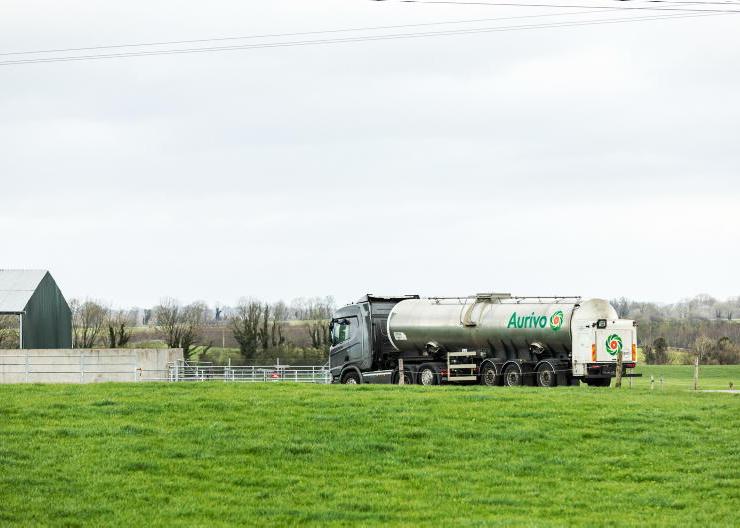
Clear vision for Dale Farm – Aurivo deal
Any merger between Aurivo and Dale Farm has to deliver efficiencies, economies of scale and diversification so the business can compete on a global level, maintained Dale Farm CEO Nick Whelan.
“This isn’t about adding two businesses just to be bigger – it has got to be better – the better is in lower costs, more opportunities and less risk. The vision is to be paying farmers a really good milk price and giving them a confidence in their future,” he said.
In recent weeks, it has become clear that the deal wont progress without the approval of the board of Irish dairy exporter, Ornua, given it is a major route to market for Aurivo products.
Whelan suggested discussions are potentially happening between both parties. In the meantime, he said it is very premature to think about when the deal might go to co-op members for approval.
If that does happen, at least 75% of members of each co-op would need to approve the deal for it to go ahead.
Lakeland view
Also speaking at the Winter Fair, Lakeland Dairies CEO Colin Kelly said the decision on whether Ornua approve the merger is very much for the board of the dairy export business. “Whatever decision they [the Ornua board] make, we as a member of their organisation and as a shareholder, we will respect that,” said Kelly.
On wider issues around consolidation in dairy co-ops, he said it is inevitable, but to date, has only tended to happen when one party is under pressure. The fact that people are now coming at it from a position of strength rather than struggle, can only be good for the industry, said Kelly.
“We are very open to consolidation – if it can bring 0.5 or 1p to our suppliers we are very much all ears and eager to have those types of conversations,” he added.

Colin Kelly CEO Lakeland dairies and Aidan Brennan Dairy Editor IFJ at the RUAS Winter Fair, Lisburn, Co Antrim. \ Peter Houston
Kelly is optimistic for second half of 2026
There are further milk price reductions to come in early 2026, but the situation could change quite quickly in the second half of the year, maintained Lakeland Dairies CEO Colin Kelly.
He said that succession issues on dairy farms and environmental pressures still exist in major dairy exporting regions and there are fewer replacement heifers coming through globally. All three combined point to a contraction in long-term milk supply.
However, to change the current market dynamic, there needs to be some immediate signs of supply starting to contract, particularly in the likes of New Zealand and the US.
“If we see a short-term correction in milk supply, they [the three issues] will start to weigh on the market again and we will be in a better position to push that narrative with buyers.
“I could see the second half of next year being pretty good, but unfortunately, we are in for a very challenging six months,” Kelly said.
He maintained that the market is currently delivering returns into the mid 20p/l territory, so unless something happens to disrupt supply in the next couple of months, “you have to expect milk prices are going to those levels”.
However, once there, the economics shouldn’t allow prices to stick at that level for too long.
“There is no money at these prices – I do expect we will start to see a contraction in supply,” said Kelly.
NAP
He also said Lakeland representatives had a “constructive discussion” with Agriculture Minister Andrew Muir around plans to revise the Nutrients Action Programme (NAP).
The latest indications are that any major changes will be implemented over a longer time period than originally envisaged in the NAP proposals released in May 2025.
The price paid for milk in the first half of 2026 is going to make it an “extremely tough” period for dairy farmers, a leading figure in NI dairy processing has said.
Addressing a breakfast event organised by the NI Institute of Agricultural Science on the morning of the Winter Fair, Leprino Foods CEO in Europe, Paul Vernon highlighted how strong supply when combined with weak consumer demand has created a perfect storm.
As a result, dairy commodity prices have been in retreat, with butter down by over 30% in the last 12 weeks, mozzarella down 28% and cheddar dropping 26%. Powders have taken less of a hit, but that has still left the likes of skim at just over €2,000/t.
“That’s a poor price,” said Vernon. With Leprino specialising in mozzarella, it also has cream to sell, but that market has been badly hit too. “We were getting £2.70 to £2.80/kg for it 12 weeks ago – you would be lucky to get £1.30/kg for it today,” he said.
On the demand side, Vernon maintained that “consumers aren’t in a good place” on the back of a higher cost of living, high inflation and general economic uncertainty.
In response, people are going out less, with out-of-home eating down 11% across Europe.
Growth
While lower dairy commodity prices will eventually feed back to the consumer and lead to improved sentiment, the fundamental issue remains over supply.
All the major milk producing regions are seeing significant growth this year, with the US up by over 5.5%, the EU by over 4% and New Zealand by over 3%. The UK is up 6%, while NI has been leading the charge at 8.5%.
“We need to see a reduction in milk supply across the globe,” said Vernon.
However, he acknowledged that is not likely to happen in the coming months, or at least, until prices fall below the cost of production.
With winter bonuses to factor in, it might be February or March before prices paid drop below costs in NI, and it is a similar picture elsewhere, with stable feed prices and current farmgate returns ensuring it is still profitable to produce milk in the US, NZ and the EU..
In fact, the prospect of lower returns can actually lead to increased milk output as farmers look to maximise revenue before negative margins come into play.
Vernon said an example of that is his business in Wales, which unlike NI, prices milk a month in advance.
In September, the business was paying from a base of 43p/l (4.2% fat; 3.4% protein). The October price was down 1p and in November it was a 4p/l reduction.
“We saw no difference in October output. In November, if anything, production has increased because farmers see lower prices coming. That is what we expect to happen over the next number of months [in NI],” he said.
The Leprino price in Wales fell another 5p in December and a further 3p is coming off in January 2026, leaving base down 13p since September at 30p/l.
“That’s unprecedented – we are not the only processor to do that. In February it will probably be down again,” said Vernon.
Advice
Ultimately, he said it was up to each individual supplier in NI to do what’s right for their business and the message from Leprino isn’t to cut back, but instead, to conserve cash and minimise expenditure over the next six months.
Nick Whelan CEO Dale Farm dairies and Aidan Brennan Dairy Editor IFJ at the RUAS Winter Fair, Lisburn, Co Antrim. \ Peter Houston
Dairy markets returning 28p – Whelan
The global over-supply of milk has created a very difficult and challenging market place for dairy co-ops, Dale Farm CEO Nick Whelan told the Irish Farmers Journal at last Thursday’s Winter Fair.
“We are probably selling into a marketplace that is returning 28p/l at the moment and I don’t really have a sense we are at the bottom of the market as yet,” he said.
He outlined how Dale Farm’s retail cheese business does help insulate the co-op to “a certain extent”, although he maintained that the “bigger challenge” is not the severity of the current downturn, but how long it might last.
“That is very hard to call – most analysts are saying this is going to last at least six months – it could be more,” suggested Whelan.
With current global milk supply up about 4.4%, which is well ahead of what he would see as a “healthy figure” of 1.5%, Whelan said there is a collective responsibility on all dairy farmers to address milk output.
As a result, the message to his members is not to carry any passengers in the herd this winter.
However, is that message potentially at odds with Dale Farm incentives around winter bonuses and its three-year scheme to realign milk supply?
“We don’t want to be chopping and changing when the market changes,” he responded. Despite the current pressure on commodities, he said both farmer members and the co-op have had a profitable year to date.
Clear vision for Dale Farm – Aurivo deal
Any merger between Aurivo and Dale Farm has to deliver efficiencies, economies of scale and diversification so the business can compete on a global level, maintained Dale Farm CEO Nick Whelan.
“This isn’t about adding two businesses just to be bigger – it has got to be better – the better is in lower costs, more opportunities and less risk. The vision is to be paying farmers a really good milk price and giving them a confidence in their future,” he said.
In recent weeks, it has become clear that the deal wont progress without the approval of the board of Irish dairy exporter, Ornua, given it is a major route to market for Aurivo products.
Whelan suggested discussions are potentially happening between both parties. In the meantime, he said it is very premature to think about when the deal might go to co-op members for approval.
If that does happen, at least 75% of members of each co-op would need to approve the deal for it to go ahead.
Lakeland view
Also speaking at the Winter Fair, Lakeland Dairies CEO Colin Kelly said the decision on whether Ornua approve the merger is very much for the board of the dairy export business. “Whatever decision they [the Ornua board] make, we as a member of their organisation and as a shareholder, we will respect that,” said Kelly.
On wider issues around consolidation in dairy co-ops, he said it is inevitable, but to date, has only tended to happen when one party is under pressure. The fact that people are now coming at it from a position of strength rather than struggle, can only be good for the industry, said Kelly.
“We are very open to consolidation – if it can bring 0.5 or 1p to our suppliers we are very much all ears and eager to have those types of conversations,” he added.
Colin Kelly CEO Lakeland dairies and Aidan Brennan Dairy Editor IFJ at the RUAS Winter Fair, Lisburn, Co Antrim. \ Peter Houston
Kelly is optimistic for second half of 2026
There are further milk price reductions to come in early 2026, but the situation could change quite quickly in the second half of the year, maintained Lakeland Dairies CEO Colin Kelly.
He said that succession issues on dairy farms and environmental pressures still exist in major dairy exporting regions and there are fewer replacement heifers coming through globally. All three combined point to a contraction in long-term milk supply.
However, to change the current market dynamic, there needs to be some immediate signs of supply starting to contract, particularly in the likes of New Zealand and the US.
“If we see a short-term correction in milk supply, they [the three issues] will start to weigh on the market again and we will be in a better position to push that narrative with buyers.
“I could see the second half of next year being pretty good, but unfortunately, we are in for a very challenging six months,” Kelly said.
He maintained that the market is currently delivering returns into the mid 20p/l territory, so unless something happens to disrupt supply in the next couple of months, “you have to expect milk prices are going to those levels”.
However, once there, the economics shouldn’t allow prices to stick at that level for too long.
“There is no money at these prices – I do expect we will start to see a contraction in supply,” said Kelly.
NAP
He also said Lakeland representatives had a “constructive discussion” with Agriculture Minister Andrew Muir around plans to revise the Nutrients Action Programme (NAP).
The latest indications are that any major changes will be implemented over a longer time period than originally envisaged in the NAP proposals released in May 2025.







SHARING OPTIONS