Energy infrastructure delivery has turned into a slow, costly and painful process.
However, it is worth reflecting on the progress made during 2025.
This article runs through some of the key renewable energy developments over the past year.
Big investment in grid
Ireland recently announced a major investment package (€18.9bn), aimed at preparing grid infrastructure for more renewables and building resilience against extreme weather.
The programme includes over 500 capital projects, including the construction and upgrade of 69 substations across the 110kV and 38kV networks, alongside 50,000 pole replacements.
Network expansion and reinforcement work include 181km of new overhead lines, 319km of new underground cables, 55km of replacement underground cabling, and capacity upgrades across 876km of existing overhead lines.
However, it comes at a cost, expected to raise electricity bills by €1.75/month.
Solar capacity surpasses 2GW
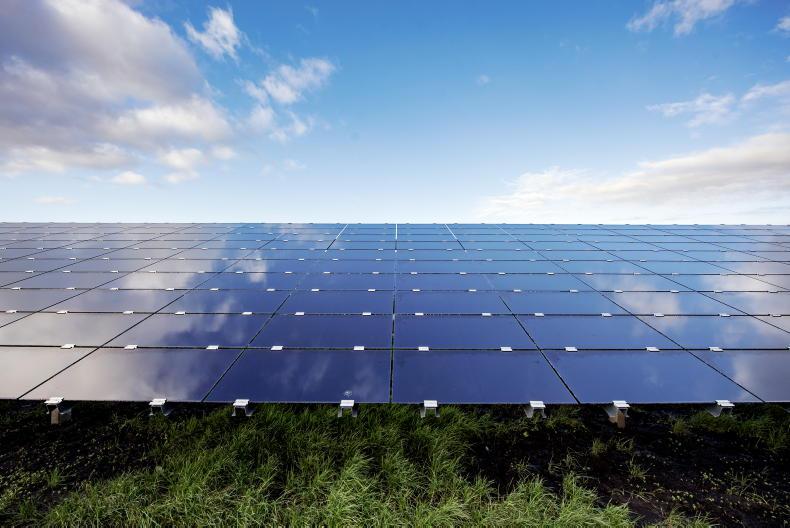
Ireland reached a major milestone this year, as installed solar capacity exceeded 2GW for the first time, driven by a rapid build-out of both solar farms and rooftop installations.
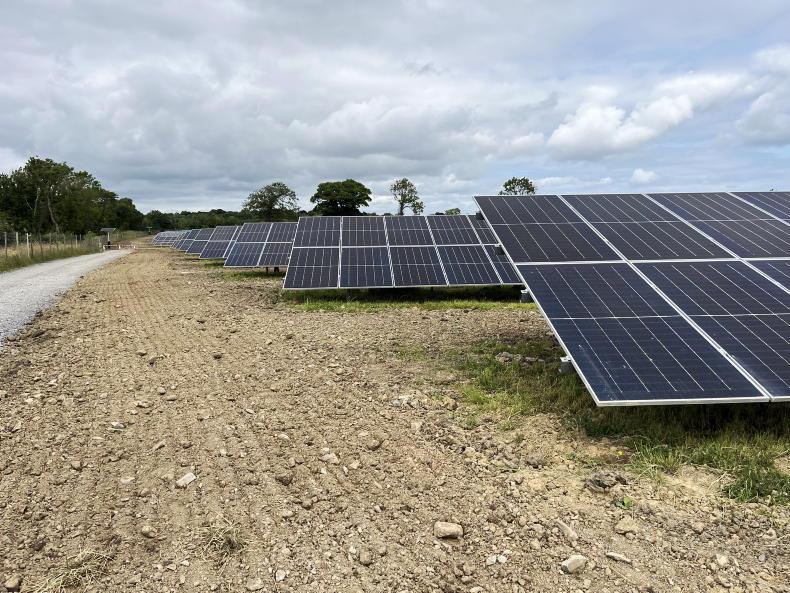
Ireland reached a major milestone this year, as installed solar capacity exceeded 2GW for the first time
Dozens of new solar farms were announced, entered the planning system, moved into construction, or were commissioned over the course of the year. However, debate around the use of land for solar farms shows no signs of cooling.
80% renewables for data centres
The Commission for Regulation of Utilities now mandates that data centres source at least 80% of their energy from additional renewable sources.
Renewable electricity exceeds 40%
New EirGrid data showed that renewables provided over 40% of electricity in October and November, the highest share on record. Irish wind farms set new generation records, including the best September on record and the second-best November ever. However, natural gas remains Ireland’s primary fuel for generating electricity still.
First coal-free month
July 2025 was the first full month without coal in Ireland’s power mix, following the closure of the Moneypoint coal generation station, a defining moment in Ireland’s energy transition.
Planning challenges
In 2025, the Government advanced major reforms to Ireland’s planning system and judicial review framework aimed at accelerating the delivery of housing, energy and strategic infrastructure.
The enactment of the Planning and Development Act 2024 introduced a more plan-led system, statutory timelines and institutional reform, including the restructuring of An Bord Pleanála into An Coimisiún Pleanála, to improve efficiency and reduce backlogs.
Alongside this, judicial review reforms were progressed to provide greater certainty for developers by tightening timelines, clarifying standing and procedures, addressing cost rules, and limiting delay caused by late or serial challenges.
Biomethane takes off
2025 marked the year in which the first wave of Ireland’s new biomethane plants moved into active development. During the year, several major projects progressed on the ground. Evergreen Agricultural Enterprise’s anaerobic digestion (AD) plant in Monasterevin entered construction and is on track to become operational in early 2026.
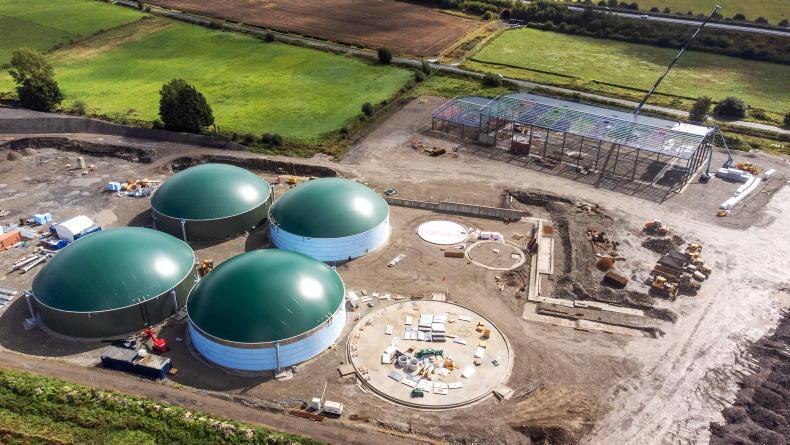
Evergreen Agricultural Enterprise’s anaerobic digestion plant in Monasterevin entered construction and is on track to become operational in early 2026
Nephin Renewable Gas broke ground on its first biomethane plant in Ballinrobe, Mayo, and announced a landmark gas purchase agreement with Flogas.
In Duleek, Meath, Carbon AMS, in partnership with farmers Brugha Duffy and Donal Hartford, commenced construction of a new, fully agricultural AD plant. The project has partnered with AstraZeneca to supply biomethane directly to its Dublin and Athlone sites, representing the first corporate biomethane offtake agreement of its kind in Ireland.
Elsewhere, Greengate Biogas launched plans for a large slurry-based biomethane plant in Carlow, while CycleØ faced planning challenges at its plants in Kildare and Limerick. We also saw proof that small-scale AD can work in Ireland, with the commissioning of Brendan Gildea’s plant on his dairy farm in Galway, supported by IrBEA.
Finally, the deadlines are approaching for AD plants to be completed to receive a 20% capital grant under the €40m biomethane capital grant scheme.
Eighteen projects were approved, but it remains unclear how many will reach the target of 31 December 2025, with estimates suggesting as few as four may do so.
Renewables schemes
The Solar Capital Investment Scheme, which provides a 60% capital grant for farm solar installations and has been one of the most successful renewable schemes for farmers, is set to become harder to access. Changes to TAMS have introduced a “ranking and selection” process from tranche nine onwards, reducing certainty for applicants.
Under the fifth Renewable Electricity Support Scheme auction, more than 3,000 acres of solar farms will receive 15-year State-backed support. In total, 23 projects, 18 solar and five wind, were successful, delivering 860MW of solar and 219MW of wind capacity, enough to power around 350,000 homes annually. Most solar projects are located in Leinster, particularly Meath and Wicklow. The five wind farms approved are located across Cork, Wicklow, Tipperary, Waterford and Mayo, including the 82MW Lyrenacarriga Wind Farm.
The average support price under RESS 5 is €98.81/MWh (€100.63 for solar and €96.56 for wind), slightly higher than RESS 4. All projects will contribute €2/MWh to community benefit funds.
The Small-Scale Renewable Electricity Support Scheme (SRESS), designed to allow farmers to develop small solar and wind projects, was launched in 2025. However, restrictive terms, design flaws and low support prices have resulted in weak uptake.
Budget 2026
Budget 2026 extended the Accelerated Capital Allowance scheme for energy-efficient equipment to 31 December 2030 and extended income tax relief of up to €400 for micro-generated electricity to the end of 2028. It also confirmed the previously signposted €7.50/t increase in the carbon tax.
Minister for Climate Darragh O’Brien’s decision not to reduce SEAI rooftop solar grants for homeowners, from €1,800 to €1,500 from 2026, was welcomed by the renewable energy sector.
Offshore
Offshore, the ESB–Ørsted partnership secured the 900MW Tonn Nua offshore wind project off Waterford with a €98.72/MWh bid, winning a 20-year contract for difference under Ireland’s second offshore auction. Grid connection is due in 2033, with a final investment decision expected around 2031 and first power in the mid-2030s.
Community voices
This year saw community voices being heard more strongly than ever before. As with many renewable energy developments, not all projects have local support, particularly from communities living near or within sight of proposed developments.
Concerns raised through protests and submissions commonly relate to visual impact, traffic, odour, potential impacts on property values, and the belief that land should be prioritised for food production rather than energy generation.
Regardless of viewpoint, these voices are becoming increasingly influential and are shaping both policy and public debate.
Growing community opposition has prompted renewed calls for clearer and more robust planning guidelines, particularly for solar, wind and biomethane developments, to better balance renewable energy targets with local and community concerns.
Energy infrastructure delivery has turned into a slow, costly and painful process.
However, it is worth reflecting on the progress made during 2025.
This article runs through some of the key renewable energy developments over the past year.
Big investment in grid
Ireland recently announced a major investment package (€18.9bn), aimed at preparing grid infrastructure for more renewables and building resilience against extreme weather.
The programme includes over 500 capital projects, including the construction and upgrade of 69 substations across the 110kV and 38kV networks, alongside 50,000 pole replacements.
Network expansion and reinforcement work include 181km of new overhead lines, 319km of new underground cables, 55km of replacement underground cabling, and capacity upgrades across 876km of existing overhead lines.
However, it comes at a cost, expected to raise electricity bills by €1.75/month.
Solar capacity surpasses 2GW
Ireland reached a major milestone this year, as installed solar capacity exceeded 2GW for the first time, driven by a rapid build-out of both solar farms and rooftop installations.
Ireland reached a major milestone this year, as installed solar capacity exceeded 2GW for the first time
Dozens of new solar farms were announced, entered the planning system, moved into construction, or were commissioned over the course of the year. However, debate around the use of land for solar farms shows no signs of cooling.
80% renewables for data centres
The Commission for Regulation of Utilities now mandates that data centres source at least 80% of their energy from additional renewable sources.
Renewable electricity exceeds 40%
New EirGrid data showed that renewables provided over 40% of electricity in October and November, the highest share on record. Irish wind farms set new generation records, including the best September on record and the second-best November ever. However, natural gas remains Ireland’s primary fuel for generating electricity still.
First coal-free month
July 2025 was the first full month without coal in Ireland’s power mix, following the closure of the Moneypoint coal generation station, a defining moment in Ireland’s energy transition.
Planning challenges
In 2025, the Government advanced major reforms to Ireland’s planning system and judicial review framework aimed at accelerating the delivery of housing, energy and strategic infrastructure.
The enactment of the Planning and Development Act 2024 introduced a more plan-led system, statutory timelines and institutional reform, including the restructuring of An Bord Pleanála into An Coimisiún Pleanála, to improve efficiency and reduce backlogs.
Alongside this, judicial review reforms were progressed to provide greater certainty for developers by tightening timelines, clarifying standing and procedures, addressing cost rules, and limiting delay caused by late or serial challenges.
Biomethane takes off
2025 marked the year in which the first wave of Ireland’s new biomethane plants moved into active development. During the year, several major projects progressed on the ground. Evergreen Agricultural Enterprise’s anaerobic digestion (AD) plant in Monasterevin entered construction and is on track to become operational in early 2026.
Evergreen Agricultural Enterprise’s anaerobic digestion plant in Monasterevin entered construction and is on track to become operational in early 2026
Nephin Renewable Gas broke ground on its first biomethane plant in Ballinrobe, Mayo, and announced a landmark gas purchase agreement with Flogas.
In Duleek, Meath, Carbon AMS, in partnership with farmers Brugha Duffy and Donal Hartford, commenced construction of a new, fully agricultural AD plant. The project has partnered with AstraZeneca to supply biomethane directly to its Dublin and Athlone sites, representing the first corporate biomethane offtake agreement of its kind in Ireland.
Elsewhere, Greengate Biogas launched plans for a large slurry-based biomethane plant in Carlow, while CycleØ faced planning challenges at its plants in Kildare and Limerick. We also saw proof that small-scale AD can work in Ireland, with the commissioning of Brendan Gildea’s plant on his dairy farm in Galway, supported by IrBEA.
Finally, the deadlines are approaching for AD plants to be completed to receive a 20% capital grant under the €40m biomethane capital grant scheme.
Eighteen projects were approved, but it remains unclear how many will reach the target of 31 December 2025, with estimates suggesting as few as four may do so.
Renewables schemes
The Solar Capital Investment Scheme, which provides a 60% capital grant for farm solar installations and has been one of the most successful renewable schemes for farmers, is set to become harder to access. Changes to TAMS have introduced a “ranking and selection” process from tranche nine onwards, reducing certainty for applicants.
Under the fifth Renewable Electricity Support Scheme auction, more than 3,000 acres of solar farms will receive 15-year State-backed support. In total, 23 projects, 18 solar and five wind, were successful, delivering 860MW of solar and 219MW of wind capacity, enough to power around 350,000 homes annually. Most solar projects are located in Leinster, particularly Meath and Wicklow. The five wind farms approved are located across Cork, Wicklow, Tipperary, Waterford and Mayo, including the 82MW Lyrenacarriga Wind Farm.
The average support price under RESS 5 is €98.81/MWh (€100.63 for solar and €96.56 for wind), slightly higher than RESS 4. All projects will contribute €2/MWh to community benefit funds.
The Small-Scale Renewable Electricity Support Scheme (SRESS), designed to allow farmers to develop small solar and wind projects, was launched in 2025. However, restrictive terms, design flaws and low support prices have resulted in weak uptake.
Budget 2026
Budget 2026 extended the Accelerated Capital Allowance scheme for energy-efficient equipment to 31 December 2030 and extended income tax relief of up to €400 for micro-generated electricity to the end of 2028. It also confirmed the previously signposted €7.50/t increase in the carbon tax.
Minister for Climate Darragh O’Brien’s decision not to reduce SEAI rooftop solar grants for homeowners, from €1,800 to €1,500 from 2026, was welcomed by the renewable energy sector.
Offshore
Offshore, the ESB–Ørsted partnership secured the 900MW Tonn Nua offshore wind project off Waterford with a €98.72/MWh bid, winning a 20-year contract for difference under Ireland’s second offshore auction. Grid connection is due in 2033, with a final investment decision expected around 2031 and first power in the mid-2030s.
Community voices
This year saw community voices being heard more strongly than ever before. As with many renewable energy developments, not all projects have local support, particularly from communities living near or within sight of proposed developments.
Concerns raised through protests and submissions commonly relate to visual impact, traffic, odour, potential impacts on property values, and the belief that land should be prioritised for food production rather than energy generation.
Regardless of viewpoint, these voices are becoming increasingly influential and are shaping both policy and public debate.
Growing community opposition has prompted renewed calls for clearer and more robust planning guidelines, particularly for solar, wind and biomethane developments, to better balance renewable energy targets with local and community concerns.






SHARING OPTIONS