


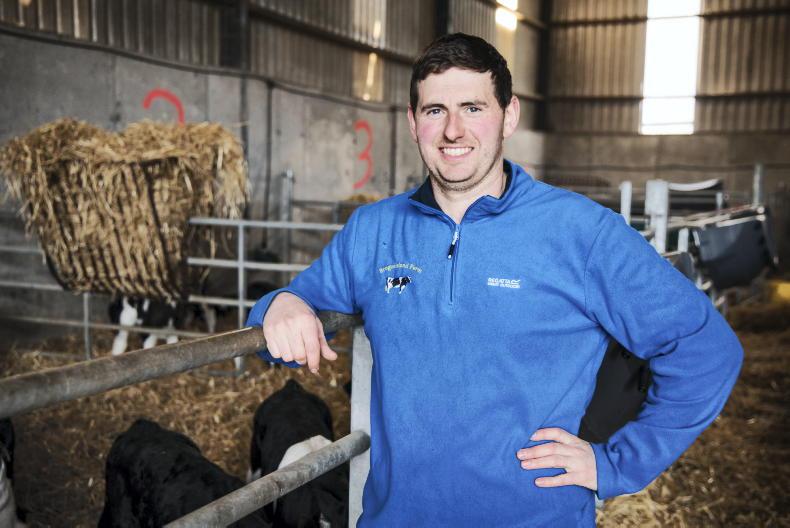
We’re now reaching the tail end of calving here in Abbeyleix, with 92% of the herd calved. Hopefully, in another week or so, we’ll be down to just the single figures left to calve.
Milk performance has been good throughout the spring. Our most recent bulk tank results came back at 4.98% fat and 3.55% protein. That’s a slight drop from a few weeks ago, when we were at 5.22% fat and 4% protein, but still very solid for the time of year. Yield is holding around 27 litres.
We’re still feeding 5kg of nuts, but if the weather improves and stays settled, I plan to drop that to 4kg, maybe even 3kg once grass growth exceeds demand. We’re also feeding one to two bales of silage per day. On paper the cows have enough grass, but they are still cleaning out the silage and grazing out well. I reckon a bit of silage is good for their stomachs, gives them some dry fibre.
Somatic cell count is holding at around 100,000, which I’m very happy with at this stage of lactation, given the weather challenges we’ve had. We California milk test (CMT) every cow before her milk enters the tank, and that vigilance is paying off.
So far, five cows have failed the CMT. We gave them a bit of time to settle, and when tested again a week later they were all clear. We’ve had a few cases of mastitis since, but nothing major.
On my grass walk last week, the average farm cover came in at 955kg DM/ha, with an average growth of 8kg DM/ha for February. We’ve grazed the 2,000kg covers and I’m now moving onto the 2,500kg cover this week in the dry weather. This paddock has grown well since we closed it at 2,000kg in December. The dung spread in the back end has worked well to keep it green and growing – not much dead grass at all.
We’ve 60% of the farm grazed now, with around 550kg DM/ha back on the first grazed paddocks. Once I finish grazing the high cover, we’ll have one at 1,700kg and four covers under 1,000kg to graze in the first round. Hopefully, they’ll all be over 1,000kg by the time it’s their turn.
We’ve grazed the 2,000kg covers and I’m now moving onto the 2,500kg cover this week in the dry weather. This paddock has grown well since we closed it at 2,000kg in December
We had one calf with a slight scour last week and I went straight in and gave every calf over two weeks old Bovicox and thank God that calf dried up and we had no more.
I should have had the older calves done sooner. We got some calves dehorned last week and I hope to do more next week. We have some calves on once-a-day feeding now and I hope to get them out soon, weather permitting.
The first round of fertiliser went out a few weeks ago and all paddocks are near 50 units of N/acre when you combine slurry and urea. I plan to go with another 20 units of N this week or next if the warm weather continues.
Our slurry tanks are full again, so I had to take a couple of foot out of them earlier this week to give us some breathing room. I wasn’t planning it, but had to spread on three grazed paddocks as the silage ground isn’t dry enough yet.
If it’s still too wet before 1 April, I’ll hold off spreading slurry there until after the first cut – I’ve got 0-7-30 in the yard to top up P and K anyway. There is no point in tearing up the fields.
Lastly, our first TB test since the reactors went is this week. Fingers crossed everything goes smoothly.



SHARING OPTIONS