


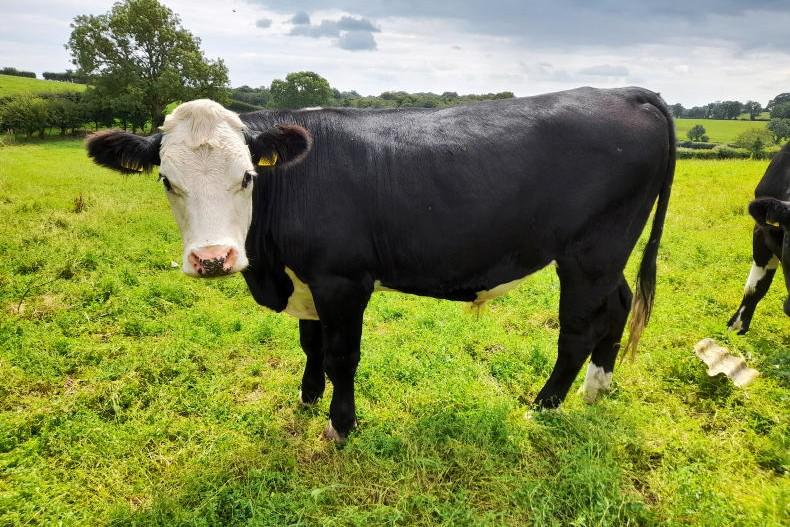
The (relatively) recent move away from beef cattle towards rearing dairy heifers has seen my enthusiasm for the weighbridge wane slightly.
Of course, it is important to keep tabs on how the heifers are performing, but it isn’t the be all and end all, compared with the vital physical weight gain of animals destined for slaughter.
However, with the acquisition of beef-bred dairy calves last year, and again this spring, my interest in daily liveweight gains has been rekindled.
Last year’s calves are now strong ‘lumps’ – I’m never sure what, exactly, constitutes a ‘lump’, but I’ve heard serious cattlemen using it as part of their vocabulary, so thought I’d use the lingo too. As a matter of fact, they’re probably more than lumps and an accurate description might be to call them ‘right strong wee bullocks?’ Whatever terminology you choose, they currently weigh just over 450kg, so perhaps someone could bring me up to date with the current phrase for that size of animal.
Records
After weighing them last week, I rummaged through the contents of a cupboard to unearth previous pieces of cardboard used for recording purposes. I’m sure I could invest in an electronic scanner and download all information to the computer, but old dogs and new tricks is once again entirely applicable.
The decision to weigh them was based mostly on vanity and the need for a bit of ego massage because, let’s face it, we’ve had a near perfect grazing year so far. There was hardly much point in confirming what should have been a cast iron certainty – cattle had put on plenty of weight. Sure enough, these cattle had added 130kg since turnout on 10 April, which equates to 1.2kg of daily liveweight gain. A broader glance at my semi-indecipherable scribblings tells me they have now been weighed five times and have gained 0.8kg daily in 350 days. In my fairly low input system, I would imagine this is entirely acceptable.
Consistent
Considering the nature of their breeding lineage (small New Zealand-style mothers and bulls of multinational heritage) the consistency of weight gain has been both pleasing and surprising.
With the exception of one black bullock that is running 40kg behind the others, the variation in yearly weight gain is only 40kg. I think I was expecting the more expensive Charolais members of the group to gallop (pun intended) ahead of the Limousins, which in turn would outperform the boys with beef Shorthorn daddies. Perhaps my initial expectation for the group was modest, so these performance figures are a pleasant surprise.
Problem
After the initial pleasure of seeing strong weight gains, I offered myself hearty congratulations on being a tremendous manager of grazing cattle (and top bloke really). However, gradually, a bit of reality set in and I began to ask myself, now what?
The problem (which I didn’t think of) concerns birthdays. These are all born between mid-February and March, and back in the day they would have been ideal candidates for a decent store over the winter, then out to grass for a late-summer finish.
However, the rules concerning the Beef Carbon Reduction Scheme are a bit tricky to negotiate. I either have to feed more heavily over the winter and finish them by mid-May (ie under 27 months), or go down the traditional route of lower inputs, a later finish next year, and ignore the £75 premium.
I find it intriguing that in the quest to lower my carbon footprint I may need to feed a pile of meal that has travelled halfway across the world (genetically modified maize/ soya byproducts) in order to achieve a suitable level of finish.
Far cleverer people than me have this all worked out so it must be right, but deep down I have my doubts that some of these measures are really going to save the planet.
Watch more here:





SHARING OPTIONS