


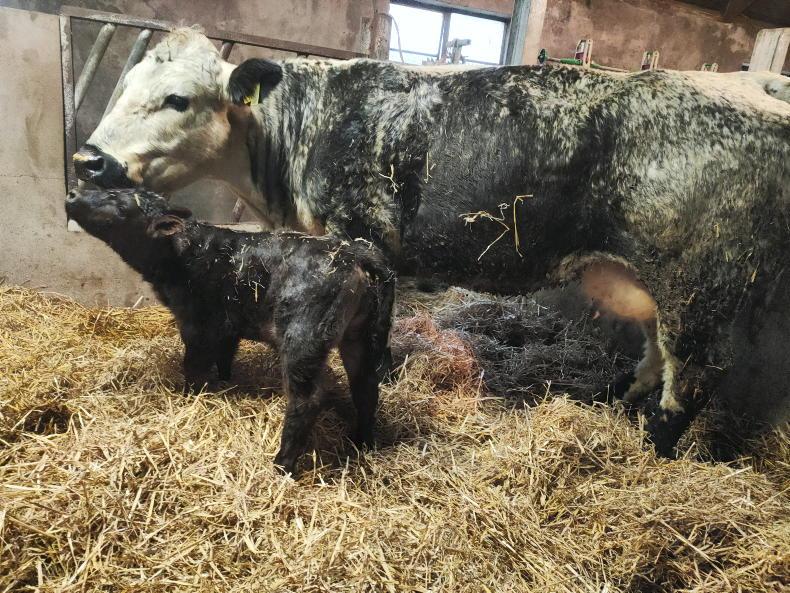
I have recently been given my first set of results from genomic testing as part of the new Bovine Genetics Project being run by Sustainable Ruminant Genetics.
Later this year this project will be rolled out to all farmers, but I was among a small group who were asked to take part in a pilot phase of the programme.
There is a lot of information coming through. Some of the material is useful, although other things might only become of value as the project develops down the line.
The initial feedback I received included an easy-to-follow report on calving data. It had figures on calving interval, mortality, calves per cow per year, percentage of heifers to calve between 22 and 26 months of age and the percentage of animals that calved in a six-week period.
I found the calving information extremely useful and it is nicely laid out in tabular form. It is also quite easy to compare your farm to others and to benchmark your performance.
You can identify areas where you are doing well and other areas that need some attention. There is also a wide range of other key performance indicators.
At the back of this report there is also an extremely useful action list of animals which may require attention for reasons such as a prolonged calving interval.
Myostatin
As well as calving data, I also received a second report which looked at the presence of myostatin across the herd.
This is more difficult for me to understand and follow. I have never taken much of an interest in this gene as I have always found it heavy going.
But I know other farmers who follow the various myostatin mutations very closely and it seems to be working well for them when it comes to selecting replacements.
However, I did find this part of the report very interesting, especially when I dug into it and traced the ear tag numbers back to cows and lines of breeding.
As it turns out I have very little myostatin in my suckler herd, which may be a good thing.
That includes the myostatin mutation F94L, which is widely known as the “profit gene” as it improves muscling without having a major impact on calving difficulty. Sadly, I have very few cows with F94L in my herd.
I did trace the few that I had and it provided quite a shock for me. I have four cows with two F94L genes, so they will pass on a copy to their offspring.
Two of these cows are in the cull pen being fattened because they don’t have enough milk. Both are good-looking animals, but they just don’t do a good job of rearing their calves.
Perhaps then, the bigger picture is that you should not take one trait on its own when deciding what animals to breed. You should use all the information available to you to make as good, informed decisions as possible.
Next stage
Thanks to taking part in the pilot programme, I have definitely gained a lot of information about my suckler herd, but the next stage will be the difficult one. I need good support from my advisor. I need to be in a group (with other farmers) who can put all their information on the table. We need to be able to compare and contrast so that we can learn from each other.
I am really excited about this whole initiative, and I think it has the potential to yield a massive return for those that truly embrace the information and act upon it.
Therein lies the problem however, the difficult part. It is fine taking the samples and getting all this data to farmers, but the challenge will be encouraging farmers to act on this information.
If the results are filed away without action, it would be a terrible waste.
I hope someone has had the foresight to plan ahead on how they are going to encourage farmers to take part and what they can do to help farmers use this information to make their businesses more sustainable.



SHARING OPTIONS