


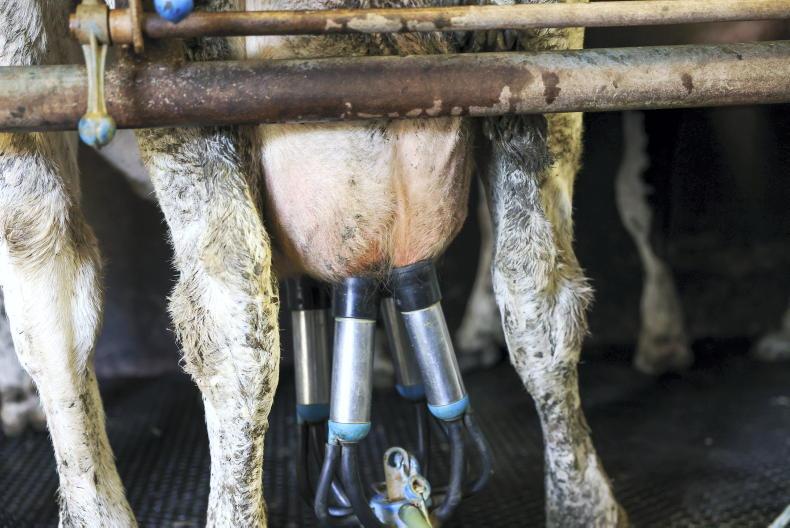
A curve ball at the start of the year led to the decision to sell 20% of the cows and heifers due to calve and milk the remainder of the herd once a day (OAD) for the full season.
OAD is something that has been on our radar for some time. Breeding decisions have been guided towards OAD using LIC’s Variable Milking Selection Index, prioritising high percentages for fat and protein, as well as specific type features such as strong udder support and milking persistency.
The importance of these traits is make or break for the system and something I didn’t fully appreciate or truth be told, understand. Some cows just don’t suit OAD and that could be the best cow you have milking twice a day.
Labour
We’re very lucky here to have fantastic people working with us and some might argue why not just pay for more labour and stay with twice a day? However, I really wanted to remove pressure from the system, ensuring those that were left to get on with it could have some down time and avoid fatigue or burnout.
My October milk statement tells me we’re down over 130,000l of milk, or 30% compared to the end of October 2024. In a year of 44p/l base price, that reduction could be viewed as madness.
Taking a punt, I would guess 20% of the reduced output is due to the OAD, while the remaining 10% is on the back of lower cow numbers.
However, protein is up 0.4 percentage points while butterfat is up 0.3. Being our first year on a full A+B-C solids-based payment did give us confidence in the decision, knowing we would be paid fairly for the high solids milk that we produced. Somatic cell count was the biggest concern, but surprisingly it was lower than 2023 and 2024 until June, at under 150,000. It has started to creep up since then as milk volumes have dropped further, but we’ve managed to keep it under 200,000.
Empty rates
Empty rates created the biggest surprise of the year. We had 10% cows empty after a 10-week breeding season and that’s double my target. The last couple of years it has been around 7% to 8%.
All the text books say fertility should improve with OAD but we saw the opposite. I’m still figuring this out. Some people reckon the heat in the summer caused the problem, but I’m not convinced. I have a hunch it’s either just one of those years or due to a combination of fewer younger animals in the herd and heat detection not being up to scratch.
Cow condition
Apart from the smaller milk cheque, the biggest visual difference is that cows were in a better body condition score all year. When empty cows were culled, they were fat as snails and probably 100kg heavier than previous years, given that we sell them coming out of the parlour in their working clothes.
Discussion group
I was very lucky to get involved in a OAD discussion group made up of farmers from all four provinces of Ireland, as well as some that are based in Britain.
Being able to compare milk and grass figures fortnightly was very beneficial.
We held our own in terms of milk solids production in the first half of the season.
As the season progressed everyone else’s fat and protein percentages sky rocketed, however, we didn’t experience the same jumps and struggled with milking persistency as the season progressed.
But seeing others achieving butterfat’s over 7% and proteins over 5% is very motivating.
What to do in 2026?
We got though 2025 making a few mistakes or as I prefer to call them, learning experiences. The bills were paid and some investments made. We still have a few quid left for Rachel Reeves and working capital for next year.
If base prices were going to stay over 40p/l it would be hard not to go back to twice a day. With smarter people than me predicting 30p/l well into 2026, which I’m starting to think is highly optimistic, I think we’ll stick with OAD for another year and do it better.





SHARING OPTIONS