


It’s hard to believe we are already just a week away from the end of another year.
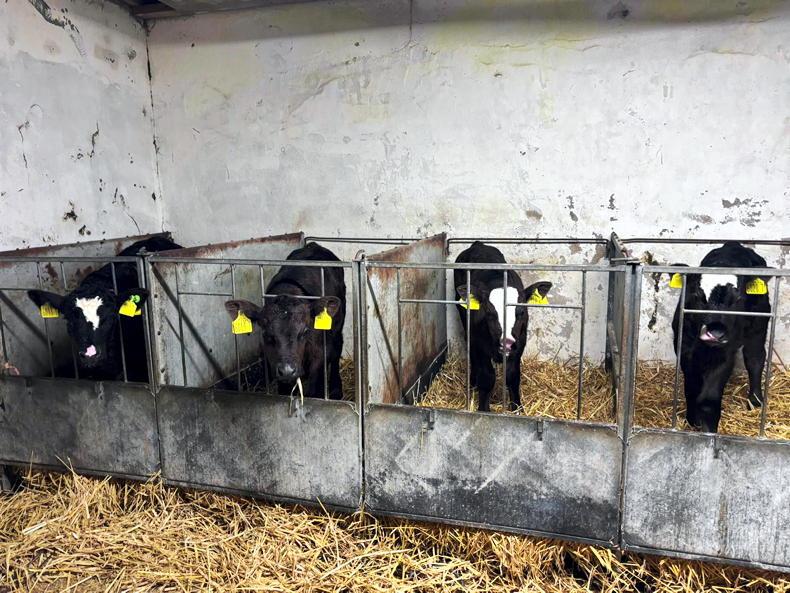
As always on the farm, time seems to move faster the busier things get. The last cow in our autumn-calving batch finally calved recently, a full two weeks after the rest of the group. She was certainly determined to hold on to that calf, but thankfully all ended well in the end.
We had relatively little bother with calves until the last dozen. Large fluctuations in temperature and a build-up of bugs in the shed meant we had some issues with scour and pneumonia. However, everything is now straightened out, with the last 10 Angus calves ready to go.
Overall, the autumn-calved cows are performing well and in mid-December were averaging 32 litres per cow, per day at 53 days in milk.
One factor that may be contributing to this level of performance is the quality of silage being fed. We decided to re-test our grass silage and the results show a significant improvement on the earlier analysis. Dry matter increased from 19% to 28%, while the D-value rose from 71 to 76.
This indicates a drier, higher-quality silage than originally thought and is likely playing a major role in driving milk yields at present.
Prices
While cow performance has been positive, the recent drops in milk price have been very disappointing. Milk quality and winter bonuses have helped to prop up the milk price over the past few months, which has softened the blow to some extent. In addition, we have our feed prices fixed for the winter period, which provides a degree of certainty and makes the current situation feel relatively manageable.
However, the outlook beyond that is worrying and once winter bonuses come off the milk price, the picture becomes extremely bleak.
Based on current forecasts, I find it hard to see how any dairy farm will be able to break even at the low milk prices being predicted into spring next year.
The drop in price has been sharp and, while we can hope this means it will be short-lived, there is real concern that it could seriously impact many farms if it drags on.
Grass-base
On our own farm, having a grass-based system for the milking herd helps to keep the cost of production lower, which offers some protection.
That said, we remain very unsure about what to do regarding fertiliser for the coming season. Normally, we would buy fertiliser in early winter to get us started at the beginning of the grazing season.
This year, however, prices seemed far too high when compared to gas prices at the time, so we held off. Now, merchants appear to be stockpiling fertiliser, wary that prices could rise again.
It may turn into a difficult spring, with a waiting game to see who blinks first – the farmer or the fertiliser company.
Workload
Despite the calendar telling us Christmas was on the horizon there was certainly no winding down in the workload. Last week, all cows were vaccinated for leptospirosis, salmonella and IBR.
Thankfully, we have had no issues sourcing vaccines this year.
We have also attached the remaining collars on our heifers in preparation for the breeding season, which starts this week.
Although I had some semen left over from last year to get things going, I’ve been a bit slow off the mark and only placed my order a couple of weeks ago. Hopefully, most of it will arrive in time.
As usual, the challenges remain for a farm that is crossbreeding. There are very few Norwegian Red and Fleckvieh bulls to choose from, making it easy to look through the list but difficult to find a bull that ticks every box.
On the other hand, when it comes to Holstein bulls, there is a world of choice, which can be quite daunting and makes it difficult to decide.
But hopefully with multiple bulls used there will be very little risk.
Whatever the next year has in store for us, I hope everyone has a happy New Year.


SHARING OPTIONS