An escalating dispute between a group of Waterford hill sheep farmers and one of the UK’s richest men took an unexpected twist on Tuesday evening.
What initially looked like potential sheep rustling turned out to be much more intriguing.
Thomas Ger Fitzgerald had been on the Knockmealdown mountain all day lambing ewes, but got a call from his son on Tuesday evening to say that something was amiss.
A strange vehicle carrying three unknown men was on the hill and they were loading up sheep.
Thomas Ger immediately, and quite naturally, feared that someone was rustling sheep.
The gardaí were called, but the truth turned out to be much stranger.
The men were indeed loading up sheep, but they were their own sheep – sheep they had allegedly brought with them and unloaded, before loading them up again soon after, which is when local farmers noticed them.
It’s just the latest incident in a saga that has seen landowner the Duke of Devonshire trying to raise the rent on the commonage land on the mountain almost tenfold.
Peregrine Cavendish is the current holder of a title that brings with it Chatsworth House, famously used in the 1995 version of Pride and Prejudice and more recently Peaky Blinders.
A part of his estate, worth an estimated £910m, is Heywood Hill bookshop in London, bought by his parents following his aunt, the famous novelist Nancy Mitford, working there during World War II.
A week ago, supporters of the Waterford commonage farmers staged a protest outside Heywood Hill, in salubrious Mayfair, highlighting the plight of the sheep farmers.

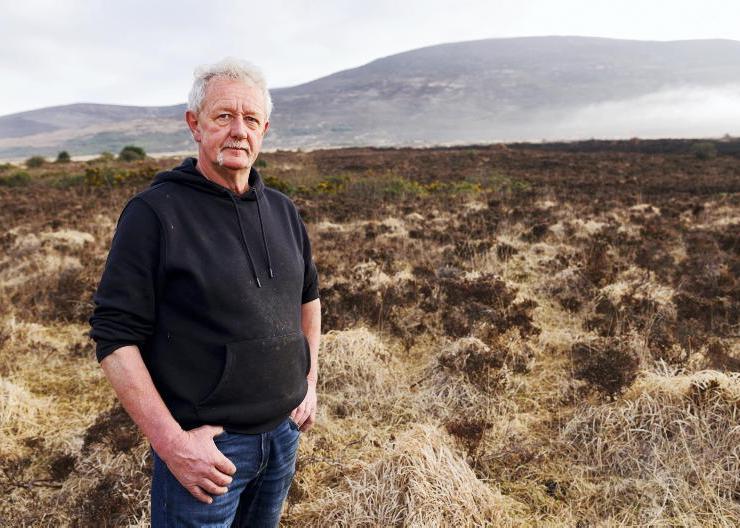
Thomas Ger Fitzgerald. \ Donal O' Leary
Thomas Ger Fitzgerald believes the unusual incident on the hill on Tuesday evening is in some way linked to the dispute.
“My family have been on this mountain since the 1600s, a century before the Cavendish family came to Lismore,” he says. “I’m on this mountain every day of the year, and I know every person and every sheep on this hill. I’d never seen these people, or those sheep, before. We are now calling on the Department of Agriculture to carry out a full review of exactly who is claiming payments on this commonage, and what farming activity they are claiming to carry out.”
The local farmers renting land in a long-standing relationship with the Devonshire family have long had concerns that other parties are renting land from the estate but not hill sheep farming, and that this may have created an expectation that the land was worth more than the hill sheep farmers have paid.
“Farming sheep on the mountains is a rewarding, but tough, way of life,” says Thomas Ger Fitzgerald. “You wouldn’t get rich on it, and you certainly wouldn’t be able to pay the kind of rental the estate is now demanding from us”.
Lismore Castle currently houses William Cavendish, heir to the Devonshire dukedom, known as Lord Burlington.
The Burlington title goes back to the Boyle family, as it was Richard Boyle who bought 42,000ac including Lismore Castle from Sir Walter Raleigh back in 1602.
The Cavendish family acquired the estate through marriage. The hope among the local farmers is that Lord Burlington and the estate management will come to understand the realities of the economics of hill farming, and massively lower their rental demands.
“There are 16 sheep farmers, from four or five original families, sharing the commonage,” says Thomas Ger Fitzgerald.
“We are fighting for our livelihoods and our heritage, to give future generations the chance to continue a tradition of almost 500 years.
“I have two grandsons aged five and seven, and my hope is that they have the chance to farm the mountain. But we need the estate to recognise the reality of our ability to pay rent for that to happen.”

Thomas Ger Fitzgerald. \ Donal O' Leary
An escalating dispute between a group of Waterford hill sheep farmers and one of the UK’s richest men took an unexpected twist on Tuesday evening.
What initially looked like potential sheep rustling turned out to be much more intriguing.
Thomas Ger Fitzgerald had been on the Knockmealdown mountain all day lambing ewes, but got a call from his son on Tuesday evening to say that something was amiss.
A strange vehicle carrying three unknown men was on the hill and they were loading up sheep.
Thomas Ger immediately, and quite naturally, feared that someone was rustling sheep.
The gardaí were called, but the truth turned out to be much stranger.
The men were indeed loading up sheep, but they were their own sheep – sheep they had allegedly brought with them and unloaded, before loading them up again soon after, which is when local farmers noticed them.
It’s just the latest incident in a saga that has seen landowner the Duke of Devonshire trying to raise the rent on the commonage land on the mountain almost tenfold.
Peregrine Cavendish is the current holder of a title that brings with it Chatsworth House, famously used in the 1995 version of Pride and Prejudice and more recently Peaky Blinders.
A part of his estate, worth an estimated £910m, is Heywood Hill bookshop in London, bought by his parents following his aunt, the famous novelist Nancy Mitford, working there during World War II.
A week ago, supporters of the Waterford commonage farmers staged a protest outside Heywood Hill, in salubrious Mayfair, highlighting the plight of the sheep farmers.
Thomas Ger Fitzgerald. \ Donal O' Leary
Thomas Ger Fitzgerald believes the unusual incident on the hill on Tuesday evening is in some way linked to the dispute.
“My family have been on this mountain since the 1600s, a century before the Cavendish family came to Lismore,” he says. “I’m on this mountain every day of the year, and I know every person and every sheep on this hill. I’d never seen these people, or those sheep, before. We are now calling on the Department of Agriculture to carry out a full review of exactly who is claiming payments on this commonage, and what farming activity they are claiming to carry out.”
The local farmers renting land in a long-standing relationship with the Devonshire family have long had concerns that other parties are renting land from the estate but not hill sheep farming, and that this may have created an expectation that the land was worth more than the hill sheep farmers have paid.
“Farming sheep on the mountains is a rewarding, but tough, way of life,” says Thomas Ger Fitzgerald. “You wouldn’t get rich on it, and you certainly wouldn’t be able to pay the kind of rental the estate is now demanding from us”.
Lismore Castle currently houses William Cavendish, heir to the Devonshire dukedom, known as Lord Burlington.
The Burlington title goes back to the Boyle family, as it was Richard Boyle who bought 42,000ac including Lismore Castle from Sir Walter Raleigh back in 1602.
The Cavendish family acquired the estate through marriage. The hope among the local farmers is that Lord Burlington and the estate management will come to understand the realities of the economics of hill farming, and massively lower their rental demands.
“There are 16 sheep farmers, from four or five original families, sharing the commonage,” says Thomas Ger Fitzgerald.
“We are fighting for our livelihoods and our heritage, to give future generations the chance to continue a tradition of almost 500 years.
“I have two grandsons aged five and seven, and my hope is that they have the chance to farm the mountain. But we need the estate to recognise the reality of our ability to pay rent for that to happen.”
Thomas Ger Fitzgerald. \ Donal O' Leary





SHARING OPTIONS