


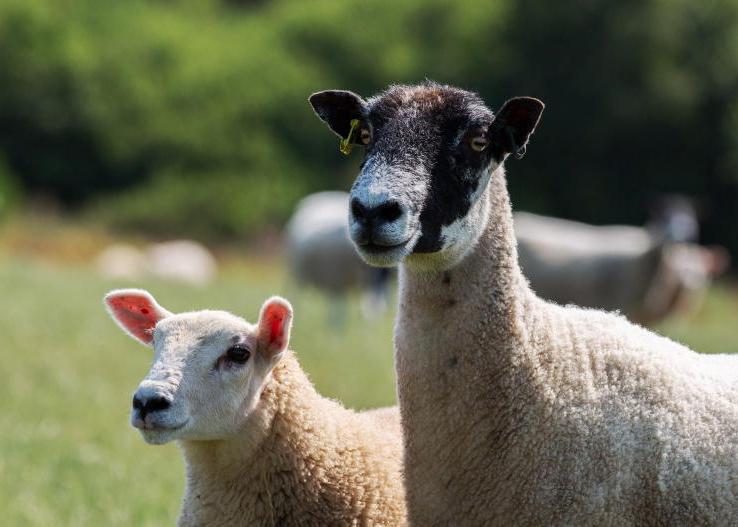
The reduction in sheep production in Ireland in recent years is well documented with the sheep kill falling by over 430,000 head in 2025 and over 377,000 head in 2024.
The sharp fall of 25% in throughput in just two years is stark and while production is not expected to remain on such a steep downward curve in 2026, there is no telling how the year will pan out.
The scale of the fall has led to calls from some industry stakeholders and farmers to convene an emergency meeting of vested interests to see if anything can be done to turn the tide on falling numbers.
While other countries have not experienced the gravity of the fall as in Ireland, many important sheep producing nations are also grappling with a decline in production.
Preliminary results of the UK’s Department of Environment, Food and Rural Affairs (DEFRA) June livestock survey shows the number of lambs aged under one year of age on farms recorded at 14.78m head – the lowest level since the dataset began in 1984. Becky Smith, AHDB’s senior analyst for livestock said the 3% fall in lamb numbers equates to 437,500 lambs and is below the level forecast by the AHDB.
She said: “Whilst contraction in the breeding flock is the major driver of this, it is likely other factors also played a part. Challenges with ewe condition and poor weather conditions at tupping may have reduced conception and lambing rates. Additionally, increased prevalence of Bluetongue [virus] is suspected to have impacted on lamb numbers, affecting fertility in both ewes and lambs”.
The female breeding flock witnessed an overall decline of nearly 1% year-on-year to sit at 14.78m head. There was a 2% fall in the number of ewes intended for further breeding and slaughter while the number of ewes intended for first-time breeding increased sharply and contrasts to the decline in ewe numbers witnessed across Europe.
Becky says “This may be a reflection of the high prices for adult sheep seen in 2025, with people potentially opting to cull older animals and keep more ewe lambs”.
While higher replacement numbers were retained it is unlikely to turn the tide on falling production.
Regional variation
The steepest declines were recorded in Northern Ireland where sheep numbers fell by 8% while numbers in England were 4% lower. This contrasts to significant growth in breeding flocks in both Scotland and Wales.
AHDB are forecasting that the smaller breeding flocks points to a continued contraction in the UK lamb crop in 2026. It adds that disease and weather will be key factors influencing numbers and signalled that a clearer picture will be presented in AHDB’s lamb outlook which will be released in February 2026 and concentrate on production, trade and consumption forecasts for 2026.
Production in the world’s largest sheepmeat exporter, Australia, is expected to dip by about 4% in 2026 when compared to the record levels of 630,000t in 2024. Ewe retention was negatively affected over the last 18 months due to drought in many areas with farmers in such areas also opting to retain fewer replacements.
However, with pastoral conditions improving, ewe lamb retention is expected to cautiously increase in 2026. This, along with further upward momentum in average carcase weights, is expected to lead to a new record high in sheep production in 2027.
The average carcase weight of lambs has increased by over 2kg over the last decade and is expected to average at approximately 25kg in 2025.
This is partly stemming from positive market signals encouraging producers to bring lambs to heavier weights. While a continued switch away from farming sheep for wool to meat production and a growing number of specialist producers finishing lambs in an intensive or feedlot-type system is driving weights upwards.
Lamb export availability is forecast to be 4% to 5% lower in 2026.
Beef and Lamb New Zealand’s latest lamb crop report paints a better picture than anticipated.
The lamb crop for the 2025/2026 season has been revised upwards by 1% or 188,000 more lambs compared to last season.
This is being driven by stronger ewe performance with the national ewe lambing percentage increasing by 3.7% to 1.31 lambs per ewe and is compensating for a 1.9% reduction in the number of breeding ewes on farms.
The upturn in lamb numbers will still not go anywhere near putting a dent in the fall in sheep production experienced in 2024/2025. At 17.07m head, the number of lambs slaughtered was over one million lower than the previous year.
As such Beef and Lamb New Zealand expects lamb production to remain relatively tight in 2026.
The latest data published by the EU Commission for the first nine months of 2025 shows EU sheepmeat production 5.8% lower, far greater than the reduction of 2% forecast. Production fell in all but two of the main sheep producing nations. Production in both France and Romania fell by 5.8% with production in Spain relatively steady at 1.2% lower.
The effect of the Bluetongue virus is evident in Germany where production fell by 35% while production in the Netherlands and Belgium was 7.1% and 11.8% lower. Italy and Greece were the only two countries recording an increase in production of 15.2% and 11.2%, respectively. This however was driven by higher culling in their national ewe flocks with confidence under pressure in dairy flocks.
Greek farmers are also facing their own challenges with a serious infectious viral disease – sheep and goat pox. Identification of the highly contagious infection leads to the entire flock being culled with some estimates putting losses to the infection since it was first identified in the country in August 2024 at almost half a million sheep. The outbreak is thought to pose serious implications for the country’s lucrative feta cheese production industry.
What does this mean for market performance in 2026
The tight supplies of sheepmeat in the main sheep exporting nations means that there is not expected to be any increase in global supplies.
Australia has its sights set on developing inroads to the UK market but if the US market remains bouyant and Middle Eastern and Chinese markets continue to perform, it is will offer a ready-made market on its doorstep.
New Zealand’s export portfolio is likely to remain similar although some industry commentators predict that the recent acquisition by Dawn Meats of a majority share in New Zealand processor Alliance could see greater volumes of New Zealand product destined for Europe. Export availability and price in key markets will dictate.
Closer to home Europe’s rate of self-sufficiency is forecast to drop back to just 87%. We have seen the effect of this in record prices for Spanish and French lamb. Irish producers will hope that some of these prices in export markets can leverage higher returns, with prices expected to be at least stable. The Bluetongue virus could also unfortunately have a big say on supplies later in 2026.




SHARING OPTIONS