Prospective homeowners in rural Ireland who have been thwarted in their efforts to build on farmland could be given a lifeline, with a review into the role of Transport Infrastructure Ireland (TII) in the planning process.
Irish Country Living has seen correspondence from Taoiseach Micheál Martin, confirming he has written to the Ministers for Housing and Transport asking them to consider reviewing the guidelines under which TII operate for rural planning.
Countless planning permissions around the country have been objected to by the State roads authority in recent years for homes on farmland due to their proximity to national roads, where the speed limit is 80kph or more.
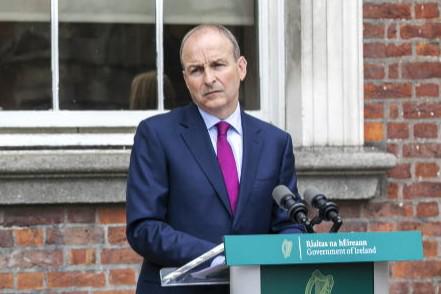
An Taoiseach, Micheál Martin, has written to Government ministers colleagues asking for a review of the guidelines under which TII operates when it comes to rural planning.
However, many of these applicants are seeking to use existing entrances to their own family’s farmhouses, to build homes for the next generation of farmers. While a large number of these applications are being sanctioned by local authorities, they are subsequently refused following an appeal by TII, on the basis of road safety.
Double standards
One Galway farmer has accused the agency of double standards when it comes to rural planning. Martin Linnane (31), who featured in last year’s inaugural Building a Home in rural Ireland series in Irish Country Living, is still trying to secure planning permission for a family home on his 72ac holding at Inishroo on the Galway/Clare border.
The entrance to Martins’ parent’s house, which he has applied to use as a shared entrance, leads on to the N67.
The father of two small children is travelling up to 90km a day to work on his sheep and suckler farm as he has been denied permission on two occasions to build a home on his land.
“It’s a case of pass the parcel and I’m getting nowhere. There’s never been an issue with that road, my father used to sell spuds from our shed and there was constant traffic coming in and out of the farm up until about 10 years ago. I have three brothers who were all living in the home house and driving in and out and there was never any issue, not one tip,” he says.
“That business is gone, my parents are elderly and I come in and out of the entrance myself several times a day to access the farm.
“What really galls me is the fact that in the past 12 months, TII objected to a commercial development on another national road in the county that was granted planning by Galway County Council. But despite its original objection, TII did not appeal the council’s decision so that business is up and running. I have no issue with the business concerned, fair play to them, but to claim that my house would endanger public safety where there would be no increase in traffic is an extreme case of double standards.
“I wrote to TII asking them to explain the contradiction in their responses to both applications and they said my points were irrelevant and it would be inappropriate to discuss them with me. But it’s beyond a joke at this stage.”
The Taoiseach has now intervened in the issue of TII objections to rural homes after it was raised in the Dáil in recent weeks by Galway East Fianna Fáil TD Albert Dolan.
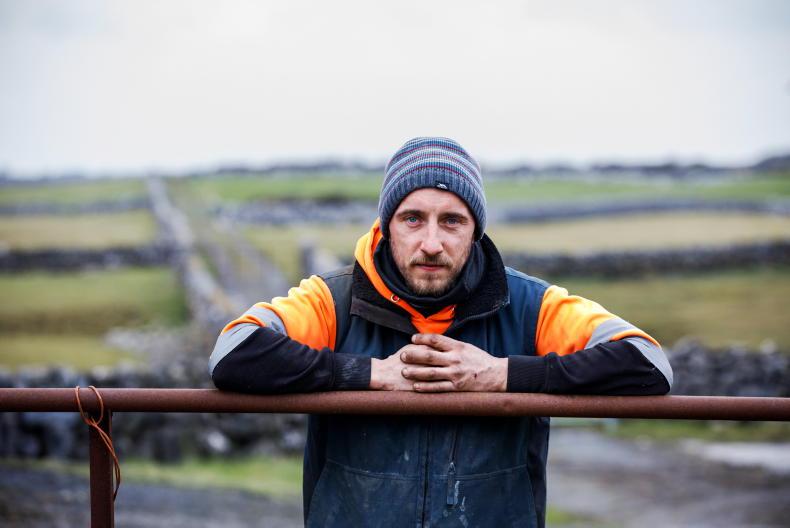
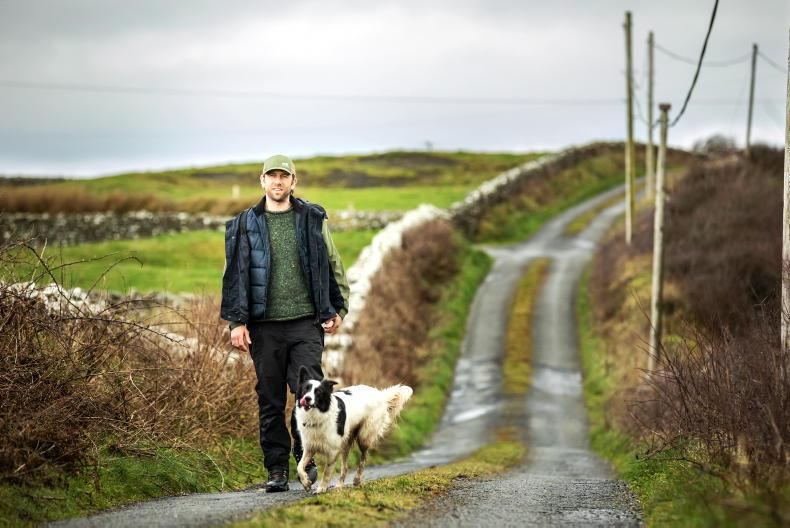
Martin Linnane, farmer from Kinvara, Co Galway accuses Transport Infrastructure Ireland of double standards when it comes to rural planning decisions. \ Philip Doyle
Overreach
Deputy Dolan says the issue has come across his desk multiple times in the past 12 months, particularly from young couples or individuals being refused planning permission along national roads due to objections by TII.
“I understand TII objecting in the case of national roads where a new entrance is being proposed. The problem is that these people are already living at home with their parents.
“They are proposing to build beside their parents and come out the same entrance that they are already using, so the justification for objecting or not allowing them to build a home beside their parents is lunacy,” says Albert.
In his Dáil response, Micheál Martin agreed that the issue needed to be addressed by Government.
“I do not think TII should be objecting to planning applications on housing and we have discussed this at Government level,” he said.
“There is overreach by TII in respect of many of these issues. I understand some of the road safety issues if it is onto a motorway or if there is an issue with protecting a motorway, but in terms of generically getting involved in planning applications where the exit is the same, that should be left to the local authority and we will be communicating that to TII. I do not think it is acceptable.”
In a follow-up letter to Deputy Dolan, the Taoiseach acknowledges that rural planning is a commitment of the Programme for Government, in terms of reviewing the guidelines to facilitate housing.
“In that context and given that the new Planning Act provides for the transition of these guidelines to National Planning Statements, I have written to both the Minister for Transport and the Minister for Housing, Local Government and Heritage to request that consideration be given to using this opportunity to undertake a review of the guidelines and the overall approach to these issues,” the Taoiseach writes.
Deputy Dolan says he has been contacted by people from all over the country since he raised the issue in the Dáil. He welcomes the Taoiseach’s response as a significant step forward for rural families.
“I am pleased to have secured a firm commitment from the Taoiseach that this practice of blanket objections will be addressed,” he says.
“Young people should not be forced out of rural Ireland because of inflexible and unreasonable objections from State bodies.

Fianna Fail Galway East TD Albert Dolan.
“I have been contacted by so many people from Monaghan to Meath, across my own constituency of Galway East and beyond who are being refused planning on their own land because of intervention by TII.
“The irony is these applicants are already living in houses that access the roads concerned and are seeking permission for houses that will share access with the existing property.”
Martin Linnane had been hoping that a proposed reduction in the speed limit on the N67, from 80kph to 60kph may go in his favour for any further planning application. However, with the lower speed reduction from 50kph to 30kph yet to be implemented by the Department of Transport, there is no indication of how far off enforcement of reducing the higher speed limit will take.
Guidelines changed
However, Deputy Albert Dolan says that this change, when it is introduced, would not necessarily guarantee a favourable outcome for applicants such as Martin.
“We need these guidelines changed because even if the road speed is reduced, there is no guarantee under the current guidelines that people will succeed in their planning applications,” he says.
“I can completely understand TII’s remit to protect safety on our roads but it is so wrong that these applications are not being considered on a case-by-case basis and are being refused under blanket national policy that doesn’t make sense.”
He says the issue was a huge consideration for a number of rural TDs in his party during the formation of the Programme for Government and he is now keen that measures are taken to end the practice of TII appealing planning decisions for rural homes.
“Lives are being put on hold and I am hopeful that the review the Taoiseach has committed to will deliver a positive outcome,” he adds.
“These are not dangerous proposals. This is about young people trying to put down roots in their own communities across rural Ireland.
“Local authorities need to be able to make planning decisions based on
common sense without interference from TII.”
The Programme for Government includes a commitment to continue to support one-off rural housing, and to protect home building in rural communities.Transport Infrastructure Ireland implements the Spatial Planning and National Roads Guidelines for Planning Authorities, issued by the Government in 2012.Updated rural housing guidelines, due to be published in October 2024 are yet to be announced by the Department of Housing, with current policy dating back to 2000.TII are referred planning applications by local authorities under certain defined circumstances as a statutory consultee in order to assist the planning authorities in making decisions.
Prospective homeowners in rural Ireland who have been thwarted in their efforts to build on farmland could be given a lifeline, with a review into the role of Transport Infrastructure Ireland (TII) in the planning process.
Irish Country Living has seen correspondence from Taoiseach Micheál Martin, confirming he has written to the Ministers for Housing and Transport asking them to consider reviewing the guidelines under which TII operate for rural planning.
Countless planning permissions around the country have been objected to by the State roads authority in recent years for homes on farmland due to their proximity to national roads, where the speed limit is 80kph or more.
An Taoiseach, Micheál Martin, has written to Government ministers colleagues asking for a review of the guidelines under which TII operates when it comes to rural planning.
However, many of these applicants are seeking to use existing entrances to their own family’s farmhouses, to build homes for the next generation of farmers. While a large number of these applications are being sanctioned by local authorities, they are subsequently refused following an appeal by TII, on the basis of road safety.
Double standards
One Galway farmer has accused the agency of double standards when it comes to rural planning. Martin Linnane (31), who featured in last year’s inaugural Building a Home in rural Ireland series in Irish Country Living, is still trying to secure planning permission for a family home on his 72ac holding at Inishroo on the Galway/Clare border.
The entrance to Martins’ parent’s house, which he has applied to use as a shared entrance, leads on to the N67.
The father of two small children is travelling up to 90km a day to work on his sheep and suckler farm as he has been denied permission on two occasions to build a home on his land.
“It’s a case of pass the parcel and I’m getting nowhere. There’s never been an issue with that road, my father used to sell spuds from our shed and there was constant traffic coming in and out of the farm up until about 10 years ago. I have three brothers who were all living in the home house and driving in and out and there was never any issue, not one tip,” he says.
“That business is gone, my parents are elderly and I come in and out of the entrance myself several times a day to access the farm.
“What really galls me is the fact that in the past 12 months, TII objected to a commercial development on another national road in the county that was granted planning by Galway County Council. But despite its original objection, TII did not appeal the council’s decision so that business is up and running. I have no issue with the business concerned, fair play to them, but to claim that my house would endanger public safety where there would be no increase in traffic is an extreme case of double standards.
“I wrote to TII asking them to explain the contradiction in their responses to both applications and they said my points were irrelevant and it would be inappropriate to discuss them with me. But it’s beyond a joke at this stage.”
The Taoiseach has now intervened in the issue of TII objections to rural homes after it was raised in the Dáil in recent weeks by Galway East Fianna Fáil TD Albert Dolan.
Martin Linnane, farmer from Kinvara, Co Galway accuses Transport Infrastructure Ireland of double standards when it comes to rural planning decisions. \ Philip Doyle
Overreach
Deputy Dolan says the issue has come across his desk multiple times in the past 12 months, particularly from young couples or individuals being refused planning permission along national roads due to objections by TII.
“I understand TII objecting in the case of national roads where a new entrance is being proposed. The problem is that these people are already living at home with their parents.
“They are proposing to build beside their parents and come out the same entrance that they are already using, so the justification for objecting or not allowing them to build a home beside their parents is lunacy,” says Albert.
In his Dáil response, Micheál Martin agreed that the issue needed to be addressed by Government.
“I do not think TII should be objecting to planning applications on housing and we have discussed this at Government level,” he said.
“There is overreach by TII in respect of many of these issues. I understand some of the road safety issues if it is onto a motorway or if there is an issue with protecting a motorway, but in terms of generically getting involved in planning applications where the exit is the same, that should be left to the local authority and we will be communicating that to TII. I do not think it is acceptable.”
In a follow-up letter to Deputy Dolan, the Taoiseach acknowledges that rural planning is a commitment of the Programme for Government, in terms of reviewing the guidelines to facilitate housing.
“In that context and given that the new Planning Act provides for the transition of these guidelines to National Planning Statements, I have written to both the Minister for Transport and the Minister for Housing, Local Government and Heritage to request that consideration be given to using this opportunity to undertake a review of the guidelines and the overall approach to these issues,” the Taoiseach writes.
Deputy Dolan says he has been contacted by people from all over the country since he raised the issue in the Dáil. He welcomes the Taoiseach’s response as a significant step forward for rural families.
“I am pleased to have secured a firm commitment from the Taoiseach that this practice of blanket objections will be addressed,” he says.
“Young people should not be forced out of rural Ireland because of inflexible and unreasonable objections from State bodies.
Fianna Fail Galway East TD Albert Dolan.
“I have been contacted by so many people from Monaghan to Meath, across my own constituency of Galway East and beyond who are being refused planning on their own land because of intervention by TII.
“The irony is these applicants are already living in houses that access the roads concerned and are seeking permission for houses that will share access with the existing property.”
Martin Linnane had been hoping that a proposed reduction in the speed limit on the N67, from 80kph to 60kph may go in his favour for any further planning application. However, with the lower speed reduction from 50kph to 30kph yet to be implemented by the Department of Transport, there is no indication of how far off enforcement of reducing the higher speed limit will take.
Guidelines changed
However, Deputy Albert Dolan says that this change, when it is introduced, would not necessarily guarantee a favourable outcome for applicants such as Martin.
“We need these guidelines changed because even if the road speed is reduced, there is no guarantee under the current guidelines that people will succeed in their planning applications,” he says.
“I can completely understand TII’s remit to protect safety on our roads but it is so wrong that these applications are not being considered on a case-by-case basis and are being refused under blanket national policy that doesn’t make sense.”
He says the issue was a huge consideration for a number of rural TDs in his party during the formation of the Programme for Government and he is now keen that measures are taken to end the practice of TII appealing planning decisions for rural homes.
“Lives are being put on hold and I am hopeful that the review the Taoiseach has committed to will deliver a positive outcome,” he adds.
“These are not dangerous proposals. This is about young people trying to put down roots in their own communities across rural Ireland.
“Local authorities need to be able to make planning decisions based on
common sense without interference from TII.”
The Programme for Government includes a commitment to continue to support one-off rural housing, and to protect home building in rural communities.Transport Infrastructure Ireland implements the Spatial Planning and National Roads Guidelines for Planning Authorities, issued by the Government in 2012.Updated rural housing guidelines, due to be published in October 2024 are yet to be announced by the Department of Housing, with current policy dating back to 2000.TII are referred planning applications by local authorities under certain defined circumstances as a statutory consultee in order to assist the planning authorities in making decisions.







SHARING OPTIONS