


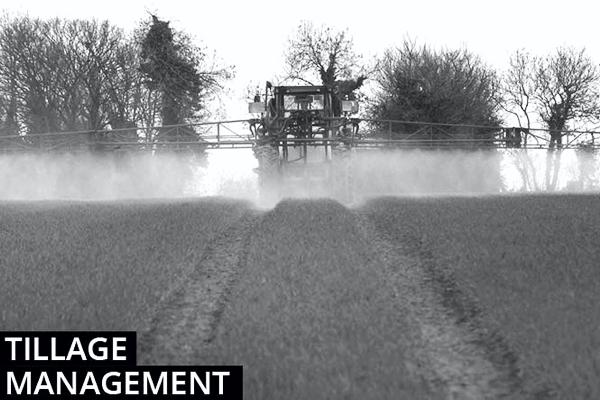
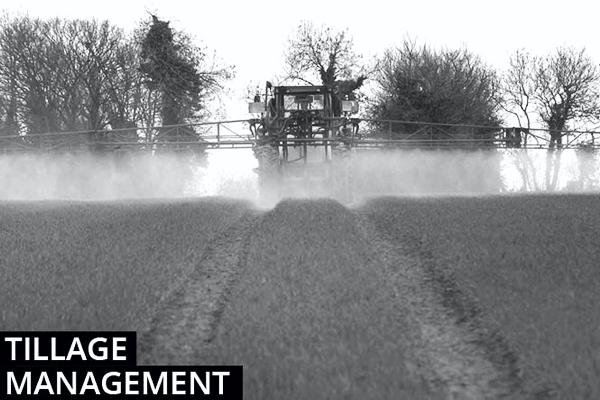
Difficult conditions: This May seems to be broadly similar to last year, when we also had awkward spraying conditions and wet tramlines. The wet ground is showing in many spring crops, with headlands, patches and other compacted areas gone yellow and looking the worse for wear.
Many winter barley crops appear to have slipped back in potential, but they are still clean enough to deliver. Wheat is again proving to be more robust and most crops still have very little septoria. However, recent cold and low inoculum could be slowing the appearance of infection, so the threat is still there.
Winter barley crops are at either side of heading. Many winter wheat crops are now at T2 stage.
Consider the final N on winter wheat (40-60 kgN/ha) once flag leaves have emerged. Rabbits continue to cause serious problems in places.
Disease control: Consider higher application rates for T2 on winter wheat where treatment is delayed, especially the triazole. The T2 should include an SDHI, triazole and multisite. Where possible, swap actives between treatments.
Robust rates are now needed, so at least 0.8 of rate of the SDHI and even more on the triazole. Treatments will contain either Adexar, Aviator, Seguris, Treoris or products with broadly similar actives, plus one or two triazoles and either chlorothalonil or folpet. Consider 1.5 litres/ha of chlorothalonil on very septoria-prone varieties.
Apply the final spray on winter barley either side of earing out. Again, alternate actives where possible. Final sprays should include an SDHI or strobilurin (or both), a triazole and chlorothalonil or folpet. Product choices include Bontima, Siltra, Ceriax or Treoris mixes.
Hold final sprays on oats until ears are out to help grain colour. If you need a stop-gap, consider a straight triazole like Folicur or Opus. Halo blight may begin to appear on oats due to the frequent wet, but this is a bacterial disease.
Watch early sown spring crops for rhyncho and treat if necessary. It is highly advisable to use a mix of actives.
There is now research information showing benefits from including either phosphite or Kantor, with fungicides for improved disease control and yield, so they are worth considering in this broken weather.
Spring crops: Many spring barley crops are suffering to various degrees in the wet and cold. Blank patches are now evident and some crops are poorly tillered. Crops at the five-leaf stage need herbicide and insecticide.
Herbicide will include an SU, or a mix of SU actives, plus a contact or hormone partner, especially where SU resistance is present. You may also need to treat wild oats now. Take care with mixes and sequences when using Axial and do not mix with hormones.
Early sown spring wheat may be at CCC stage – 0.8-1.0 l/ha of a 75% CCC product.


SHARING OPTIONS