


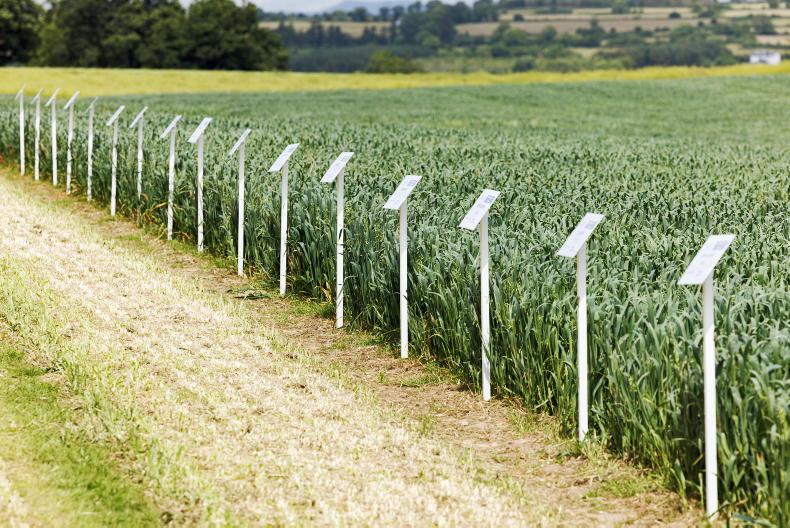
The spring cereal recommended lists were published at the end of last week. You can follow links at the bottom of the article to view the details.
The lists provide huge detail and are the compilation of years of work. As a result, growers should only grow varieties listed by the Department of Agriculture, Food and the Marine. The crop evaluation division of the Department provides essential, independent information on crop varieties.
It tests hundreds of varieties each year. In 2025, there were 14 trial sites across the main tillage growing region.
Varieties are tested in standard conditions, without fungicides and in high nitrogen situations. Varieties have to meet specific criteria over a three-year period to be fully recommended.
Huge effort goes into sourcing varieties to test by seed companies and the Department then test these varieties independently. Most varieties do not get onto the list. It’s a rigorous process and if a variety does not perform well in Irish conditions then it does not make the cut. Equally, if a variety is on the list and fails to meet standards it is taken off the list.
A variety may do well in England for example, but could fail miserably on trials here in Ireland. If it was good enough to be grown in Ireland it would be on the list. So, growers should only work off the list when choosing varieties to grow.
Importing seed into the country, of varieties grown in other countries, brings huge bio-security risks in terms of weeds and diseases which can affect the farm they are planted on, but also other farms in the region.
View the 2026 spring barley list here.
View the 2026 spring oats list here.
View the 2026 spring wheat list here.



SHARING OPTIONS