


Over the last several decades, and contrary to what many politicians seem to think, the national population share of Dublin city and county has risen only a little, and more slowly than in adjoining counties.
There has been meteoric growth in counties Meath and Kildare – even within county Dublin, the greatest expansion has been in the Fingal area, north of Dublin airport and a mainly rural area until the 1980s.
Of the four local authorities in county Dublin, the most distant, Fingal, has grown fastest.
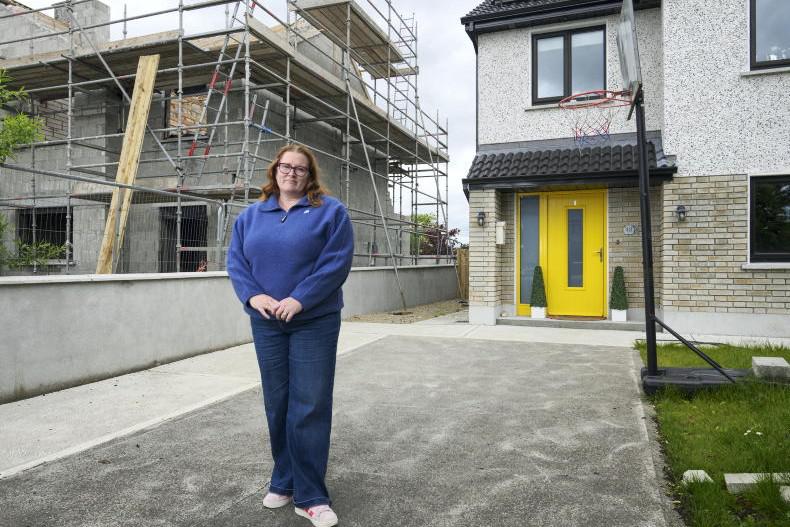
Every county in Ireland has taken a share of the boom in national population, if only in recent years for some, and there has been an accompanying trend to urban sprawl, where new housing developments around Dublin and cities like Cork and Galway have been low density and at increasing distances, in Dublin’s case stretching into the midlands.
The result is congestion and greater reliance on long-distance commuting.
Examples
Examples are all around. What were the market towns of Leinster 30 or 40 years ago, including Portlaoise or Mullingar to the west, Gorey to the south or Navan and Drogheda to the north, have become outer suburbs of Dublin for many of their commuting residents.
There is enough empty land to host a large city between, for example, Portlaoise and Dublin.
While urban sprawl is acknowledged as a problem and lamented, no coherent policy is pursued which might reverse the trend.
In particular no measures are pursued which would facilitate pro-active zoning for residential development closer to the urban centres, most notably Dublin.
The effect of the 1963 Planning and Development Act has been to place the zoning power and the one-by-one grant or denial of planning permission in the hands of local councils, whose members and planning staff are incentivised to respond to objections from local residents’ associations.
Exacerbated
The housing affordability crisis is exacerbated by the political structure of decision-making: the crisis is national but key decisions are assigned to 31 local authorities, the units of public administration most exposed to the pressures of nimbyism.
Central government nonetheless responds to the inadequacy of housing supply with ad hoc interventions and declines to address the dysfunctional allocation of veto power.
Instead of loosening up constraints on supply in urban Ireland where demand is strongest, gimmicky interventions proliferate. There have been two recent examples of policy in unrelated areas skewed to encourage development outside the main urban areas.
The first is the announcement of increased subsidies for electric cars, where the availability of subsidy is to be more generous outside Dublin and the main provincial cities of Waterford, Cork, Limerick and Galway.
EV uptake has indeed been quicker in Dublin but that may reflect charger availability, still very poor in many parts of the country.
But there is evidence from the Central Statistics Office that private car ownership and use is lowest in higher density suburbs close to existing built-up areas.
Why not address the problem directly, by encouraging higher density housing where demand is greatest and car reliance is least, combined with better provision of fast charging around the road network?
Annual mileage in rural Ireland is higher and range anxiety, caused by poor availability of fast chargers, is perfectly understandable.
The second example concerns one-off rural housing and a policy change just announced will make planning permission even more readily available.
There has long been a practice of almost automatic grant of permission in rural locations on proof of a family link to the area. If you can establish that you are local, the council will likely grant you permission and tough luck if you are not.
Whether this form of discrimination by council planners is constitutional remains to be tested.
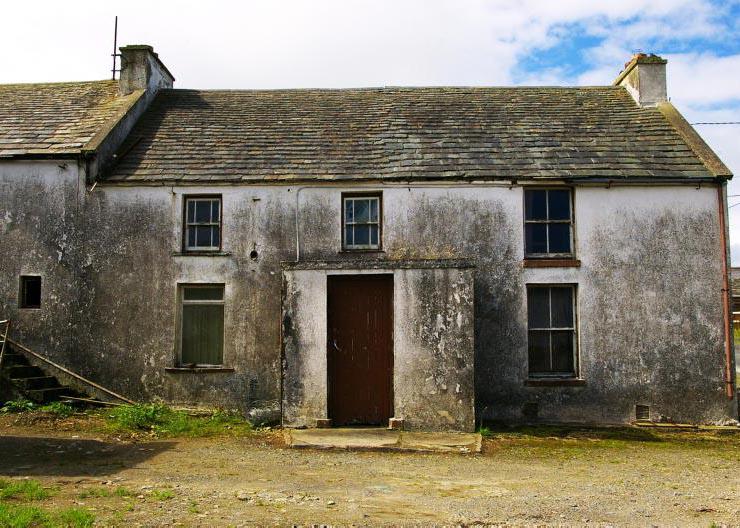
One result is that refurbishment of older houses in towns and villages is less attractive than a new build a couple of miles away, where sites are cheaper or even free if a kind relative donates the corner of a field.
In the Victorian main street of the nearest town or village, unoccupied premises could need a new roof, a new kitchen, central heating and much more, adding up to a cost disadvantage versus the new build a few miles away.
The main streets of many rural towns are suffering creeping dereliction as a result and retail businesses including pubs and restaurants suffer.
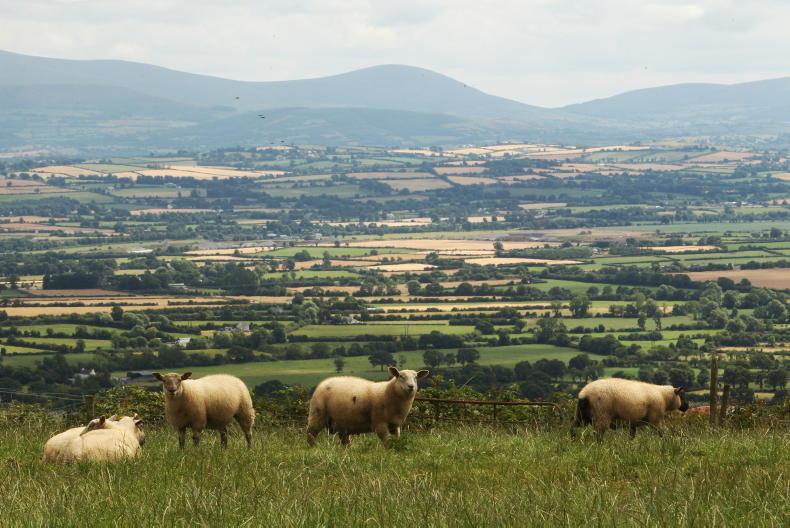
There is rural sprawl as well as urban sprawl and it encourages high reliance on the private car.
In cities as well as small rural centres, the retail trade is suffering anyway from online shopping combined with home delivery, as well as the trend of working from home, also supported by public policy.
Resorting to uncoordinated interventions from the many Irish policy silos, a feature of single issue populism, is the denial of unavoidable trade-offs.




SHARING OPTIONS