


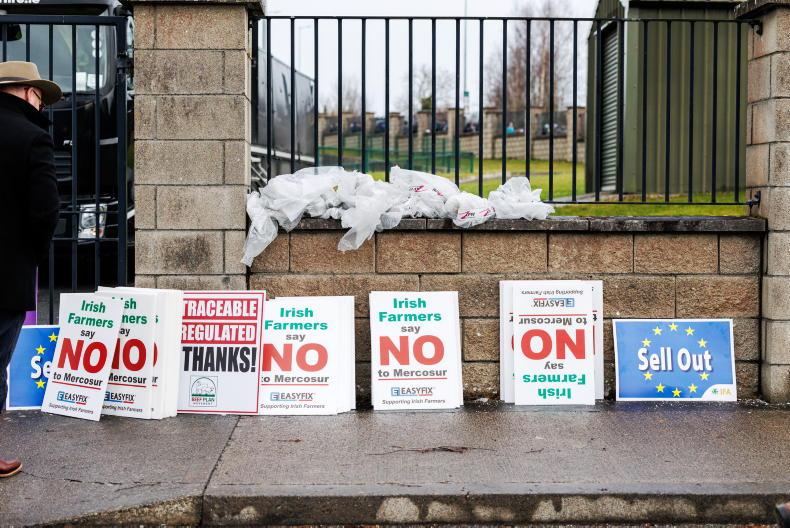
Last Friday’s decision by European member states to ratify the next stage of the Mercosur trade deal was widely anticipated in the lead up to the vote.
Battle lines now move to the European parliament, where a simple majority vote will suffice to finally get the deal across the line. In what some say is a display of confidence, Ursula von der Leyen will travel to Paraguay this weekend to perform some ceremonial signing duties ahead of the vote.
Speaking to sources in Brussels, there is a nervousness around the vote. Von der Leyen has already faced down two votes of no confidence in the first two years of her tenure, and many are portraying the Mercosur vote as another vote of confidence in the president of the Commission.
There are 720 seats in the European parliament, so 361 yes votes will see the vote through.
In theory, the pro-European centre groups (European People’s Party, Socialists and Democrats, Renew group and the greens) should see the votes passed, with these parties controlling just over 480 of the parliament seats.
On the other side are the right-wing groups and the hard left, who control close to 350 votes.
They are said to be united in their opposition to the deal and could, along with a number of defectors from the other groups, come close to reaching the 361 no votes to knock the deal.
Opposition
The Irish government’s opposition to the trade deal should be acknowledged. While it was late in the day and unclear as to what pressure was applied from rural independent TDs, they still opted to oppose the deal.
They stood with Poland, Austria, Hungary and France, while Belgium abstained from the vote.
The vote, which was completed by EU ambassadors in Brussels, needed 65% of the EU population to get across the line.
Far from a resounding vote of confidence, the deal came in at just over 68% and should Romania, which represents 4% of the EU population, have voted no the deal would not have passed.
Italy, who had opposed the deal prior to the abandoned December vote, was swayed on side with a reallocation of CAP funds.
The 68% majority is the slimmest margin a trade deal has ever been passed through by the member states, and this margin will be a concern for EU leaders. Since Ireland voted against the deal, many commentators have hopped on the bandwagon, criticising Ireland’s position and what the implications might be.
Democracy is at the very core of the European project, and if a country is exorcised due to opposition to a trade deal, we have a bigger problem than we first thought.
The Mercosur deal is a good deal for big business in Europe, but beef should never have been part of the deal. The 99,000 tonnes of Mercosur beef is small in the overall context of Mercosur beef exports.
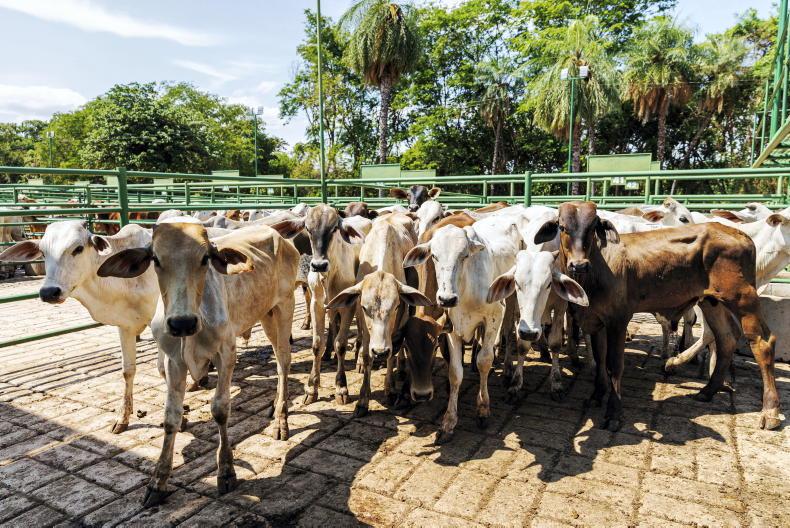
When the Irish Farmers Journal and the Irish Farmers Association visited Brazil last October, many of the farmers we talked to didn’t want to go down the road of exporting to Europe, with some saying that Europe has regulated its farmers out of business and why would they want to go down the same road?
Reality
The reality is that over 200,000 tonnes of Mercosur beef is already coming into Europe.
Over the last number of weeks, the fact that beef labelled as Brazilian is circulating in Ireland has been highlighted.
In a country where we export 90% of what we produce, some are asking the question around why this beef is here. That’s a valid point.
The fact that it is labelled as being from Brazil and clearly identified as not being Irish means that a consumer can make a choice in purchasing a product or supporting the establishment that offers the imported product for sale.
The bigger issue for me is where there is no country of origin declared, with consumers then unwittingly consuming the product when they think it’s Irish.
This isn’t Mercosur or Brazil’s fault, but if it is important to the EU and member states, it could be legislated for.This isn’t only a beef issue – eating a chicken sandwich from a deli that was made with Irish chicken is a rare occurrence.
In a roundabout way, even if the Mercosur trade deal does go through, maybe the heightened consumer awareness of imported product over the last two weeks will give consumers confidence to ask where the food they are purchasing comes from.



SHARING OPTIONS