



Senate Democrats in the US have introduced the Family Grocery and Farmer Relief Act. The purpose of this proposed legislation is to “break up dominant meatpackers, rein in foreign controlled corporate giants, and use federal tools to stop unfair pricing that drives up grocery bills for American families and hurts workers, farmers, and ranchers.”
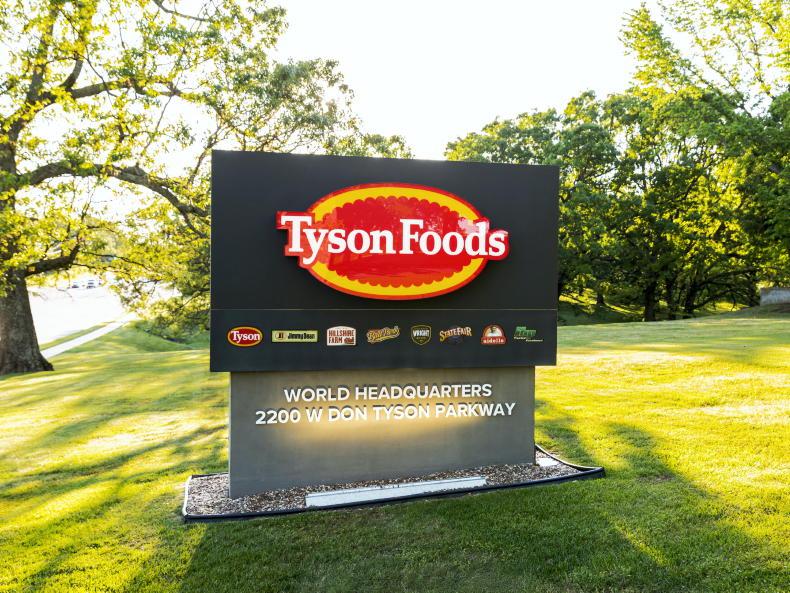
The bill proposes a wide range of farmer supports but what is most controversial is that it wants to break up the large US meat processing industry. It would make it “unlawful for a major meatpacking conglomerate to control more than one major type of meat, forcing the biggest players to choose a line of business. In practice, that would mean a company like Tyson Foods, the largest meat processor in the US would have to choose one of the three species that it processes, beef, pork and chicken and offload its processing capacity in the other two.
It doesn’t end there. The legislation suggests “hard caps on the concentration of beef markets at both the regional and national levels”.
Where these are exceeded, the Federal Trade Commission (FTC) would “order targeted divestitures – selling off plants, facilities, or business units, or spinning off new independent firms – until markets are competitive again”. The FTC would be required to “design and enforce divestiture plans, so the law delivers real structural change, not just fines that companies treat as a cost of doing business . With the four largest beef processing groups in the US controlling over 80% of beef processing this would mean a break up of many businesses.
Non-US ownership is also targeted which would impact on two of the four big processors, JBS and National Beef Packing Company, both of whom have Brazilian ownership.
Industry kickback
There has been immediate pushback from the Meat Institute, the organisation that represents the US meat processing industry. Their view is that the proposed legislation “will destroy the meat packing industry”. President and CEO Julie Anna Potts described it as “absurd” and “reckless election year pandering”.
She said it compared it to the Ford motor company being compelled to manufacturing only trucks and having to sell off their other motor lines.
To emphasise her hostility to the suggestion further she added that it was being assumed that there were “buyers lining up to enter the meat and poultry business, and that with the flip of a switch production would simply continue”, something which she says “is a dangerous fantasy”.
Addressing the wrong problem
Her statement also highlighted that even if the proposals on industry restructuring came to pass, they would only have a negative effect across the supply chain. Breaking up the large processors would have the effect of fragmenting the industry and increasing costs and uncertainty alongside a likely drop in production.
This in turn was likely to make the retail price of beef higher, not lower according to the Meat Institute. They point out that the proposal overlooks the fact that the cattle population in the US is at its lowest in 75 years, adding that for the past 18 months beef packers have “experienced the largest losses on record” at up to $350 (€302) per head.
The MI comments wrapped up by advising that the solution is “to encourage cattle producers to retain heifers and rebuild the herd” and that watching the industry is a “political football”.
Comment – solution or distraction
There is a similarity between the Irish and US beef processing industries in that four companies control the majority of the processing capacity. There is also an issue with cattle supply in both countries. The Irish cattle kill was down over 200,000 head last year, which is a problem for processors and will mean the loss of processing capacity. Supplies are an even bigger issue in the US where the herd is at a 75 year low.
The difference is that there isn’t the same level of visibility of Irish processors’ profitability as there is in the US where much more detailed price reporting systems are in place.
During the Biden presidency, an initiative was launched to attract new competition into meat processing that had limited success. The current attempt by the Democratic party in the senate to enact legislation for breaking up the processing groups has been forcefully opposed by the meat industry trade association. They make a strong case around the problem being lack of cattle rather than industry structure which is supported by the numbers, where processors are losing $350 (€302) per head. It is ironic that despite these losses, the meat industry in the US regularly falls foul of their competition authorities!




SHARING OPTIONS