



While the EU has been wrestling with ratification of the Mercosur trade deal this week, China has announced the outcome of its investigation into what it called EU pork dumping.
A similar investigation is under way on global beef and with the outcome of these expected in January and February respectively.
This has already been deferred twice, but the expectation is that the outcome will be revealed this time. Elsewhere, Mexico has just announced that it is investigating the increased quantities of US pork that are landing in its market.
While each investigation is unique to the trading relationship between the individual parties, there are a couple of common themes.
A frequent trigger is when domestic governments come under increased lobby pressure from producers and processors in their own country.
This is often when there is higher than usual domestic supply or a weaker market, meaning that imported produce adds to the supply and has a depressing effect on domestic prices.
This is often added to by a political dimension and this has been a particularly turbulent year in international trade.
Investigation of EU pork
In the case of the China investigation on EU pork, it commenced in June 2024 and in October that year, the EU imposed additional tariffs on electric vehicle (EV) imports from China.
This was in addition to the 10% base level that had been in place previously. While both these occurrences may be totally unrelated, many suspect that they are not entirely unrelated.
The final report on the pork investigation was published during the past week. While it confirms tariffs for a five-year period, there was some consolation for EU exporters in that these have been reduced from levels announced in an interim report, which was published in September.
Companies that were sampled during the investigation will pay a tariff between 4.9% and 19.8%, which is down from 15.6% to 32.7% announced in September.
For other companies that co-operated with the investigation, the rate is reduced from 20% to 9.8%, while all other EU companies will be subject to a 19.8% tariff instead of the 62.4% tariff announced in September.
Dairy and beef
The investigation by China into what it describes as 'EU dairy dumping in China' commenced in August 2024 and its report has been deferred until February 2026.
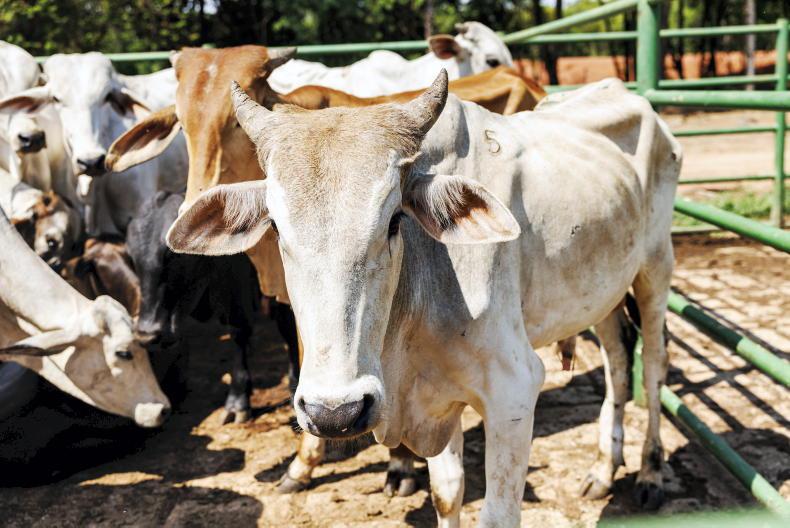
A similar investigation is also taking place on beef, but the difference with it is that it applies to all beef.
The EU is a significant supplier of both pork and dairy products to China, but beef imports from the EU are negligible.
Almost all its imported beef is supplied from the major South American exporting countries, including Argentina, Brazil, Uruguay and Paraguay.
Until recently, the US was a significant supplier of beef and Canada is a smaller but still significant source as well. The remainder of China’s beef imports come from Australia and New Zealand.
There is much speculation on what will happen with China’s beef imports. There is considerable dependency in China on beef imports to meet consumer demand.
Also, ramping up beef production is more complex and time-consuming than pork.
There are reports that China will look at setting a quota above which imports will be subject to a tariff. What form this will take is unknown, but there is speculation in Argentina that this will be allocated on a country-specific basis, as opposed to an overall quota allocated on a first-come, first-served basis.
While there may be some relief for Irish and EU pork exporters that the level of tariff has been reduced from what it could have been, there is still a new cost to doing business that wasn’t there before.
It remains to be seen if this will also be the case with dairy and beef.
The bottom line is that any introduction of any tariff is unwelcome news for exporting countries such as Ireland.




SHARING OPTIONS