Ratifying the proposed EU-Mercosur free trade deal would not impede the EU from outright banning beef imports from Mercosur countries if their authorities were deemed to not have responded adequately to shortcomings exposed by EU food safety audits, the European Commission has claimed.
A Commission official - who briefed journalists on Friday - said that if a Mercosur country’s response to the findings of EU audits is “not satisfactory and there is a serious concern with respect to animal health or human health”, that it will remain “always possible to delist a country”.
“This is still an option that is on the table. It is based on the audits, the findings,” the unnamed official said.
Beef shipments from Mercosur countries to the EU currently amount to around 200,000t annually and the proposed deal would lower tariffs to just 7.5% for 99,000t carcase weight equivalent of this beef each year.
The Commission insists that current Mercosur beef imports to the EU must meet EU food safety standards and that the deal will not roll back these standards.
Concern on adherence to standards
However, the deal’s lowering of beef tariffs has reignited EU beef farmers’ concerns with South American food safety systems’ adherence to EU standards, especially in the wake of a Commission recall of consignments of Brazilian beef late last year due to the presence of a banned hormone in the meat.
Some of these recalled batches had entered the food chain in EU countries and around 128kg of it had landed with food businesses in Ireland, the Food Safety Authority of Ireland later confirmed.
“In reality, what this all shows is that we have a system of controls and checks and this precisely why this is in place, that we have identified there is a problem and we need to recall that,” the Commission official said on this latest recall.
“Then the next question is - what’s the cost for the operators that are affected by this situation.
“That is very clear. When you have to recall consignments, it has a huge cost. You never want to end up in this situation.”
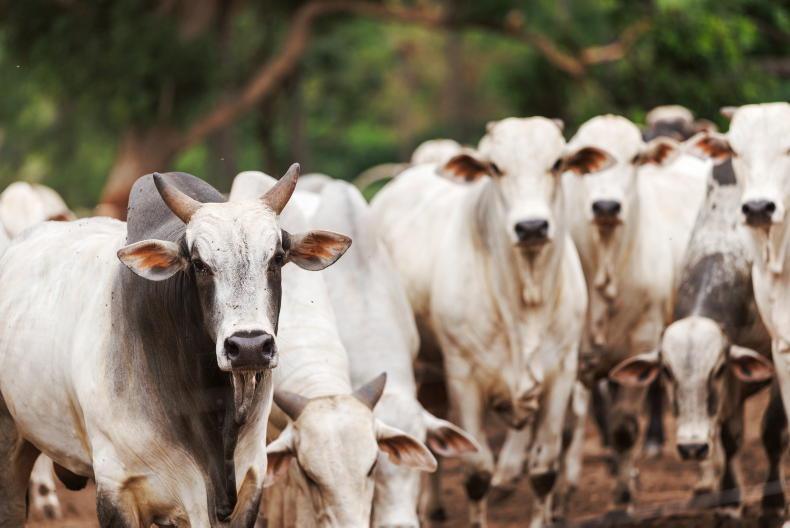
The 2025 EU-wide recall fo consignments of Brazilian hormone beef followed a 2024 EU audit that exposed shortcomings in food standards there. \ Philip Doyle
This latest scandal came, the official explained, after “there was one aspect [of Brazilian controls] that was still not solved” after a previous EU audit in 2024 had exposed shortcomings.
Standards since major 2017 scandal
The official insisted that standards in Brazil have improved since Operation Weak Flesh, a 2017 Brazilian law enforcement investigation that saw raids on meat factories in Brazil amid allegations that decayed or salmonella-tainted meat had been exported by processors there, with state officials bribed in the process.
“Since then, the level of control on beef – documentary and physical checks, testing – is way much higher than other countries and this has a cost,” the Commission official commented on the 2017 scandal.
Speaking more generally on EU checks of food imports, the official noted that there is “two levels of the controls” in play.
“The one at the border that is implemented by national authorities’ customs agent and there is another level that is implemented by the Commission and these are the audits that are carried out in third countries,” they said.
“Over the last two years, the Commission done outside audits in Mercosur countries nine times in the agri-food areas,” adding that there is a further “six on-site audits” planned for the coming year, two of which are to be carried out in Brazil.
Read more
Brazilian beef containing illegal hormone entered Irish food chain
Operation 'Weak Flesh': five days that rocked Brazil's meat industry
Explainer: the Mercosur trade deal on beef access
Hormone-free Brazilian beef to EU cannot be guaranteed, report finds
Ratifying the proposed EU-Mercosur free trade deal would not impede the EU from outright banning beef imports from Mercosur countries if their authorities were deemed to not have responded adequately to shortcomings exposed by EU food safety audits, the European Commission has claimed.
A Commission official - who briefed journalists on Friday - said that if a Mercosur country’s response to the findings of EU audits is “not satisfactory and there is a serious concern with respect to animal health or human health”, that it will remain “always possible to delist a country”.
“This is still an option that is on the table. It is based on the audits, the findings,” the unnamed official said.
Beef shipments from Mercosur countries to the EU currently amount to around 200,000t annually and the proposed deal would lower tariffs to just 7.5% for 99,000t carcase weight equivalent of this beef each year.
The Commission insists that current Mercosur beef imports to the EU must meet EU food safety standards and that the deal will not roll back these standards.
Concern on adherence to standards
However, the deal’s lowering of beef tariffs has reignited EU beef farmers’ concerns with South American food safety systems’ adherence to EU standards, especially in the wake of a Commission recall of consignments of Brazilian beef late last year due to the presence of a banned hormone in the meat.
Some of these recalled batches had entered the food chain in EU countries and around 128kg of it had landed with food businesses in Ireland, the Food Safety Authority of Ireland later confirmed.
“In reality, what this all shows is that we have a system of controls and checks and this precisely why this is in place, that we have identified there is a problem and we need to recall that,” the Commission official said on this latest recall.
“Then the next question is - what’s the cost for the operators that are affected by this situation.
“That is very clear. When you have to recall consignments, it has a huge cost. You never want to end up in this situation.”
The 2025 EU-wide recall fo consignments of Brazilian hormone beef followed a 2024 EU audit that exposed shortcomings in food standards there. \ Philip Doyle
This latest scandal came, the official explained, after “there was one aspect [of Brazilian controls] that was still not solved” after a previous EU audit in 2024 had exposed shortcomings.
Standards since major 2017 scandal
The official insisted that standards in Brazil have improved since Operation Weak Flesh, a 2017 Brazilian law enforcement investigation that saw raids on meat factories in Brazil amid allegations that decayed or salmonella-tainted meat had been exported by processors there, with state officials bribed in the process.
“Since then, the level of control on beef – documentary and physical checks, testing – is way much higher than other countries and this has a cost,” the Commission official commented on the 2017 scandal.
Speaking more generally on EU checks of food imports, the official noted that there is “two levels of the controls” in play.
“The one at the border that is implemented by national authorities’ customs agent and there is another level that is implemented by the Commission and these are the audits that are carried out in third countries,” they said.
“Over the last two years, the Commission done outside audits in Mercosur countries nine times in the agri-food areas,” adding that there is a further “six on-site audits” planned for the coming year, two of which are to be carried out in Brazil.
Read more
Brazilian beef containing illegal hormone entered Irish food chain
Operation 'Weak Flesh': five days that rocked Brazil's meat industry
Explainer: the Mercosur trade deal on beef access
Hormone-free Brazilian beef to EU cannot be guaranteed, report finds







SHARING OPTIONS